- Company Articles
- Products and Technology
- Product knowledge
- Swivel Stem Caster Wheels for Turnover Carts: Durability & Maneuverability

Swivel Stem Caster Wheels for Turnover Carts: Durability & Maneuverability
Related Product
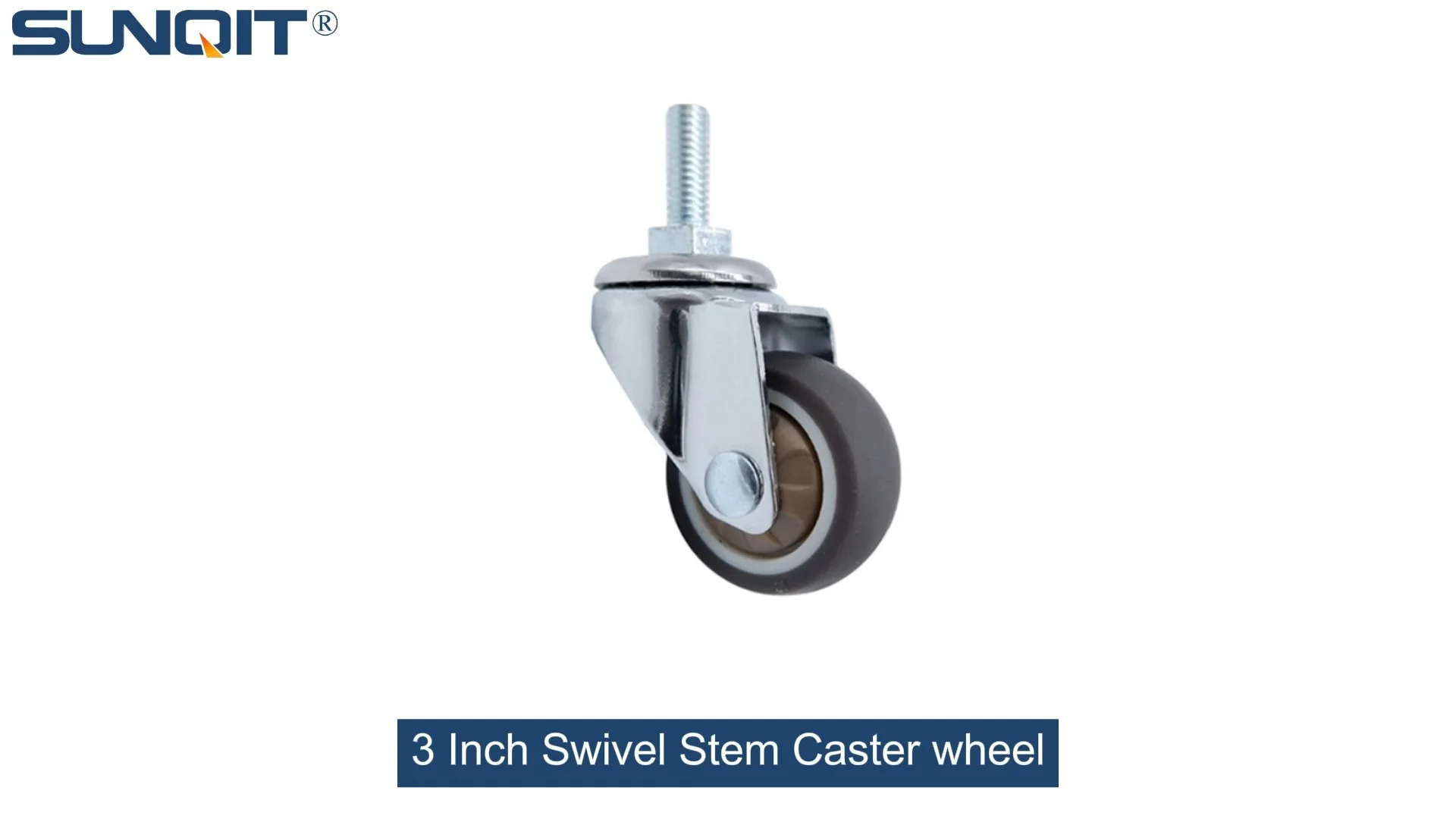
Swivel Stem Caster wheel
360 Degree Swivel Stem Caster. Threaded-post mount design, castors diameter 3 inch.Each swivel caster wheels loading 70KGS. Heavy enough and widely suit for carts, chairs, cabinet, flow rack, workbench, turnover rolley.
Ever stood in a busy warehouse and watched someone wrestle with a loaded cart? Their arms strain, their steps falter, and every turn feels like a battle against the cart itself. It's a scene that screams inefficiency—and it's almost always avoidable. The culprit? More often than not, it's the casters. Those small, unassuming wheels that connect the cart to the floor might seem trivial, but they're the difference between a workflow that hums and one that sputters. Today, we're focusing on a specific type of caster that's revolutionizing how we move materials: swivel stem caster wheels. When paired with turnover carts—the workhorses of warehouses, factories, and retail stockrooms—these casters don't just make movement possible; they make it effortless . Let's unpack why durability and maneuverability matter here, and how the right caster can turn a frustrating chore into a smooth, almost satisfying task.
What Are Swivel Stem Caster Wheels, Anyway?
Before we dive into the "why," let's get clear on the "what." Swivel stem caster wheels are exactly what they sound like: wheels mounted on a stem (a rod or post) that can rotate 360 degrees. Unlike rigid casters, which only roll forward and backward, swivel stems let the wheel pivot, making it easy to change direction with a light push. The "stem" part is key here—it's how the caster attaches to the cart. Think of it like a plug: the stem slides into a hole or bracket on the cart's frame, locking in place (often with a nut or pin) to keep the wheel secure. This design is super common in modular setups, like the ones used in turnover trolley and rack systems, where carts need to be adaptable and easy to assemble.
You've probably seen these casters without realizing it. They're on the bottom of office chairs, hospital meal carts, and yes—those turnover carts that zip through warehouses. But not all swivel stem casters are created equal. The ones built for industrial use, the kind that handle heavy loads day in and day out, are a world apart from the flimsy wheels on a cheap shopping cart. And when it comes to turnover carts—which often carry everything from boxes of inventory to heavy machinery parts—"industrial grade" isn't just a buzzword; it's a necessity.
Durability: Built to Last, Even When the Going Gets Tough
Let's talk durability first. A caster that breaks down after a month of use isn't just a hassle—it's a safety risk. Imagine a cart loaded with 500 pounds of tools suddenly losing a wheel mid-move. Not only does that stop work in its tracks, but it could also damage products or injure someone. So what makes a swivel stem caster wheel durable? Let's break it down.
Wheel Materials: The Foundation of Toughness
The wheel itself is where durability starts. You'll find three main materials in industrial caster wheels, each with its own superpowers:
- Polyurethane: This is the workhorse of caster materials. It's a blend of plastic and rubber, so it's tough enough to handle heavy loads but soft enough to absorb shocks. Ever noticed how some carts glide quietly over concrete? That's polyurethane. It resists wear and tear, even on rough floors, and it won't mark up smooth surfaces like hardwood or tile—perfect if your turnover cart occasionally ventures into retail spaces or offices.
- Nylon: If you need something that can take a beating, nylon is your friend. It's stiffer than polyurethane, so it handles higher loads (we're talking 1,000+ pounds per wheel in some cases) and doesn't scratch easily. The tradeoff? It's noisier on smooth floors and can feel "jerky" if the floor isn't perfectly level. You'll often see nylon wheels in factories or warehouses with concrete floors that have seen better days.
- Rubber: Think of rubber wheels as the "gentle giants." They're soft, which means they grip well on slippery floors (like wet warehouses) and dampen vibrations—great if you're moving fragile items. But they wear down faster than polyurethane or nylon, so they're better for lighter loads or environments where the cart isn't in constant use.
To put this in perspective: A turnover cart used in a bakery, moving sacks of flour and sugar, might use rubber wheels to keep from slipping on flour-dusted floors. A metalworking shop, hauling steel sheets, would opt for nylon to handle the weight. And a warehouse, where carts zip between concrete floors and polished shipping areas, would lean on polyurethane for versatility.
The Stem: More Than Just a Stick
The stem is the unsung hero of durability here. It's what holds the wheel to the cart, so if it bends or breaks, the whole caster fails. Most industrial swivel stem casters use steel stems—either plain carbon steel (for dry environments) or stainless steel (if there's moisture or chemicals involved, like in food processing plants). The stem's diameter and length matter too. A stem that's too thin for the cart's weight will bend under pressure, while one that's too short might pop out of its mounting hole. That's why manufacturers list "stem size" (like 1/2 inch diameter x 2 inches long) right alongside load capacity—it's not a detail to overlook.
Load Capacity: Don't Overestimate (or Underestimate)
Here's a golden rule: Always check the load capacity of the caster, and then add 20% to it. Why? Because carts are rarely loaded evenly. A box might shift to one side, or someone might accidentally stack an extra case on top. If your turnover cart typically carries 400 pounds, spring for casters rated for 500 pounds. It's better to have extra capacity than to push a caster to its breaking point. Most manufacturers list load capacity per caster, so remember: a four-wheeled cart can handle four times the per-caster rating (but again, add that 20% buffer!).
| Wheel Material | Typical Load Capacity (per wheel) | Best For | Wear Resistance |
|---|---|---|---|
| Polyurethane | 300–800 lbs | Mixed floor types, quiet operation | High |
| Nylon | 600–1,200 lbs | Heavy loads, rough concrete | Very High |
| Rubber | 150–400 lbs | Fragile items, slippery floors | Medium |

Maneuverability: When "Easy to Push" Translates to "More Work Done"
Durability keeps the caster from breaking—but maneuverability is what makes it useful . What's the point of a tough wheel if you need a forklift to turn it? Swivel stem casters excel here because of their ability to pivot, but there's more to it than just spinning 360 degrees. Let's break down the features that make a caster "easy to push."
Swivel Radius: Tight Turns in Tight Spaces
Ever tried to navigate a cart through a narrow aisle and had to backtrack because the wheels wouldn't turn sharp enough? That's a swivel radius problem. The swivel radius is the distance from the center of the stem to the edge of the wheel. The smaller the radius, the tighter the turn the cart can make. For example, a caster with a 2-inch swivel radius can pivot in a circle just 4 inches wide, while a 3-inch radius needs 6 inches. In a warehouse with packed shelves or a factory with assembly lines crowding the floor, that extra inch or two can mean the difference between squeezing through and having to take the long way around.
This is where modular systems like lean pipe joint setups shine. Turnover carts built with lean pipe joints are often custom-designed for specific spaces, so pairing them with casters that have a small swivel radius ensures the cart fits exactly where it needs to—no more "almost there" moments.
Bearings: The Secret to Smooth Swiveling
You might not see them, but the bearings in the swivel head (the part that lets the caster spin) are what make turning feel effortless. There are two main types: ball bearings and roller bearings. Ball bearings are small, smooth metal balls that reduce friction—they're why your office chair spins so easily. Roller bearings, on the other hand, use cylindrical rollers, which distribute weight more evenly. They're better for heavy loads but can feel slightly "stiffer" than ball bearings. For most turnover carts, ball bearings are the sweet spot: they're smooth, affordable, and durable enough for daily use.
Wheel Tread: Grip, Noise, and Floor Love
The tread—the pattern on the wheel—might seem like a style choice, but it's actually about function. A smooth tread is quiet and glides well on clean floors, but it can slip on wet or dusty surfaces. A tread with grooves (like a car tire) grips better on rough or uneven floors but makes more noise. Polyurethane wheels often have a "ribbed" tread that balances grip and quietness, which is why they're popular in settings where noise matters—like a retail stockroom next to a sales floor or a hospital corridor.
Wheel Diameter: Big Wheels Roll Easier
It's simple physics: bigger wheels roll over obstacles better. A 5-inch wheel will glide over a cracked floor tile or a door threshold, while a 3-inch wheel might get stuck. That's why most industrial turnover carts use wheels between 4 and 6 inches in diameter. They're large enough to handle bumps but not so big that the cart becomes unstable. Plus, bigger wheels mean less effort to push—think of it like riding a bike: a larger wheel needs less force to keep rolling than a smaller one.

Why Turnover Carts (and Their Users) Deserve the Best Casters
Turnover carts aren't just "carts"—they're the circulatory system of a facility. In a warehouse, they move inventory from shelves to shipping. In a factory, they carry parts to assembly lines. In a restaurant, they transport ingredients from the walk-in fridge to the kitchen. When these carts are hard to move, everything slows down. Workers get tired faster, deadlines get missed, and morale takes a hit. That's where swivel stem casters come in—they turn turnover carts into tools that support workers, not drain them.
Let's take a real-world example: A small electronics manufacturer I worked with a few years back was struggling with their assembly line. Their turnover carts, loaded with circuit boards and wiring, had old, rigid casters that barely turned. Workers were spending 10 minutes just moving a cart from the storage area to the workbench—time that should have been spent building products. After switching to swivel stem casters with polyurethane wheels and ball bearings? The same cart took 2 minutes to move. Over a day, that added up to hours of saved time. And the workers? They stopped complaining about sore shoulders and started focusing on their tasks. It was a small change, but it had a ripple effect on productivity.
Then there's the safety angle. A cart that's hard to control is a cart that's more likely to tip over or crash into shelves, walls, or even people. Swivel stem casters with "swivel locks" (a mechanism that locks the wheel in place to prevent spinning) add an extra layer of safety when loading or unloading. Imagine a worker trying to load a heavy box onto a cart that won't stay still—that's an accident waiting to happen. A locked caster keeps the cart steady, turning a risky task into a routine one.

Choosing the Right Swivel Stem Caster for Your Turnover Cart
So, how do you pick the perfect caster? It starts with asking the right questions. Let's walk through the key factors to consider:
1. What's the Cart Carrying?
Start with the load. If you're moving 50-pound boxes of clothing, a light-duty polyurethane caster will work. If it's 500-pound pallets of metal parts, you need heavy-duty nylon or steel wheels. Don't guess—weigh a typical load and add that 20% buffer we talked about earlier.
2. Where Will the Cart Be Used?
Floor type matters. Smooth concrete? Polyurethane or rubber. Rough, cracked concrete? Nylon. Tile or hardwood? Avoid hard wheels that might scratch—stick with polyurethane. Also, consider the environment: Is it wet (like a car wash)? Go for stainless steel stems to prevent rust. Is it dusty (like a woodworking shop)? Look for casters with sealed bearings to keep dust out.
3. How Often Will the Cart Be Moved?
A cart that's used once a day can get away with basic casters. One that's pushed 50 times a day needs something durable. High-use carts benefit from features like sealed bearings (less maintenance) and thick polyurethane tread (slower wear).
4. Does It Need to Lock?
Swivel locks (which stop the wheel from turning) and wheel locks (which stop the wheel from rolling) are must-haves if you need the cart to stay put. For example, if you're loading the cart on a ramp, a wheel lock prevents it from rolling away. If you're using it as a mobile workbench, a swivel lock keeps it from pivoting while you work.
Maintaining Your Casters: Keep Them Rolling for Years
Even the best casters need a little love.,,.:
- Clean the wheels: At the end of each shift, wipe off dirt, hair, or debris from the wheels. A toothbrush works great for getting gunk out of the tread grooves. Built-up dirt can make wheels wobble or get stuck.
- Lubricate the swivel head: Every 3–6 months (more often if used daily), add a drop of lubricating oil to the swivel joint. This keeps the caster turning smoothly. Avoid using WD-40—it's a cleaner, not a long-term lubricant. Go for a light machine oil instead.
- Check for wear: Inspect the wheels for cracks, flat spots, or uneven tread. If the wheel is misshapen, it's time to replace it. Also, check the stem for bends or rust—if it's bent, the caster won't swivel properly.
- Tighten loose parts: If the wheel wobbles, the nut holding the stem in place might be loose. Grab a wrench and tighten it gently (don't overdo it—you could strip the threads).
Think of it like maintaining a bike: A little care goes a long way. A caster that's cleaned and lubricated regularly can last 5–7 years, while one that's neglected might need replacing in a year.
Final Thoughts: Small Wheels, Big Impact
Swivel stem caster wheels might not be the flashiest part of a facility, but they're one of the most important. They turn turnover carts from frustrating obstacles into tools that make work easier, faster, and safer. When you invest in durable, maneuverable casters, you're not just buying wheels—you're investing in your team's productivity, their comfort, and the overall efficiency of your operation.
So the next time you see someone struggling with a cart, remember: It's not them—it's the casters. And the solution? It might be as simple as swapping out those old, stiff wheels for a set of swivel stem casters that can keep up with the work. After all, in a world where every second counts, why waste energy pushing when you could be gliding?