- Company Articles
- Products and Technology
- Product knowledge
- Swivel Stem Caster Wheels: How Do They Work? Mechanism Explained

Swivel Stem Caster Wheels: How Do They Work? Mechanism Explained
Related Product
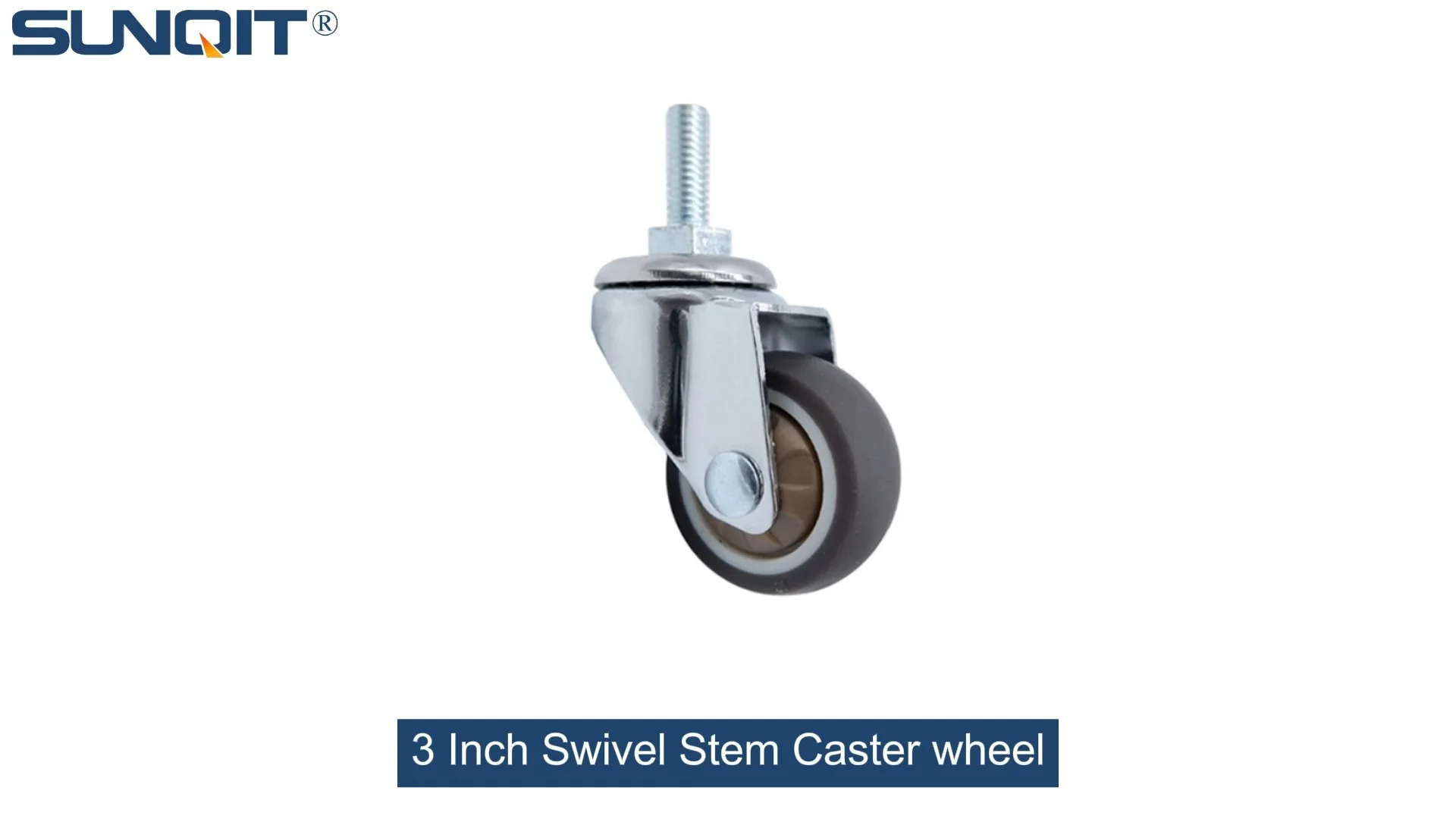
Swivel Stem Caster wheel
360 Degree Swivel Stem Caster. Threaded-post mount design, castors diameter 3 inch.Each swivel caster wheels loading 70KGS. Heavy enough and widely suit for carts, chairs, cabinet, flow rack, workbench, turnover rolley.
Introduction: The Unsung Heroes of Workplace Mobility
Think about the last time you walked through a warehouse, a factory floor, or even a busy office. Chances are, you passed by a cart loaded with supplies, a mobile workbench, or a storage rack that glided effortlessly with a gentle push. What made that smooth movement possible? More often than not, it's a set of swivel stem caster wheels quietly doing their job. These small but mighty components are the backbone of mobility in countless workplaces, yet they rarely get the attention they deserve. In this article, we'll pull back the curtain on swivel stem caster wheels—how they work, what makes them tick, and why they're indispensable in everything from lean manufacturing systems to everyday material handling. Whether you're a facility manager, a manufacturing engineer, or just someone curious about the mechanics behind workplace efficiency, let's dive into the world of these unsung heroes.
What Are Swivel Stem Caster Wheels, Exactly?
At their core, swivel stem caster wheels are wheeled devices mounted to the bottom of equipment, allowing it to roll and rotate 360 degrees. Unlike fixed casters (which only roll forward and backward), swivel stems offer unparalleled maneuverability—think of a shopping cart that can turn on a dime or a hospital bed that navigates tight corridors with ease. But what sets "stem" casters apart? The stem is the vertical rod or bolt that attaches the caster to the equipment. It's the bridge between the wheel assembly and the object being moved, and its design (threaded, hollow, or expanding) determines how securely the caster locks into place.
You'll find these casters in a dizzying array of settings: from the lean system of a car manufacturing plant, where they keep assembly lines flowing, to the ESD workstation in an electronics lab, where static-safe mobility is critical. Even the turnover trolley and rack in a retail stockroom relies on them to shuffle inventory quickly. Their versatility is part of their appeal, but it's their internal mechanics that truly make them shine.
You'll find these casters in a dizzying array of settings: from the lean system of a car manufacturing plant, where they keep assembly lines flowing, to the ESD workstation in an electronics lab, where static-safe mobility is critical. Even the turnover trolley and rack in a retail stockroom relies on them to shuffle inventory quickly. Their versatility is part of their appeal, but it's their internal mechanics that truly make them shine.

Breaking Down the Components: What Makes a Swivel Stem Caster Tick?
To understand how swivel stem casters work, let's zoom in on their key parts. Each caster is a mini marvel of engineering, with components working in harmony to balance load, reduce friction, and enable smooth rotation. Here's a closer look:
- The Stem: As mentioned, this is the "anchor" that attaches the caster to equipment. Threaded stems screw into pre-drilled holes, while expanding stems (like the 360° swivel expanding stem casters wheel ) use a mechanism to grip the inside of a hollow tube—perfect for quick, tool-free installation. Some stems even come with a bush adapter , a small sleeve that adjusts the stem's diameter to fit different mounting holes, adding to their flexibility.
- The Swivel Head: This is where the magic happens. The swivel head sits between the stem and the wheel fork, allowing the entire wheel assembly to rotate. Inside, you'll find a raceway (a circular track) filled with ball bearings or roller bearings. These bearings reduce friction, so the caster can spin smoothly even under heavy loads. High-quality casters often use precision ball bearings for quiet operation, while heavier-duty models might opt for tapered roller bearings to handle more weight.
- The Wheel Fork (or Yoke): This U-shaped frame holds the wheel in place. It's attached to the swivel head and must be strong enough to support the load without bending. Forks are usually made of steel or aluminum, with reinforced legs for durability.
- The Wheel: The part that touches the floor, wheels come in materials like rubber, polyurethane, nylon, or steel. Rubber wheels are gentle on floors and absorb shock, while polyurethane offers a balance of grip and durability—ideal for lean pipe workbench setups where equipment moves frequently. Steel wheels, on the other hand, are tough but noisy and can scratch floors, so they're better for rough industrial environments.
- The Brake (Optional but Critical): Many swivel stem casters come with brakes, like the swivel stem caster wheel with brake . Brakes lock the wheel (and sometimes the swivel head) in place, preventing accidental movement. Common types include "total lock" brakes (which stop both wheel rotation and swivel) and "directional lock" brakes (which keep the wheel straight but allow rolling—useful for moving in a straight line).
- Caster Accessories: Small parts that enhance performance, like caster install base (a plate that bolts to equipment, providing a stable mounting surface for stem casters), caster accessories like dust covers (to keep debris out of the swivel head), or anti-slip adjustable leveling feet (which combine a caster with a retractable foot for extra stability when parked).

The Mechanism: How Swivel Stem Casters Rotate and Roll
Now, let's put it all together. When you push a cart with swivel stem casters, here's what happens step by step:
1. Initiating Movement: When you apply force to the cart, the wheels start rolling. The wheel's tread grips the floor, converting your push into forward motion. The type of wheel material matters here—softer materials like rubber provide more traction, while harder ones like nylon roll more easily on smooth surfaces.
2. Swiveling into Action: When you turn the cart, the swivel head takes over. The ball bearings in the raceway allow the entire wheel assembly to rotate around the stem. The key here is friction: without bearings, the swivel head would grind to a halt under load. Instead, the bearings act like tiny rollers, letting the raceway glide smoothly. Ever noticed how a heavily loaded caster still swivels easily? Thank those bearings.
3. Balancing Load: The swivel head is designed so that the caster's center of gravity lines up with the stem's axis. This prevents "wheel wobble"—that annoying shimmy you get with cheap casters when moving at speed. High-quality casters also have a "kingpin," a bolt that secures the swivel head to the fork, adding stability under heavy loads.
4. Braking (When Needed): Hit the brake pedal, and a pad or lever presses against the wheel (or swivel head), creating friction to stop movement. For example, the 360° swivel expanding stem casters wheel with brake uses a spring-loaded mechanism: when you press the brake, a metal plate clamps the wheel, holding it firmly in place. Release the brake, and the plate retracts, letting the wheel roll again.
1. Initiating Movement: When you apply force to the cart, the wheels start rolling. The wheel's tread grips the floor, converting your push into forward motion. The type of wheel material matters here—softer materials like rubber provide more traction, while harder ones like nylon roll more easily on smooth surfaces.
2. Swiveling into Action: When you turn the cart, the swivel head takes over. The ball bearings in the raceway allow the entire wheel assembly to rotate around the stem. The key here is friction: without bearings, the swivel head would grind to a halt under load. Instead, the bearings act like tiny rollers, letting the raceway glide smoothly. Ever noticed how a heavily loaded caster still swivels easily? Thank those bearings.
3. Balancing Load: The swivel head is designed so that the caster's center of gravity lines up with the stem's axis. This prevents "wheel wobble"—that annoying shimmy you get with cheap casters when moving at speed. High-quality casters also have a "kingpin," a bolt that secures the swivel head to the fork, adding stability under heavy loads.
4. Braking (When Needed): Hit the brake pedal, and a pad or lever presses against the wheel (or swivel head), creating friction to stop movement. For example, the 360° swivel expanding stem casters wheel with brake uses a spring-loaded mechanism: when you press the brake, a metal plate clamps the wheel, holding it firmly in place. Release the brake, and the plate retracts, letting the wheel roll again.
Real-World Example:
Imagine a
workbench
in a electronics factory. It's loaded with circuit boards, tools, and a soldering station—easily 300 pounds. Without swivel stem casters, moving it would require a team. But with casters, one person can glide it to a new position, swiveling around a pallet of components, and lock the brakes to keep it steady during work. That's efficiency in action.

Why Swivel Stem Casters Are a Game-Changer for Lean Systems and Beyond
In the world of manufacturing and logistics, "lean" is all about eliminating waste—whether it's time, effort, or space. Swivel stem casters fit perfectly into this philosophy by making material flow seamless. Here's how:
- Flexible Workflows: In a lean system, production lines need to adapt quickly. A turnover trolley with swivel casters can move parts from station to station without backtracking, cutting down on "transport waste." Similarly, a mobile flow rack (loaded with components) can be positioned right next to an assembly line, reducing the time workers spend walking to fetch supplies.
- Space Optimization: Fixed equipment takes up permanent floor space. But with swivel casters, workbenches, racks, and trolleys can be reconfigured on the fly. At the end of a shift, they can be nested together to free up space for cleaning or other tasks—a boon for small factories or warehouses.
- Ergonomic Benefits: Pushing a heavy cart with fixed casters requires more force and can lead to worker fatigue or injury. Swivel stem casters reduce the effort needed to maneuver, lowering the risk of strain. This is especially important in settings like hospitals or distribution centers, where staff move equipment all day.
Beyond lean systems, swivel stem casters shine in specialized environments. Take ESD workstations , where static electricity can damage sensitive electronics. Casters with conductive wheels or stems (often labeled "ESD-safe") channel static away from the workstation, protecting components during movement. In food processing plants, stainless steel casters resist corrosion from water and cleaning chemicals, ensuring hygiene standards are met.
- Flexible Workflows: In a lean system, production lines need to adapt quickly. A turnover trolley with swivel casters can move parts from station to station without backtracking, cutting down on "transport waste." Similarly, a mobile flow rack (loaded with components) can be positioned right next to an assembly line, reducing the time workers spend walking to fetch supplies.
- Space Optimization: Fixed equipment takes up permanent floor space. But with swivel casters, workbenches, racks, and trolleys can be reconfigured on the fly. At the end of a shift, they can be nested together to free up space for cleaning or other tasks—a boon for small factories or warehouses.
- Ergonomic Benefits: Pushing a heavy cart with fixed casters requires more force and can lead to worker fatigue or injury. Swivel stem casters reduce the effort needed to maneuver, lowering the risk of strain. This is especially important in settings like hospitals or distribution centers, where staff move equipment all day.
Beyond lean systems, swivel stem casters shine in specialized environments. Take ESD workstations , where static electricity can damage sensitive electronics. Casters with conductive wheels or stems (often labeled "ESD-safe") channel static away from the workstation, protecting components during movement. In food processing plants, stainless steel casters resist corrosion from water and cleaning chemicals, ensuring hygiene standards are met.
Choosing the Right Swivel Stem Caster: Key Considerations
Not all swivel stem casters are created equal. To pick the best one for your needs, ask yourself these questions:
- What's the Load Capacity? Casters are rated for maximum weight (e.g., 100 lbs, 500 lbs, 1000 lbs). Always choose a caster rated for more than your expected load—overloading leads to premature wear or failure. For example, a workbench E (single deck-without caster) might need casters rated for 300 lbs if it will hold tools and materials.
- What's the Floor Like? Rough concrete? Smooth tile? Carpet? Soft rubber wheels are gentle on hardwood or tile, while polyurethane wheels handle rough floors well. For ESD environments, look for conductive wheels to prevent static buildup.
- Do You Need Brakes? If the equipment needs to stay put during use (like a workbench), opt for a swivel stem caster wheel with brake . Total-lock brakes are best for stability, while directional locks work if you only need to prevent swiveling.
- Mounting Style: Threaded stems work for pre-drilled holes, while expanding stems are better for hollow tubes. If your equipment has a flat bottom, consider adding a caster install base (a metal plate with a stem) to create a secure mounting point.
To help visualize, here's a quick comparison of common wheel materials:
- What's the Load Capacity? Casters are rated for maximum weight (e.g., 100 lbs, 500 lbs, 1000 lbs). Always choose a caster rated for more than your expected load—overloading leads to premature wear or failure. For example, a workbench E (single deck-without caster) might need casters rated for 300 lbs if it will hold tools and materials.
- What's the Floor Like? Rough concrete? Smooth tile? Carpet? Soft rubber wheels are gentle on hardwood or tile, while polyurethane wheels handle rough floors well. For ESD environments, look for conductive wheels to prevent static buildup.
- Do You Need Brakes? If the equipment needs to stay put during use (like a workbench), opt for a swivel stem caster wheel with brake . Total-lock brakes are best for stability, while directional locks work if you only need to prevent swiveling.
- Mounting Style: Threaded stems work for pre-drilled holes, while expanding stems are better for hollow tubes. If your equipment has a flat bottom, consider adding a caster install base (a metal plate with a stem) to create a secure mounting point.
To help visualize, here's a quick comparison of common wheel materials:
| Wheel Material | Best For | Pros | Cons |
|---|---|---|---|
| Rubber | Smooth floors, noise reduction | Shock-absorbent, non-marking | Wears faster on rough surfaces |
| Polyurethane | Heavy loads, mixed floors | Durable, good traction, easy rolling | More expensive than rubber |
| Nylon | Light loads, smooth concrete | Chemical-resistant, low friction | Hard, noisy on tile |
| Steel | Extreme heavy loads, industrial settings | Super strong, long-lasting | Scratches floors, noisy |
Maintaining Your Swivel Stem Casters: Tips for Longevity
Even the best casters need care to perform their best. Here's how to keep them rolling smoothly for years:
- Clean Regularly: Dust, debris, and even floor polish can gunk up the swivel head. Wipe the raceway with a cloth and use compressed air to blow out dirt from bearings.
- Lubricate the Swivel Head: Every 6 months (or more often in dirty environments), apply a few drops of lubricating oil to the raceway. This keeps the ball bearings rolling freely and prevents rust.
- Check Brakes: Test brakes regularly to ensure they engage fully. If a brake feels "spongy," tighten the adjustment screw or replace worn brake pads.
- Inspect Wheels and Accessories: Look for cracks in the wheel tread, loose stems, or damaged caster accessories like the bush adapter. replace worn parts promptly—ignoring a small crack can lead to a caster failure under load.
Conclusion: Small Wheels, Big Impact
Swivel stem caster wheels may be small, but their impact on workplace efficiency, safety, and mobility is enormous. From the
lean system
of a manufacturing plant to the
ESD workstation
in a tech lab, they keep operations moving forward—quietly, reliably, and with remarkable precision. By understanding their mechanics, components, and how to choose the right one, you can unlock new levels of productivity in your own workspace. So the next time you glide a cart across the floor or reposition a workbench with ease, take a moment to appreciate the swivel stem caster: the unsung hero that makes it all possible.