- Company Articles
- Products and Technology
- Installation And Maintenance
- Swivel Stem Caster Wheels Maintenance Schedule for Warehouse Logistics Teams

Swivel Stem Caster Wheels Maintenance Schedule for Warehouse Logistics Teams
Related Product
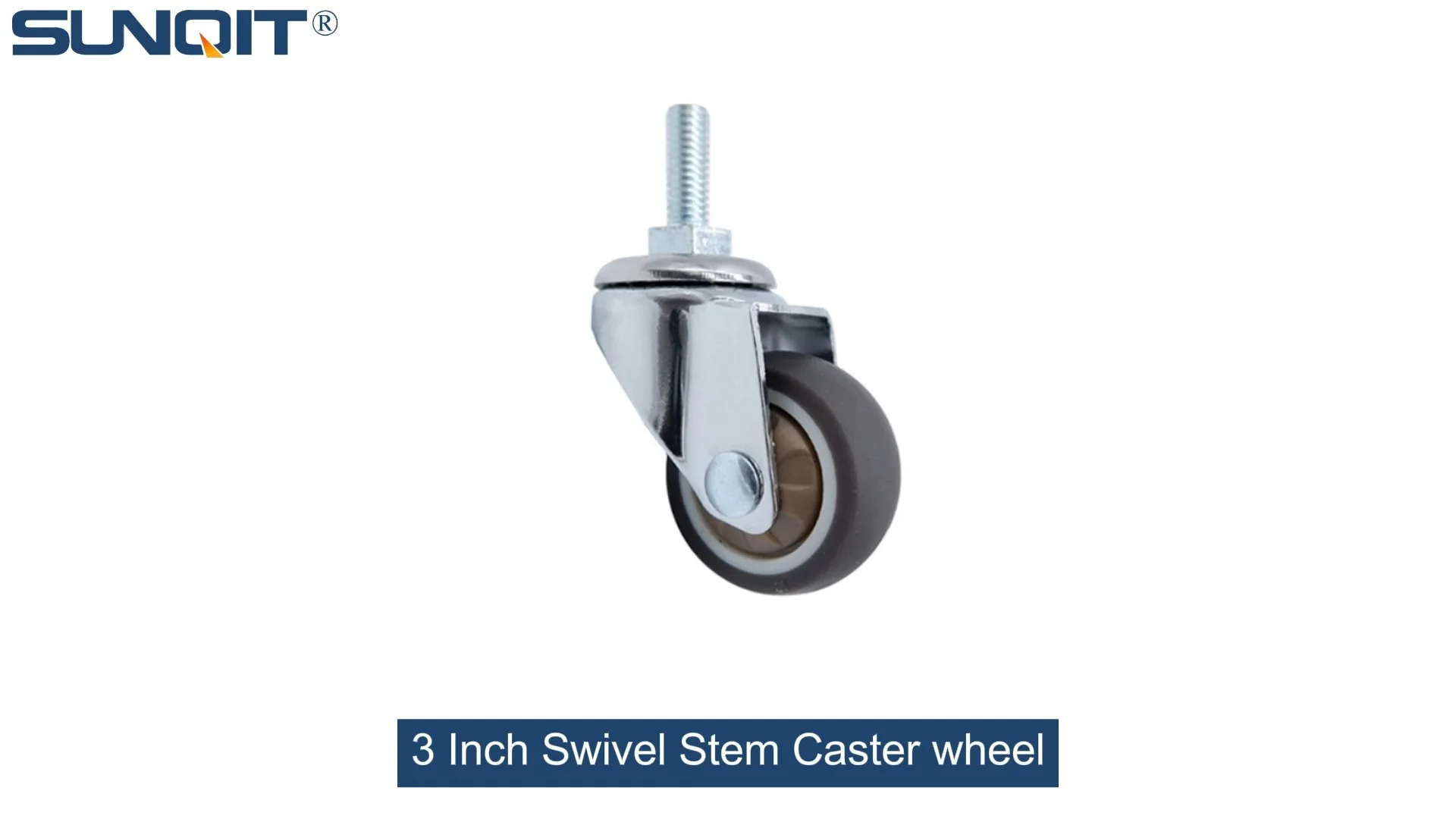
Swivel Stem Caster wheel
360 Degree Swivel Stem Caster. Threaded-post mount design, castors diameter 3 inch.Each swivel caster wheels loading 70KGS. Heavy enough and widely suit for carts, chairs, cabinet, flow rack, workbench, turnover rolley.
Introduction: The Unsung Heroes of Warehouse Efficiency
In the bustling world of warehouse logistics, where every minute counts and every movement matters, there's a component so yet so critical that its absence would bring operations to a grinding halt: the swivel stem caster wheel. These small, wheeled devices are the silent workhorses beneath your turnover trolleys, material racks, and even workbenches, enabling smooth movement of goods, tools, and equipment across the warehouse floor. Whether you're pushing a loaded trolley to the assembly line or repositioning a workbench to optimize workflow, the swivel stem caster wheel with brake is often the unsung hero that keeps things rolling—literally.
But here's the thing: like any hardworking tool, swivel stem caster wheels don't last forever on their own. Dust, debris, heavy loads, and constant use take a toll, turning smooth-rolling wheels into squeaky, stuck, or even dangerous liabilities. A seized caster can slow down a team's pace, a worn wheel can damage the warehouse floor, and a faulty brake can lead to accidents that risk both inventory and employee safety. That's where a proactive maintenance schedule comes in. By taking the time to care for these small but vital components, warehouse teams can avoid costly downtime, extend the lifespan of their equipment, and keep operations running like a well-oiled machine.
This article is your go-to guide for creating and implementing a practical maintenance schedule for swivel stem caster wheels. We'll break down exactly what needs to be done, how often, and why—tailored specifically to the needs of warehouse logistics teams. We'll also touch on common issues, troubleshooting tips, and best practices to ensure your caster wheels (and the equipment they support) stay in peak condition. Let's dive in.
Why Maintenance Matters: The Cost of Neglect
Before we jump into the "how," let's take a moment to understand the "why." You might be thinking, "We're busy enough—do we really need to add another task to the list?" The short answer: yes. Neglecting caster wheel maintenance might save a few minutes today, but it costs far more in the long run. Here's how:
1. Downtime and Lost Productivity
Imagine this: It's a busy morning, and your team is rushing to fulfill an urgent order. A turnover trolley loaded with critical parts suddenly jams—its swivel stem caster wheel has locked up, refusing to turn. Now, two team members have to stop what they're doing to either fix the trolley or transfer the parts to another one. What should have taken 5 minutes takes 20, and the ripple effect delays the entire order. Multiply this scenario by a few stuck or broken casters each week, and you're looking at hours of lost productivity—and missed deadlines.
2. Increased Repair and Replacement Costs
A little wear on a caster wheel might seem harmless, but it's a slippery slope. A wheel with minor tread wear can quickly develop uneven patterns, putting extra strain on the stem and bearings. Without lubrication, the swivel mechanism can rust or seize, requiring a full replacement instead of a simple fix. Caster accessories like brake pads or axle pins are cheap to replace individually, but ignore them, and you'll soon be buying entire new caster assemblies. Over time, reactive replacements cost 3–5 times more than proactive maintenance.
3. Safety Risks
Warehouse safety is non-negotiable, and faulty casters are a hidden hazard. A swivel stem caster wheel with a broken brake can cause a loaded trolley to roll away unexpectedly, crashing into equipment or even employees. Worn wheels might wobble, increasing the risk of tipping, while debris trapped in the swivel joint can lead to sudden jolts that strain workers' backs. OSHA reports that over 20% of warehouse injuries involve manual handling equipment—many of which trace back to poorly maintained casters.
4. Damage to Equipment and Infrastructure
It's not just the casters themselves that suffer. A rough, worn caster wheel can scratch or gouge concrete floors, leading to expensive repairs. If a caster seizes on a workbench, dragging it across the floor can damage the bench's frame or the materials stored on it. Even small issues, like a loose stem, can cause the equipment to wobble, putting stress on other components (like the workbench's legs or the trolley's frame) and shortening their lifespan.
The bottom line? Investing time in maintenance isn't a chore—it's an investment in your team's efficiency, safety, and bottom line. Now, let's outline the schedule that makes it all possible.

The Maintenance Schedule: Weekly, Monthly, and Quarterly Tasks
Caster wheel maintenance doesn't have to be complicated. By breaking tasks into weekly "quick checks," monthly "deep cleans," and quarterly "overhauls," you can spread the work evenly and ensure nothing falls through the cracks. Below is a detailed breakdown of each phase.
Weekly Checks: The "5-Minute Scan"
Weekly checks are all about catching small issues before they grow. Assign a team member to spend 5–10 minutes per day (or 30–45 minutes once a week) inspecting the caster wheels on frequently used equipment—think turnover trolleys, mobile workbenches, and material racks. Focus on the following:
- Visual Inspection: Walk around each piece of equipment and look for obvious red flags. Are the wheels free of debris like dirt, string, or small stones? Are there cracks or chunks missing from the wheel tread? Is the stem bent or loose? Does the swivel joint move freely when you gently push the wheel?
- Brake Test: For swivel stem caster wheels with brakes, engage the brake and try to push the equipment. It should stay firmly in place—no rolling or sliding. If it moves, the brake pad might be worn or misaligned.
- Noise Check: Roll the equipment back and forth. Squeaking, grinding, or clicking sounds are signs of trouble. A little squeak might just mean it's time for lubrication, but a grinding noise could indicate damaged bearings.
- Debris Removal: Use a stiff brush or compressed air to clear dirt, hair, or threads from the wheel axles and swivel joints. Even small debris can cause friction and wear over time.
Pro tip: Keep a "caster log" near the equipment storage area. Have team members jot down any issues they notice (e.g., "Trolley #3 has a squeaky left caster") so nothing gets forgotten between checks.
Monthly Maintenance: Cleaning and Lubrication
Once a month, set aside 1–2 hours for deeper cleaning and lubrication. This step is crucial for preventing rust, reducing friction, and keeping the swivel mechanism smooth. Here's how to do it:
Step 1: Thorough Cleaning
Start by moving the equipment to a clean, well-lit area. Use a damp cloth to wipe down the wheels, stems, and swivel joints, removing built-up grime. For stubborn dirt (like oil or grease), use a mild detergent (avoid harsh chemicals, which can damage plastic wheels). Pay extra attention to the area where the wheel meets the axle—this is a common spot for debris to hide.
Step 2: Lubrication
Lubrication is the key to smooth swiveling and rolling. Use a high-quality, waterproof lubricant (silicone-based lubricants work best for plastic wheels; lithium grease is better for metal ones). Apply a small amount to:
- The swivel joint (where the stem connects to the wheel assembly)—this keeps the wheel turning freely.
- The axle (where the wheel spins)—a drop here reduces friction and prevents squeaking.
- The brake mechanism—lubricate the pivot points of the brake lever to ensure it engages and releases smoothly.
Wipe away excess lubricant with a clean cloth—too much can attract dirt, which defeats the purpose.
Step 3: Tighten Loose Components
Use a wrench or screwdriver to check for loose nuts, bolts, or stem connections. Over time, vibration can loosen these parts, leading to wobbling or misalignment. Tighten them gently—over-tightening can strip threads or crack the wheel housing.
Quarterly Overhaul: Inspect, replace, and Repair
Every 3 months, it's time for a full inspection to assess wear and tear and replace worn parts. This might take 2–3 hours, but it's worth it to avoid unexpected failures. Here's what to cover:
Step 1: Wheel Tread Inspection
Check the tread depth of each wheel. Most caster wheels have a "wear indicator"—a small line or groove that becomes visible when the tread is too thin. If the tread is worn past this line, or if there are deep cracks, splits, or chunks missing, replace the wheel immediately. Worn treads reduce traction, making the equipment harder to control and increasing the risk of slippage.
Step 2: Bearing Check
Spin each wheel by hand. It should rotate smoothly with minimal resistance. If it feels rough, wobbly, or doesn't spin freely, the bearings might be damaged or rusted. In some cases, bearings can be replaced (using caster accessories like bearing kits), but for cheaper casters, it's often more cost-effective to replace the entire wheel assembly.
Step 3: Brake System Deep Dive
For swivel stem caster wheels with brakes, inspect the brake pad for wear. If the pad is thin, cracked, or covered in oil (which reduces grip), replace it. Also, check the brake lever and spring—if the lever feels loose or the spring doesn't snap back into place, tighten or replace these parts as needed.
Step 4: Stem and Mount Inspection
Examine the stem (the metal rod that attaches the caster to the equipment) for rust, bends, or cracks. A bent stem can cause the wheel to wobble, while rust can weaken the metal over time. Also, check the mounting plate or socket where the stem attaches to the equipment—if it's cracked or stripped, the caster might detach during use, which is extremely dangerous.
Step 5: replace Caster Accessories as Needed
Don't overlook small parts—they make a big difference. replace worn axle pins, missing washers, or damaged clips (all common caster accessories) to ensure the wheel stays securely in place. Keep a stock of these parts on hand (e.g., extra brake pads, washers, and axle nuts) so you can make repairs immediately, instead of waiting for replacements to arrive.

Maintenance Task Checklist: At a Glance
| Task | Frequency | Tools Needed | Key Steps | Notes |
|---|---|---|---|---|
| Visual inspection (debris, cracks, looseness) | Weekly | None | Check wheels, stems, and swivel joints for damage; remove visible debris. | Note any issues in the caster log. |
| Brake test | Weekly | None | Engage brake and attempt to roll equipment; ensure it stays in place. | replace brake pads if equipment moves. |
| Noise check | Weekly | None | Roll equipment; listen for squeaks, grinding, or clicks. | Squeaks may need lubrication; grinding may mean damaged bearings. |
| Deep cleaning | Monthly | Damp cloth, mild detergent, brush | Wipe down wheels, stems, and joints; remove stubborn grime. | Avoid harsh chemicals on plastic wheels. |
| Lubrication | Monthly | Silicone-based lubricant or lithium grease, cloth | Apply lubricant to swivel joints, axles, and brake pivots; wipe excess. | Use silicone for plastic wheels, lithium grease for metal. |
| Tighten loose components | Monthly | Wrench, screwdriver | Check nuts, bolts, and stem connections; tighten gently. | Over-tightening can strip threads. |
| Wheel tread inspection | Quarterly | None | Check tread depth and look for cracks/splits. | replace wheels if tread is worn past the wear indicator. |
| Bearing check | Quarterly | None (or bearing puller for replacement) | Spin wheels; check for roughness or wobble. | replace bearings or entire wheel if damaged. |
| Stem and mount inspection | Quarterly | Flashlight (for hard-to-see areas) | Check stem for rust/bends; inspect mounting plate for cracks. | replace caster if stem is bent or mount is damaged. |

Troubleshooting Common Caster Wheel Issues
Even with regular maintenance, issues can pop up. Here's how to diagnose and fix the most common problems:
Problem 1: Squeaky Wheels
Cause: Lack of lubrication, debris in the axle, or worn bearings.
Solution: First, clean the axle and swivel joint with a brush and apply lubricant. If the squeak persists, spin the wheel—if it feels rough, the bearings may be worn and need replacement.
Problem 2: Wheel Won't Swivel
Cause: Rust in the swivel joint, debris buildup, or a bent stem.
Solution: Clean the joint with compressed air and lubricate. If it still won't move, check for a bent stem—replace the caster if the stem is damaged.
Problem 3: Brake Won't Hold
Cause: Worn brake pad, misaligned brake lever, or oil/grease on the wheel tread.
Solution: replace the brake pad if it's thin or cracked. Wipe the wheel tread clean (oil reduces friction). If the lever is misaligned, adjust it using a wrench to tighten the pivot bolt.
Problem 4: Wheel Wobbles or Rolls Unevenly
Cause: Loose axle, bent wheel, or uneven tread wear.
Solution: Tighten the axle nut. If the wheel is bent or tread is uneven, replace the wheel—continuing to use it will damage the swivel joint and floor.
Problem 5: Stem Pulls Loose from Equipment
Cause: Stripped mounting threads, damaged mounting plate, or overloading.
Solution: Check the mounting plate for cracks—replace the equipment if damaged. If the threads are stripped, use a thread repair kit or replace the caster stem. Ensure the equipment isn't being overloaded (check the caster's weight rating!)
Best Practices for Long-Term Caster Wheel Care
Beyond the schedule, these tips will help you get the most out of your swivel stem caster wheels:
1. Choose the Right Caster for the Job
Not all casters are created equal. Match the caster to the environment: use soft rubber wheels for hardwood or tiled floors, hard plastic wheels for concrete, and stainless steel wheels for wet or corrosive areas (like freezers). Also, check the weight rating—using a caster rated for 200 lbs on a trolley that carries 300 lbs is a recipe for failure.
2. Train Your Team
Ensure everyone who uses caster-equipped equipment knows the basics: don't overload trolleys, engage brakes when parked, and report issues immediately. Hold a quick 10-minute training session on the monthly maintenance steps—team ownership makes the schedule more effective.
3. Keep Spare Parts On Hand
Stock up on common caster accessories: brake pads, axle washers, lubricant, and replacement wheels. This way, you can fix issues on the spot instead of waiting for orders to arrive.
4. Rotate Equipment When Possible
If you have multiple trolleys or workbenches, rotate their use to distribute wear evenly. This prevents one set of casters from bearing the brunt of daily use.
5. Clean the Warehouse Floor
A clean floor means cleaner casters. Regular sweeping and mopping reduce debris that gets trapped in wheels and joints. Invest in floor mats in high-traffic areas to minimize wear on both wheels and floors.
Conclusion: Small Steps, Big Results
Swivel stem caster wheels might be small, but their impact on warehouse efficiency and safety is huge. By following this maintenance schedule—weekly checks, monthly cleaning, quarterly overhauls—you'll keep these workhorses rolling smoothly, reduce downtime, and extend the life of your equipment. Remember: maintenance isn't a one-time task; it's an ongoing commitment to your team, your operations, and your bottom line.
So, grab that brush, lubricant, and wrench, and start small. Your first weekly check might take a little longer, but soon it will become second nature. Before you know it, you'll be wondering how you ever managed without it—and your team will thank you for the smoother, safer workflow.
Here's to rolling forward—one well-maintained caster wheel at a time.