- Company Articles
- Products and Technology
- Product knowledge
- Swivel Stem Caster Wheels vs Swivel Plate Casters: Cost & Performance Analysis

Swivel Stem Caster Wheels vs Swivel Plate Casters: Cost & Performance Analysis
Related Product
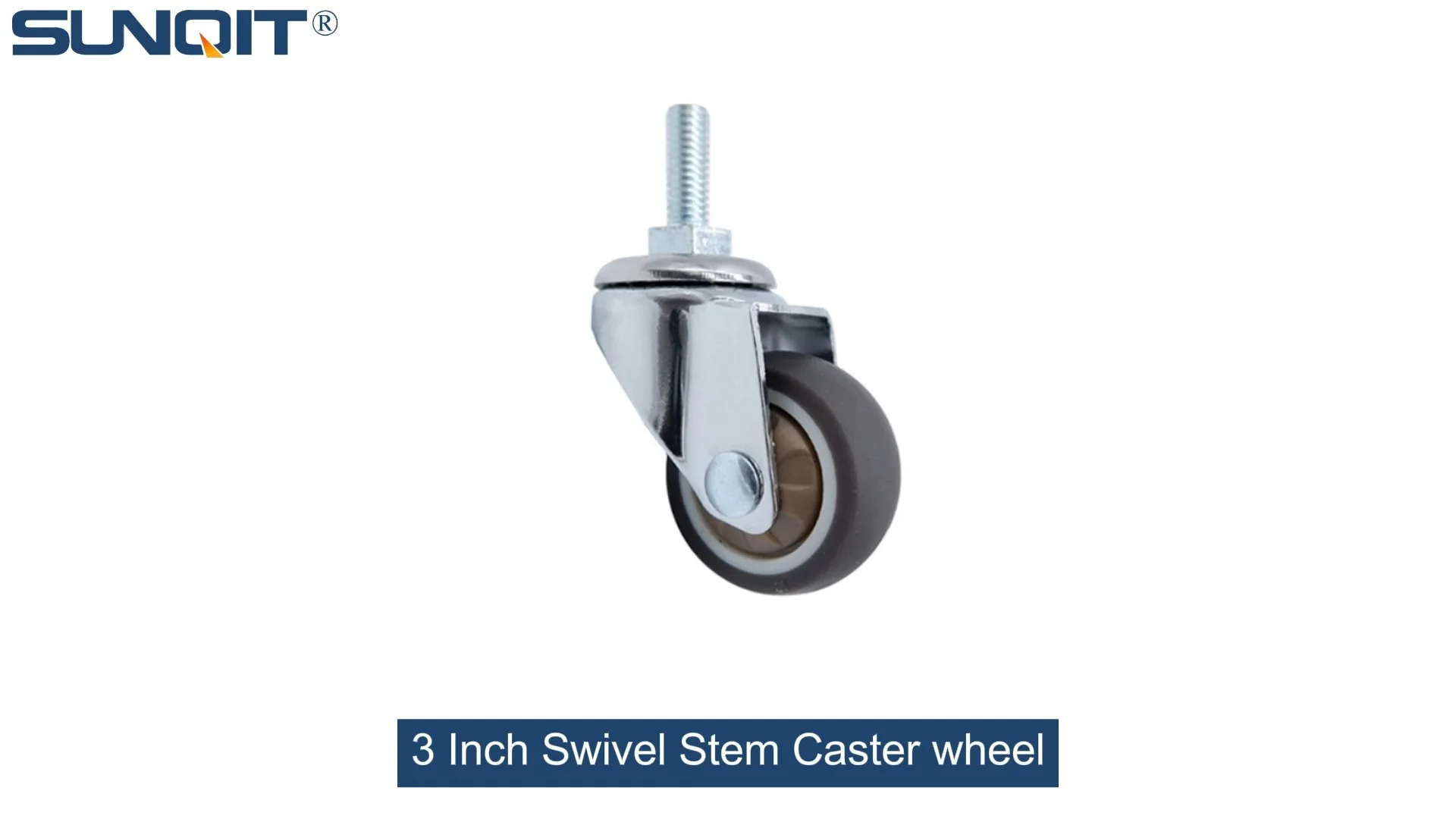
Swivel Stem Caster wheel
360 Degree Swivel Stem Caster. Threaded-post mount design, castors diameter 3 inch.Each swivel caster wheels loading 70KGS. Heavy enough and widely suit for carts, chairs, cabinet, flow rack, workbench, turnover rolley.
In the world of material handling, manufacturing, and facility management, there's a silent workhorse that often goes unnoticed: the caster wheel. These small but critical components are the backbone of mobility, allowing everything from workbenches and carts to heavy machinery to move smoothly across floors. Without the right caster, operations slow down, safety risks rise, and efficiency takes a hit. But not all casters are created equal. Two of the most common types—swivel stem caster wheels and swivel plate casters—serve distinct purposes, each with its own strengths and weaknesses. In this article, we'll dive deep into their design, cost, performance, and real-world applications to help you decide which is right for your needs.
Understanding the Basics: What Are Swivel Casters?
Before we compare the two types, let's clarify what "swivel" means in the context of casters. A swivel caster features a rotating head that allows the wheel to turn 360 degrees, making the equipment it's attached to highly maneuverable. This is in contrast to rigid casters, which only roll forward and backward. Swivel casters are ideal for environments where frequent direction changes are needed—think warehouses, hospitals, or workshops where navigating tight spaces is a daily challenge.
Both swivel stem and swivel plate casters share this 360-degree rotation, but their mounting mechanisms set them apart. That mounting difference is key to understanding their cost, performance, and best-use scenarios.
Swivel Stem Caster Wheels: Compact, Lightweight, and Quick to Install
Design and Components
Swivel stem casters get their name from their mounting style: a "stem" that extends upward from the swivel head, designed to insert into a pre-drilled hole or socket on the bottom of the equipment. The stem itself can take several forms: threaded (like a bolt), grip-ring (with a spring-loaded ring that locks into a hole), or expanding (with a mechanism that tightens when inserted). This design makes them compact—no bulky mounting plate needed—and easy to attach to lightweight or space-constrained items.
A typical swivel stem caster includes four main parts: the stem (mounting mechanism), the swivel head (which allows rotation), the wheel (made from materials like rubber, polyurethane, or plastic), and optional brakes (to lock the wheel or swivel head in place). Because they're designed for lighter loads, the materials here are often lighter too—think aluminum or plastic for the swivel head, and softer wheel materials for floor protection.
Common Applications
Swivel stem casters shine in scenarios where mobility is prioritized over heavy lifting. You'll find them on:
- Office furniture : Task chairs, mobile file cabinets, and small utility carts often use threaded stem casters, as they're easy to install and replace.
- Medical equipment : Lightweight carts for medications, tools, or patient supplies rely on stem casters for smooth movement in tight hospital corridors.
- Retail and hospitality : Display racks, serving carts, and cleaning equipment use stem casters to stay nimble, especially when frequent rearrangements are needed.
- DIY and small-scale workshops : Hobbyists and small businesses often use stem casters on homemade carts or lightweight workbenches, where quick setup is more important than heavy-duty performance.

Swivel Plate Casters: Heavy-Duty, Stable, and Built for Endurance
Design and Components
Swivel plate casters, on the other hand, mount using a flat, rectangular plate (usually steel or aluminum) with pre-drilled holes. This plate is bolted or screwed directly to the bottom of the equipment, creating a strong, stable connection. Unlike stem casters, which rely on a single stem for mounting, plate casters distribute weight across the entire plate, making them better suited for heavier loads.
The components of a swivel plate caster are similar to stem casters—swivel head, wheel, and optional brakes—but built tougher. The swivel head is often made of forged steel for durability, and the plate itself is thick enough to withstand bending or warping under pressure. Wheel options here are more robust too, including steel, iron, or heavy-duty polyurethane, designed to handle rough floors or constant use.
Common Applications
Swivel plate casters are the go-to choice for heavy, industrial, or high-stakes environments. Examples include:
- Manufacturing and lean systems : In factories using lean system principles to optimize workflow, mobile workbenches, assembly line carts, and material racks rely on plate casters. These setups often require frequent reconfiguration, and plate casters provide the stability needed to keep heavy tools or parts secure during movement.
- Warehousing and logistics : Pallet jacks, loading docks, and heavy-duty storage racks use plate casters to move hundreds or thousands of pounds of inventory safely.
- Industrial machinery : Equipment like compressors, generators, or CNC machine tool cabinets often use plate casters to allow for maintenance access or repositioning without disassembly.
- Food service and hospitality : Commercial kitchen equipment, like stainless steel prep tables or large beverage carts, use plate casters to handle the weight of full ingredient bins or glassware.

Cost Analysis: Swivel Stem vs. Swivel Plate Casters
Cost is often the first factor considered when choosing casters, but it's not just about the upfront price tag. Let's break down the costs involved—initial purchase, installation, and long-term maintenance—to see which option offers better value.
Upfront Purchase Cost
Swivel stem casters are generally cheaper to buy than swivel plate casters. A basic stem caster with a plastic wheel might cost as little as $5–$15 per unit, while a heavy-duty stem caster with a polyurethane wheel and brake could range from $20–$50. The simple design—no metal plate, fewer materials—keeps production costs low.
Swivel plate casters, by contrast, start at around $15–$30 for lightweight models (aluminum plate, small wheel) and can climb to $100 or more for industrial-grade options (steel plate, large steel wheel, dual locks). The metal plate, reinforced swivel head, and heavier wheels add to the manufacturing cost, but this investment pays off in durability.
Installation Cost
Installation costs depend on labor time and tools needed. Swivel stem casters are quick and easy to install: simply insert the stem into a pre-drilled hole and secure it with a nut (for threaded stems) or rely on the grip-ring/expanding mechanism to hold it in place. No special tools are needed—just a wrench or pliers for tightening. For a small cart with four stem casters, installation might take 10–15 minutes.
Swivel plate casters require more work. You'll need to drill holes in the equipment (if not pre-drilled), align the plate, and bolt it down with screws or bolts. This takes longer—30–60 minutes for four casters—and may require power tools like a drill or impact driver. If you're hiring a professional, this labor adds to the cost. However, some equipment (like commercial workbenches or lean system carts) comes pre-drilled for plate casters, reducing installation time.
Long-Term Maintenance and Replacement Costs
Here's where swivel plate casters often become the more cost-effective choice. Stem casters, while cheap upfront, are more prone to wear and tear. The stem can loosen over time, especially under heavy loads, leading to wobbling or even detachment. The swivel head, made from lighter materials, may seize up if debris gets stuck in the bearings, requiring replacement.
Plate casters, with their reinforced design, last longer. The steel or aluminum plate resists bending, and the swivel head (often sealed with grease fittings) is easier to maintain. When parts do wear out—like a wheel or brake—replacement is straightforward, thanks to standardized caster accessories (e.g., replacement wheels, brake pads) that fit most plate models. Stem casters, especially those with proprietary stem sizes, can be harder to replace if the manufacturer discontinues the model.
Cost Comparison Table
| Cost Factor | Swivel Stem Casters | Swivel Plate Casters |
|---|---|---|
| Upfront Cost (per unit) | $5–$50 (cheaper for light-duty) | $15–$100+ (more expensive, but heavier-duty) |
| Installation Time | 10–15 minutes (4 casters) | 30–60 minutes (4 casters) |
| Tools Needed | Wrench/pliers (minimal tools) | Drill, screws/bolts, screwdriver (more tools) |
| Expected Lifespan | 1–3 years (light use) | 5–10 years (heavy use) |
| Replacement Frequency | Higher (stem loosening, wheel wear) | Lower (durable plate and swivel head) |

Performance Analysis: Which Caster Delivers Better Results?
Cost is important, but performance ultimately determines whether a caster meets your needs. Let's compare key performance metrics: load capacity, maneuverability, durability, and safety.
Load Capacity
Load capacity is the maximum weight a caster can support without failing. Swivel stem casters are designed for light to medium loads. A standard stem caster might handle 50–300 lbs per wheel, while heavy-duty stem casters (with steel stems and larger wheels) can reach 500 lbs. Beyond that, the stem becomes a weak point—too much weight can bend the stem or strip the threads, causing the caster to fail.
Swivel plate casters excel here. Lightweight plate casters (aluminum plate) start at 200–500 lbs per wheel, while industrial plate casters (steel plate, large steel wheels) can handle 1,000–5,000 lbs or more. The plate distributes weight evenly across the mounting surface, reducing stress on any single point. For example, a workbench loaded with 800 lbs of tools would need four plate casters rated for at least 200 lbs each (always add a 20% safety margin), whereas stem casters would struggle to support that weight without bending.
Maneuverability
Both swivel stem and swivel plate casters offer 360-degree rotation, but their maneuverability differs in practice. Swivel stem casters are often more nimble, especially on lighter equipment. The smaller profile and lighter weight mean less friction in the swivel head, making it easier to turn with minimal force. This is why they're popular on office chairs or medical carts, where quick, tight turns are needed.
Swivel plate casters, while still swiveling, can feel "heavier" to maneuver—especially with heavy loads. The larger plate and reinforced swivel head add weight, requiring more force to turn. However, this stability is a trade-off: plate casters are less likely to "swivel unexpectedly" when moving straight, which is critical for heavy equipment. Some plate casters also feature precision bearings in the swivel head, reducing friction and improving maneuverability for mid-weight loads (500–1,000 lbs).
Durability and Floor Protection
Durability depends on materials and design. Swivel stem casters use lighter materials—plastic or aluminum swivel heads, rubber or plastic wheels—which are prone to wear. The stem can loosen over time, especially with frequent movement, leading to wobbling. Wheel materials like soft rubber may flat-spot if left under heavy weight for long periods, making rolling uneven.
Swivel plate casters are built to last. Steel or aluminum plates resist bending, while sealed swivel heads (with grease fittings) prevent debris from jamming the rotation. Wheel options like polyurethane or steel are tough enough to handle rough concrete floors, gravel, or debris without damage. For example, a steel wheel plate caster can roll over a loose screw on a warehouse floor without scratching or cracking, whereas a plastic wheel on a stem caster might chip or get stuck.
Floor protection is another consideration. Swivel stem casters often use soft wheels (rubber, polyurethane) that are gentle on hardwood, tile, or polished concrete—ideal for offices or retail spaces. Swivel plate casters can also use soft wheels, but industrial models may have steel or iron wheels that scratch floors. In these cases, adding a polyurethane wheel covering (a common caster accessory) can protect floors without sacrificing load capacity.
Safety Features
Safety is non-negotiable, especially when moving heavy loads. Both caster types offer brake options, but plate casters generally have more robust safety features:
- Wheel locks : Most casters (stem and plate) have a wheel lock that prevents rolling. Plate casters often add a "swivel lock" that locks the entire caster in place, preventing rotation—critical for keeping heavy equipment from shifting during use.
- Load stability : Plate casters are less likely to tip over than stem casters, as the wider plate distributes weight lower to the ground. This is especially important for tall equipment, like a material rack in a warehouse.
- Failure resistance : A stem caster that fails (stem bends, grip ring breaks) can cause the equipment to collapse suddenly. Plate casters, with their bolted mounting, are far less likely to detach, even if the wheel or swivel head wears out.
Real-World Scenarios: When to Choose Stem vs. Plate Casters
To put this all into context, let's look at two common scenarios and see which caster is the better fit.
Scenario 1: A Small Workshop with Mobile Storage Carts
A hobbyist woodworker has a small workshop with several storage carts for tools, lumber, and finished projects. The carts are lightweight (200–300 lbs when full), and the workshop has polished concrete floors. The woodworker needs to move the carts frequently to access tools but doesn't need to lift heavy loads.
Best choice: Swivel stem casters . The upfront cost is lower, installation is quick (drill a few holes, insert stems), and the soft rubber wheels will protect the polished floors. Maneuverability is key here—stem casters make it easy to pivot the carts in tight workshop spaces. Since the load is under 300 lbs, stem casters will hold up well with minimal maintenance.
Scenario 2: A Manufacturing Plant with Lean System Workbenches
A car parts manufacturer uses lean system principles to optimize its assembly line. The plant has mobile workbenches that hold heavy tools, hydraulic presses, and bins of metal parts—each workbench weighs 800–1,000 lbs when fully loaded. The floors are rough concrete, and the workbenches are reconfigured weekly to adapt to new production runs.
Best choice: Swivel plate casters . The workbenches need to support heavy loads without wobbling, so plate casters with steel plates and polyurethane wheels are a must. The swivel lock feature ensures the workbenches stay in place during assembly, while the durable wheels can handle the rough concrete. Though more expensive upfront, the plate casters will last longer and reduce downtime from caster failures, aligning with the plant's lean focus on efficiency.
Conclusion: Making the Right Choice for Your Needs
Swivel stem caster wheels and swivel plate casters each have their place in the world of mobility. Stem casters are the budget-friendly, lightweight option—perfect for small, frequent moves with light loads. Plate casters are the heavy-duty workhorses—ideal for stability, heavy loads, and long-term durability. When choosing between them, ask yourself:
- How much weight will the caster need to support?
- How often will the equipment be moved, and how far?
- What type of floor surface will the caster roll on?
- Is stability or maneuverability more important?
- What's my long-term budget for maintenance and replacement?
For light, quick moves (office chairs, small carts), swivel stem casters are the way to go. For heavy loads, industrial settings, or lean system setups (like mobile workbenches), swivel plate casters offer the performance and reliability you need. Whichever you choose, investing in quality casters—from a reputable supplier—will save you time, money, and headaches in the long run. After all, when your equipment moves smoothly, so does your entire operation.