- Company Articles
- Products and Technology
- Product knowledge
- Swivel Stem Caster Wheels: Why Material Choice Matters for Floor Compatibility

Swivel Stem Caster Wheels: Why Material Choice Matters for Floor Compatibility
Related Product
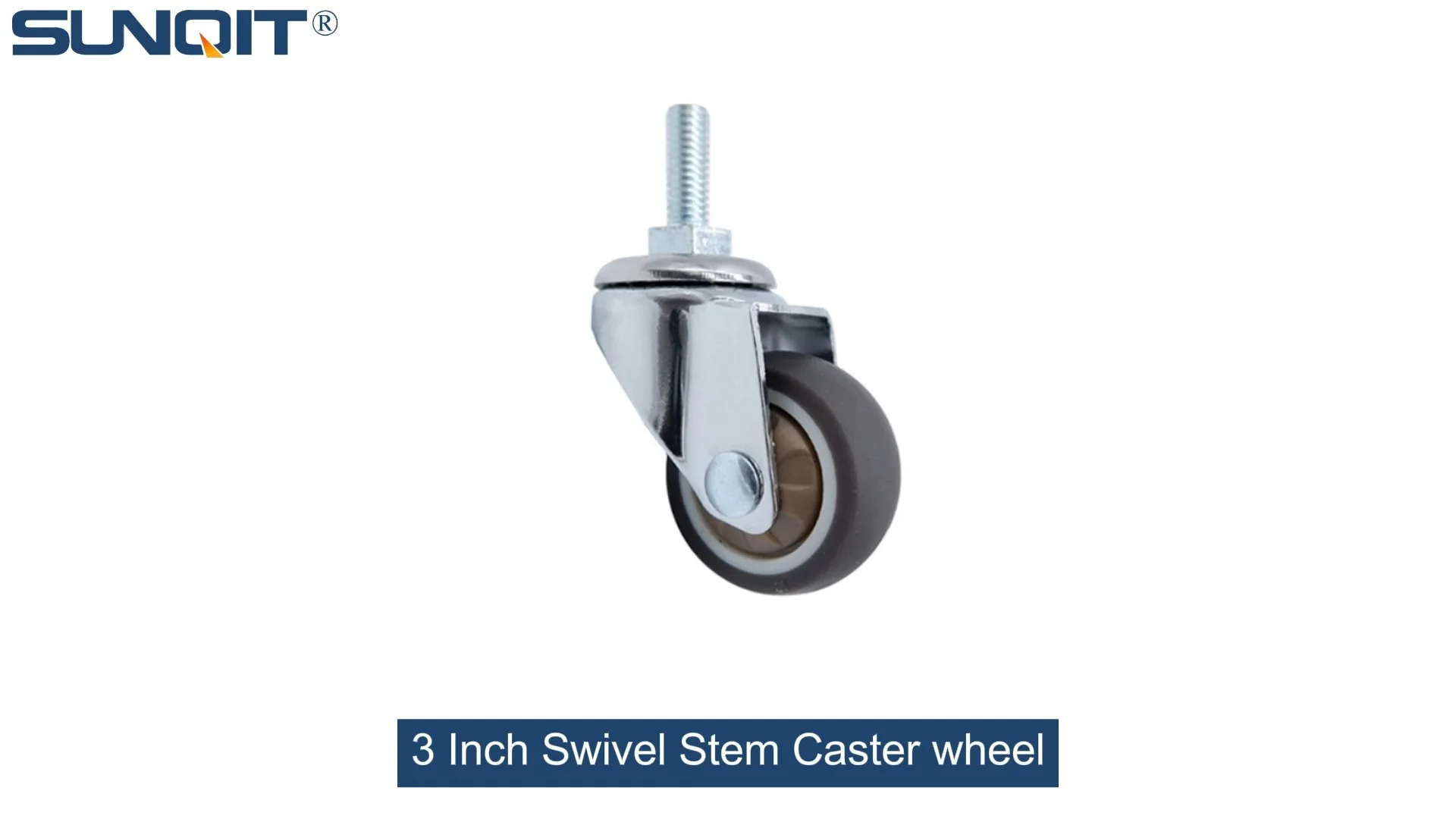
Swivel Stem Caster wheel
360 Degree Swivel Stem Caster. Threaded-post mount design, castors diameter 3 inch.Each swivel caster wheels loading 70KGS. Heavy enough and widely suit for carts, chairs, cabinet, flow rack, workbench, turnover rolley.
Walk into any busy warehouse, manufacturing plant, or even a well-organized workshop, and you'll notice something but utterly essential: the wheels that keep things moving. From tool carts gliding across the floor to workbenches that shift with a gentle push, swivel stem caster wheels are the unsung heroes of operational efficiency. But here's the thing— not all caster wheels are created equal. The material they're made of isn't just a minor detail; it's the difference between smooth, silent mobility and scratched floors, squeaky disruptions, or even safety hazards. In this article, we'll dive deep into why material choice is critical for floor compatibility when it comes to swivel stem caster wheels, exploring common materials, their real-world impacts, and how to choose the right one for your space.
What Are Swivel Stem Caster Wheels, Anyway?
Before we get into materials, let's make sure we're on the same page about what swivel stem caster wheels are. Unlike fixed casters that only roll forward and backward, swivel stem casters have a 360-degree rotating head, allowing the wheel to turn freely in any direction. The "stem" part refers to how they're mounted— typically a metal rod (sometimes made from sturdy aluminum pipe for lightweight strength) that inserts into a socket or bracket, making installation straightforward on everything from metal frames to wooden workbenches.
These wheels are everywhere because they solve a basic problem: mobility without compromise. Need to reposition a heavy workbench in a production line? Swivel stem casters make it possible with minimal effort. Want a cart that can navigate tight corners in a warehouse? Their rotating design handles that with ease. But here's where it gets tricky: that same mobility can become a liability if the wheel material clashes with your floor type. Let's unpack why that matters.
Why Floor Compatibility Isn't Just About "Not Scratching"
When most people think about floor compatibility, they picture scratches on hardwood or tile. And while that's a valid concern, the stakes are higher than just aesthetics. Let's break down the real-world consequences of choosing the wrong caster wheel material:
Costly Repairs: A single steel caster wheel dragging across a polished concrete floor can leave deep grooves, requiring resurfacing that costs thousands. Soft rubber wheels on a rough asphalt surface might wear down in months, leading to frequent replacements.
Safety Risks: A wheel that sticks or skids on a wet warehouse floor isn't just annoying—it's a trip hazard. ESD workstations, which handle sensitive electronics, need casters that don't generate static, as a single spark could damage circuit boards worth hundreds of dollars.
Operational Disruption: Squeaky wheels aren't just a noise nuisance; they're a sign of friction that slows down workflows. Imagine a team trying to meet a deadline while every cart movement sounds like a screeching brake—productivity plummets, and employee frustration rises.
Regulatory Headaches: In industries like healthcare or food processing, floors must meet strict hygiene standards. Caster wheels that trap dirt or degrade in harsh cleaning chemicals can lead to failed inspections and compliance issues.
In short, floor compatibility is about balancing protection, performance, and practicality. And it all starts with the material of the swivel stem caster wheel. Let's explore the most common options and how they stack up.

Material Deep Dive: Which Wheel Works Where?
Swivel stem caster wheels come in a range of materials, each with its own strengths and weaknesses. Let's take a closer look at the top contenders, their ideal floor types, and the scenarios where they shine (or fall short).
1. Rubber: The Gentle Giant for Soft Floors
Rubber is the "people pleaser" of caster wheel materials—and for good reason. It's naturally shock-absorbent, quiet, and has a high coefficient of friction, which means it grips floors well without slipping. These qualities make it ideal for indoor spaces with soft or delicate floors, like hardwood, vinyl, or polished tile.
Think about a hospital corridor: rubber wheels on medical carts glide silently, won't mark the linoleum, and dampen vibrations that could jostle sensitive equipment. In an office setting, a mobile workbench with rubber casters can roll over carpet without snagging or leaving indentations.
But rubber has limits. It's not built for heavy loads—most rubber wheels max out at around 200 lbs per wheel. Expose them to extreme heat (like near a welding station) or harsh solvents, and they'll crack or melt. And on rough outdoor surfaces, rubber wears quickly, turning smooth rolls into bumpy rides.
2. Polyurethane: The Versatile Workhorse
If rubber is the gentle giant, polyurethane is the Swiss Army knife. This synthetic material combines the best of rubber and plastic: it's durable like nylon, quiet like rubber, and offers excellent traction on almost any floor type. How? Polyurethane is often poured over a hard core (like aluminum or steel), creating a wheel that's both strong and flexible.
Polyurethane wheels are a favorite in manufacturing plants with mixed floor types—concrete in the assembly area, tile in the break room, and carpet in the office. They handle heavy loads (up to 1,000 lbs per wheel in some cases) without deforming, and their resistance to oil, grease, and chemicals makes them a staple in automotive shops.
For ESD workstations, there's even conductive polyurethane, which dissipates static electricity to protect sensitive electronics. Imagine a tech repair bench where a cart loaded with circuit boards can roll freely, knowing the casters won't generate a single static charge—that's polyurethane at work.
The downside? Polyurethane is pricier than rubber or nylon, and on extremely rough surfaces (like gravel), it can chip over time. But for most indoor industrial settings, the investment pays off in longevity and versatility.
3. Nylon: The Heavy-Duty Hardliner
Nylon is the "no-nonsense" option for heavy loads and tough environments. Made from strong, rigid plastic, these wheels have a low coefficient of friction, meaning they roll with minimal effort—perfect for pulling loaded carts across large warehouses.
If you're moving steel beams or pallets of bricks, nylon casters are your best bet. They handle weights up to 2,000 lbs per wheel, resist abrasion, and don't absorb moisture, making them ideal for outdoor use or damp areas like loading docks. In construction sites, where floors are often uneven concrete or gravel, nylon wheels keep rolling without getting stuck.
But here's the catch: nylon is hard. Really hard. On soft floors like hardwood or vinyl, it acts like a mini bulldozer, leaving scratch marks with every turn. It's also noisy—imagine dragging a nylon-wheeled cart across a tile floor, and you'll swear it sounds like a train approaching. For ESD workstations, nylon is a non-starter unless it's specially coated, as it generates static like a balloon rubbed on hair.
4. Steel: The Industrial Titan (With a Soft Spot)
Steel caster wheels are the heavyweights of the bunch, built to handle loads that would crush other materials. We're talking 5,000 lbs per wheel or more—think factory machinery, shipping containers, or military-grade equipment. Their all-metal construction (often paired with aluminum pipe frames for added strength) makes them resistant to extreme temperatures, chemicals, and impacts.
But steel's strength is also its weakness. On anything but the toughest floors—like reinforced concrete or asphalt—steel wheels are destructive. A steel wheel on a marble floor would leave a trail of sparks and scratches. Even on concrete, they're noisy and prone to rust if not properly coated, which can stain floors over time.
These wheels are best reserved for outdoor yards, foundries, or construction sites where floor damage is unavoidable and heavy lifting is non-negotiable.
5. Aluminum: The Lightweight Contender
While not as common as the above, aluminum wheels (often paired with aluminum pipe accessories for a lightweight setup) are gaining traction in industries where portability matters. Aluminum is corrosion-resistant, making it ideal for marine environments or food processing plants where saltwater or sanitizers are present. It's also non-magnetic, which is critical in labs handling sensitive magnetic equipment.
Aluminum wheels are gentler on floors than steel but not as soft as rubber. They work well on concrete or tile but can still scratch hardwood. Their biggest selling point? Weight—an aluminum caster wheel weighs half as much as steel, making carts easier to maneuver for teams with limited staff.

Material Showdown: Comparing the Options
To make it easier to compare, let's put these materials side by side. The table below breaks down how each performs across key factors like floor compatibility, load capacity, and special features:
| Material | Ideal Floor Types | Max Load (Per Wheel) | Noise Level | ESD-Safe? | Best For |
|---|---|---|---|---|---|
| Rubber | Hardwood, Tile, Vinyl | Up to 200 lbs | Quiet (≤50dB) | Sometimes (with additives) | Offices, Hospitals, Light Workbenches |
| Polyurethane | Concrete, Tile, Carpet | Up to 1,000 lbs | Moderate (50-65dB) | Yes (conductive variants) | Manufacturing, ESD Workstations, Warehouses |
| Nylon | Concrete, Asphalt, Gravel | Up to 2,000 lbs | Loud (≥70dB) | No (unless coated) | Heavy-Duty Carts, Outdoor Use |
| Steel | Reinforced Concrete, Asphalt | Up to 5,000+ lbs | Very Loud (≥80dB) | No | Machinery, Construction, Heavy Industry |
| Aluminum | Concrete, Tile, Marine Decks | Up to 800 lbs | Moderate (55-70dB) | Sometimes (non-conductive) | Food Processing, Labs, Light Industrial |

Beyond the Wheel: Caster Accessories That Boost Compatibility
The wheel material is the star, but caster accessories play a supporting role in floor compatibility. Here are a few to consider:
Brakes and Locks
Even the best swivel stem caster wheel can cause problems if it rolls unexpectedly. A workbench on casters might drift across a sloped floor, damaging walls or equipment. That's where brake accessories come in. Total-lock brakes lock both the wheel and the swivel head, keeping carts stationary on inclines. Side-lock brakes are simpler, locking just the wheel—great for temporary stops during loading.
Tread Patterns
Not all rubber or polyurethane wheels are the same. A smooth tread works well on clean, dry floors, but a grooved tread is better for wet or oily surfaces, channeling away liquids to prevent skidding. For ESD workstations, a conductive tread ensures static dissipates through the wheel to the floor, rather than building up on the cart.
Bearings
A wheel is only as good as its bearings. Ball bearings are standard for light loads, but roller bearings handle heavier weights with less friction. Sealed bearings are a must for dusty environments, preventing debris from gumming up the works and causing drag.
Stem Materials
Remember that aluminum pipe stem we mentioned earlier? The stem material matters too. A steel stem might rust in a humid warehouse, while an aluminum stem resists corrosion. For ESD workstations, a non-conductive stem (like fiberglass) ensures static doesn't travel from the wheel to the cart frame.
Real-World Applications: How Material Choice Solves Problems
Let's look at a few case studies to see how the right (and wrong) material choices play out in the field.
Case 1: The ESD Workstation Disaster
A tech repair shop invested in new ESD workstations to handle smartphone repairs. They chose nylon caster wheels for their durability, assuming "stronger is better." Within a week, two technicians reported fried circuit boards. An inspection revealed the nylon wheels were generating static electricity, which discharged when the cart was near the workbench. The fix? Switching to conductive polyurethane wheels with aluminum pipe stems, which grounded the static safely. The cost? $500 in new casters, versus $10,000 in damaged phones.
Case 2: The Warehouse Noise Nightmare
A distribution center with polished concrete floors was using steel caster wheels on their pallet jacks. The noise was so loud that employees wore earplugs, and productivity was down 20% due to slow, cautious movement. Switching to polyurethane wheels with rubber treads cut noise by 60%, and workers reported feeling less fatigued. Within a month, order fulfillment rates returned to normal, and the company avoided a costly noise abatement lawsuit.
Case 3: The Restaurant Floor Fiasco
A high-end restaurant wanted mobile serving carts for outdoor patios. They chose rubber wheels, assuming they'd be gentle on the wooden deck. But after a rainy season, the rubber swelled and cracked, leaving black marks on the deck. The solution? Aluminum wheels with a soft rubber tread—combining aluminum's weather resistance with rubber's floor protection. The carts now last years instead of months, and the deck remains scratch-free.
How to Choose: A Step-by-Step Guide
Ready to pick the right swivel stem caster wheel material? Follow these steps:
- Assess Your Floor Type: Is it hardwood, concrete, tile, carpet, or outdoor asphalt? Soft floors need soft wheels (rubber, polyurethane); hard floors can handle nylon or steel.
- Calculate Load Requirements: Add up the weight of the cart plus its typical load, then divide by the number of wheels (most carts have 4). A 1,000-lb cart needs wheels rated for at least 250 lbs each (add 20% for safety).
- Check the Environment: Is it wet? Choose corrosion-resistant materials like aluminum. ESD-sensitive? Opt for conductive polyurethane. Noisy? Rubber or polyurethane with soft treads.
- Consider Long-Term Costs: A cheaper nylon wheel might need replacement every 6 months, while a pricier polyurethane wheel lasts 3 years. Do the math—sometimes spending more upfront saves money later.
- Test Before Committing: Buy a single caster wheel and test it on your floor type. Roll it, lock it, expose it to your typical conditions. If it works, order the rest.
Final Thoughts: Your Floor Deserves the Right Wheel
Swivel stem caster wheels might seem like a small detail, but they're a big deal when it comes to floor compatibility. The wrong material can cost you in repairs, safety issues, and lost productivity. The right material? It keeps things moving smoothly, quietly, and safely—letting you focus on what matters: running your business.
Whether you're outfitting an ESD workstation, a warehouse cart, or a mobile workbench, take the time to assess your floor type, load needs, and environment. And remember: it's not just about the wheel—it's about how it interacts with the world beneath it. Choose wisely, and your floors (and your bottom line) will thank you.