- Company Articles
- Products and Technology
- Product knowledge
- Swivel Stem Caster Wheels with Brakes: Safety Features for Medical Carts

Swivel Stem Caster Wheels with Brakes: Safety Features for Medical Carts
Related Product
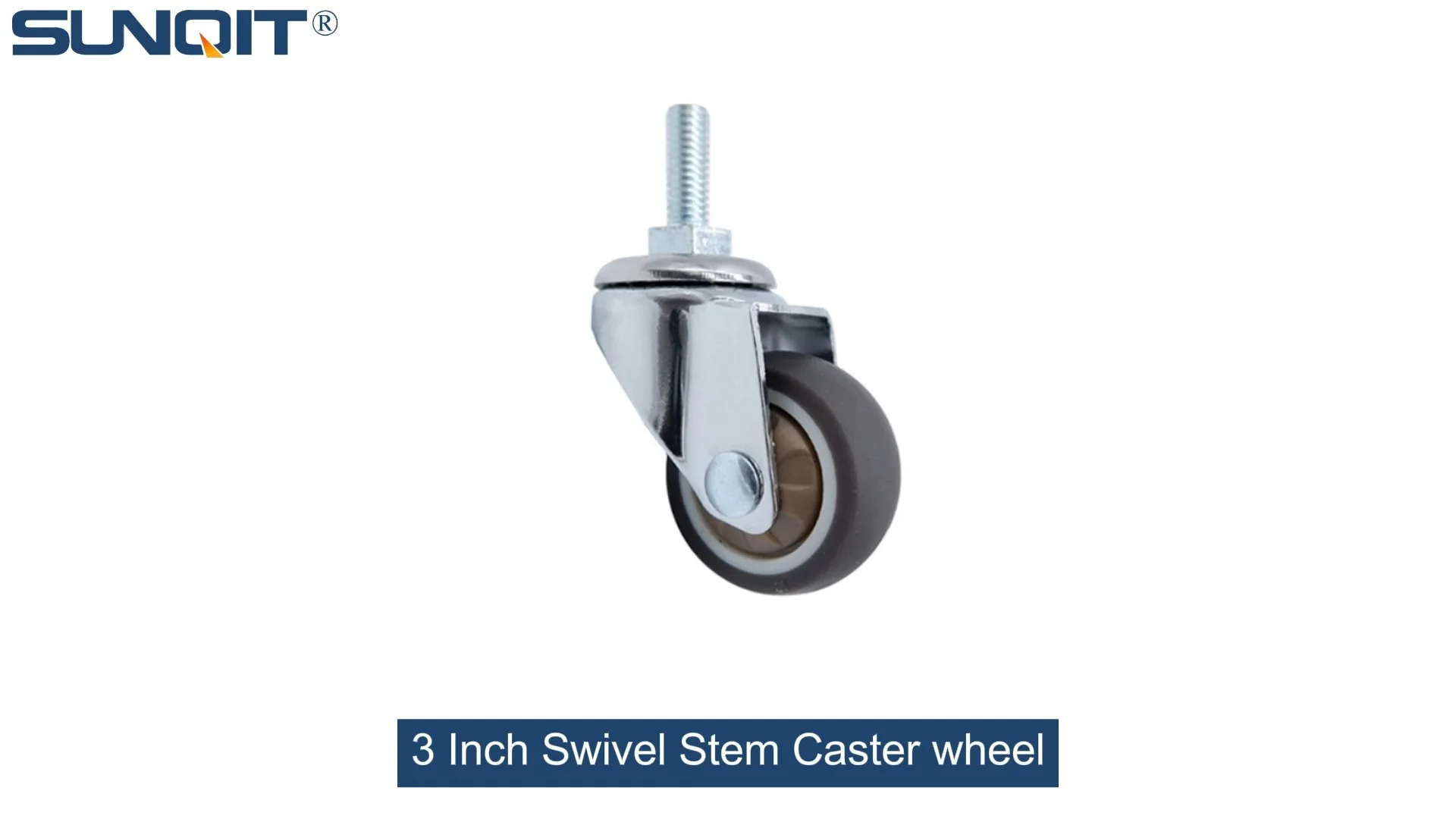
Swivel Stem Caster wheel
360 Degree Swivel Stem Caster. Threaded-post mount design, castors diameter 3 inch.Each swivel caster wheels loading 70KGS. Heavy enough and widely suit for carts, chairs, cabinet, flow rack, workbench, turnover rolley.
It's 3:15 AM in the emergency department. A nurse hurries down the corridor, pushing a medication cart loaded with IV bags, syringes, and a defibrillator. At the patient's door, she pauses, taps her foot on a small pedal, and the cart locks instantly—no rolling, no creaking, just steady reliability. In that split second, the difference between a smooth, safe handoff and a potential disaster lies in a component so it's often overlooked: the swivel stem caster wheels with brakes. In healthcare, where every second counts and safety is non-negotiable, these small but mighty parts are the unsung heroes keeping medical carts stable, staff efficient, and patients protected.
Medical carts are the workhorses of hospitals, clinics, and labs. They carry everything from life-saving drugs to sensitive diagnostic equipment, navigating tight corners, busy hallways, and uneven floors. The casters that keep them moving aren't just "wheels"—they're precision-engineered safety tools. Today, we're diving into why swivel stem caster wheels with brakes have become the gold standard for medical mobility, exploring their key safety features, real-world impact, and how they integrate with critical components like stainless steel pipe series frames and aluminum profile structures to create a seamless, secure healthcare workflow.
What Are Swivel Stem Caster Wheels with Brakes?
At first glance, a caster might seem simple: a wheel mounted on a frame. But swivel stem caster wheels with brakes are a masterclass in functional design. Let's break them down: the "stem" is the metal rod that attaches the caster to the cart—strong, threaded, and designed to lock into place, ensuring the wheel stays anchored even under heavy loads. The "swivel" allows the wheel to rotate 360 degrees, making tight turns in crowded nurse stations or between hospital beds effortless. And the "brake"? That's the safety net—a mechanism that, when engaged, stops both the wheel's rotation and (in premium models) the swivel movement, holding the cart firmly in place.
Unlike fixed casters, which only move forward and backward, or swivel casters without brakes, which glide freely, these hybrid tools balance mobility and stability. In a setting where a cart might need to zip from the pharmacy to a patient's room, then stay rock-steady during medication preparation, this balance isn't just convenient—it's critical. Imagine a nurse leaning over a cart to draw up a dose, only for it to roll away; or a surgical tech rushing an instrument tray into the OR, unable to stop quickly at the table. These scenarios aren't just frustrating—they risk spills, contamination, or worse. Swivel stem caster wheels with brakes eliminate that risk, turning every cart into a controlled, predictable extension of the healthcare team.
The Safety Features That Matter Most in Healthcare
Not all casters are created equal, especially in healthcare. When lives are on the line, the details make all the difference. Here's a closer look at the safety features that set high-quality swivel stem caster wheels with brakes apart:
1. Dual-Lock Braking Systems: Total Control When You Need It
The best medical casters offer more than a simple wheel lock—they feature dual-lock brakes that secure both the wheel and the swivel. Why both? If only the wheel is locked, the cart might still pivot on the caster, sliding sideways on a sloped floor (common in older hospitals). A dual lock eliminates that: press the brake pedal, and the cart becomes immovable, even if bumped. This is a game-changer in areas like ICU rooms, where beds are adjusted frequently, or operating theaters, where sterile fields can't be compromised by a shifting cart.
Brake pedals are also designed with ergonomics in mind. They're wide enough to engage with a quick tap of a shoe, even when wearing clunky work boots or slippery surgical clogs. No bending down, no fumbling—just a natural motion that keeps staff focused on the task at hand.
2. Durable Materials: Built to Withstand Harsh Healthcare Environments
Hospitals are tough on equipment. Disinfectant sprays, constant foot traffic, and heavy loads take a toll. That's why top-tier swivel stem casters are built with materials like stainless steel (from the stainless steel pipe series) for the stem and brake components. Stainless steel resists rust and corrosion, even when doused daily with bleach-based cleaners—a must for infection control. The wheels themselves are often made of non-marking rubber or polyurethane, which grip floors without leaving scuffs (critical for maintaining clean, professional-looking corridors) and absorb shocks, reducing noise and vibration.
Many medical carts pair these casters with aluminum profile frames. Aluminum is lightweight yet surprisingly strong, so carts are easy to push without sacrificing durability. When combined with stainless steel casters, the result is a system that's both agile and long-lasting—perfect for 12-hour shifts and 7-day workweeks.
3. Quiet Operation: Protecting Patient Rest
In patient rooms, especially ICUs or pediatric wards, noise is the enemy. A squeaky cart wheel can jolt a sleeping patient, disrupt a fragile newborn, or stress an anxious family member. Swivel stem caster wheels with brakes solve this with precision-sealed bearings that minimize friction, ensuring smooth, silent movement. Even when rolling over uneven transitions between carpet and linoleum, the casters glide without the grating "screech" of cheaper models. For night shifts, when hallways are supposed to be calm, this quietude isn't just a nicety—it's part of patient-centered care.
4. Load Capacity: Handling the Heaviest Carts with Ease
Medical carts carry more than just bandages. A medication cart might hold hundreds of pill bottles and IV fluids; a mobile ultrasound machine can weigh 300+ pounds; a surgical instrument tray could be loaded with metal tools. Swivel stem casters are rated for specific weight limits—often 200 to 500 pounds per caster—and healthcare facilities take this seriously. A cart with four casters rated for 300 pounds each, for example, can safely handle 1,200 pounds (though it's always wise to stay under the total limit to avoid strain). Overloading casters isn't just risky for the cart—it can cause brakes to fail, wheels to crack, or stems to bend, turning a useful tool into a hazard.
Reputable suppliers (like those specializing in caster accessories) provide clear load charts, helping facilities match casters to cart needs. A medication cart might use lighter-duty casters (200 lbs each), while an equipment cart gets heavy-duty ones (500 lbs each). This customization ensures safety across all departments.
5. Low-Maintenance Design: Keeping Carts Rolling, Not Idle
Hospitals can't afford downtime. A cart stuck in maintenance means staff scrambling to find backups, delays in patient care, and lost productivity. Swivel stem caster wheels with brakes are built to minimize upkeep. Sealed bearings prevent dust, hair, or liquid from clogging the mechanism, so there's no need for frequent lubrication. Stainless steel components resist rust, even after years of daily cleaning. And when parts do wear—say, a brake pad or wheel—casters are designed for easy replacement. Many come with tool-free wheel removal, so a maintenance tech can swap a worn wheel in minutes, not hours. Caster accessories like replacement brake pedals or bearings are also widely available, ensuring facilities never have to wait for repairs.

How Casters Work with Other Critical Components
Swivel stem caster wheels with brakes don't operate in a vacuum—they're part of a larger ecosystem of medical cart design. Two components, in particular, work hand-in-hand with these casters to enhance safety: stainless steel pipe series frames and aluminum profile structures.
Stainless steel pipe series frames are a staple in sterile environments like labs or surgical prep areas. The metal is non-porous, so it doesn't harbor bacteria, and it stands up to harsh disinfectants. When paired with stainless steel stem casters, the entire cart becomes a corrosion-resistant, easy-to-clean unit—ideal for preventing cross-contamination. Imagine a pathology cart rolling from a specimen collection room to the lab: every surface, from the frame to the caster stems, can be wiped down with bleach, leaving no crevices for germs to hide.
Aluminum profile structures, on the other hand, are lightweight and modular. These extruded aluminum beams (think of the "T-slots" that let you attach shelves, bins, or hooks) are perfect for carts that need to be customized—like medication carts with adjustable drawers or mobile workbenches in clinics. Aluminum's light weight reduces the overall load on the casters, making the cart easier to push, while its strength ensures it doesn't flex or warp under heavy equipment. A swivel stem caster with a brake, attached to an aluminum profile frame, creates a cart that's both nimble and sturdy—easy to maneuver through tight doorways, yet stable enough to serve as a temporary workbench during patient exams.
Even smaller details, like caster accessories, play a role. For example, some casters come with floor protectors —soft, rubberized caps that prevent scratches on delicate hospital floors. Others have swivel locks (separate from the wheel brake) for times when you want the cart to move in a straight line without swiveling, like when transporting large equipment down a long hallway. These little extras turn a good caster into a great one, adapting to the unique needs of each healthcare setting.

Comparing Caster Types: Why Swivel Stem with Brakes Lead the Pack
To understand why swivel stem caster wheels with brakes are the top choice for medical carts, it helps to see how they stack up against other common types. Below is a comparison of caster options, highlighting their pros, cons, and best uses in healthcare:
| Caster Type | Maneuverability | Safety Features | Best For | Healthcare Rating (1-5) |
|---|---|---|---|---|
| Fixed Casters | Low (only forward/backward) | None (no swivel, no brake) | Heavy, stationary equipment (e.g., filing cabinets) | 2/5 (too limited for dynamic settings) |
| Swivel Casters (No Brake) | High (360° rotation) | None (rolls freely when unattended) | Light, temporary use (e.g., meal trays) | 3/5 (mobile but unsafe for critical tasks) |
| Swivel Casters (Wheel Brake Only) | High (360° rotation) | Stops wheel rotation but not swivel | General transport (e.g., linen carts) | 4/5 (good, but risk of sideways sliding) |
| Swivel Stem Casters (Dual-Lock Brake) | High (360° rotation + easy steering) | Locks wheel and swivel; ergonomic brake pedal | Critical tasks (medication carts, surgical trays, patient care carts) | 5/5 (ideal balance of mobility and safety) |
*Ratings based on mobility, safety, and suitability for dynamic healthcare environments.

Real-World Impact: How These Casters Improve Patient and Staff Experiences
It's one thing to talk about features on paper—but what difference do swivel stem caster wheels with brakes make in real hospitals? Let's look at a case study: Maplewood General Hospital , a mid-sized facility in the Midwest, switched to these casters on all medication and supply carts in 2023. Here's what they reported after six months:
- Fewer incidents: Medication cart "rollaways" dropped by 100%. Previously, staff reported 2-3 near-misses monthly (e.g., a cart rolling into a patient's bedrail); after the switch, there were zero.
- Happier staff: In a survey, 92% of nurses said pushing carts was "easier" or "much easier" with swivel stem casters, citing smoother movement and less strain on shoulders and backs. "I used to dread medication runs because the old carts felt like they were fighting me," one nurse noted. "Now, I can zip around corners without breaking a sweat."
- Quieter halls: Patient satisfaction scores for "environmental noise" rose by 15%. "The carts used to squeak so loud at night, I'd have patients ask if we were doing construction," said a night shift charge nurse. "Now, they glide by silently—it's made a huge difference in how restful the floors feel."
- Lower maintenance costs: The hospital's maintenance team reported 30% fewer repair requests for cart wheels and frames. "The old casters would seize up from disinfectant, or the brakes would stick," said the facilities manager. "These new ones clean easily, and the sealed bearings mean we don't have to lubricate them every month."
Maplewood's experience isn't unique. Across the country, healthcare facilities are recognizing that casters aren't just "parts"—they're investments in safety, efficiency, and patient care. When you multiply these benefits across dozens of carts and hundreds of staff members, the impact adds up quickly.
Choosing the Right Swivel Stem Caster for Your Facility
With so many caster options on the market, how do you pick the best one for your hospital, clinic, or lab? Start by asking these key questions:
1. What's the cart's maximum load?
Check the weight of the cart itself plus its typical load (e.g., 300 lbs for medications, 500 lbs for equipment). Choose casters with a combined weight rating that exceeds this by 20% (to account for unexpected heavy loads).
2. Where will the cart be used?
ORs and ICUs need sterile, corrosion-resistant casters (stainless steel is a must). Patient rooms prioritize quiet, non-marking wheels. Outdoor or loading dock carts may need rugged, all-terrain wheels. Match the caster's material and design to the environment.
3. Who will be using the cart?
Consider staff height and strength. Brake pedals should be easy to reach for all team members, from 5'2" nurses to 6' tall techs. Casters with ergonomic designs (e.g., smooth-rolling bearings) reduce fatigue for staff who push carts all day.
4. What's your budget for maintenance?
Cheaper casters may save money upfront, but they'll cost more in repairs, replacements, and downtime. Invest in mid-to-premium models with sealed bearings, stainless steel components, and easy-to-find caster accessories—your maintenance team will thank you.
Finally, partner with a supplier who understands healthcare. Look for companies that specialize in medical-grade casters and can provide custom solutions (e.g., casters with specific brake types or wheel materials). A good supplier won't just sell you a product—they'll help you assess your needs, recommend the right model, and support you with fast shipping for replacement parts.
Conclusion: Small Wheels, Big Impact
In the grand scheme of healthcare, swivel stem caster wheels with brakes might seem like small players. But as any nurse, tech, or doctor will tell you, the tools that make daily work safer and easier are the ones that truly matter. These casters don't just move carts—they protect patients from spills and noise, reduce staff injuries, and keep critical workflows running smoothly. When paired with durable materials like stainless steel pipe series frames and aluminum profiles, they become part of a system that's built to care—for patients, for staff, and for the future of healthcare.
So the next time you see a medical cart glide down a hallway, pause for a moment. Look at those wheels. Notice how they swivel, how they stop on a dime, how quietly they move. That's not just engineering—that's safety in motion. And in healthcare, motion without safety is just chaos. Swivel stem caster wheels with brakes? They're the opposite: controlled, reliable, and ready to support the heroes on the front lines of care.