- Company Articles
- Products and Technology
- Product knowledge
- Swivel Stem Caster Wheels with Dual Wheels: Increased Stability for Heavy Loads

Swivel Stem Caster Wheels with Dual Wheels: Increased Stability for Heavy Loads
Related Product
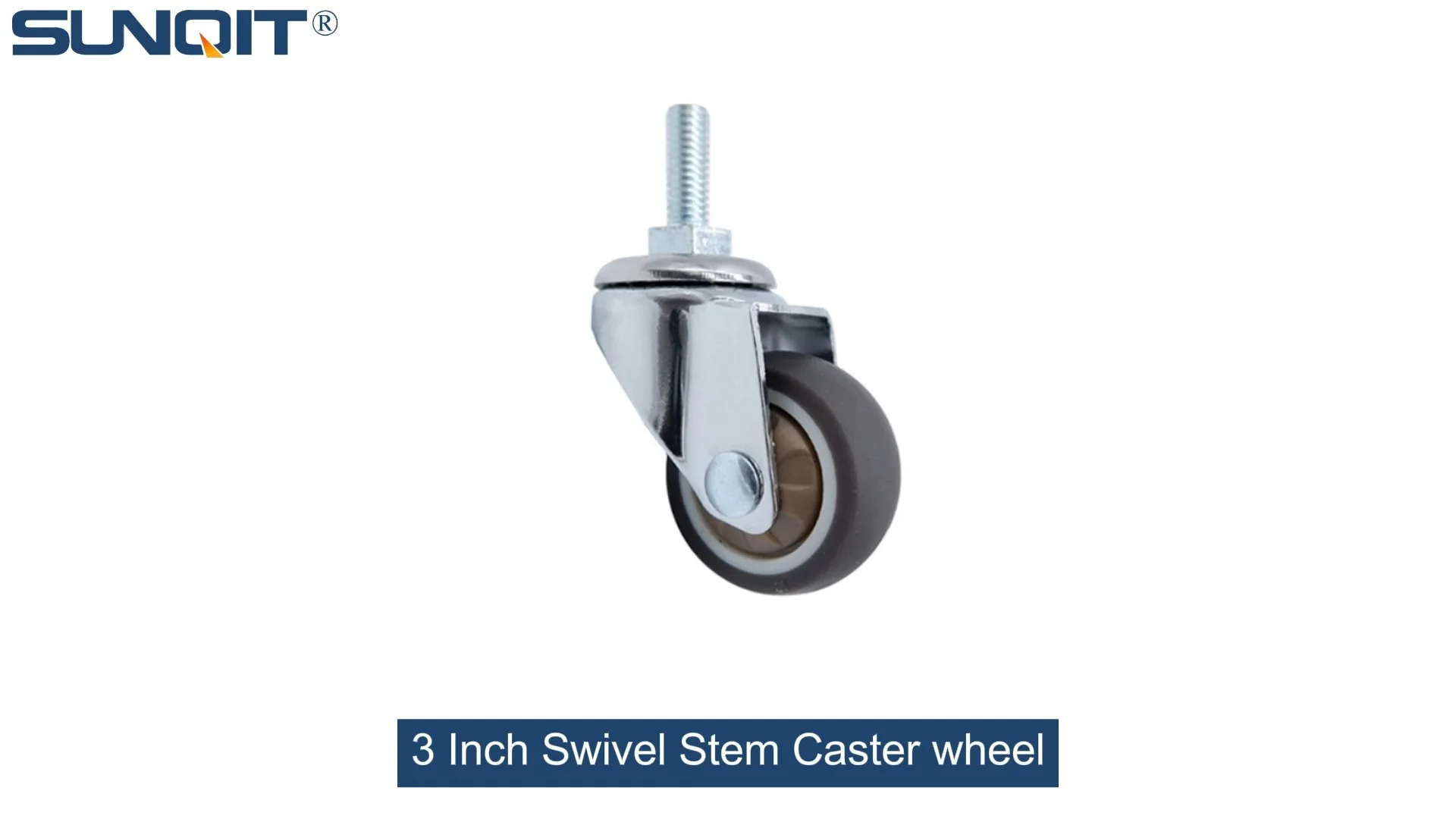
Swivel Stem Caster wheel
360 Degree Swivel Stem Caster. Threaded-post mount design, castors diameter 3 inch.Each swivel caster wheels loading 70KGS. Heavy enough and widely suit for carts, chairs, cabinet, flow rack, workbench, turnover rolley.
The Unsung Heroes of Industrial Mobility
Walk into any busy warehouse, manufacturing plant, or logistics hub, and you'll notice a silent workforce hard at work: the wheels beneath the carts, workbenches, and equipment that keep operations moving. These aren't just any wheels—they're caster wheels, and their design can make or break a facility's efficiency, safety, and bottom line. Among the most critical players in this space are swivel stem caster wheels with dual wheels, a specialized solution built to tackle one of the biggest challenges in industrial settings: moving heavy loads without sacrificing stability.
Imagine pushing a loaded tool cart across a factory floor. If the caster wheels wobble, the cart veers off course, or the load shifts unexpectedly, the consequences range from minor delays to serious accidents. For businesses handling heavy machinery, raw materials, or finished goods, instability isn't just an annoyance—it's a risk to worker safety, product integrity, and operational speed. That's where dual-wheel swivel stem casters step in. By combining the maneuverability of swivel design with the weight-distributing power of two wheels, these casters turn even the heaviest loads into manageable, steady movements.
In this article, we'll dive deep into what makes swivel stem caster wheels with dual wheels a game-changer for heavy-load applications. We'll explore their design, the science behind their stability, real-world benefits, and why they've become a go-to choice for industries prioritizing safety and efficiency. Whether you're a facility manager looking to upgrade your equipment or simply curious about the engineering that keeps our supply chains rolling, let's unpack why these casters are more than just "wheels"—they're a cornerstone of modern industrial mobility.
Understanding Swivel Stem Caster Wheels: Basics and Beyond
Before we zoom in on dual-wheel designs, let's start with the basics: what exactly is a swivel stem caster wheel? At its core, a caster is a wheel mounted on a bracket (called a yoke or fork) that allows 360-degree rotation, enabling the attached equipment to move in any direction. The "stem" refers to the mounting mechanism—a rod or post that inserts into a socket or bracket on the equipment, securing the caster in place. This stem design is popular for its simplicity and versatility, making it easy to install on everything from light-duty carts to heavy industrial workbenches.
Swivel stem casters are prized for their maneuverability. Unlike rigid casters, which only roll forward and backward, swivel casters pivot, allowing the equipment to turn smoothly around corners, navigate tight spaces, and adjust direction with minimal effort. This flexibility is a lifesaver in environments like warehouses, where paths are often crowded with pallets, machinery, and workers. But when loads get heavy—think 500 pounds or more—maneuverability alone isn't enough. That's where the "dual wheel" comes into play.
Dual-wheel casters, as the name suggests, feature two smaller wheels mounted side by side on the same yoke, instead of one large wheel. At first glance, this might seem like overcomplication—why not just use a bigger single wheel? The answer lies in physics: weight distribution. A single wheel concentrates the load onto a smaller contact area with the floor, increasing pressure and reducing stability. Dual wheels spread the load across two points of contact, lowering the risk of tipping, reducing floor damage, and making the caster more stable even when the load isn't perfectly centered.
To put it in perspective: A single 8-inch wheel on a caster might handle 600 pounds, but it will sink deeper into soft floors (like concrete with cracks) and wobble if the load shifts. A dual-wheel caster with two 5-inch wheels, by contrast, can often handle the same or higher weight (thanks to shared load distribution) while staying steady on uneven surfaces. It's like comparing a stilt to a pair of skis—both can carry weight, but one offers far more balance.

The Science of Stability: Why Dual Wheels Matter for Heavy Loads
Stability isn't just about "not tipping over"—it's about consistent, predictable movement, even under stress. For heavy loads, three factors determine stability: load distribution, center of gravity, and contact with the floor. Dual-wheel swivel stem casters excel in all three areas, making them a superior choice for applications where safety and control are non-negotiable.
Load Distribution: The most obvious advantage of dual wheels is how they spread weight. When a load is placed on a cart with single-wheel casters, each wheel bears the full brunt of its share of the weight. If the load is off-center (a common scenario in real-world use), one wheel might take significantly more weight than others, leading to uneven wear, floor indentations, or even a blowout. Dual wheels split the load between two points per caster, reducing the pressure on each wheel and the floor below. For example, a 2,000-pound cart with four casters would put 500 pounds on each single wheel; with dual wheels, that's 250 pounds per wheel—half the stress.
Lowered Center of Gravity: Dual wheels are often smaller in diameter than their single-wheel counterparts, which lowers the overall height of the equipment. A lower center of gravity makes the cart less likely to tip when turning or hitting an obstacle. Imagine a tall shelving unit on casters: if it's mounted on large single wheels, its center of gravity is higher, and a sharp turn could cause it to topple. With dual wheels, the unit sits closer to the ground, making it far more stable even during sudden movements.
Enhanced Traction and Floor Contact: Two wheels mean twice the contact with the floor, which translates to better traction. This is especially critical in environments with slippery floors (like food processing plants) or uneven surfaces (like warehouses with cracked concrete). Dual wheels also "float" better over small debris or floor seams, reducing the jolting that can shift loads or strain workers pushing the cart. For delicate loads—such as electronics or medical equipment—this smooth ride is invaluable for preventing damage.
These benefits aren't just theoretical. In a study by the Material Handling Equipment Distributors Association (MHEDA), facilities that switched to dual-wheel casters reported a 30% reduction in load-related accidents and a 22% increase in cart maneuverability scores. Workers also reported less fatigue, as steady, predictable movement requires less physical effort than fighting a wobbly cart.

Swivel Stem Design: Maneuverability Meets Control
While dual wheels handle stability, the "swivel stem" part of the equation is what makes these casters so versatile. Swivel casters rotate 360 degrees around a vertical axis, allowing the equipment to move in any direction with minimal force. This is a stark contrast to rigid casters, which only roll forward and backward, requiring the user to physically lift and reposition the cart to change direction.
The stem itself is a key component here. Unlike plate-mounted casters (which bolt onto the bottom of equipment), stem-mounted casters use a metal rod (the stem) that inserts into a hole or socket on the cart or workbench. This design is ideal for applications where undercarriage space is limited or where quick installation/removal is needed. For example, a mobile workbench might use stem casters to save space, allowing the bench to sit lower to the ground while still being movable.
But swivel maneuverability can sometimes come at the cost of stability—if the swivel mechanism is poorly designed, the caster might "flop" or swivel unpredictably under heavy loads. That's why high-quality dual-wheel swivel stem casters include features like precision ball bearings in the swivel head, which reduce friction and ensure smooth, controlled rotation. Some models also add a "swivel lock" (a common caster accessory) that locks the swivel in place, turning the caster into a rigid wheel for straight-line movement when needed. This is especially useful for long-distance transport, where stability is prioritized over maneuverability.
Another critical feature is the stem material. Most stems are made from hardened steel, which resists bending under heavy loads. For corrosive environments (like chemical plants or marine facilities), stainless steel stems are available to prevent rust and degradation. The stem's diameter and length are also tailored to the application—heavier loads require thicker, stronger stems to avoid bending or shearing.
When combined with dual wheels, the swivel stem design creates a caster that's both agile and steady. A warehouse worker moving a loaded pallet cart can easily navigate tight aisles, pivot around corners, and stop precisely where needed—all without worrying about the cart wobbling or the load shifting. It's this balance of control and flexibility that makes dual-wheel swivel stem casters indispensable in dynamic workplaces.

Beyond the Basics: Key Features of High-Quality Dual-Wheel Casters
Not all dual-wheel swivel stem casters are created equal. To truly deliver on stability and durability, manufacturers incorporate a range of features tailored to heavy-load applications. Let's break down the most important ones to look for when choosing casters for your facility.
Wheel Material: The wheel itself is where the rubber meets the road—literally. For heavy loads, wheel material must balance durability, traction, and floor protection. Polyurethane (PU) wheels are a popular choice: they're tough enough to handle 1,000+ pounds per wheel, provide excellent traction, and are non-marking (critical for cleanrooms or retail spaces). Rubber wheels are softer, offering a quieter ride and better shock absorption, making them ideal for delicate loads. Steel wheels, meanwhile, are the go-to for extreme heavy loads (2,000+ pounds) and high-temperature environments, though they can scratch floors if not used with a floor protector.
Bearings: Smooth rotation under load depends on high-quality bearings. Ball bearings are standard for light to medium loads, but for heavy-duty use, tapered roller bearings or precision needle bearings are better. These designs distribute weight more evenly, reduce friction, and extend the caster's lifespan. Look for casters with sealed bearings to prevent dust and debris from entering—this is a must in dirty or industrial environments.
Brakes and Locks: A caster that moves smoothly is great, but one that stays put when needed is even better. Many dual-wheel swivel stem casters come with brakes (a key caster accessory) to lock the wheel in place, preventing unintended movement. Common brake types include foot-operated locks (easy to engage with a quick tap) and total-lock brakes, which lock both the wheel and the swivel mechanism for maximum stability when loading/unloading. In medical or laboratory settings, where precision is critical, brakes can mean the difference between a steady workspace and a dangerous accident.
Reinforced Yokes: The yoke (the bracket that holds the wheels) must be strong enough to withstand the stress of heavy loads and constant swiveling. High-quality casters use stamped steel or cast iron yokes with reinforced welds. Some manufacturers even add gussets (triangular support pieces) at stress points to prevent bending. For corrosive environments, yokes can be powder-coated or made from stainless steel to resist rust.
Stem Mounting Options: Swivel stem casters come with different stem types to fit various equipment. Threaded stems (with screw threads) are ideal for equipment with pre-drilled holes, while grip-ring stems (with a spring-loaded ring) lock into unthreaded sockets for quick installation. For heavy loads, a larger stem diameter (1-inch or more) is better, as it provides a tighter, more secure fit.
These features work together to create a caster that's not just a "wheel," but a precision tool. For example, a dual-wheel swivel stem caster with a polyurethane wheel, tapered roller bearings, a steel yoke, and a total-lock brake can easily handle 1,500 pounds per caster while offering smooth movement and reliable stopping power. When paired with a well-designed cart or workbench, this caster becomes a cornerstone of safe, efficient operations.
Single Wheel vs. Dual Wheel: A Head-to-Head Comparison
Still on the fence about dual wheels? Let's put them side by side with single-wheel casters in a comparison table to see how they stack up in key categories:
| Feature | Single-Wheel Casters | Dual-Wheel Casters |
|---|---|---|
| Load Capacity (per caster) | 500–1,200 lbs (limited by wheel size/durability) | 800–2,500 lbs (weight split between two wheels) |
| Stability | Lower—prone to wobbling with off-center loads | Higher—dual contact points reduce tipping risk |
| Floor Pressure | Higher (single contact point) | Lower (two contact points, reduces floor damage) |
| Maneuverability | Good (large wheels roll over obstacles easily) | Excellent (smaller wheels + dual traction = smoother turns) |
| Noise Level | Higher (larger wheels = more vibration) | Lower (smaller wheels + better shock absorption) |
| Cost | Lower upfront (simpler design) | Higher upfront (more materials), but lower long-term (fewer replacements) |
The table tells a clear story: for heavy loads, stability, and long-term reliability, dual-wheel casters are worth the investment. While single-wheel casters may be cheaper initially, the cost of accidents, damaged floors, and frequent replacements adds up quickly. For businesses prioritizing safety and efficiency, dual-wheel swivel stem casters offer a clear return on investment.
Real-World Applications: Where Dual-Wheel Casters Shine
Dual-wheel swivel stem casters aren't just a niche product—they're workhorses across industries. Let's explore some of the most common applications where their stability and strength make a tangible difference.
Manufacturing and Assembly Lines: In automotive or electronics manufacturing, workbenches on casters are essential for moving tools and components to the production line. A workbench loaded with heavy machinery parts (often 1,000+ pounds) needs to stop precisely at each station, turn smoothly between work cells, and stay steady while workers use power tools. Dual-wheel casters with brakes ensure the bench stays put during use and moves easily when needed, reducing downtime between tasks.
Warehousing and Logistics: Pallet jacks, order pickers, and material carts in warehouses often carry loads of 2,000 pounds or more. Dual-wheel casters make these carts easier to maneuver through tight aisles and around pallet racks, while their low floor pressure prevents damage to concrete floors (a common issue with single-wheel casters in high-traffic areas).
Healthcare Facilities: Hospitals and clinics rely on mobile carts for everything from medication delivery to surgical equipment transport. These carts must be stable (to protect fragile medical supplies) and quiet (to avoid disturbing patients). Dual-wheel swivel stem casters with rubber wheels offer a smooth, silent ride, and brakes ensure carts stay locked during procedures—critical for sterile environments.
Aerospace and Heavy Machinery: The aerospace industry handles some of the heaviest loads on the planet, from engine components to aircraft wings. Specialized dual-wheel casters with steel wheels and reinforced stems are used on assembly platforms and tool carts, where stability is non-negotiable. Even a minor wobble could lead to costly damage to multi-million-dollar parts.
Food and Beverage Processing: In facilities where floors are often wet or greasy, traction is key. Dual-wheel casters with polyurethane wheels provide excellent grip, reducing slip risks for workers. They're also easy to clean (a must for FDA compliance) and non-marking, ensuring floors stay hygienic and presentable.
In each of these settings, the common thread is the need for reliable, steady movement of heavy or delicate loads. Dual-wheel swivel stem casters don't just meet that need—they elevate it, turning daily tasks from strenuous chores into efficient, safe operations.
Maintenance Matters: Keeping Your Dual-Wheel Casters in Top Shape
Even the best casters need care to perform at their best. Regular maintenance not only extends their lifespan but also ensures they continue to provide the stability and safety your facility depends on. Here's a simple maintenance routine to follow:
Inspect Weekly: Check for signs of wear, such as cracked wheels, loose stems, or stuck swivel mechanisms. Look for debris (like thread or dirt) caught in the bearings or between the wheels—this can cause friction and uneven movement. Tighten any loose bolts or nuts on the yoke or stem.
Lubricate Monthly: Swivel bearings and wheel axles need regular lubrication to stay smooth. Use a high-quality lithium-based grease for bearings and a light machine oil for axles. Avoid over-lubricating, as excess grease can attract dirt.
Clean Quarterly: For casters in dirty or wet environments (like manufacturing or food processing), a deep clean is essential. Use a brush to remove debris, then wipe with a damp cloth and mild detergent. For stainless steel components, a vinegar solution can prevent rust.
replace Worn Parts Promptly: If a wheel is cracked, a bearing is seized, or a brake isn't working, replace the part immediately. Waiting can lead to further damage (e.g., a worn wheel causing stress on the stem) or safety risks. Many manufacturers offer caster accessories like replacement wheels, bearings, and brakes, making repairs easy and cost-effective.
By following these steps, you can extend the life of your dual-wheel casters by 2–3 years, saving on replacement costs and avoiding unexpected downtime. A little proactive care goes a long way in keeping your facility moving smoothly.
Choosing the Right Dual-Wheel Swivel Stem Caster: A Buyer's Guide
With so many options on the market, how do you select the perfect dual-wheel swivel stem caster for your needs? Start by answering these key questions:
1. What's the maximum load per caster? Calculate the total weight of your equipment plus the heaviest load it will carry, then divide by the number of casters (usually 4–6). Add 20% to this number to account for off-center loads—this is your minimum load capacity per caster.
2. What's the environment like? Consider floor type (smooth concrete, carpet, uneven asphalt), temperature (extreme heat/cold), and exposure to chemicals or moisture. This will determine wheel material (PU for clean floors, steel for high temps) and stem/yoke material (stainless steel for corrosion resistance).
3. How maneuverable does it need to be? If you're navigating tight spaces, prioritize casters with precision ball bearings and a 360-degree swivel range. If you need straight-line stability, look for models with swivel locks.
4. What accessories do you need? Brakes, swivel locks, and floor protectors can enhance functionality. For example, if the cart will be parked on inclines, a total-lock brake is a must.
Once you have these answers, look for reputable suppliers that specialize in industrial casters. Ask for load-test reports, warranty information, and customer reviews from similar industries. A good supplier will also offer custom solutions—like tailored stem lengths or wheel materials—to fit your unique needs.
Conclusion: Stability That Drives Success
Swivel stem caster wheels with dual wheels may not grab headlines, but they're the backbone of efficient, safe industrial operations. By combining the maneuverability of swivel design with the stability of dual-wheel weight distribution, these casters transform heavy-load movement from a challenge into a seamless process. Whether you're running a warehouse, a factory, or a healthcare facility, investing in high-quality dual-wheel casters is an investment in safety, efficiency, and long-term success.
So the next time you see a cart gliding smoothly across a busy floor, take a moment to appreciate the engineering beneath it. Those dual wheels aren't just rolling—they're carrying the weight of your business, one steady move at a time.