- Company Articles
- Products and Technology
- Product knowledge
- Swivel vs. Fixed Castor Install Base: Which is Better for Order Picking Trolleys?

Swivel vs. Fixed Castor Install Base: Which is Better for Order Picking Trolleys?
Related Product
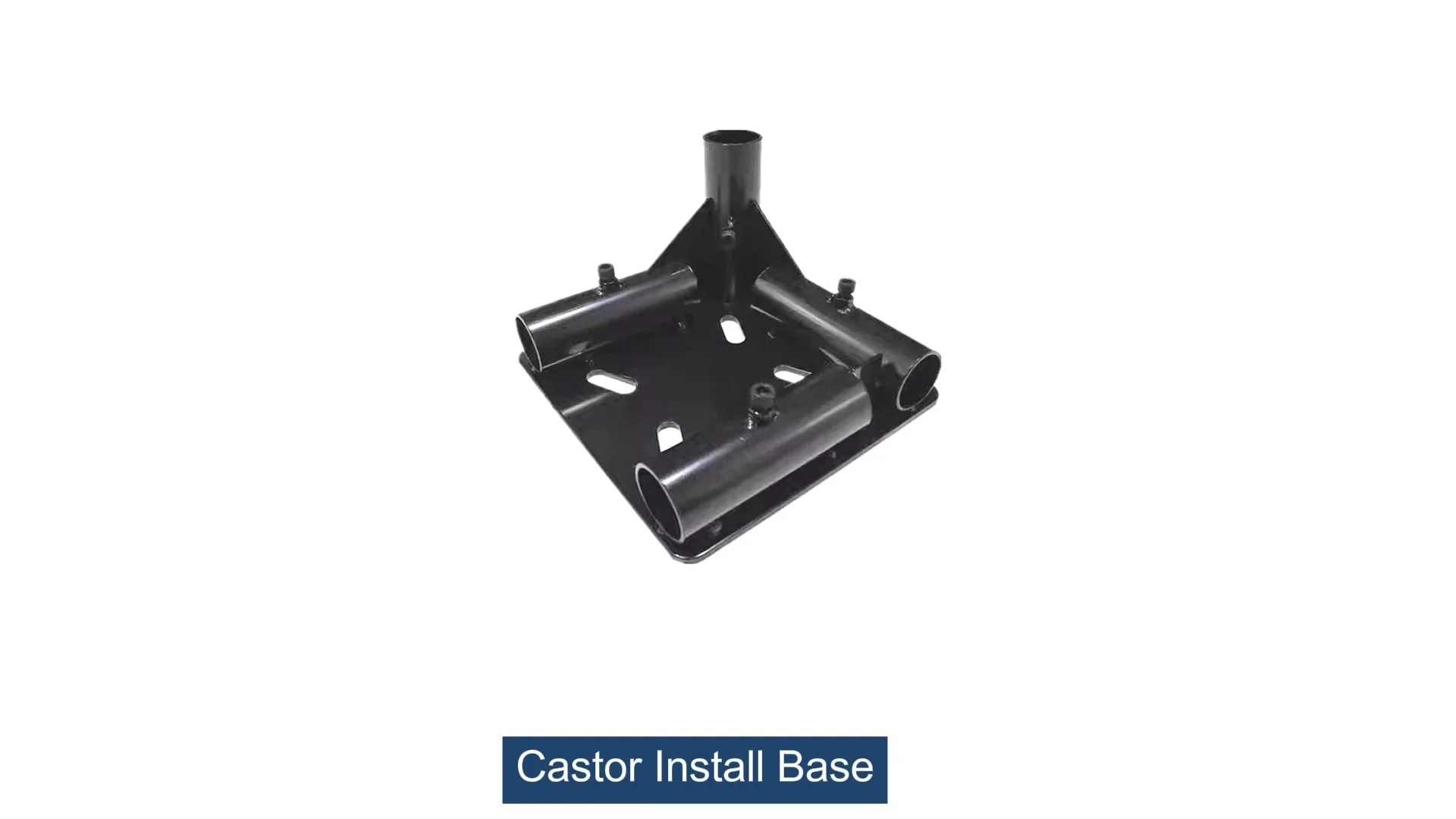
Castor Install Base
Castor install base, used for connection between pipe and castor, it can connect 4 pcs pipe by 1 pcs castor base, to make the structure strong and stable.
Walk into any busy warehouse, distribution center, or retail backroom, and you'll notice a silent workhorse keeping operations moving: the order picking trolley. These humble carts are the backbone of order fulfillment,,,,. But here's the thing—while most people focus on the trolley's size or storage capacity, there's a tiny yet critical component that often gets overlooked: the castor install base . This unassuming part connects the caster wheel to the trolley frame, and its design—whether swivel or fixed—can make or break how smoothly your order picking process runs. Today, we're diving deep into the swivel vs. fixed castor install base debate, breaking down which one deserves a spot on your order picking trolleys.
First Things First: Why Do Order Picking Trolleys Rely So Heavily on Castors?
Before we get into the nitty-gritty of swivel vs. fixed, let's take a step back. Order picking is the heartbeat of any supply chain. Every time a customer clicks "buy now," a picker grabs a trolley, navigates through aisles, and collects items to fulfill that order. If that trolley is clunky, hard to move, or unstable, everything slows down. Missed deadlines, frustrated workers, and even damaged products become par for the course.
Castors are the "feet" of the trolley, and the castor install base is the "ankle" that determines how those feet move. A poorly designed base can turn a 10-minute picking run into a 20-minute struggle, as workers wrestle with a trolley that won't turn, drifts off course, or wobbles under load. On the flip side, the right base transforms the trolley into an extension of the picker—responsive, stable, and almost effortless to maneuver. So, when we talk about swivel vs. fixed castor install bases, we're really talking about empowering your team to work smarter, not harder.
What Exactly Is a Castor Install Base, Anyway?
Think of the castor install base as the middleman between the trolley's frame and the caster wheel . It's a metal (or sometimes plastic) plate or bracket that bolts to the trolley's bottom, with a mounting point for the caster. Its job? To distribute the trolley's weight evenly across the wheel, absorb shocks from uneven floors, and—depending on the type—either lock the wheel into a fixed direction or let it rotate freely.
But not all bases are created equal. Some are made from lightweight aluminum (great for reducing overall trolley weight), others from heavy-duty steel (ideal for maxing out load capacity). The design also varies: swivel bases have a rotating mechanism (often with ball bearings) that lets the wheel spin 360 degrees, while fixed bases are rigid, keeping the wheel pointed straight ahead. And yes, even the smallest details—like how the base attaches to the trolley or the quality of its welds—matter. A flimsy base can bend under pressure, causing the caster to tilt, while a sturdy one will keep the wheel aligned, even when loaded with heavy cartons.

Swivel Castor Install Bases: The Flexible Problem-Solvers
Let's start with swivel castor install bases—the "agile" option. These bases allow the caster wheel to rotate a full 360 degrees, so the trolley can turn on a dime, pivot around corners, and glide sideways in tight spaces. If you've ever pushed a shopping cart through a crowded grocery store, you're already familiar with swivel castors in action—they're why you can weave around other shoppers without breaking a sweat.
The Pros: Why Swivel Bases Shine in Busy Environments
Maneuverability in tight spots: Warehouses aren't always spacious. Many have narrow aisles, low shelving, or temporary obstacles (like stacked pallets or other workers). Swivel castors let pickers navigate these tight quarters without having to backtrack or "shuffle" the trolley into position. Imagine trying to reach a product on a shelf that's just inches away from the aisle edge—with a swivel base, you can pivot the trolley sideways, grab the item, and move on. No wasted steps, no frustration.
Reduced physical strain: Pushing a trolley with fixed castors requires constant effort to steer—you have to turn the entire cart, which can strain shoulders and wrists over time. Swivel castors, by contrast, "follow" the picker's movements. A slight nudge to the handle sends the trolley in the desired direction, cutting down on the force needed to maneuver. This is a big deal for workers who push trolleys 8+ hours a day; less strain means fewer injuries and more energy to focus on accuracy.
Versatility across layouts: Not all warehouses have the same setup. Some have grid-like aisles, others have open "pick zones" with irregular paths. Swivel bases adapt to whatever layout you throw at them. They're equally at home in a retail backroom with zigzagging shelves as they are in a warehouse with dynamic, ever-changing product placements. If your order picking routes are unpredictable, swivel castors are like a Swiss Army knife—always ready to adapt.
The Cons: Where Swivel Bases Fall Short
Stability at high speeds (or heavy loads): All that flexibility comes with a trade-off: stability. Swivel castors can "wander" if the trolley is moving too fast, especially when loaded down with heavy items. Picture a picker hurrying to meet a deadline, pushing a fully loaded trolley down a straight aisle—the swivel wheels might start to drift, forcing the picker to correct course constantly. Over time, this not only slows them down but also increases the risk of tipping if the load shifts.
More maintenance: The rotating mechanism in swivel bases has more moving parts (bearings, pins, springs) than fixed bases. These parts can wear down with frequent use, especially if the warehouse floor is rough or debris (like loose screws or dirt) gets trapped in the joint. Without regular lubrication or cleaning, swivel bases can start to "stick," making rotation jerky or uneven. And let's not forget caster accessories —replacement bearings or washers might be needed sooner than with fixed bases.
Cost: Swivel castor install bases are generally pricier than fixed ones. The added complexity of the rotating mechanism, plus higher-quality materials (to handle the stress of 360-degree movement), drives up the cost. If you're outfitting a fleet of trolleys, those extra dollars can add up quickly—though many warehouses argue the long-term efficiency gains are worth the investment.

Fixed Castor Install Bases: The Steady Workhorses
Now, let's turn to fixed castor install bases—the "reliable" option. These bases lock the caster wheel into a straight-ahead position, so the trolley moves forward or backward only. No spinning, no pivoting—just a straight line, every time. They're the choice for environments where predictability and stability matter most.
The Pros: Why Fixed Bases Excel in Straight-Line Operations
Rock-solid stability: When you need a trolley to stay on track—literally—fixed castors deliver. They don't drift, wobble, or veer off course, even when loaded with heavy items (think 50+ pounds of tools or bulk products). This makes them ideal for long, straight aisles, where pickers can push the trolley at a steady pace without worrying about correcting direction. It also reduces the risk of collisions with shelves or other equipment—no more "oops, almost hit that pallet!" moments.
Lower maintenance: Fixed bases have fewer moving parts, which means less can go wrong. No bearings to lubricate, no rotating joints to clean—just a simple, sturdy bracket holding the wheel in place. This translates to lower long-term costs, as you won't need to stock as many caster accessories (like replacement bearings) or spend time on repairs. For warehouses with tight maintenance budgets, fixed bases are a no-brainer.
Durability for heavy loads: If your order picking involves hauling heavy or bulky items (like automotive parts, industrial tools, or large appliances), fixed bases are built to handle the pressure. Their rigid design distributes weight evenly across the wheel and frame, reducing stress on the trolley itself. Swivel bases, by contrast, can flex under extreme loads, leading to premature wear. Fixed bases are the workhorses that keep going, even when the going gets tough.
The Cons: Where Fixed Bases Struggle
Limited maneuverability: The biggest downside of fixed castors is their lack of flexibility. If a picker needs to turn around in a narrow aisle, they'll have to "walk" the trolley in a wide arc—wasting time and energy. In layouts with lots of corners or obstacles, fixed bases can turn a simple picking run into a frustrating puzzle. Imagine trying to navigate a trolley with fixed castors through a U-shaped aisle—you'd spend more time maneuvering than picking, which is the opposite of efficient.
Physical strain in tight spaces: Pushing a fixed-castor trolley around corners requires more force than a swivel one. You have to use your body weight to pivot the entire cart, which can lead to sore muscles or even repetitive strain injuries over time. For workers with smaller frames or mobility issues, this extra effort can be a significant barrier to productivity.
Not ideal for dynamic workflows: If your warehouse's layout changes frequently (e.g., seasonal displays, new product lines, or temporary storage setups), fixed castors can become a liability. They work best in static environments where routes rarely change. In dynamic settings, pickers end up adapting their paths to the trolley's limitations—instead of the other way around.

Swivel vs. Fixed: A Side-by-Side Comparison
| Factor | Swivel Castor Install Base | Fixed Castor Install Base |
|---|---|---|
| Maneuverability | Excellent—360° rotation for tight spaces and pivoting. | Limited—only moves forward/backward; requires wide turns. |
| Stability | Good for light-to-medium loads; may drift with heavy loads or high speeds. | Excellent for heavy loads and straight paths; minimal drifting. |
| Maintenance | Higher—needs regular lubrication and cleaning of rotating parts; may require caster accessories like replacement bearings. | Lower—fewer moving parts; minimal upkeep needed. |
| Cost | Higher upfront cost due to rotating mechanism. | Lower upfront cost; simpler design. |
| Ideal Environment | Narrow aisles, tight spaces, dynamic layouts, light-to-medium loads. | Wide, straight aisles, static layouts, heavy loads, high-speed movement. |
| Worker Strain | Lower—requires less force to steer and pivot. | Higher—requires more effort to turn and maneuver in tight spots. |
Real-World Scenarios: When to Choose Swivel, Fixed, or a Mix
So, which one is better? The truth is, there's no one-size-fits-all answer—it depends on your specific workflow. Let's look at a few real-world examples to see how the choice plays out.
Scenario 1: E-Commerce Warehouse with Narrow Aisles
Imagine an e-commerce warehouse where aisles are only 4 feet wide, and shelves are packed with small items (electronics, cosmetics, clothing). Pickers need to move quickly, often changing direction to grab items from both sides of the aisle. In this case, swivel castor install bases are a no-brainer. They let pickers pivot the trolley to reach items without backing up, cutting down on time per order. The slight trade-off in stability is worth it for the speed and agility gained.
Scenario 2: Industrial Distribution Center with Heavy Loads
Now, picture a distribution center for industrial supplies—think 50-pound boxes of nails, power tools, or metal pipes. Aisles are 10 feet wide, and pickers follow strict, straight-line routes to minimize congestion. Here, fixed castor install bases make sense. They keep the trolley stable under heavy loads, reduce the risk of tipping, and require less maintenance (critical for a facility with hundreds of trolleys). The lack of maneuverability isn't an issue because the paths are predictable and wide.
Scenario 3: Hybrid Layout—The Best of Both Worlds
Many warehouses opt for a hybrid approach: two swivel castors on the front of the trolley and two fixed ones on the back (or vice versa). This "combo" setup balances maneuverability and stability. The swivel castors up front let the picker steer easily, while the fixed ones in the back keep the trolley moving straight when needed. It's a popular choice for facilities with both wide aisles and tight corners—no need to choose between the two.
The Role of Caster Accessories in Boosting Performance
No matter which castor install base you choose, caster accessories can take your trolley's performance to the next level. These small add-ons solve common pain points and extend the life of your castors and bases.
Brakes: Swivel or fixed, adding brakes to your castors lets pickers lock the trolley in place while loading/unloading items. This prevents accidental rolling, reducing the risk of injuries or damaged products.
Wheel covers: If your warehouse has rough floors (concrete with cracks, gravel, or metal shavings), wheel covers (made of rubber or polyurethane) protect the caster wheel from debris, reducing wear and tear on both the wheel and the castor install base .
Lubricants: For swivel bases, a high-quality lubricant keeps the rotating joint smooth, preventing "sticking" and reducing friction. This extends the life of the bearings and ensures the castor rotates freely, even after months of use.
Replacement parts: Having spare bearings, washers, or bolts on hand means you can repair a damaged castor install base quickly—no need to wait for a new trolley. This is especially important for high-traffic warehouses where downtime equals lost revenue.
How the Right Castors Support a Lean System
At the end of the day, order picking isn't just about moving products—it's about doing it efficiently. That's where lean system principles come in: eliminating waste, reducing effort, and optimizing flow. The right castor install base plays a surprisingly big role in making your lean system work.
Swivel castors reduce "motion waste"—the time and energy pickers spend navigating tight spaces. By letting them pivot and turn quickly, swivel bases cut down on unnecessary steps, which aligns with lean's goal of streamlining workflows.
Fixed castors, on the other hand, reduce "transport waste"—the effort needed to move heavy loads over long distances. Their stability and durability mean pickers can push heavier loads with less strain, reducing the number of trips required to fulfill an order.
Both swivel and fixed bases contribute to a lean system by making order picking more predictable. When trolleys move smoothly and reliably, pickers can focus on accuracy instead of wrestling with equipment—leading to fewer errors, faster fulfillment, and happier customers.
How to Choose: A Decision Checklist
Still on the fence? Use this checklist to narrow down your options:
1. Assess your layout: Measure aisle width, note the number of corners/obstacles, and map out typical picking routes. Narrow aisles or tight corners = swivel or hybrid. Wide, straight aisles = fixed or hybrid.
2. Calculate average load weight: If most orders weigh under 30 pounds, swivel bases are fine. If loads regularly hit 50+ pounds, fixed or hybrid is safer.
3. Talk to your pickers: Who better to ask than the people using the trolleys every day? Do they complain about maneuvering? Swivel might help. Do they struggle with heavy loads? Fixed could be the answer.
4. Consider maintenance resources: Do you have a dedicated maintenance team to handle swivel bases' upkeep? If not, fixed bases (with fewer parts) might be more practical.
5. Test before you buy: Most suppliers let you trial trolleys with different castor setups. Borrow a few, have pickers test them in real-world conditions, and see which one gets the most positive feedback.
Final Thoughts: It's All About Your Unique Needs
Swivel vs. fixed castor install bases isn't a "which is better" debate—it's a "which is better for you" one. Swivel bases thrive in dynamic, tight spaces where agility is key. Fixed bases excel in stable, heavy-load environments where predictability matters most. And for many warehouses, a hybrid setup offers the best of both worlds.
At the end of the day, the castor install base might be small, but its impact is huge. It's the difference between a picker dreading their next trolley run and feeling confident, efficient, and in control. So, take the time to assess your workflow, talk to your team, and choose the base that aligns with your goals. Your pickers (and your bottom line) will thank you.
And remember—whether you go swivel, fixed, or hybrid—don't skimp on quality. A sturdy castor install base , paired with a durable caster wheel and the right caster accessories , will keep your order picking trolleys rolling smoothly for years to come. After all, in the world of warehousing, every small detail adds up to big results.