- Company Articles
- Products and Technology
- Product knowledge
- T-Groove Aluminum Pipe for Lean Manufacturing: Reducing Waste in Production

T-Groove Aluminum Pipe for Lean Manufacturing: Reducing Waste in Production
Related Product
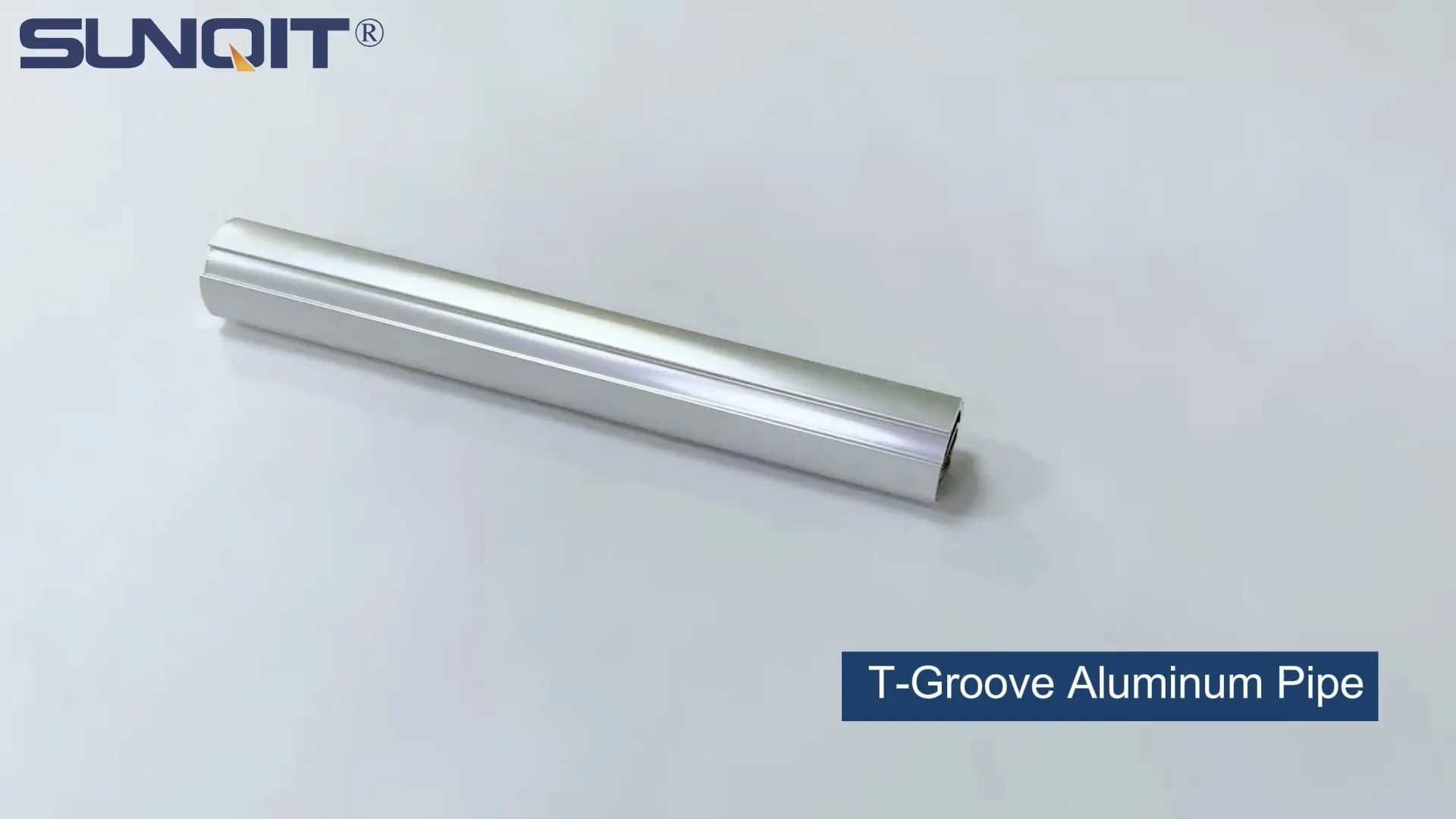
T-Groove Aluminum Pipe
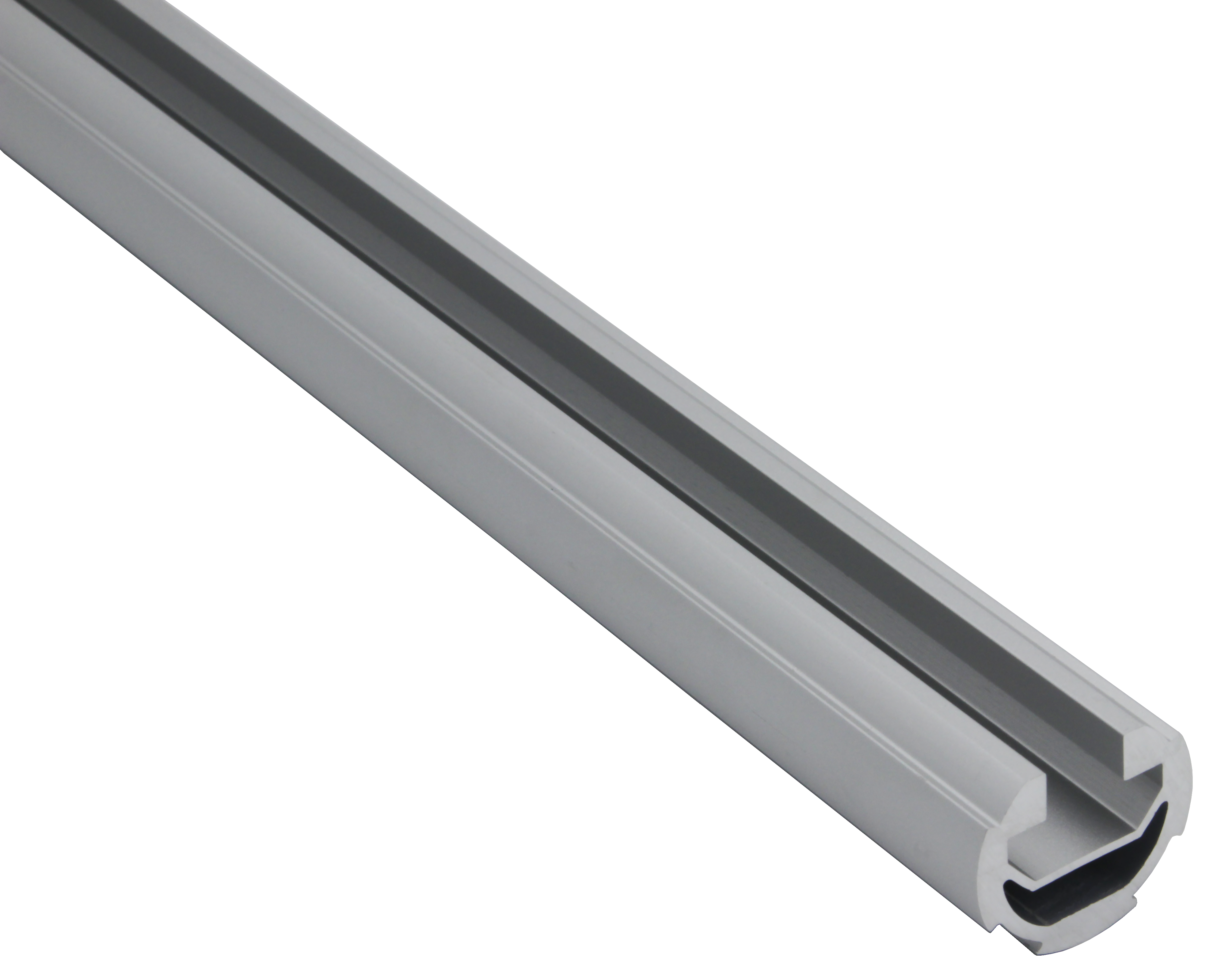
The aluminum pipe opening 10mm is installed into the T-shaped slider, which can be installed with casters or other matching functional parts. The groove can be used for positioning and is used for the track of the roller.
In the fast-paced world of manufacturing, where every second and every cent counts, the battle against waste is never-ending. From tangled workflows that slow down production to rigid equipment that can't adapt to changing demands, inefficiencies creep in silently, eating away at profits and morale. This is where lean manufacturing steps in—not as a buzzword, but as a philosophy rooted in the simple idea of "doing more with less." At the heart of successful lean implementation lies the tools we choose to build our production systems. Today, one tool stands out for its ability to transform chaos into order, rigidity into flexibility, and waste into value: the T-slot aluminum pipe.
If you've ever walked through a factory floor, you've likely seen the aftermath of outdated production setups: heavy steel workbenches that take a team to move, wooden racks that warp under weight, or plastic components that crack after a few months of use. These systems weren't designed with lean principles in mind—they were built for a static world, where change was rare and waste was accepted as part of the process. But in 2025, change is the only constant. Customer demands shift overnight, product lines evolve, and production volumes fluctuate. To keep up, manufacturers need systems that can evolve with them. That's where T-slot aluminum pipe, paired with aluminum profile and lean pipe accessories, becomes a game-changer.
Understanding Lean: The Fight Against Waste
Before diving into the specifics of T-slot aluminum pipe, let's ground ourselves in what lean manufacturing truly means. Lean isn't just about cutting costs—it's about respecting people and optimizing flow . Developed by Toyota in the mid-20th century, the Toyota Production System (TPS) identified seven types of waste, often called "muda," that plague production lines: overproduction, waiting, transportation, overprocessing, inventory, motion, and defects. Over the years, an eighth waste was added: unused talent. These wastes aren't just numbers on a spreadsheet; they translate to frustrated workers stuck in inefficient routines, missed deadlines, and products that cost too much to make.
The goal of lean is to eliminate these wastes by designing systems that are responsive , flexible , and human-centered . A responsive system adapts to demand without overproducing. A flexible system adjusts to new product designs or workflow changes quickly. A human-centered system reduces unnecessary motion, making it easier for workers to do their jobs well. Enter T-slot aluminum pipe: a material that embodies all three qualities, and has become a cornerstone of modern lean systems.
What Is T-Slot Aluminum Pipe? The Basics
At first glance, T-slot aluminum pipe might look like any other metal tube, but its magic lies in the precision-engineered "T-groove" running along its length. This groove isn't just a design quirk—it's a gateway to modularity. Unlike traditional steel pipes, which require welding or drilling to attach components, T-slot aluminum pipe uses simple fasteners, brackets, and lean pipe accessories to connect to other parts. Think of it as a grown-up version of building blocks: you snap, slide, and secure components into place, no heavy tools required.
But what makes this possible? The answer lies in how it's made. T-slot aluminum pipe is typically crafted using aluminum extrusion profile technology. Extrusion is a manufacturing process where raw aluminum is heated and forced through a die, shaping it into complex cross-sections—like the T-groove—with incredible precision. This process ensures consistency: every pipe, every groove, and every connection point is identical, so components from different batches fit together seamlessly. It also creates a material that's lightweight (about 1/3 the weight of steel) but surprisingly strong, thanks to aluminum's natural strength-to-weight ratio.
Aluminum profile, the broader category that includes T-slot pipes, comes in various sizes and shapes—from small 20x20mm tubes for light-duty workbenches to robust 40x80mm profiles for heavy material racks. This versatility means there's a T-slot solution for almost every application, whether you're building a compact electronics assembly station or a large-scale conveyor system for automotive parts.
How T-Slot Aluminum Pipe Reduces Waste: A Lean Tool in Action
Lean manufacturing is all about targeting waste, so let's break down how T-slot aluminum pipe attacks the seven (or eight) wastes head-on. We'll start with the most obvious: motion waste .
1. Eliminating Motion Waste: Making Work Easier for Humans
Motion waste happens when workers spend time reaching, bending, or walking unnecessarily. Imagine a assembly line where tools are scattered across a cluttered workbench, or a material rack that's too high to reach without a ladder. These small inefficiencies add up: studies show that workers in poorly designed workspaces can spend up to 25% of their day on non-value-added motion. T-slot aluminum pipe solves this by letting you build custom workbenches and material racks tailored to human ergonomics.
For example, an aluminum profile workbench can be adjusted to the exact height of the workers using it—no more stooping or stretching. Tools can be mounted directly into the T-grooves using lean pipe accessories like tool holders or hooks, keeping everything within arm's reach. Material racks can be built with adjustable shelves, so heavy items sit at waist level, and lighter items go on higher or lower shelves. The result? Workers move less, focus more, and stay healthier—reducing both fatigue and the risk of injury.
2. Cutting Down on Waiting Waste: Speeding Up Changeovers
Waiting waste occurs when production grinds to a halt because a machine is being reconfigured, a workbench is being moved, or a new rack is being built. Traditional systems are often "permanent"—welded steel workbenches or bolted-down racks can take hours (or even days) to modify. T-slot aluminum pipe, by contrast, is designed for rapid changeovers .
Let's say a electronics manufacturer needs to switch from assembling smartphones to tablets. The old wooden workbench might need to be completely replaced, or at least sawed and rehammered to fit the larger tablet components. With a T-slot aluminum workbench, the process is different: loosen a few fasteners, adjust the shelf heights using aluminum profile accessories, add a new tool rail, and you're ready to go—often in under an hour. This flexibility turns "downtime" into "uptime," keeping production lines moving and orders on track.
3. Reducing Inventory Waste: Less Storage, More Efficiency
Inventory waste isn't just about overstocked parts—it also includes storing unnecessary equipment. Traditional production setups often require separate systems for different tasks: one workbench for assembly, another for testing, a third for packaging. With T-slot aluminum pipe, modularity means one system can do the job of three. A single aluminum frame can be reconfigured from an assembly station in the morning to a packaging station in the afternoon, using the same base components and swapping out only the accessories.
This also reduces the need to stockpile spare parts. Since T-slot components are standardized, a handful of lean pipe accessories—like joints, brackets, and casters—can be used across dozens of systems. No more storing specialized brackets for that one custom steel rack; instead, you keep a few universal parts that work everywhere. It's lean inventory management, built into the material itself.
4. Minimizing Transportation Waste: Moving Materials Smarter
Transportation waste is the unnecessary movement of materials around the factory floor—think of parts being carted from one end of the facility to another because the production flow is disjointed. T-slot aluminum pipe helps solve this by enabling the creation of flow racks and conveyor systems that bring materials directly to the point of use.
Flow racks, built with T-slot aluminum profiles and roller tracks, use gravity to feed parts to workers. For example, in an automotive plant, a flow rack might hold screws, washers, and bolts, with each component sliding down to the front as the worker takes the top one. No more walking to a distant storage room; the parts come to them. Similarly, T-slot conveyors—whether belt-driven, roller-based, or chain-powered—can be customized to fit the exact layout of the factory, ensuring materials flow smoothly from one station to the next, with no backtracking or bottlenecks.
5. Avoiding Overprocessing Waste: Building Only What You Need
Overprocessing waste happens when we add unnecessary steps or features to a product or system. Traditional manufacturing setups often suffer from this: a steel workbench might be overbuilt with extra bracing (adding weight and cost) because it's easier to weld a "one-size-fits-all" design than to tailor it to the task. T-slot aluminum pipe, with its modular design, lets you build exactly what you need—no more, no less.
Need a lightweight cart for moving small components? Use a 20x20mm aluminum profile frame with plastic casters. Need a heavy-duty rack for 50kg tooling? Opt for a 40x40mm profile with reinforced joints. There's no need to overengineer because you can mix and match components to meet the exact load, size, and durability requirements of the job. This not only cuts down on material costs but also reduces the energy and labor needed to assemble and maintain the system.

T-Slot vs. Traditional Materials: A Clear Winner for Lean
To truly appreciate the impact of T-slot aluminum pipe, let's compare it to the materials it's replacing. Below is a breakdown of how it stacks up against steel, wood, and plastic—three common choices for production systems:
| Feature | T-Slot Aluminum Pipe | Steel Pipe | Wooden Structures | Plastic Components |
|---|---|---|---|---|
| Weight | Light (1/3 steel's weight) | Heavy (hard to move/reconfigure) | Moderate (but bulky) | Light (but low load capacity) |
| Flexibility | High (modular, no welding/drilling) | Low (requires tools to modify) | Low (permanent, prone to damage) | Moderate (limited compatibility) |
| Durability | High (resistant to rust, corrosion, dents) | High (but rusts without coating) | Low (warps, rots, scratches) | Low (cracks under stress, UV damage) |
| Cost Over Time | Low (reusable, low maintenance) | High (expensive to modify, heavy maintenance) | High (needs frequent replacement) | High (short lifespan, frequent replacement) |
| Waste Reduction | High (modular, reduces motion/waiting/transport waste) | Low (rigid, contributes to waiting/motion waste) | Low (prone to damage, contributes to inventory waste) | Low (limited use, contributes to overprocessing waste) |
The table tells a clear story: T-slot aluminum pipe outperforms traditional materials in almost every category that matters for lean manufacturing. Its light weight makes it easy to reconfigure, its modularity cuts down on changeover time, and its durability ensures it lasts for years—even in harsh factory environments. Unlike steel, it won't rust; unlike wood, it won't warp; unlike plastic, it won't crack under pressure. And because it's reusable, you can disassemble a workbench today and build a conveyor tomorrow, giving every component a second life instead of sending it to the scrap heap.

Real-World Applications: T-Slot in Action Across Industries
T-slot aluminum pipe isn't just a theoretical solution—it's transforming production floors in industries from automotive to aerospace. Let's look at a few examples of how companies are using it to build lean systems:
Automotive Manufacturing: Streamlining Assembly Lines
Automotive plants are a hotbed of lean innovation, and T-slot aluminum pipe has become a staple here. Take a major car manufacturer that recently switched from steel workbenches to aluminum profile stations for dashboard assembly. The old steel benches weighed over 200kg each, requiring a forklift to move. When the company introduced a new dashboard design, reconfiguring the line took two days of downtime. With T-slot aluminum workbenches, each station weighs just 50kg, so workers can adjust positions by hand. Reconfiguring for the new design took 4 hours—cutting downtime by 90%. Plus, the T-grooves allowed them to mount custom tool holders and cable management systems, reducing motion waste by 30% per worker shift.
Electronics Production: Precision and Cleanliness
Electronics manufacturing demands precision and cleanliness, and T-slot aluminum pipe delivers on both. A smartphone manufacturer was struggling with static electricity damaging sensitive components on their plastic workbenches. Switching to aluminum profile workstations solved the problem: aluminum is conductive, so it can be grounded to dissipate static. Additionally, the smooth, non-porous surface of aluminum is easy to clean with disinfectants, reducing the risk of dust or debris contaminating circuit boards. The modular design also let them add ESD (electrostatic discharge) accessories, like grounding straps and anti-static mats, directly into the T-grooves—creating a fully integrated ESD-safe workspace.
Logistics and Warehousing: Flexible Material Handling
In warehouses, where storage needs change with every shipment, T-slot aluminum pipe's flexibility shines. A third-party logistics provider was using wooden pallet racks that couldn't adjust to varying box sizes. They replaced them with aluminum extrusion profile racks, using T-slot pipes and lean pipe accessories to build adjustable shelving. Now, workers can reposition shelves in minutes using just a hex key, accommodating everything from small parcels to large appliances. The lightweight design also reduced the risk of back injuries from moving heavy wooden shelves, and the corrosion-resistant aluminum holds up to the humidity of the warehouse environment—unlike wood, which was rotting after a few years.
The Role of Lean Pipe Accessories: The Unsung Heroes of Modularity
T-slot aluminum pipe is powerful on its own, but its true potential is unlocked by lean pipe accessories—the nuts, bolts, brackets, and connectors that turn pipes into systems. These small components are the glue that holds lean manufacturing together, and they deserve a spotlight of their own.
Take joints, for example. Internal rotary aluminum joints allow pipes to pivot, creating foldable workbenches or adjustable-angle material racks. Straight connectors link pipes end-to-end, while corner brackets create 90° or 135° angles for stable frames. Then there are the "extras": caster wheels that turn a static rack into a mobile trolley, roller tracks that transform a shelf into a gravity-fed flow rack, and even LED light brackets that mount directly into T-grooves to illuminate workspaces. Each accessory is designed to snap into the T-groove, no drilling or adhesives required, making it easy to add, remove, or reposition components as needs change.
The beauty of these accessories is their universality. A caster wheel that fits a 30x30mm aluminum profile will also fit a 30x60mm profile from the same manufacturer, thanks to standardized T-groove dimensions. This means companies don't have to stockpile dozens of specialized parts—just a few core accessories can adapt to almost any project. It's a lean approach to inventory, right down to the smallest component.
Sustainability: T-Slot Aluminum Pipe and the Green Lean Revolution
In recent years, lean manufacturing has begun to overlap with sustainability—and for good reason: both are about reducing waste, whether it's time, materials, or environmental impact. T-slot aluminum pipe aligns perfectly with this trend. Aluminum is 100% recyclable, and recycling it uses just 5% of the energy required to produce new aluminum. This means that even if a T-slot system reaches the end of its life, the materials can be melted down and turned into new pipes or profiles, with no loss of quality.
Additionally, the modular design reduces material waste from the start. Traditional steel or wooden systems often require cutting materials to size on-site, leading to scraps that end up in landfills. With T-slot aluminum pipe, components are pre-cut to standard lengths, and excess pieces can be repurposed for smaller projects (like tool holders or small carts). Even the packaging is lean: aluminum profiles are shipped nested together, reducing cardboard waste and transportation costs.
Building Your Lean System: Getting Started with T-Slot Aluminum Pipe
If you're ready to bring T-slot aluminum pipe to your production floor, where do you start? The process is simpler than you might think. First, map out your current workflow and identify waste hotspots: Are workers walking too far for materials? Are changeovers taking too long? Is space being wasted on oversized equipment? Once you've pinpointed the issues, you can design a T-slot system to address them.
Next, choose your aluminum profile size. For light-duty tasks like workbenches or small carts, 20x20mm or 30x30mm profiles work well. For medium-duty applications, like flow racks or conveyor frames, 40x40mm or 40x80mm are better. For heavy loads, 60x60mm or larger profiles are ideal. Most suppliers offer free design tools or templates to help you sketch your system, and many provide pre-configured kits for common setups (e.g., "basic workbench kit" or "3-tier flow rack kit").
Finally, don't overlook the importance of training. T-slot systems are intuitive, but taking an hour to teach your team how to use lean pipe accessories—how to tighten a joint, adjust a shelf, or replace a caster—will empower them to make small adjustments on the fly, keeping the system lean and responsive over time.
The Future of Lean: T-Slot Aluminum Pipe and Beyond
As manufacturing continues to evolve—with trends like automation, customization, and reshoring reshaping the industry—lean principles will only grow more critical. T-slot aluminum pipe is poised to play a central role in this future. Imagine a factory where production lines reconfigure themselves overnight using modular aluminum extrusion profile components, or where AI-powered systems suggest workflow improvements based on real-time data from T-slot-mounted sensors. The flexibility of T-slot makes these possibilities tangible.
But perhaps the most exciting part is that T-slot aluminum pipe isn't just for "big factories." Small and medium-sized businesses (SMBs) are increasingly adopting it, too. With lower upfront costs than steel systems and no need for specialized tools, it's democratizing lean manufacturing, letting companies of all sizes compete on efficiency and agility.
Conclusion: Building a Leaner, Better Production Floor
Waste in manufacturing isn't just a problem—it's a choice. A choice to stick with outdated systems that hold back progress, or to invest in tools that empower workers, streamline workflows, and create value. T-slot aluminum pipe isn't just a tool; it's a commitment to lean thinking. It's about building systems that adapt, grow, and improve—just like the people who use them.
From reducing motion waste with ergonomic workbenches to cutting downtime with rapid reconfigurations, from minimizing material waste with modular design to supporting sustainability with recyclable materials, T-slot aluminum pipe embodies what lean manufacturing is all about: respect for people, respect for resources, and a relentless focus on value. So the next time you walk through your production floor, ask yourself: Is your current system holding you back? Or is it built to thrive in a world where change is the only constant?
The answer might just be a T-slot aluminum pipe away.