- Company Articles
- Products and Technology
- Application Cases
- T-Groove Aluminum Pipe in Education: Teaching Lean Manufacturing Principles

T-Groove Aluminum Pipe in Education: Teaching Lean Manufacturing Principles
Related Product
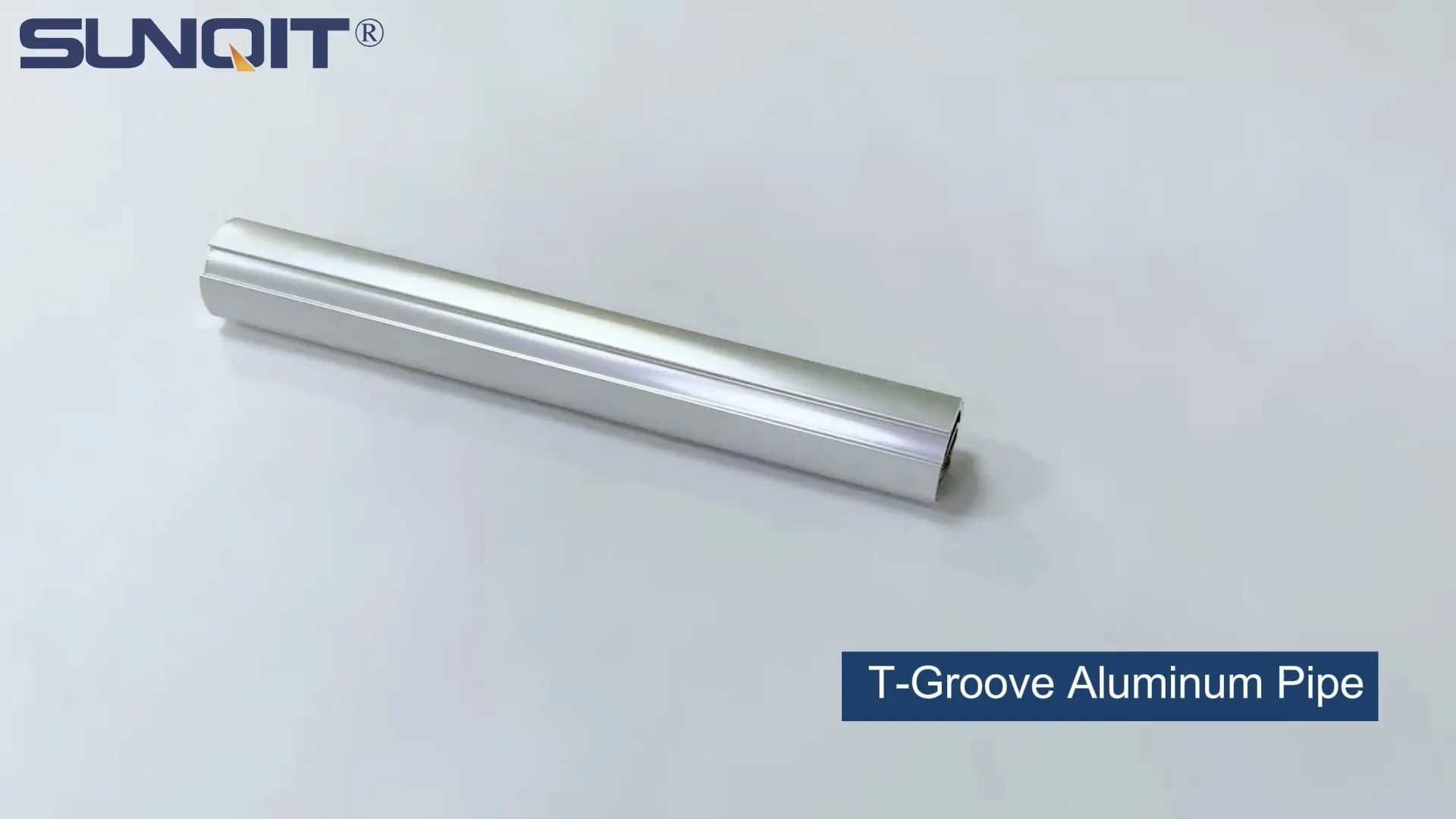
T-Groove Aluminum Pipe
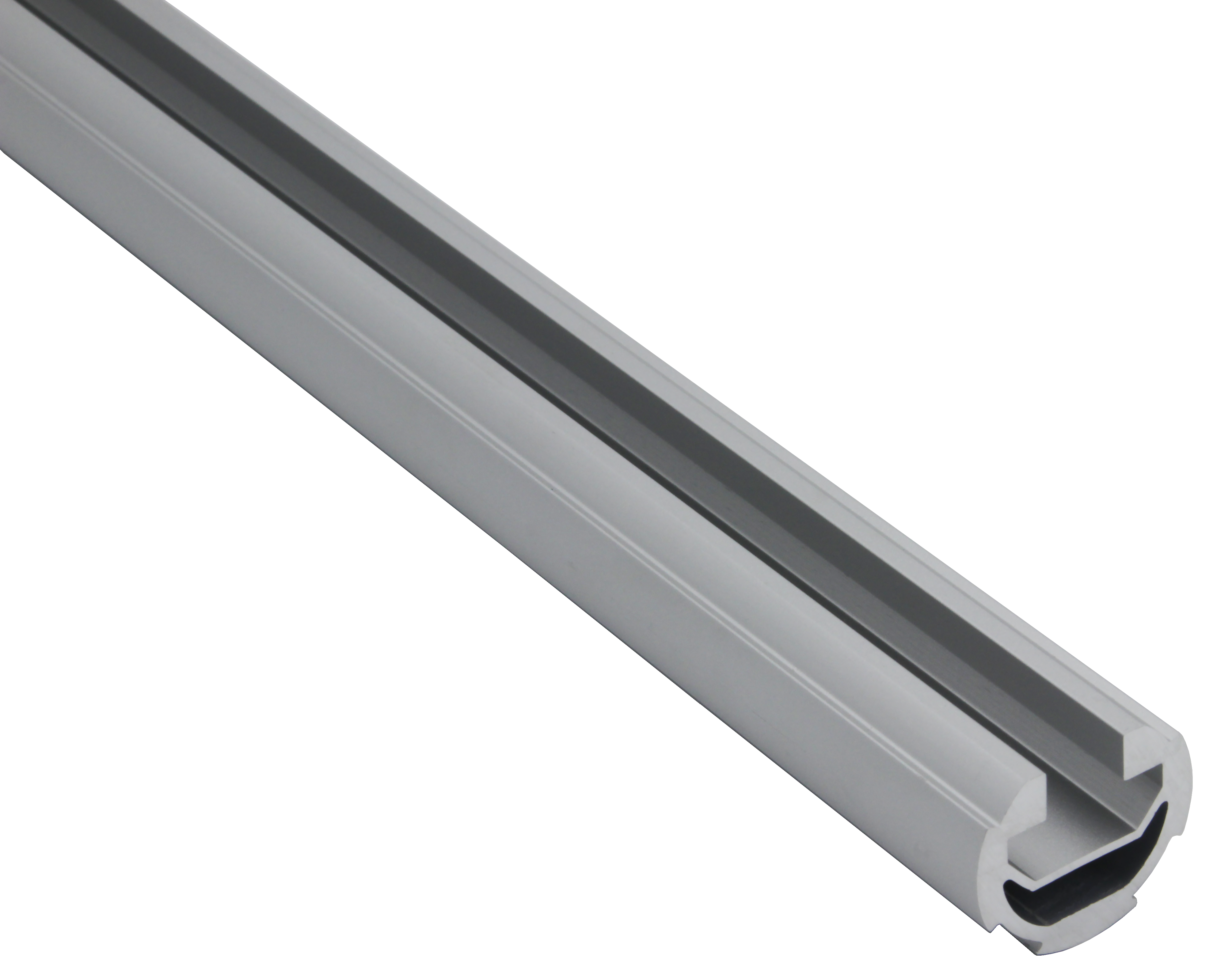
The aluminum pipe opening 10mm is installed into the T-shaped slider, which can be installed with casters or other matching functional parts. The groove can be used for positioning and is used for the track of the roller.
Walk into any manufacturing classroom, and you'll likely find rows of textbooks, PowerPoint slides filled with bullet points on "waste reduction," and maybe a few outdated models of assembly lines gathering dust in the corner. For decades, educators have struggled to bridge the gap between the abstract theory of lean manufacturing and the messy, dynamic reality of a factory floor. Students memorize terms like "kaizen" and "value stream mapping," but when asked to design a process that actually reduces waste, many stare blankly—because theory, no matter how well-taught, can only take you so far. That's where T-Groove Aluminum Pipe comes in: a simple, modular tool that's transforming how the next generation of manufacturers learns to build, adapt, and innovate.
Lean manufacturing, at its core, is about creating more value with less work. Born from the Toyota Production System, its principles—eliminating waste, continuous improvement, respect for people—are the backbone of modern manufacturing. But these principles aren't just concepts to be studied; they're habits to be practiced. And practice, as any educator knows, requires tools that let students experiment, fail, and try again. T-Groove Aluminum Pipe, with its lightweight aluminum rails, versatile aluminum profile accessories, and snap-together design, is that tool. It's not just a material for building—it's a canvas for teaching lean thinking.
Why Lean Manufacturing Education Needs Hands-On Tools
Imagine a group of engineering students tasked with designing a workstation for a small electronics manufacturer. The goal: reduce the time workers spend reaching for tools, a common form of "motion waste" in lean terminology. In a traditional classroom, they might sketch designs on paper or build a static model with wood and nails. But wood is heavy, nails are permanent, and reworking the design means starting over. By the time they realize the shelf is too high or the tool hooks are in the wrong place, the project is due, and the lesson in iteration is lost.
Now picture the same students using T-Groove Aluminum Pipe. They start by measuring the average worker's arm reach, then use basic aluminum tubes and internal rotary aluminum joints to build a prototype workbench. The joints twist and lock in seconds, so when they notice the tool tray is 6 inches too low, they don't scrap the project—they adjust it. An hour later, they've tested three configurations, identified the one that cuts motion waste by 30%, and even added a small flow rack using roller track and accessories to feed components directly to the workstation. By the end of the day, they're not just talking about waste reduction—they're experiencing it. That's the power of hands-on learning with tools that mirror real-world flexibility.
T-Groove Aluminum Pipe: The Building Block of Lean Learning
At first glance, T-Groove Aluminum Pipe looks unassuming: thin, silver aluminum rails with a T-shaped groove running along their length. But that groove is where the magic happens. It lets students attach aluminum profile accessories—joints, brackets, shelves, wheels—without drilling, welding, or special tools. A 180° fixed joint here, a caster wheel there, and suddenly a pile of pipes becomes a workbench, a conveyor, or a material rack. It's modularity taken to its simplest form, and it's perfect for teaching lean because lean itself is about adaptability.
Unlike traditional building materials, T-Groove Aluminum Pipe is forgiving. A student who miscalculates the height of a flow rack can loosen a joint and slide the rail up; one who designs a workstation that's too narrow can add an extension in minutes. This "fail fast, adjust faster" cycle is exactly what lean manufacturing demands. In a factory, production lines are never static—customer demands change, new products are introduced, and processes must evolve. T-Groove models that reality, teaching students to see their designs not as finished products, but as starting points for improvement.
Take, for example, the concept of "flow," a key lean principle that emphasizes moving materials and information smoothly through a process. A classroom lesson might explain flow with diagrams of bottlenecks and value streams, but students often struggle to visualize how small changes—like the angle of a conveyor or the placement of a shelf—can break up logjams. With T-Groove, they can build a mini assembly line using roller track and swivel roller balls, then simulate production by sending small parts (like toy gears or circuit boards) down the line. When parts get stuck at a sharp corner, they adjust the roller track's angle. When workers (classmates) have to wait for materials, they add a second flow rack to create a parallel process. By the end, they've not only fixed the flow—they've internalized why flow matters.
| Lean Principle | Traditional Classroom Approach | T-Groove Aluminum Pipe Approach |
|---|---|---|
| Eliminating Waste (Muda) | Lectures on 7 types of waste; case studies of failed processes. | Students build a workstation, then identify waste (e.g., excess motion) by testing it—then redesign using aluminum profile accessories to fix it. |
| Continuous Improvement (Kaizen) | Discussions of "small, daily improvements"; written assignments on hypothetical changes. | Groups build a flow rack, then compete to improve it over 3 rounds (e.g., adding roller track guides to speed up part delivery). |
| Respect for People | Readings on teamwork and worker autonomy. | Students rotate roles (designer, builder, tester) to solve a problem, reflecting on how communication and trust impact results. |
| Standardization | PowerPoint slides on SOPs and checklists. | Teams create a "standard work" document for assembling a T-Groove workbench, then teach it to another group—identifying gaps in clarity. |
From Classroom to Career: Real-World Skills Through T-Groove Projects
At Midlands Technical College in South Carolina, instructor Mark Henderson has watched T-Groove transform his lean manufacturing course. "We used to do paper-based simulations," he says. "Students would draw assembly lines on worksheets, but they never asked, 'What if the conveyor breaks?' or 'How do we adjust for taller workers?' Now, they're building those lines with T-Groove, and suddenly those questions are everywhere. Last semester, a group designed a workbench with adjustable height using internal rotary aluminum joints—they noticed that half the class was hunched over during simulations, so they added a crank to raise or lower the surface. That's problem-solving, not just busywork."
Henderson's students don't just build models—they build solutions to real problems. One group partnered with a local bakery that was struggling with packaging delays. The bakery's workers were carrying trays of pastries from the oven to the packaging table, a 20-foot walk that wasted 2 hours a day. Using T-Groove, the students designed a gravity-fed flow rack with plastic roller track guide rails (yellow, to match the bakery's branding) that let trays glide from the oven directly to the packers. The bakery saved 10 hours a week, and the students learned that lean isn't about theory—it's about making someone's job easier.
Another project at a vocational high school in Michigan focused on "5S," a lean methodology for organizing workspaces (Sort, Set in Order, Shine, Standardize, Sustain). Students were tasked with cleaning up a cluttered classroom storage area using T-Groove. They sorted tools into categories, built custom shelves with aluminum guide rails to "set in order" supplies, and labeled everything with color-coded tags. The result? A storage system that cut the time to find tools from 15 minutes to 30 seconds. But the real lesson came later, when the class had to "sustain" the system: they created checklists and rotated responsibility for keeping the area organized, learning that lean isn't a one-time project—it's a daily habit.

Why Educators Love T-Groove (And Why Budgets Do Too)
For educators, T-Groove isn't just a teaching tool—it's a practical solution to common classroom challenges. Unlike steel pipes or wooden boards, it's lightweight, so students can carry materials without straining. It's durable enough to withstand years of use (Henderson notes his T-Groove kits are still in great shape after 5 years of student projects). And because it's modular, schools don't need to buy new materials for every project—they can reuse pipes and accessories, saving thousands on supplies.
Safety is another win. Traditional shop classes often involve saws, drills, and welding torches—tools that require strict supervision and can intimidate beginners. T-Groove, by contrast, needs only a hex key (and sometimes just a firm twist) to assemble. This lowers the barrier for students who might be nervous about hands-on work, letting them focus on problem-solving instead of tool safety. "I have students who've never held a hammer build a functional conveyor in an hour," Henderson says. "That confidence boost changes everything—suddenly, they see themselves as builders, not just learners."
Perhaps most importantly, T-Groove aligns with industry standards. Many manufacturers, from automotive plants to electronics factories, use aluminum profile systems (like T-Groove) to build workstations, flow racks, and assembly lines. When students graduate knowing how to use these systems, they're not just job-ready—they're able to contribute on day one. As one manufacturing manager told Henderson, "I'd rather hire a graduate who's built a lean system with T-Groove than one who's only studied it in a book. The first knows how to solve problems; the second knows how to talk about them."

The Future of Lean Education: Where T-Groove Meets Industry 4.0
As manufacturing evolves, so too must manufacturing education. Industry 4.0—with its smart factories, IoT sensors, and data-driven decision-making—is merging lean principles with digital tools. T-Groove is evolving right alongside it. Some schools are now adding sensors to T-Groove workbenches to track how often tools are used (eliminating "inventory waste" by removing rarely used items). Others are pairing T-Groove assembly lines with simulation software, letting students compare real-world performance data (like cycle times) with digital models. It's a bridge between the physical and digital worlds—exactly where modern manufacturing is heading.
But even as technology advances, the core value of T-Groove remains: it teaches students to think like lean manufacturers. In a world where automation and AI are changing jobs, that ability—to see waste, adapt quickly, and design for people—will be more valuable than ever. T-Groove doesn't just build workbenches or flow racks; it builds problem-solvers. And in lean manufacturing, problem-solvers are the most valuable resource of all.
Conclusion: Building the Future, One Pipe at a Time
Lean manufacturing isn't about perfection—it's about progress. It's about looking at a process and asking, "How can we make this better?" That's the question T-Groove Aluminum Pipe puts in the hands of students every day. It turns abstract principles into tangible projects, passive learning into active experimentation, and theory into habit. In classrooms across the country, students are building more than models—they're building the skills, mindsets, and confidence to transform the factories of tomorrow.
So the next time you walk into a manufacturing classroom, don't be surprised if you don't see rows of textbooks. Instead, you might find students huddled around a T-Groove assembly line, arguing over the angle of a roller track or the height of a shelf. They're not just building—they're learning to lean. And that, more than any lecture or exam, is how the future of manufacturing will be made.