- Company Articles
- Products and Technology
- Application Cases
- T-Groove Aluminum Pipe in Home Appliance Manufacturing: Assembly Line Applications

T-Groove Aluminum Pipe in Home Appliance Manufacturing: Assembly Line Applications
Related Product
T-Groove Aluminum Pipe
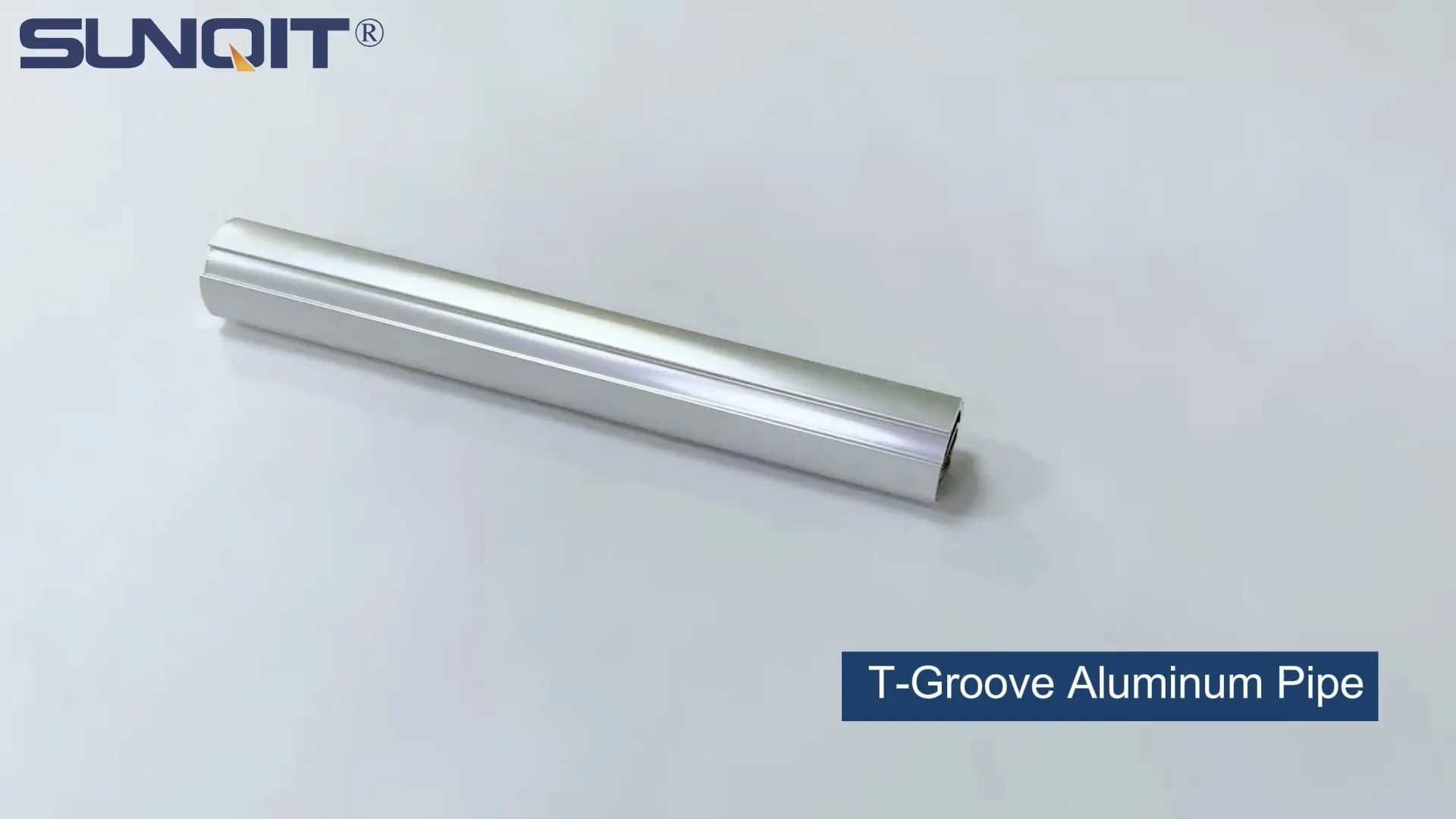
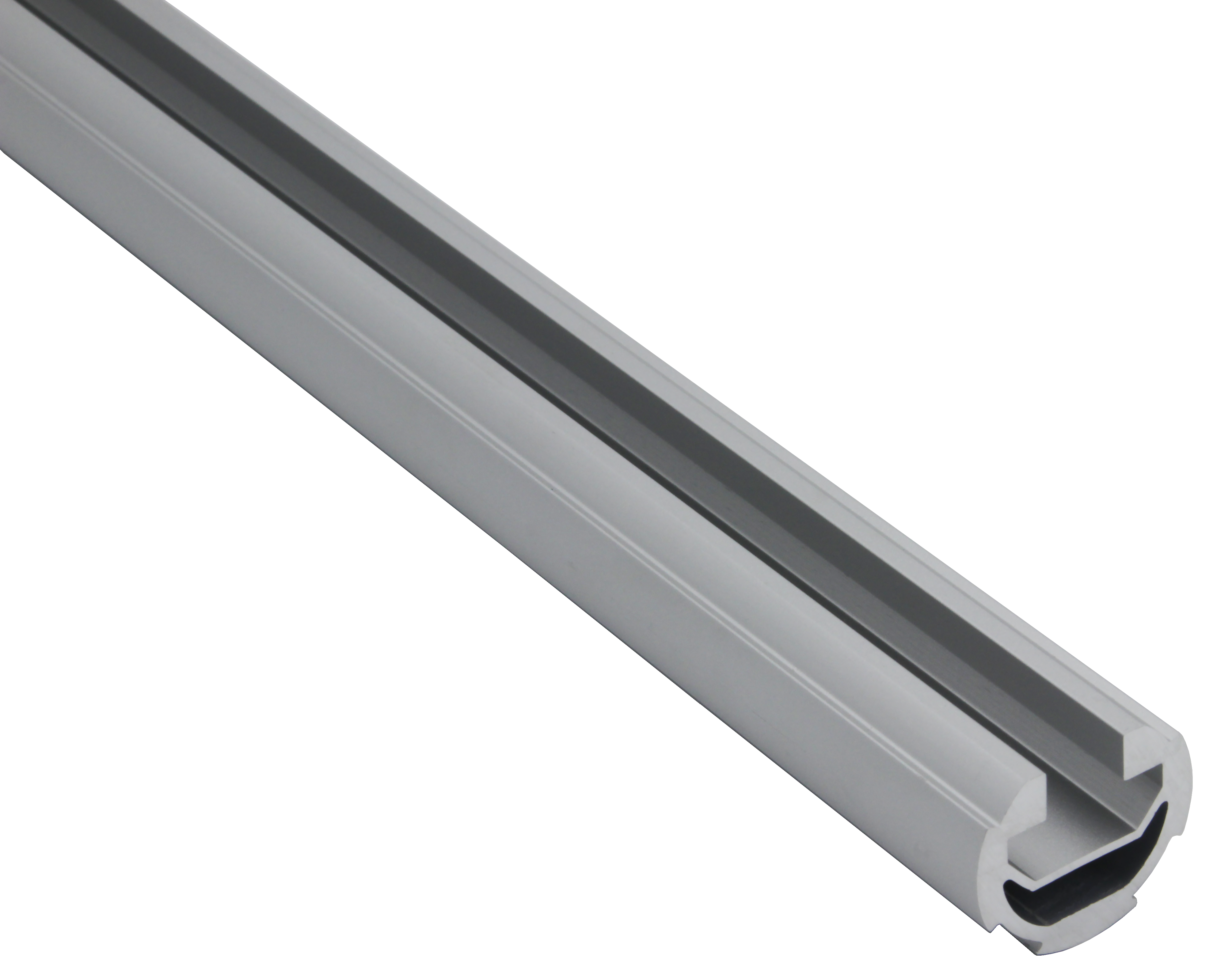
The aluminum pipe opening 10mm is installed into the T-shaped slider, which can be installed with casters or other matching functional parts. The groove can be used for positioning and is used for the track of the roller.
In the fast-paced world of home appliance manufacturing, where precision, speed, and adaptability are non-negotiable, the assembly line stands as the heartbeat of production. Every day, factories churn out refrigerators, washing machines, ovens, and microwaves, each requiring hundreds of components to come together flawlessly. But here's the challenge: consumer demands shift rapidly—new models, updated features, and tighter deadlines mean assembly lines can't afford to be rigid. Traditional setups, often built with fixed steel or wood, struggle to keep up, leading to downtime, high reconfiguration costs, and frustrated workers. Enter T-groove aluminum pipe: a quiet revolution in manufacturing floor design that's changing how teams build, adapt, and optimize their assembly processes. Let's dive into why this material has become a go-to choice for forward-thinking appliance manufacturers.
What Is T-Groove Aluminum Pipe, Anyway?
At first glance, T-groove aluminum pipe might look like any other metal tube, but its magic lies in the details. Picture a long, sleek aluminum extrusion with a continuous T-shaped groove running along its length—this groove is the key to its versatility. Made from lightweight yet durable aluminum alloys (typically 6063-T5, known for its strength and corrosion resistance), these pipes are extruded in a process that shapes molten aluminum into precise profiles, ensuring consistency across every piece. But what truly sets them apart is their compatibility with a vast range of aluminum profile accessories: connectors, brackets, hinges, and fasteners that slide into the T-groove, locking securely in place with a simple twist or bolt. No welding, no drilling, no messy adhesives—just quick, tool-free assembly that even a new line worker can master in minutes.
Think of it as the "Lego of manufacturing." Just as Lego bricks click together to build anything from castles to spaceships, T-groove aluminum pipes and their accessories combine to form workbenches, conveyors, material racks, and more. And like Lego, if you want to redesign or expand, you just take it apart and start fresh—no waste, no hassle. This modularity is a game-changer for environments where change is the only constant.
Why T-Groove Aluminum Pipe Beats Traditional Materials
To understand why T-groove aluminum pipe has become a staple in home appliance factories, let's compare it to the old guards: steel and wood. These materials have been around for decades, but they come with significant drawbacks in dynamic manufacturing settings. Below is a breakdown of how T-groove aluminum stacks up:
| Feature | T-Groove Aluminum Pipe | Traditional Steel | Wooden Structures |
|---|---|---|---|
| Weight | Lightweight (1/3 the weight of steel) | Heavy (requires machinery to move/modify) | Moderate weight, but prone to warping |
| Modularity | Tool-free assembly with aluminum profile accessories; reconfigurable in hours | Fixed (requires welding/cutting to modify) | Static (nails/screws damage wood when disassembled) |
| Durability | Corrosion-resistant; withstands daily wear, moisture, and chemicals | Prone to rust without constant painting/coating | Degrades over time (splintering, rot, pest damage) |
| Ergonomics | Easy to adjust height/angle for worker comfort | Fixed height; hard to adapt for different workers | Bulky, hard to adjust; edges may splinter |
| Long-Term Cost | Higher upfront cost, but lower maintenance and reconfiguration expenses | Low upfront cost, but high repair/modification costs | Cheap initially, but frequent replacement needed |
The data speaks for itself: T-groove aluminum pipe offers a balance of strength, flexibility, and cost-effectiveness that steel and wood can't match. For home appliance manufacturers, this translates to assembly lines that can evolve with product changes, reduce downtime, and keep workers happy—all critical factors in a industry where margins are tight and competition is fierce.
T-Groove Aluminum Pipe in Action: Key Assembly Line Applications
Now that we understand what T-groove aluminum pipe is and why it's superior, let's explore how it's transforming specific parts of the home appliance assembly line. From workbenches where workers piece together components to conveyors that move products seamlessly, this material is proving its worth in every corner of the factory.
1. Workbenches: Where Precision Meets Comfort
Walk into any appliance assembly plant, and you'll find workbenches as the most common sight—these are where the magic happens. A worker might spend 8 hours a day here, attaching control panels to oven doors or wiring circuit boards for refrigerators. The right workbench can mean the difference between a productive, pain-free shift and one filled with backaches and errors. T-groove aluminum pipe excels here because it lets manufacturers build workbenches tailored to the task at hand.
Take, for example, a workbench designed for assembling washing machine control panels. Using T-groove pipe, the team can adjust the height to match the average worker's elbow level (reducing strain), add shelves at varying heights for tools and parts, and mount LED task lights along the edge—all using aluminum profile accessories that clip into the T-groove. Need to add a small conveyor section to feed panels onto the bench? Just attach a roller track placon mount to the side. Want to install an ESD mat to protect sensitive electronics? Use a bracket that slides into the groove and locks in place. When the next model of washing machine comes out with a larger panel, the workbench can be reconfigured in an hour: adjust the shelf positions, extend the length by adding another pipe section, and swap out the roller track for a wider one. No need to order a whole new bench—just repurpose what you have.
One appliance manufacturer in Ohio reported that after switching to T-groove aluminum workbenches, worker complaints about wrist and back pain dropped by 35%, and task completion times for complex assemblies improved by 18%. It's not just about tools—it's about respecting the people behind the products.
2. Conveyors: Moving Parts Without the Headaches
Conveyors are the arteries of the assembly line, moving parts from station to station. In home appliance manufacturing, they need to handle everything from tiny screws to large, heavy panels (like refrigerator doors weighing 50+ pounds). Traditional steel conveyors are tough, but they're also rigid: if you need to change the path to accommodate a new product, you're looking at days of welding, cutting, and rebalancing. T-groove aluminum pipe changes the game with roller track systems that are modular, lightweight, and infinitely adaptable.
Imagine a conveyor line feeding oven doors to the final assembly station. Using T-groove aluminum pipe as the frame, the team can mount plastic roller track guide rails (yellow for visibility, grey for low-light areas) along the top. These rails hold free-spinning rollers that let doors glide smoothly, even with heavy glass inserts. The beauty? If the oven door design changes—say, the new model is 6 inches wider—the team can adjust the conveyor width by the brackets holding the guide rails, sliding them outward, and locking them in place. No welding, no cutting—just a few turns of a wrench. Need to add a 90-degree turn to route doors around a new storage rack? Use a 90° aluminum crossing joint to connect two conveyor sections, ensuring a smooth transition. Even better, T-groove pipe's lightweight nature means the entire conveyor can be moved if the factory layout shifts—just add casters to the base (using caster accessories, of course) and roll it into place.
Another advantage? Maintenance. Steel conveyors often rust at the joints, leading to seized rollers and jams. T-groove aluminum resists corrosion, even in damp factory environments, and the roller track placon mounts are easy to remove and replace if a roller wears out. A plant manager in Texas told me, "We used to have a guy spending 4 hours every week unjamming our steel conveyors. Now, with T-groove aluminum, he spends 30 minutes checking rollers, and jams are almost unheard of."
3. Material Racks: Organizing Parts for Efficiency
A disorganized parts storage area is a productivity killer. Workers waste precious time hunting for the right screw or bracket, and parts get damaged when stacked haphazardly. T-groove aluminum pipe solves this with material racks that are as flexible as they are sturdy. Take material rack B, a common design with 3 rows and 3 floors—perfect for storing small to medium-sized components like oven knobs, gaskets, and wiring harnesses. Built with T-groove pipe, each shelf height can be adjusted by moving the brackets up or down the vertical pipes, and dividers can be added using aluminum guide rails to separate different part numbers. When a new component is introduced (say, a larger knob for a premium oven line), the shelf can be widened by adding a crossbar, or the divider spacing can be increased—no tools required beyond a hex key.
For fast-moving parts, flow racks are a game-changer. These racks use gravity to feed parts to the front, ensuring first-in, first-out (FIFO) inventory management. T-groove aluminum pipe makes building flow racks a breeze: mount swivel roller balls (1 inch or 0.5 inch, depending on part size) along the shelves, and parts glide forward as the front ones are taken. A manufacturer in Mexico City reported that after switching to T-groove flow racks, picking errors (grabbing the wrong part) dropped by 22%, and restocking time was cut in half because workers could adjust shelf heights to match new box sizes in minutes.
4. Lean System Integration: Waste Less, Do More
Lean manufacturing isn't just a buzzword—it's a philosophy centered on eliminating waste, streamlining processes, and empowering workers to drive improvement. T-groove aluminum pipe aligns perfectly with lean principles because it's built for adaptability. In a lean system, every second of downtime or every unnecessary movement is a waste to be eliminated. With T-groove, reconfiguring the assembly line to reduce waste becomes a daily habit, not a quarterly project.
Consider 5S, a lean methodology focused on sorting, setting in order, shining, standardizing, and sustaining. A T-groove aluminum pipe workstation can be "set in order" by mounting shadow boards for tools (using brackets in the T-groove), ensuring everything has a place. When a new tool is added, just add a new bracket—no drilling holes in the wall. For "standardizing," teams can create modular workstation kits: a set of pipes, joints, and accessories that can be quickly assembled into a standardized workbench or rack, ensuring consistency across shifts. And when it's time to "sustain" improvements, the flexibility of T-groove means workers can tweak the setup themselves—no waiting for the maintenance team. One factory in Germany documented that after training line workers to reconfigure their own T-groove stations, 5S compliance rose from 60% to 92% in six months.
Kanban systems, which use visual cues to trigger production, also benefit from T-groove. A kanban board built with T-groove pipe can have magnetic strips (mounted via T-groove brackets) for cards, and adjustable dividers to separate different product lines. When production priorities shift, the board can be reorganized in 10 minutes. It's lean in action—small, constant improvements that add up to big results.
Case Study: How One Appliance Maker Cut Downtime by 40% with T-Groove Aluminum
The Challenge: A mid-sized manufacturer in Tennessee producing electric ovens was struggling to keep up with demand for their new "smart oven" line. Their existing assembly line, built with steel workbenches and fixed conveyors, took 3 weeks to reconfigure when switching from standard ovens to smart ovens—a delay that cost them $120,000 in missed orders. Workers were frustrated with the clunky, unadjustable workstations, and maintenance costs for rusted steel conveyors were eating into profits.
The Solution: The team decided to rebuild the core of their assembly line using T-groove aluminum pipe, focusing on three areas: workbenches, conveyors, and material racks. They partnered with a local T-groove supplier to source pipes, aluminum profile accessories, roller tracks, and casters.
The Results: - Reconfiguration Time: What once took 3 weeks now takes 2 days. When the next smart oven model launched, the team reconfigured the workbenches and conveyors over a weekend, with no production downtime. - Maintenance Costs: Annual spending on conveyor repairs dropped from $45,000 to $12,000, thanks to corrosion-resistant aluminum and easy-to-replace roller track parts. - Worker Productivity: Assembly line throughput increased by 22%, and employee turnover in the assembly department fell by 28%—workers reported feeling "valued and empowered" by the adjustable workstations. - Cost Savings: Within 18 months, the investment in T-groove aluminum paid for itself through reduced downtime, lower maintenance, and higher productivity.

The Future of Assembly Lines: Where T-Groove Aluminum Is Headed
As home appliance manufacturers embrace automation, IoT, and customization, T-groove aluminum pipe is evolving right alongside them. Suppliers are developing smarter accessories, like sensors that mount in the T-groove to track conveyor speed or part counts, and modular robotic arm mounts that let cobots (collaborative robots) be positioned anywhere along the line. There's also a push toward sustainability: aluminum is 100% recyclable, and many suppliers now offer pipes made from recycled materials without sacrificing strength. For manufacturers aiming for net-zero goals, this is a huge win.
Another trend is the integration of T-groove with digital tools. Imagine using a 3D modeling app to design a custom workstation, then ordering the exact T-groove pipes and accessories needed for assembly—no guesswork, no excess inventory. Some suppliers already offer this service, cutting down on lead times and waste.
Perhaps most exciting is the democratization of manufacturing design. With T-groove aluminum pipe, line workers, not just engineers, can contribute to improving the assembly line. A worker who notices that a shelf is too low can adjust it themselves; a team lead who wants to add a new conveyor section can sketch it out and build a prototype in a day. This culture of ownership is transforming factories from top-down operations to collaborative hubs of innovation.

Final Thoughts: More Than Just Pipes—A Tool for People
At the end of the day, T-groove aluminum pipe isn't just a material—it's a tool that empowers people to do their best work. In home appliance manufacturing, where precision and speed matter, it's the difference between struggling to keep up and leading the pack. It's about building assembly lines that adapt to products, not the other way around. It's about respecting workers by giving them ergonomic, flexible workspaces. And it's about future-proofing factories for the inevitable changes ahead.
So the next time you unbox a new refrigerator or start a load of laundry, take a moment to appreciate the invisible infrastructure that brought it to life. Chances are, somewhere along the line, T-groove aluminum pipe played a role—quietly, reliably, and flexibly making sure your appliance was built with care.