- Company Articles
- Products and Technology
- Product knowledge
- T-Groove Aluminum Pipe Sizing Guide: Diameter, Length & Wall Thickness Selection

T-Groove Aluminum Pipe Sizing Guide: Diameter, Length & Wall Thickness Selection
Related Product
T-Groove Aluminum Pipe
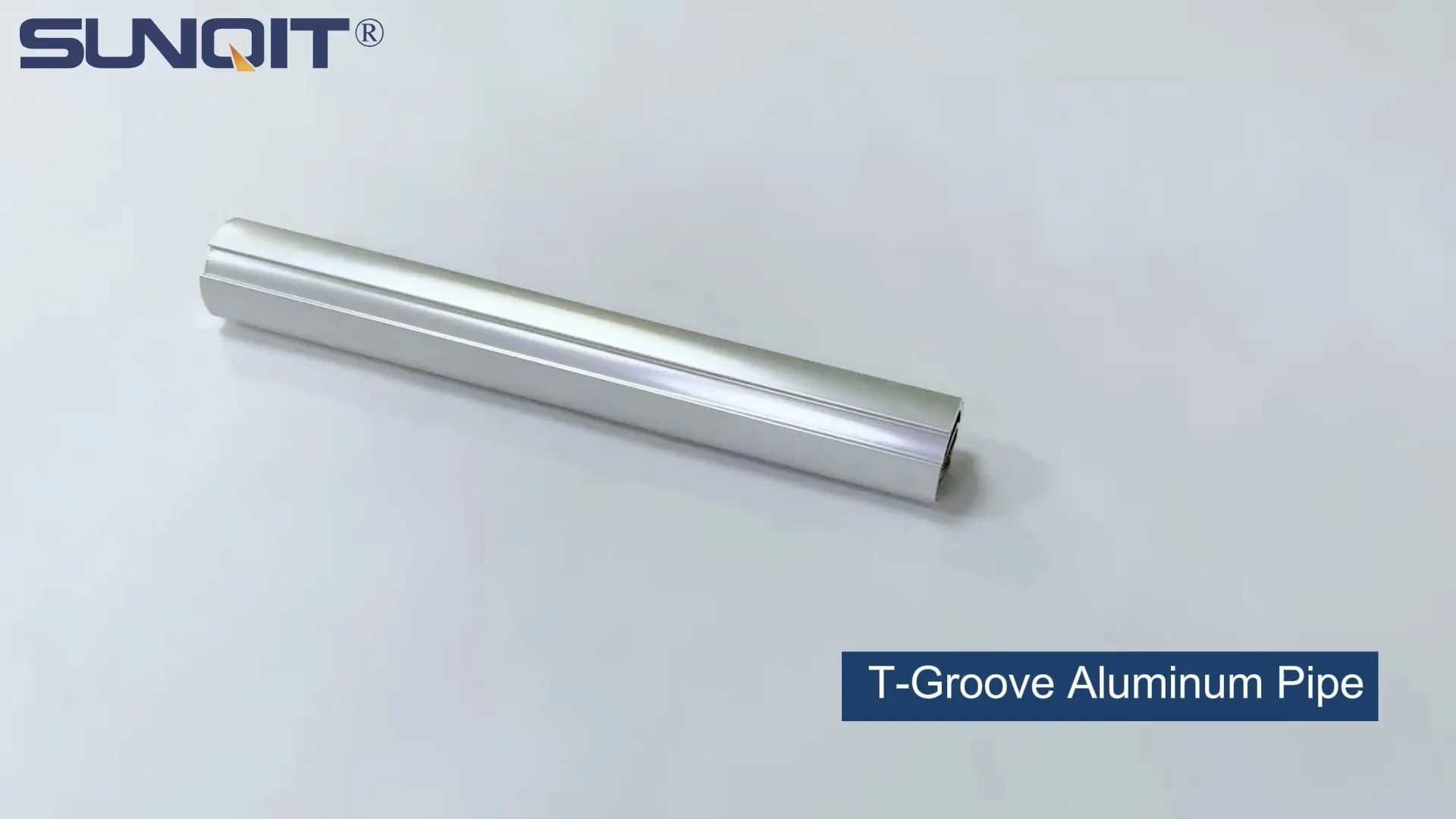
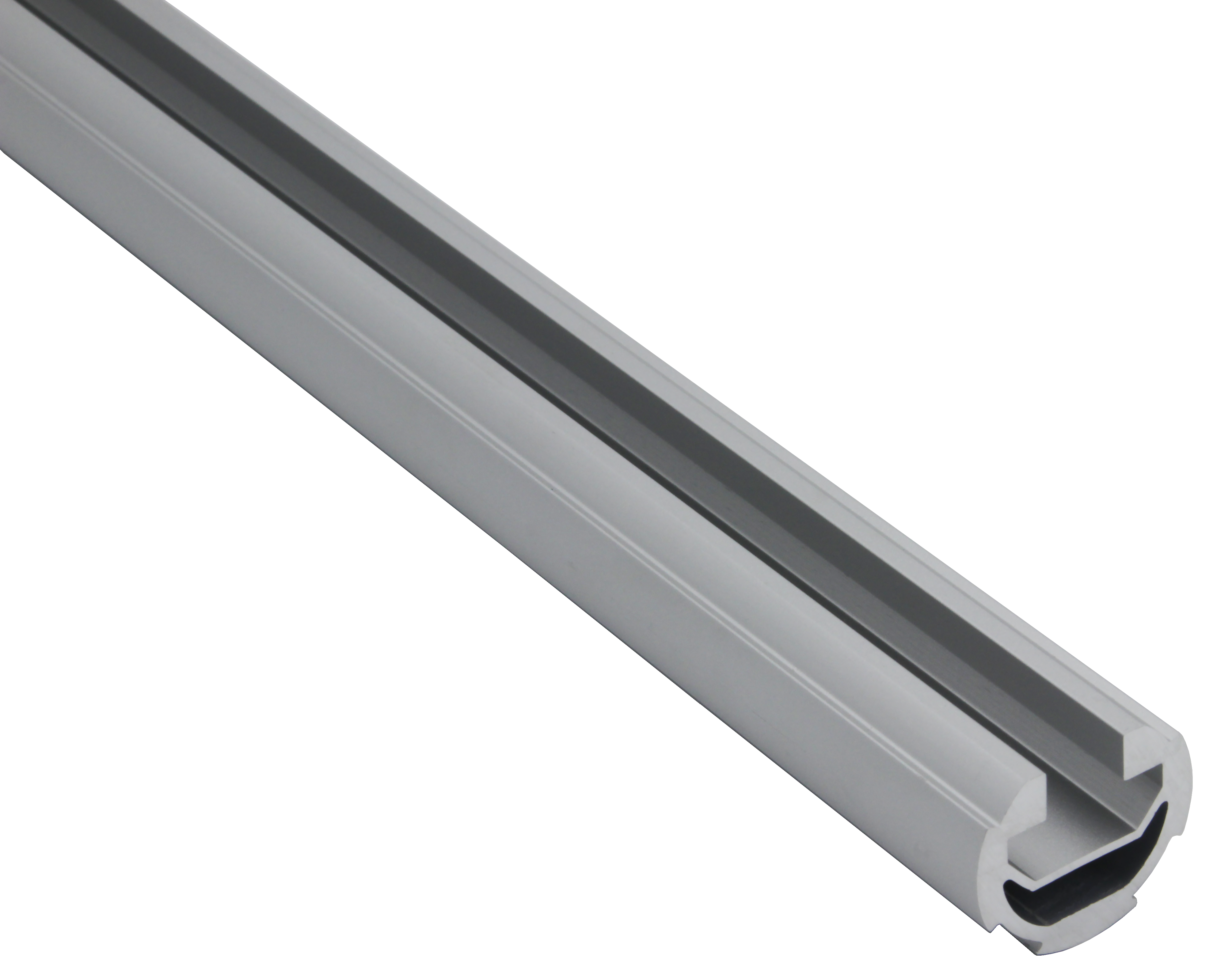
The aluminum pipe opening 10mm is installed into the T-shaped slider, which can be installed with casters or other matching functional parts. The groove can be used for positioning and is used for the track of the roller.
Walk into any modern workshop, manufacturing plant, or even a well-organized garage, and you'll likely spot a common hero quietly holding everything together: T-groove aluminum pipes. These unassuming yet versatile components are the backbone of lean systems, workbenches, material racks, and countless other structures that keep operations running smoothly. But here's the thing—choosing the right T-groove aluminum pipe isn't as simple as grabbing the first one off the shelf. Get the diameter wrong, and your workbench might wobble under tools. Pick a length that's too short, and you'll waste time (and money) on extra joints. Skimp on wall thickness, and you could be looking at costly repairs down the line.
Whether you're a small business owner setting up your first production line, a DIY enthusiast building a garage organizer, or a procurement manager at a large facility sourcing parts for a lean system upgrade, this guide is for you. We'll break down the critical factors—diameter, length, and wall thickness—and how to match them to your needs. Plus, we'll touch on the accessories that turn a basic pipe into a fully functional system. Let's dive in.
Understanding T-Groove Aluminum Pipe Diameter: Size Matters (A Lot)
If there's one measurement that dictates what your T-groove aluminum pipe can (and can't) do, it's diameter. Think of it as the pipe's "strength foundation"—a larger diameter generally means more stability, higher load capacity, and the ability to support heavier accessories. But bigger isn't always better. A pipe that's too large for the job adds unnecessary weight and cost, making assembly clunky and transportation a hassle. Let's break down the most common diameters and when to use each.
Pro Tip: T-groove aluminum pipes are often labeled with a two-part number (e.g., 2020, 3030, 4040), where the first two digits represent the width in millimeters, and the second two represent the height. For square pipes, these numbers are the same (20x20mm, 30x30mm), while rectangular profiles might have different values (e.g., 3060 for 30x60mm). Keep this in mind when shopping—suppliers like to keep things straightforward!
Common T-Groove Aluminum Pipe Diameters & Their Uses
Let's start with the basics. Below is a breakdown of the most widely used T-groove aluminum pipe diameters, their typical applications, and what makes each unique. We'll focus on square profiles here, as they're the most versatile for general use.
| Diameter (mm) | Common Profile Labels | Typical Wall Thickness (mm) | Best For | Max Load Capacity (Approx., per linear meter) |
|---|---|---|---|---|
| 20x20 | 2020 National Standard Profile, 2020 EU Standard | 1.0–1.2 | Light-duty structures: small shelves, display racks, DIY projects, 3D printer frames | 15–25 kg |
| 30x30 | 3030 National Standard Profile A, 3030 EU Standard Profile B | 1.2–1.5 | Medium-duty applications: workbenches (like Workbench E), small material racks, assembly line components | 30–50 kg |
| 40x40 | 4040 EU Standard Profile A, 4040 EU Standard Profile C | 1.5–2.0 | Heavy-duty use: industrial workbenches, conveyor supports, lean system frames, Material Rack B (3 row and 3 floor) | 60–100 kg |
| 50x50+ | 5050, 6060 EU Standard Profiles | 2.0–3.0 | Extreme loads: machine bases, large storage racks, automotive assembly fixtures | 120–200+ kg |
20x20mm (2020 Profile): The Lightweight Workhorse
At just 20mm per side, the 2020 profile is the smallest common T-groove aluminum pipe—and don't let its size fool you. It's perfect for lightweight, precision applications where space is tight. Think: small electronics workbenches (like the compact Workbench E without casters), 3D printer frames, or retail display shelves holding lightweight products. Its narrow profile makes it easy to handle, even for DIYers, and it pairs well with small accessories like 20# aluminum corner codes for quick, sturdy joints.
One of the 2020's biggest advantages? Cost. It's the most affordable option, making it ideal for budget projects or temporary structures. Just remember: it's not built for heavy lifting. Stacking toolboxes or large machinery on a 2020 frame is a recipe for bending or instability.
30x30mm (3030 Profile): The All-Rounder
If there's a "goldilocks" diameter, it's 30x30mm. Not too small, not too large, the 3030 profile strikes a balance between strength and versatility that makes it the go-to for most workshops and small manufacturing setups. Need a sturdy workbench? 3030 can handle power tools and parts bins. Building a material rack for boxes of components? A 3030 frame with aluminum guide rails will keep things stable. Even lean system suppliers often recommend 3030 for medium-duty assembly lines, where it supports conveyors and turnover trolleys without adding excess weight.
What sets 3030 apart is its adaptability. With wall thicknesses ranging from 1.2mm to 1.5mm, it can be tailored to light or medium loads. Plus, it works with a wide range of accessories—from T-slot rubber seal covers to reinforce connections to 3060 aluminum angle yards for extra bracing. It's the kind of pipe you can stock in your workshop and trust to solve 80% of your building needs.
40x40mm (4040 Profile): The Heavy Hitter
When you need to support serious weight, the 40x40mm profile steps up. With thicker walls (often 1.5mm to 2.0mm) and a wider base, it's built for industrial-grade applications. Think: heavy-duty workbenches in automotive shops, material racks holding metal parts (like Material Rack B with 3 rows and 3 floors), or the main frames of lean systems in manufacturing plants. Even roller tracks for moving large bins or pallets often rely on 4040 rails for stability.
The 4040's strength comes with a tradeoff: it's heavier and bulkier than smaller diameters. Assembling a 4040 frame alone can be tough—grab a friend or use a lift if you're working with long lengths. But for projects where safety and durability are non-negotiable, the extra effort is worth it. Many lean system suppliers offer pre-cut 4040 kits for industrial workbenches, which take the guesswork out of sizing.
How to Choose Diameter: 3 Key Questions
Still unsure which diameter is right for you? Ask yourself these three questions:
- What's the maximum weight the structure will hold? A quick load test: if you're building a shelf for 5kg boxes, 2020 works. For 50kg tool chests, go 3030 or 4040.
- How much space do I have? In tight workshops, a 4040 frame might crowd the area. Opt for 3030 if space is limited but you still need strength.
- Will it need to move? If you're building a mobile trolley, lighter 3030 (or even 2020) will be easier to maneuver than 4040.
Length: Getting the Right Fit Without Wasting Material
Once you've nailed down diameter, the next step is length. It might seem simple—just measure how long you need, right? But there's more to it than that. T-groove aluminum pipes come in standard lengths (usually 2.5m, 3m, or 6m), and cutting them to size can save you money, reduce waste, and make assembly smoother. Let's break down how to choose the perfect length for your project.
Standard vs. Custom Lengths: Pros and Cons
Most suppliers sell T-groove aluminum pipes in fixed standard lengths, typically 6 meters (about 19.7 feet) for larger diameters like 4040, and 3 meters (9.8 feet) for smaller ones like 2020. Why 6m? It's a common length for shipping—easily fits on trucks without extra fees—and it's versatile enough to be cut into smaller pieces for most projects. But standard lengths aren't one-size-fits-all. Here's when to stick with standard and when to go custom:
Standard Lengths: Best for large projects where you can use most of the pipe (e.g., building a 2.5m workbench from a 3m pipe, with leftover for small shelves). They're also cheaper per meter than custom-cut pipes.
Custom Lengths: Ideal for precision projects where every millimeter counts (e.g., a wall-mounted shelf that must fit exactly between two studs). Many suppliers offer cutting services for a small fee, and some even include it free with bulk orders.
Calculating Length: Avoiding the "Oops, I Cut It Too Short" Mistake
The golden rule of length calculation: measure twice, cut once. But even that might not be enough. Here's a step-by-step method to get it right:
- Sketch your design. Draw the structure to scale (even a rough sketch works) and label each pipe segment with its intended length.
- Add joint allowances. When pipes connect with joints (like internal straight aluminum joints), they overlap slightly. Most joints add 10–15mm to the total length per connection. For example, two 1m pipes joined together will actually span ~1.98m (1m + 1m – 20mm overlap).
- Check standard lengths for efficiency. If your sketch calls for four 1.5m pipes, a 6m standard length can be cut into four 1.5m pieces with zero waste—perfect! If you need 1.7m pipes, a 6m length will give you three (1.7x3=5.1m) with 0.9m leftover. Decide if the leftover is useful for other projects or if custom cutting is better.
- Account for transportation. A 6m pipe won't fit in a sedan. If you don't have a truck, opt for 3m lengths or ask the supplier to cut them to 2.5m for easier transport.
Minimizing Waste: The Art of "Nested" Cuts
Waste isn't just bad for the environment—it's bad for your wallet. A 6m pipe that's cut into 1m pieces leaves 0m waste, but if you cut it into 1.2m pieces, you'll have 6m / 1.2m = 5 pieces (6m total) with no waste. But if you need 1.3m pieces? 6 / 1.3 ≈ 4 pieces (5.2m), leaving 0.8m unused. That 0.8m might seem small, but multiply it by 10 pipes, and you're wasting 8m of material—enough for another project!
The solution? "Nested" cutting: design your project to use leftover pieces from longer cuts. For example, if you need 4x1.3m pipes (total 5.2m), use the leftover 0.8m to build a small shelf or bracket. Many lean system suppliers use this trick to keep costs low—they plan entire systems around standard pipe lengths to minimize scraps.
Wall Thickness: Balancing Strength and Weight
Diameter and length get all the attention, but wall thickness is the silent hero (or villain) of T-groove aluminum pipe performance. A pipe with a thicker wall can support more weight, resist bending, and last longer—but it's also heavier and more expensive. A thinner wall saves weight and cost but sacrifices strength. Finding the right balance is key, and it all depends on your project's needs.
Common Wall Thicknesses and Their Uses
T-groove aluminum pipes typically come in wall thicknesses ranging from 1.0mm to 3.0mm, with 1.2mm, 1.5mm, and 2.0mm being the most common. Here's how to choose:
| Wall Thickness (mm) | Best For | Key Benefit | Example Applications |
|---|---|---|---|
| 1.0–1.2mm | Light-duty, low-load | Lightweight, affordable | Display shelves, small 3D printer frames, 2020 profile structures |
| 1.5mm | Medium-duty, balanced | Strength + weight savings | 3030 profile workbenches, material racks, lean system components |
| 2.0–3.0mm | Heavy-duty, high-load | Maximum strength | 4040 profile machine bases, industrial conveyor supports, Material Rack B (3 row, 3 floor) |
1.0–1.2mm: Light and Nimble
Thinner walls (1.0–1.2mm) are all about lightweight efficiency. They're perfect for structures that don't need to hold much weight but still require rigidity—like small workbenches for hobbies, retail displays, or temporary partitions. The 2020 profile with 1.2mm walls is a classic example: it's easy to cut, drill, and assemble by hand, making it a favorite for DIYers. Just remember: while it's rigid enough for light tools or small parts, it will bend under heavy loads (think: over 25kg per linear meter).
1.5mm: The Sweet Spot for Most Projects
For most workshops and small manufacturers, 1.5mm walls hit the sweet spot. They offer enough strength to handle medium loads (30–50kg per linear meter for 3030 profiles) without adding excessive weight. This makes them ideal for workbenches, material racks, and even mobile trolleys—you can move the structure without straining, but it won't wobble when loaded. Many lean system suppliers default to 1.5mm walls for 3030 and 4040 profiles, as they balance durability and cost for everyday use.
2.0mm+: Built for the Long Haul
When you need to support heavy machinery, large parts, or constant use, 2.0mm (or thicker) walls are non-negotiable. These pipes are the backbone of industrial setups—think automotive assembly lines, heavy tool storage, or machine bases that take years of vibration and weight. A 4040 profile with 2.0mm walls can easily handle 100kg+ per linear meter, making it perfect for Material Rack B (with 3 rows and 3 floors) holding metal components or large bins.
The downside? Thicker walls mean heavier pipes. Assembling a 6m 4040 pipe with 2.0mm walls alone is tough—you'll need help lifting it. They're also pricier, so reserve them for projects where strength is critical.

Putting It All Together: Application-Based Sizing Examples
Let's tie it all together with real-world examples. Below are three common projects, and how we'd choose diameter, length, and wall thickness for each.
Example 1: Home Garage Workbench
Goal: A sturdy workbench for car repairs, with a 1.8m (6ft) length, 0.6m (2ft) depth, and storage shelves below.
Sizing Choices:
- Diameter: 30x30mm (3030 profile). It's strong enough for tools and parts but not too bulky for a garage.
- Length: Standard 3m pipes cut to 1.8m (tabletop frame) and 0.6m (legs). Leftover 1.2m pieces can build the lower shelves.
- Wall Thickness: 1.5mm. Balances strength for toolboxes (up to 50kg) and weight for easy assembly.
- Accessories: 3060 aluminum angle yards for bracing, T-slot rubber seal cover to protect the tabletop edge, and casters (with caster accessories) for mobility.
Example 2: Small Manufacturing Material Rack
Goal: A 3-row, 3-floor material rack (like Material Rack B) to hold boxes of electronic components, each weighing ~15kg.
Sizing Choices:
- Diameter: 40x40mm (4040 profile). Need to support 3 rows x 3 floors x 15kg = 135kg total, plus the rack itself.
- Length: 6m pipes cut to 1.2m (height), 0.9m (width), and 0.4m (depth). 6m / 1.2m = 5 pieces per pipe, minimizing waste.
- Wall Thickness: 2.0mm. Heavy-duty enough for the load, and the 4040 profile ensures stability.
- Accessories: Aluminum guide rails to keep boxes from sliding, roller track placon mount brackets for easy box movement, and end support for roller track placon mount with stop to prevent overshooting.
Example 3: Retail Display Shelf
Goal: A wall-mounted shelf for small toys, 1.2m long, holding ~2kg per linear meter.
Sizing Choices:
- Diameter: 20x20mm (2020 profile). Lightweight and sleek for retail spaces.
- Length: 3m pipe cut to 1.2m. Two shelves per pipe, with leftover for smaller displays.
- Wall Thickness: 1.2mm. More than enough for 2kg/m, and lightweight for wall mounting.
- Accessories: 20# aluminum corner codes for mounting to the wall, plastic roller track guide rail yellow for a pop of color, and plastic end caps for safety.

Accessorizing Your T-Groove Aluminum Pipes: The Finishing Touches
A pipe is just a pipe—until you add accessories. Aluminum profile accessories turn basic pipes into functional systems, and choosing the right ones can make assembly faster, stronger, and more versatile. Here are the must-have accessories to consider:
Joints and Connectors
Joints are the glue that holds your structure together. For T-groove pipes, the most common types are:
- Aluminum corner codes: 20# for 2020 profiles, 3060 aluminum angle yards for 3030/3060. These L-shaped brackets reinforce 90° joints.
- Internal straight aluminum joints: Slide into the T-slot to connect pipes end-to-end for longer lengths.
- Multi-angle fixed aluminum joints: For non-90° angles, like 45° or 135° connections.
Covers and Edging
Protect your pipes and improve safety with these:
- T-slot rubber seal cover: Slides into the T-groove to cover sharp edges and prevent debris buildup.
- Plastic pipe end caps: Snap onto pipe ends to hide rough cuts and prevent injuries.
Functional Add-Ons
Make your structure work harder:
- Roller tracks: 40 steel roller track yellow wheel for material racks, or 38 aluminum roller track black esd with side guide for ESD-sensitive electronics.
- Casters: Swivel stem caster wheel with brake for mobile workbenches or trolleys.
- Workbench tops: Aluminum honeycomb panel for a flat, sturdy surface (like Workbench A).
Pro Tip: Buy accessories from the same supplier as your pipes. Different brands sometimes have slight variations in T-groove size, which can make joints or covers a tight (or loose) fit. A reliable lean pipe supplier will ensure all parts work together seamlessly.
Final Thoughts: Sizing with Confidence
Choosing the right T-groove aluminum pipe comes down to three questions: What will it hold? Where will it go? And how much can I spend? By matching diameter to load, length to space, and wall thickness to strength needs, you'll build structures that are sturdy, efficient, and cost-effective.
Remember: there's no "perfect" pipe for every project—but with the guidelines here, you'll be able to size with confidence. And when in doubt, reach out to a trusted supplier. A good lean system supplier or aluminum profile specialist can help you tweak your choices based on their expertise.
Now go build something great—your well-sized T-groove aluminum pipes are waiting!