- Company Articles
- Products and Technology
- Product knowledge
- T-Groove Aluminum Pipe Structure Explained: How Groove Design Enhances Flexibility

T-Groove Aluminum Pipe Structure Explained: How Groove Design Enhances Flexibility
Related Product
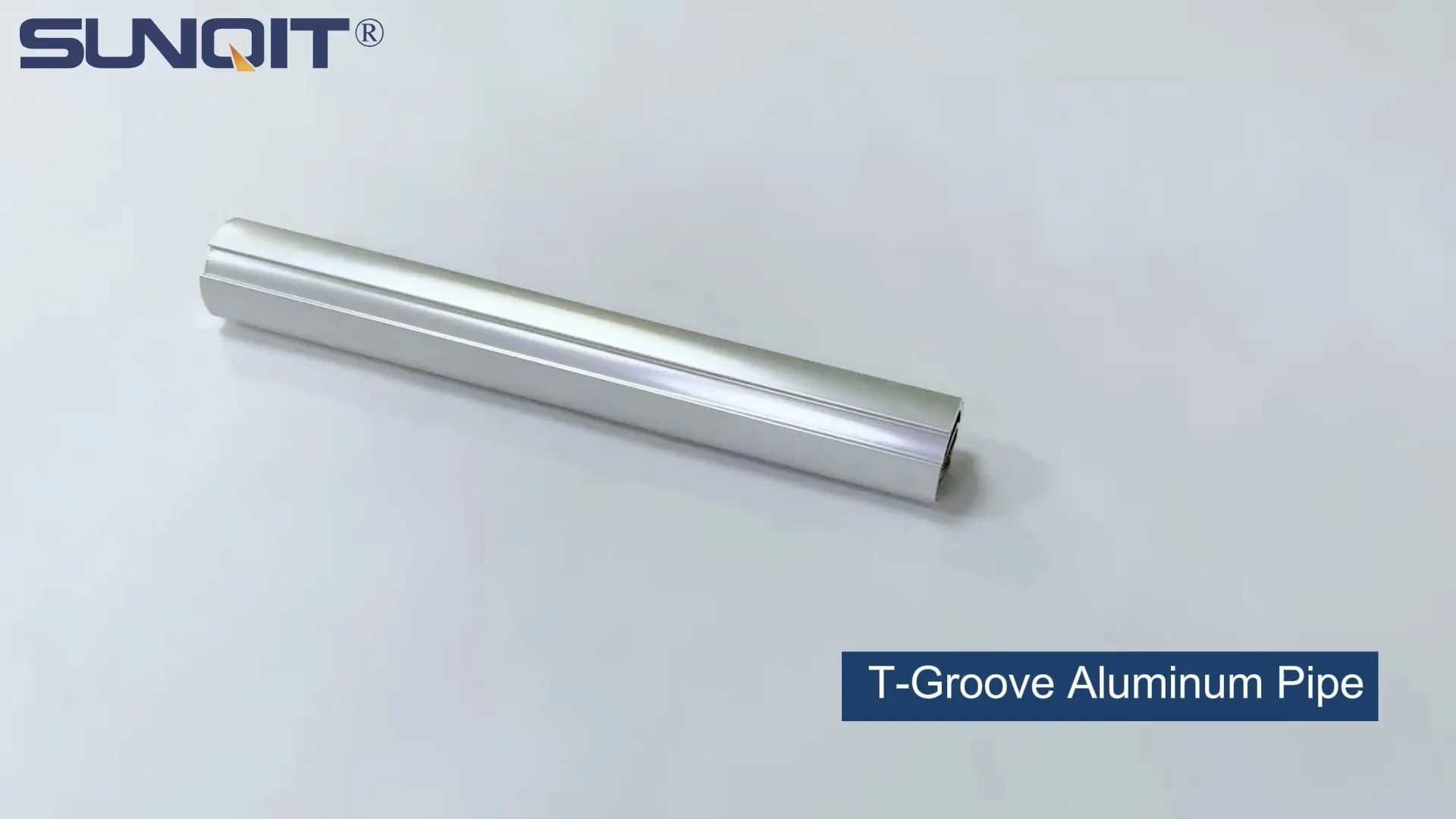
T-Groove Aluminum Pipe
The aluminum pipe opening 10mm is installed into the T-shaped slider, which can be installed with casters or other matching functional parts. The groove can be used for positioning and is used for the track of the roller.
Introduction: The Unsung Hero of Flexible Workspaces
Ever walked into a busy workshop, a bustling factory floor, or even a small garage-turned-inventor's den and thought, "How do they make all this chaos work so smoothly?" Maybe you noticed a workbench that seemed to shift from holding heavy tools one minute to delicate electronics the next, or a material rack that somehow expanded to fit a sudden surge in inventory without a single loose screw. Chances are, you were looking at a system built with T-Groove aluminum pipes. These unassuming metal tubes, with their signature T-shaped channels running along their length, are the quiet backbone of flexible, adaptable workspaces everywhere. They're not just pipes—they're building blocks for problem solvers.
In a world where businesses and creators need to pivot fast—whether it's scaling production, retooling for a new project, or just making the most of limited space—rigidity is the enemy. Traditional materials like steel pipes (heavy, hard to modify, requiring welding) or wood (prone to warping, one-and-done designs) often leave you stuck. But T-Groove aluminum? It's different. Its magic lies in that simple groove: a narrow, precise channel that turns a basic pipe into a modular masterpiece. Today, we're diving deep into how this clever design works, why it matters, and how it transforms "good enough" workspaces into ones that grow, adapt, and thrive.
What Even Is a T-Groove Aluminum Pipe?
Let's start with the basics. A T-Groove aluminum pipe—sometimes called a T-slot aluminum pipe—is exactly what it sounds like: an aluminum tube (usually hollow, for lightness and strength) with a long, T-shaped groove extruded along its length. This groove isn't just a design quirk; it's a purpose-built feature that lets you attach, adjust, and reconfigure components with ease. Think of it as a built-in "track" that accessories like brackets, joints, and shelves can slide into, lock down, and move again later if needed.
But first, let's talk about the material itself: aluminum. Not just any aluminum, though—we're talking about aluminum extrusion profile. Extrusion is the process where heated aluminum billets are forced through a die (a custom-shaped mold) to create long, uniform lengths of pipe with the exact cross-section you need. For T-Groove pipes, that die includes the T-slot, so the groove is part of the pipe's DNA, not an afterthought. This matters because it means every inch of that groove is consistent—same width, same depth, same angle—so accessories from different manufacturers (yes, even competitors) can play nice together. No more hunting for "matching parts" or dealing with ill-fitting hardware.
And aluminum? It's the perfect partner for this job. It's lightweight enough that you can assemble a workbench by yourself without straining your back, but strong enough to hold hundreds of pounds (think tool chests, engine parts, or stacks of inventory). It's also corrosion-resistant, so it won't rust in damp garages or factories, and it takes anodized finishes well—meaning you can get it in colors that match your workspace vibe (or just keep it sleek, natural silver). In short, it's durable, versatile, and ready to work hard.
The Groove: Small Design, Big Impact
Anatomy of the T-Slot
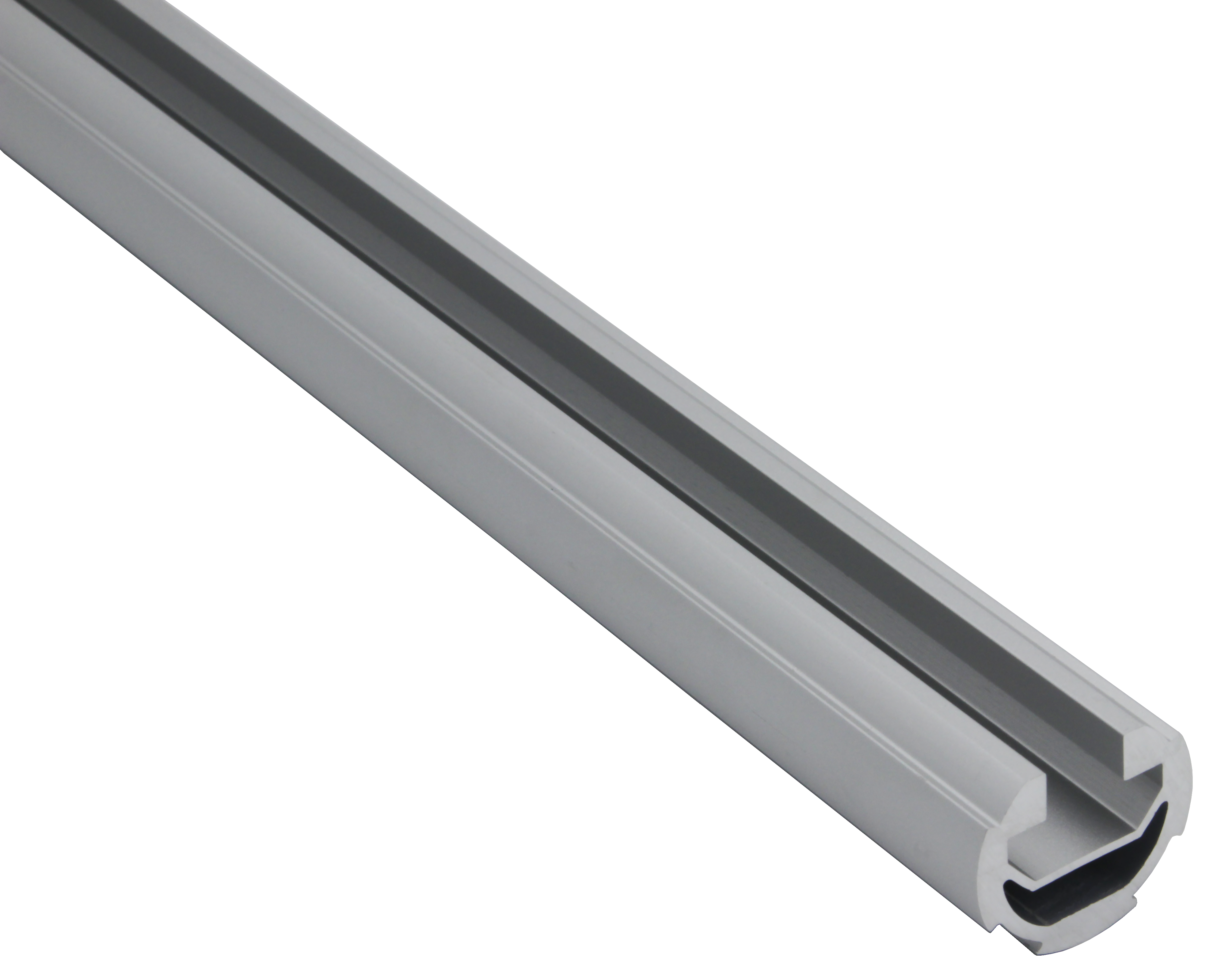
Let's zoom in on that groove. Picture a cross-section of the pipe: the main tube is usually round or square (square is common for stability), and along one side, there's a narrow opening that widens slightly inside—like a T lying on its side. The "top" of the T is the narrow opening on the pipe's surface, and the "stem" is the wider channel inside. Why does this shape matter? Because it lets you slide a special fastener (called a sliding nut or T-nut) into the groove from the end of the pipe, where it can then move freely along the channel. Once you position the nut where you want it, you tighten a bolt through your accessory (say, a shelf bracket) and into the nut. The T-shape locks the nut in place—no spinning, no slipping, just a secure hold that can be loosened and repositioned whenever you need.
Here's a real-world example: Imagine you're building a workbench. You start with four T-Groove pipes as legs. Using L-shaped joints (aluminum profile accessories, to be precise), you attach horizontal pipes to form the frame. Then, you slide shelf brackets into the grooves on those horizontal pipes—maybe one shelf near the bottom for tools, another halfway up for parts. A few months later, you need more space for a larger project, so you loosen the bolts, slide the brackets up, and suddenly you've got a taller, roomier work surface. No drilling new holes, no sawing pipes, no swearing over stripped screws. Just adjust and go.
Why Aluminum Extrusion Profile Makes All the Difference
None of this would work without aluminum extrusion profile. Extrusion isn't just a manufacturing method—it's what makes the T-slot so precise and reliable. When aluminum is extruded, it's heated until it's malleable, then pushed through a steel die under intense pressure. The die's shape determines the pipe's cross-section, including that critical T-groove. This process creates pipes with incredibly consistent dimensions: the groove width, depth, and angle are the same from one end of the pipe to the other, and from one pipe to the next. That consistency is key because it means accessories—whether they're from a big supplier or a small shop—will fit perfectly. A bracket designed for a 20mm T-slot will work on any 20mm T-Groove pipe, no exceptions. It's like LEGOs for grown-ups, but sturdier.
Compare that to, say, drilling holes in steel pipes. Even with careful measuring, holes are never perfectly aligned, and once you drill, you can't undrill. With extrusion, the groove is built in, so every inch of the pipe is a potential attachment point. Need to add a hook 3 inches from the top? Slide a nut into the groove, position it, and tighten. Need to move it 6 inches down next week? No problem. That's the extrusion advantage: flexibility baked right into the material.

The Team Players: Aluminum Profile Accessories
A T-Groove pipe alone is just a pipe. But pair it with the right aluminum profile accessories, and it becomes a superpower. These accessories are the "glue" that turns individual pipes into functional systems—think joints that connect pipes at any angle, brackets that hold shelves or panels, and even tiny sliding nuts that make adjustments a breeze. Let's break down the MVPs of this team:
| Accessory Type | What It Does | Real-World Use Case |
|---|---|---|
| Joints (e.g., 90° aluminum pipe joint) | Connect two or more pipes at angles (90°, 45°, 135°, etc.) without welding. | Building the corners of a workbench frame or a material rack. |
| Brackets (e.g., shelf brackets, panel mounts) | Attach flat surfaces (wood, metal, plastic) to pipes. | Adding a tabletop to a workbench or a tool board to a wall-mounted pipe. |
| Sliding Nuts & Bolts | Lock accessories into the T-groove; slide to reposition. | Adjusting the height of a shelf on a material rack or moving a tool holder on a workbench. |
| End Caps | Cover the open ends of pipes to prevent sharp edges or debris buildup. | Finishing the legs of a workbench for a clean look and safety. |
| Casters (with T-slot mounts) | Add wheels to bases, making systems mobile. | Turning a stationary workbench into a rolling cart for moving tools around a shop. |
The beauty of these accessories is that they're designed to work together seamlessly. A 90° joint from one brand will fit a T-slot pipe from another, and a shelf bracket will pair perfectly with a sliding nut from a third. This interoperability is a game-changer for anyone building or modifying systems. You don't have to buy an entire "kit"—you can mix and match based on your needs. Need a heavy-duty joint for a load-bearing shelf? Grab that. Want a lightweight bracket for a small parts bin? That works too. It's flexibility in action, right down to the smallest component.

How the Groove Design Solves Real-World Problems
Okay, so we know the groove is clever and the accessories are handy—but how does this actually make life easier? Let's look at three common scenarios where T-Groove aluminum pipes shine, thanks to that T-slot design.
Scenario 1: The Growing Small Business
Meet Maria, who runs a small electronics repair shop. When she started, she had a single workbench (a basic wooden table) and a rickety shelf for parts. As her business grew, she needed more space—but her shop was tiny. A friend suggested T-Groove aluminum, and Maria built a custom workbench using T-slot aluminum pipes for the frame. She added a pegboard on one side (using brackets) for tools, and sliding shelves below (adjustable via the T-groove) for parts bins. Six months later, she started offering custom circuit-building services and needed a space for soldering irons and heat guns. Instead of buying a new bench, she loosened the brackets holding the pegboard, slid them up, and added a second tier of shelves below. Total time spent: 20 minutes. Cost: $0 (she already had the extra brackets). That's the groove design at work—growing with you, not against you.
Scenario 2: The Garage Inventor
Then there's Raj, an inventor who prototypes everything from robot kits to custom bike parts. His problem? Every project needs a different setup. One week, he's building a small drone (needing a clutter-free, static-free surface); the next, he's fabricating a metal frame (needing a sturdy bench that can take hammering). With T-Groove aluminum, he built a "transformer" workbench: the base is a frame of T-slot pipes with casters (so he can roll it out of the way when not in use). He has interchangeable tops: a wooden board for general work, an ESD-safe mat (for electronics) that clamps into the T-groove, and a steel plate (for metalworking) that bolts on with sliding nuts. When he needs to drill, he adds a vice by sliding its mounting brackets into the groove. When the project's done? He swaps the top, folds down the vice, and rolls the bench into the corner. No more tripping over multiple workbenches—just one that does it all.
Scenario 3: The Factory Floor Pivot
Even big operations benefit. A mid-sized auto parts factory recently switched to T-Groove aluminum for their assembly line material racks. Previously, they used fixed steel racks—if a new part was larger than the shelf spacing, they had to weld on extensions or buy new racks (costing time and money). Now, with T-slot aluminum racks, line workers can adjust shelf heights in minutes using nothing but a hex key. When a rush order came in for larger components last quarter, the team reconfigured three racks in under an hour, keeping production on track. The maintenance manager later joked, "We used to have a guy whose whole job was drilling holes in steel. Now he's building new racks instead of fixing old ones."
Why Not Just Use Steel? Or Wood? The T-Groove Advantage
You might be thinking, "Steel is strong, wood is cheap—why bother with aluminum?" Fair question. Let's break down the trade-offs:
Steel pipes: Strong, yes, but heavy. A 10-foot steel pipe can weigh 20+ pounds; aluminum? Half that, or less. Lifting steel requires help, and reconfiguring a steel frame means welding (which needs skills and tools) or drilling (permanent, messy). Plus, steel rusts—bad news in damp environments. T-Groove aluminum? Light enough to carry solo, no welding required, and corrosion-resistant. It's not as strong as steel, but for most workshop or factory needs (holding parts, tools, workbenches), it's more than tough enough.
Wood: Cheap and easy to cut, but it warps, cracks, and can't handle moisture. A wooden shelf might work for a year, but then it sags under weight. And once you build it, it's built—no adjusting. T-Groove aluminum? It'll outlast wood by decades, and if you need to change its shape, you just… do it. No sawing, no glue, no regrets.
Plastic pipes: Light and cheap, but flimsy. They bend under heavy loads and can't handle heat (like a hot soldering iron accidentally touching them). Aluminum? Stiff, heat-resistant, and built to take a beating.
The T-groove itself is the cherry on top. None of these alternatives offer that built-in, infinitely adjustable attachment system. Steel has holes (fixed), wood has screws (permanent), plastic has… well, not much. T-Groove aluminum? It's the only one that lets you say, "I need to move this 3 inches to the left," and actually do it—quickly, easily, and without ruining the material.
Beyond the Basics: The Future of T-Groove Design
T-Groove aluminum pipes aren't stuck in the past, either. Manufacturers are constantly innovating, adding features that make them even more flexible. For example, some newer pipes have double T-grooves (two slots per pipe) for even more attachment points, or rounded edges for safety. Aluminum profile accessories are getting smarter too: quick-release brackets (no tools needed), spring-loaded nuts (lock in place with a click), and even modular panels with built-in T-slots (so you can attach accessories directly to walls or machine surfaces).
There's also a growing focus on sustainability. Aluminum is 100% recyclable, and since T-Groove systems are modular, they generate less waste—you can reuse pipes and accessories for new projects instead of throwing them away. Many suppliers now offer recycled aluminum options, too, making it a greener choice than ever.
Conclusion: Flexibility Isn't a Bonus—It's a Necessity
At the end of the day, T-Groove aluminum pipes are more than a building material. They're a philosophy: that your workspace shouldn't limit you—it should empower you. Whether you're a small-business owner like Maria, an inventor like Raj, or part of a big factory team, the ability to adapt quickly, solve problems on the fly, and make the most of what you have is everything. And that's exactly what the T-slot design delivers.
It starts with that simple groove: a channel that turns a pipe into a tool for creativity. Add in aluminum extrusion profile (precise, consistent, strong), pair it with aluminum profile accessories (the right part for every job), and you've got a system that doesn't just work —it evolves. It turns "I can't" into "I can adjust." It turns "We'll have to buy new" into "We'll just reconfigure."
So the next time you walk into a workspace that feels like it was designed with you in mind—one that bends, grows, and keeps up with your ideas—take a closer look. Chances are, you'll spot those T-shaped grooves, quietly doing their job. And now, you'll know: that's not just a pipe. That's flexibility, built in.