- Company Articles
- Products and Technology
- Product knowledge
- T Slot Aluminum Pipe for Automated Systems: Integration with Robotics

T Slot Aluminum Pipe for Automated Systems: Integration with Robotics
Related Product
T Slot Aluminum Pipe
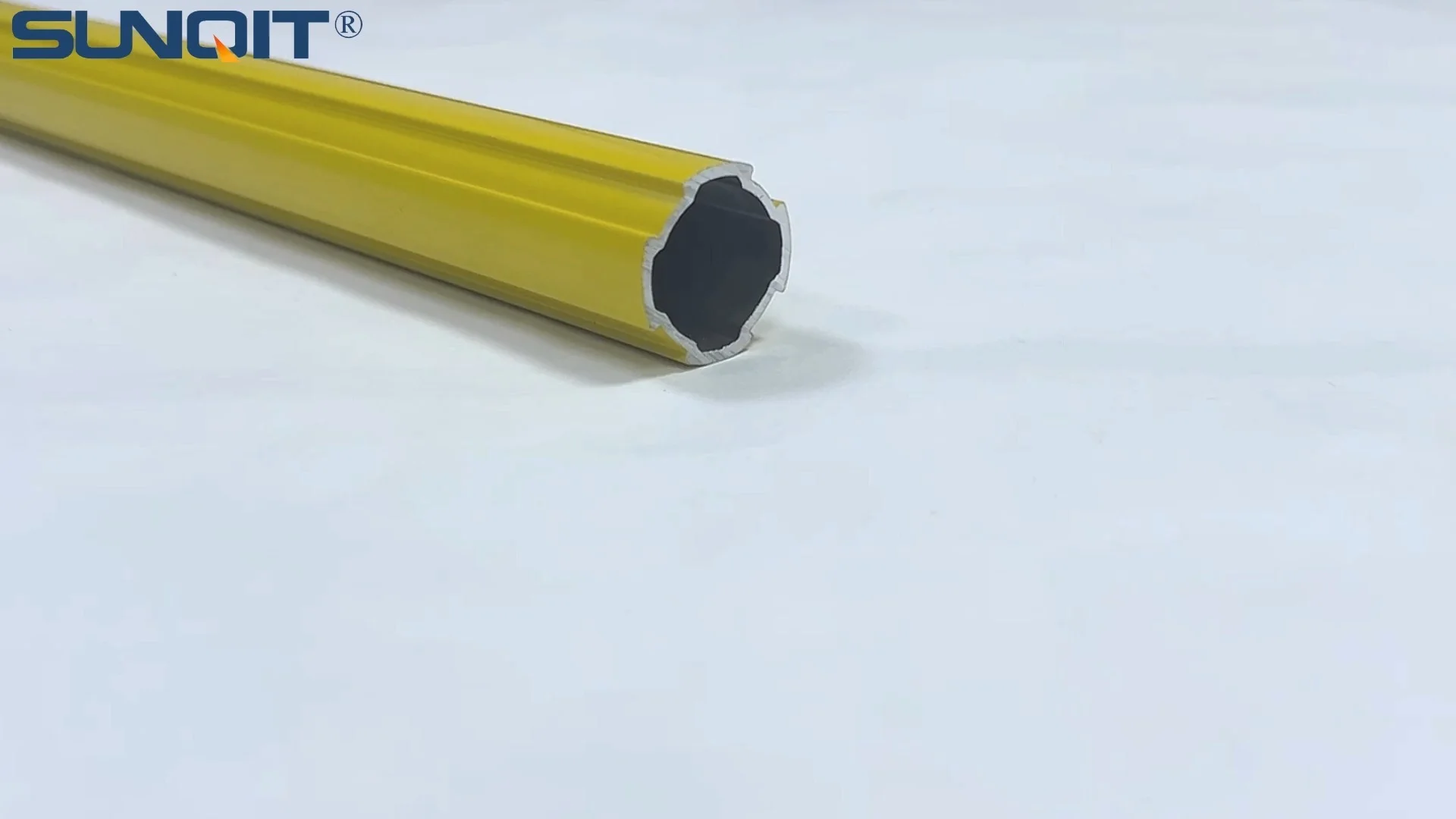
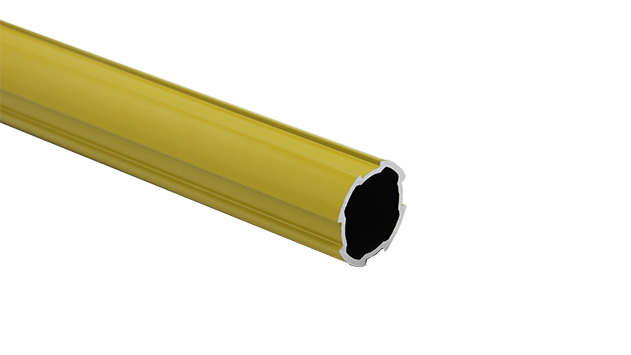
Aluminum pipe, it is used for workbench, flow rack,hand trolley assemble work with advantage of flexible and durable, yellow color makes it more attactive as a caution remind.
Walk into any modern manufacturing facility, warehouse, or logistics center today, and you'll likely be greeted by the hum of robots working alongside humans—precision arms assembling electronics, autonomous carts ferrying materials, and automated systems streamlining workflows that once relied solely on manual labor. This shift toward automation isn't just about speed; it's about adaptability, efficiency, and the ability to pivot quickly in a world where consumer demands and production needs change overnight. At the heart of this transformation lies a quiet hero: T Slot Aluminum Pipe. It's not the flashiest technology on the floor, but without it, many of these robotic and automated systems would struggle to deliver the flexibility and reliability that businesses depend on.
In this article, we'll dive into why T Slot Aluminum Pipe has become indispensable in automated systems, especially when paired with robotics. We'll explore how its unique design solves real-world challenges, from custom workbench setups where robots perform intricate tasks to roller tracks that keep materials flowing seamlessly to robotic workstations. We'll also touch on the accessories that make it so versatile and hear from industries where this unassuming component has made a measurable difference. By the end, you'll understand why T Slot Aluminum Pipe isn't just a building material—it's a catalyst for innovation in automation.
What is T Slot Aluminum Pipe, Anyway?
Let's start with the basics. T Slot Aluminum Pipe—often referred to as aluminum extrusion profile—is exactly what it sounds like: lightweight, durable aluminum tubes (or "profiles") with continuous T-shaped grooves (the "slots") running along their length. These slots aren't just for show; they're the secret to its adaptability. Unlike traditional steel pipes or fixed metal framing, which require welding, drilling, or specialized tools to modify, T Slot Aluminum Pipe lets you attach brackets, panels, sensors, or even robotic arms using simple fasteners that slide into the slots and tighten into place. It's like building with a set of modular, industrial-grade Legos, but designed for the rigors of factory floors and automated environments.
But not all aluminum extrusion profiles are created equal. The term "aluminum extrusion" refers to the manufacturing process: heated aluminum billets are pushed through a die to create consistent, custom cross-sections. For T Slot Aluminum Pipe, these cross-sections are engineered with those T-slots in mind, ensuring that accessories like connectors, guides, and mounts fit securely and can be repositioned in minutes. This matters because in automated systems, rigidity is important, but so is the ability to reconfigure on the fly. A production line that builds smartphones today might need to switch to tablets next month, and T Slot Aluminum Pipe makes that transition possible without tearing down entire workstations.
Another key point: T Slot Aluminum Pipe is part of a larger ecosystem. Manufacturers don't just sell the pipes; they offer a vast array of aluminum profile accessories—joints, brackets, end caps, and even specialized components like roller track connectors—that turn simple pipes into fully functional systems. This ecosystem is what makes it possible to build everything from a small workbench for a collaborative robot (cobot) to an entire material handling system with roller tracks that feed parts to robotic assembly arms.
Why T Slot Aluminum Pipe is a Game-Changer for Automated Systems
Automated systems, by nature, demand two seemingly conflicting traits: stability and flexibility. Robots, for example, need rock-solid bases to ensure precision—even a tiny wobble in a workbench can throw off a robotic arm's ability to place a component with sub-millimeter accuracy. At the same time, production lines need to evolve. A manufacturer might add a new robotic cell, reposition a conveyor, or adjust a workbench height to accommodate a taller robot model. Traditional materials like steel or wood struggle with this balance: steel is strong but heavy and hard to modify; wood is cheap but lacks durability and precision.
T Slot Aluminum Pipe checks both boxes. Its aluminum construction is lightweight enough to reconfigure without heavy machinery but strong enough to support robotic arms, tooling, and even the weight of materials moving along roller tracks. The T-slots add another layer of flexibility: if a robot's end effector (the "hand" of the arm) needs a new sensor mount, you don't need to drill a new hole—just slide a bracket into the slot and tighten. Need to raise a workbench by 6 inches to align with a robot's reach? Swap out the legs with longer aluminum profile sections and secure them with internal rotary aluminum joints (another handy accessory). It's this "build, adapt, rebuild" cycle that makes T Slot Aluminum Pipe ideal for dynamic automated environments.
Cost is another factor. While aluminum extrusion profile might have a higher upfront cost than, say, steel pipe, its long-term value becomes clear when you factor in reusability and downtime. A steel-framed workbench that needs to be welded and repainted every time the production line changes can cost thousands in labor and lost production hours. With T Slot Aluminum Pipe, reconfiguration takes hours, not days, and the components can be reused in other projects. Over time, this adds up to significant savings—especially for small to mid-sized businesses that can't afford to overhaul their infrastructure with every product update.
Integrating T Slot Aluminum Pipe with Robotics: Real-World Applications
Let's get specific. How exactly does T Slot Aluminum Pipe work with robotics? Let's break it down into two common scenarios: robotic workstations (where robots perform tasks) and material handling systems (where robots move or interact with parts). In both cases, T Slot Aluminum Pipe plays a starring role.
1. Robotic Workbenches: The Foundation of Precision
A robotic workbench isn't just a table—it's a custom-designed platform that positions parts, tools, and sensors exactly where the robot needs them. For example, in electronics manufacturing, a cobot might assemble circuit boards on a workbench. The workbench needs to be sturdy enough to prevent vibration (which could misalign tiny components), but also adjustable to accommodate different board sizes or robot arm models. Enter T Slot Aluminum Pipe workbenches.
These workbenches are built using aluminum extrusion profiles for the frame, with a tabletop (often aluminum honeycomb panel for lightweight rigidity) secured via brackets in the T-slots. What makes them robot-friendly? First, adjustability. If the robot's arm has a reach of 800mm, the workbench height can be fine-tuned by swapping out the leg profiles or adding shims—no cutting or welding required. Second, integration with tools. Vision systems (cameras that guide the robot) can be mounted on aluminum profile arms that extend from the workbench, positioned precisely using T-slot brackets. Even cable management becomes easier: clips and channels slide into the slots, keeping robot power and data cables organized and out of the way of moving parts.
Take the "Workbench E (Single Deck-Without Caster)" from many aluminum profile suppliers—a basic model that can be customized with T Slot Aluminum Pipe add-ons. A manufacturer might start with this base and add side rails (using aluminum guide rails) to keep parts from sliding off, or mount a tool rack (using material rack components) to hold the robot's spare grippers. When the production line switches to a new product, the same workbench can be reconfigured by removing the rails, adjusting the height, or adding a new sensor mount—all in under an hour.
2. Roller Tracks: Feeding the Robots
Robots need parts to work on, and getting those parts to the robot efficiently is half the battle. That's where roller tracks come in. Roller tracks are systems of wheels or rollers mounted on a frame, designed to let materials (like bins, trays, or individual parts) glide smoothly from one point to another—say, from a storage area to a robotic assembly station. And guess what frames those roller tracks? You guessed it: T Slot Aluminum Pipe.
Roller tracks built with aluminum extrusion profiles offer two big advantages for robotics integration. First, modularity. Roller track sections can be connected using roller track connectors (another key accessory) to create straight runs, curves, or even inclines—all without welding. This means you can design a track that delivers parts directly to the robot's "pick zone," reducing the need for the robot to travel long distances (which saves energy and speeds up cycles). Second, compatibility with robotic sensors. Photoelectric sensors (which detect when a part has arrived) can be mounted on brackets in the T-slots of the roller track frame, triggering the robot to start its task as soon as the part is in position.
Consider a scenario in automotive parts manufacturing: a robot arm needs to pick plastic components from a tray and place them into a mold. The trays are loaded onto a roller track made with 40mm steel roller track (yellow wheels, for visibility) mounted on aluminum extrusion profile legs. The track is angled slightly downward, so gravity helps the trays glide toward the robot. When a tray reaches the end, a sensor (mounted on an aluminum bracket in the T-slot) sends a signal to the robot, which then uses its gripper to extract the parts. Once empty, the tray continues down the track to a return conveyor. If the manufacturer switches to a larger component, they can adjust the roller track's width by adding aluminum guide rails (like Aluminum Guide Rail A or B) to the frame—no need to replace the entire track.
Real-World Example: A medical device manufacturer in Ohio recently upgraded their robotic assembly line using T Slot Aluminum Pipe. Previously, their workbenches were steel-framed and fixed in place, making it hard to reposition robots when introducing new products. By switching to aluminum extrusion profile workbenches with roller track feeding systems, they reduced reconfiguration time from 3 days to 4 hours. The robots now operate with 20% fewer errors (thanks to sturdier, vibration-free work surfaces), and the team estimates they've saved $75,000 in labor and downtime in the first year alone.

The Accessories That Make Integration Seamless
T Slot Aluminum Pipe is powerful on its own, but it's the accessories that turn it into a robotic integration toolkit. Let's highlight a few that are particularly useful in automated systems:
Aluminum Profile Accessories: The Glue That Holds It All Together
From joints to brackets, these accessories are designed to work with T Slot Aluminum Pipe, making it easy to build complex structures. For example, internal rotary aluminum joints let you connect two aluminum profile sections at adjustable angles—perfect for building workbench frames with sloped sides or roller track supports that need to follow the contour of the factory floor. Then there are caster wheels and accessories: adding lockable casters to a robotic workbench lets you move it out of the way for maintenance or reposition it next to a different robot, all without heavy lifting.
Roller Track Connectors: Building Custom Material Paths
Roller tracks rarely come in one long, straight piece—they need to turn, split, or connect to other systems. Roller track connectors, like the "roller track placon mount for rail connection" or "roller track placon mount joint," let you link roller track sections together securely. These connectors slide into the T-slots of the aluminum extrusion profile frame, ensuring alignment and stability. For example, a 90-degree turn in a roller track can be achieved using a "roller track placon mount bracket" to join two track sections at a right angle, with the T-slots ensuring everything stays square and level—critical for preventing jams when parts are moving to the robot.
Sensors and Tool Mounts: Bringing Robots and Pipes Together
Robots rely on data to make decisions, and T Slot Aluminum Pipe makes it easy to mount the sensors that provide that data. Whether it's a proximity sensor to detect when a part is in place or a camera to guide the robot's gripper, brackets designed for T-slots let you position these tools exactly where they're needed. Even robotic end-effectors (the tools at the end of the arm) can be mounted on custom brackets made from aluminum extrusion profiles, allowing for quick tool changes. For example, a robot that switches between picking small screws and large gears can have both grippers stored on an aluminum profile tool rack, with the rack secured to the workbench via T-slot fasteners.

T Slot Aluminum Pipe vs. Traditional Materials: A Clear Winner for Automation
You might be wondering: Why not use steel pipe or wood instead? Let's put it to the test with a comparison table. We'll look at key factors that matter in automated and robotic systems: flexibility, weight, installation time, and long-term cost.
| Factor | T Slot Aluminum Pipe (Aluminum Extrusion Profile) | Traditional Steel Pipe | Wood Framing |
|---|---|---|---|
| Flexibility | High: Reconfigurable with T-slot accessories; no welding/drilling needed. | Low: Requires welding or cutting to modify; fixed once built. | Medium: Can be cut/modified but lacks precision; prone to warping over time. |
| Weight | Lightweight (1/3 the weight of steel), easy to move/reposition. | Heavy; requires equipment to move; adds stress to floors/structures. | Medium weight, but less durable; can splinter or bend under heavy loads. |
| Installation Time | Fast: Modular assembly with hand tools; typical workbench built in 1-2 hours. | Slow: Requires welding, painting, and specialized labor; 8-10 hours for a similar workbench. | Medium: Quick to build but imprecise; adjustments require re-cutting. |
| Long-Term Cost | Cost-effective: Reusable components reduce replacement costs; minimal downtime for reconfigurations. | High: High labor costs for modifications; frequent replacement due to rust (in humid environments). | Low upfront, high long-term: Needs replacement every 1-2 years due to wear/tear. |
| Compatibility with Robotics | Excellent: Mounts for sensors, tools, and roller tracks; vibration-resistant. | Fair: Sturdy but hard to integrate sensors/accessories without drilling. | Poor: Not rigid enough for precision tasks; prone to vibration. |
The table tells the story: T Slot Aluminum Pipe outperforms traditional materials in almost every category that matters for automated and robotic systems. Its flexibility alone makes it a no-brainer for businesses that need to adapt quickly, but when you add in its lightweight design, fast installation, and long-term cost savings, it's clear why it's become the go-to choice for engineers and plant managers.
Future Trends: T Slot Aluminum Pipe and the Next Generation of Automation
As robotics and automation continue to evolve, so too will the role of T Slot Aluminum Pipe. Here are a few trends to watch:
1. Collaborative Robotics (Cobots) and Customization: Cobots—robots designed to work safely alongside humans—are becoming more common, and they thrive in flexible environments. T Slot Aluminum Pipe workbenches will become even more customizable, with quick-change components that let workers switch between cobot tasks (e.g., packing, sorting, assembly) in minutes.
2. Smart Factories and IoT Integration: The rise of Industry 4.0 means more sensors, cameras, and connected devices on the factory floor. T Slot Aluminum Pipe's T-slots are perfect for mounting these smart tools, turning passive workbenches into data-collecting hubs. Imagine a roller track with built-in RFID readers (mounted via T-slot brackets) that track parts as they move to the robot, sending real-time data to a central system to optimize workflows.
3. Sustainability: Manufacturers are under increasing pressure to reduce waste and carbon footprints. Aluminum extrusion profile is 100% recyclable, and its reusability means fewer materials end up in landfills. Expect to see more eco-friendly accessories, too—like recycled plastic roller track guide rails or energy-efficient LED lights mounted in T-slots to illuminate robotic workstations.
Final Thoughts: Why T Slot Aluminum Pipe is Here to Stay
Automation and robotics are no longer optional for businesses—they're essential to staying competitive. But for these systems to deliver on their promise of efficiency and adaptability, they need a foundation that can keep up. T Slot Aluminum Pipe, with its unique combination of flexibility, durability, and modularity, provides that foundation. It's the quiet enabler that lets robots work smarter, production lines reconfigure faster, and businesses innovate without being held back by rigid infrastructure.
Whether you're building a small cobot workbench or an entire automated material handling system, remember this: the best robotic systems are only as good as the structures that support them. And when it comes to support, T Slot Aluminum Pipe doesn't just meet the mark—it raises the bar. So the next time you see a robot hard at work, take a closer look at what's holding it all together. Chances are, you'll spot those familiar T-slots, quietly powering the future of automation.