- Company Articles
- Products and Technology
- Application Cases
- T Slot Aluminum Pipe for Material Flow Optimization: Case Studies

T Slot Aluminum Pipe for Material Flow Optimization: Case Studies
Related Product
T Slot Aluminum Pipe
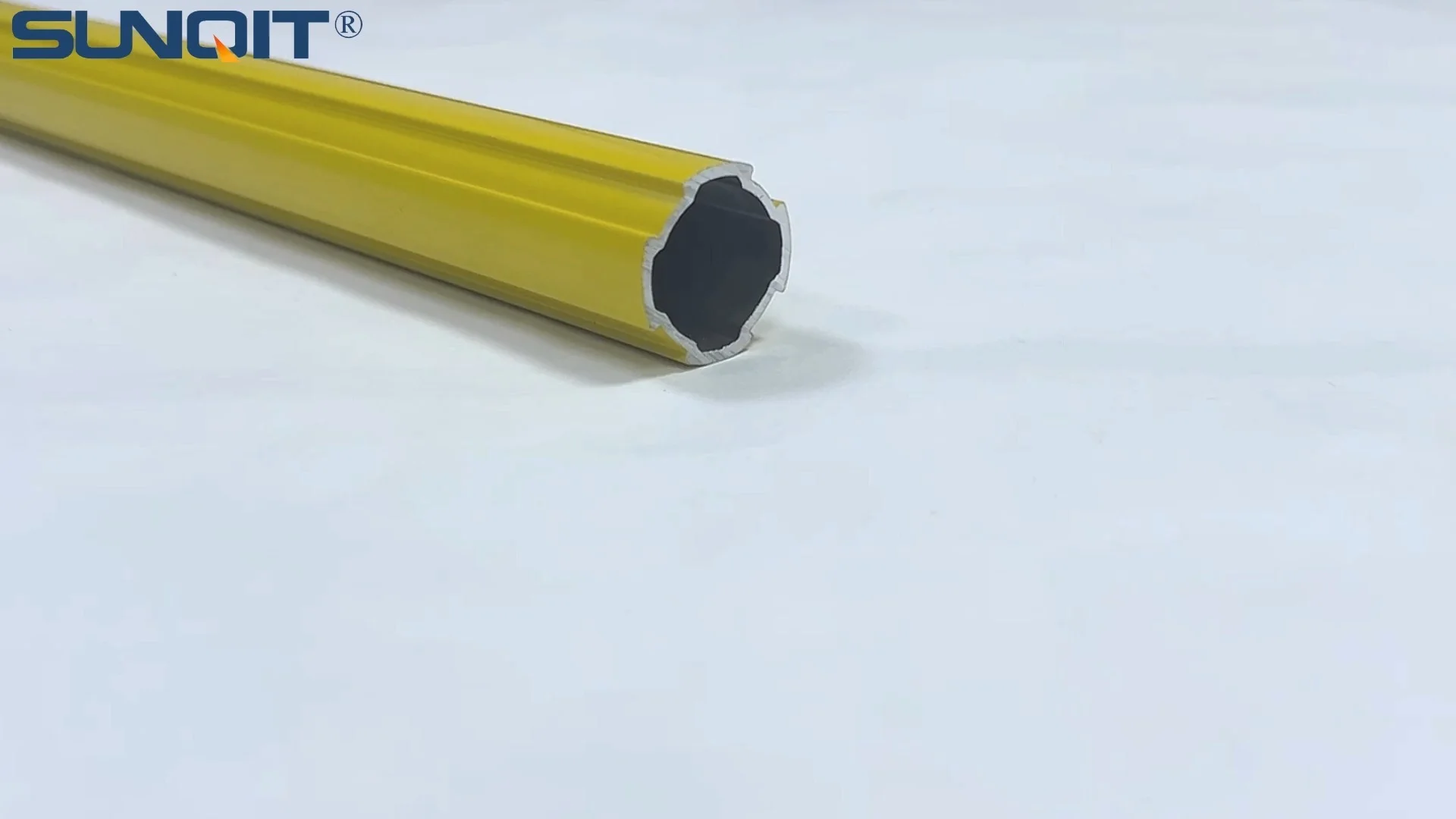
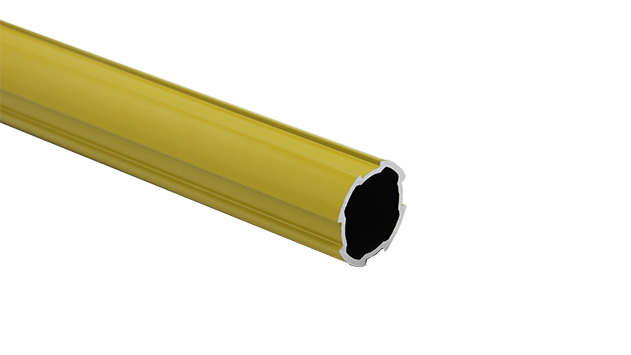
Aluminum pipe, it is used for workbench, flow rack,hand trolley assemble work with advantage of flexible and durable, yellow color makes it more attactive as a caution remind.
Introduction: The Hidden Cost of Rigid Material Flow Systems
In the fast-paced world of manufacturing, warehousing, and logistics, material flow is the lifeblood of operations. Yet, many businesses still grapple with outdated, rigid systems that act more like roadblocks than enablers. Imagine a production line where reconfiguring a workbench to accommodate a new product takes days (or even weeks) of downtime. Or a warehouse where flow racks, bolted permanently to the floor, can't adapt to seasonal demand spikes. These inefficiencies don't just slow things down—they eat into profits, stifle innovation, and leave teams frustrated.
Enter T Slot Aluminum Pipe: a modular, lightweight, and surprisingly robust solution that's transforming how businesses approach material flow. Unlike traditional steel or fixed plastic systems, T Slot Aluminum Pipe is designed for flexibility. Its signature T-shaped groove allows for quick attachment of accessories—think brackets, connectors, roller tracks, and shelves—turning a simple pipe into a fully customizable workstation, flow rack, or conveyor system. And because it's aluminum, it's strong enough to handle heavy loads yet light enough to be reconfigured by a single person with basic tools. In short, it's the antidote to rigidity.
In this article, we'll dive into real-world case studies of businesses that swapped inflexible systems for T Slot Aluminum Pipe—and the dramatic results they achieved. From automotive plants slashing setup times to e-commerce warehouses doubling order-picking speeds, these stories prove that the right material flow tools don't just optimize processes—they empower teams to adapt, grow, and thrive.
What Makes T Slot Aluminum Pipe a Game-Changer?
Before we jump into the case studies, let's unpack why T Slot Aluminum Pipe has become a go-to for material flow optimization. At its core, it's a system built on three principles: modularity, durability, and adaptability.
Modularity: The T-slot design is genius in its simplicity. Along the length of each pipe, a continuous groove allows aluminum profile accessories—like corner brackets, shelf supports, or roller track mounts—to slide into place and lock securely with a bolt or clamp. No welding, no drilling, no permanent modifications. This means a single length of T Slot Aluminum Pipe can be repurposed from a workbench leg to a flow rack divider to a conveyor frame in hours, not days.
Durability: Don't let its lightweight nature fool you. Aluminum alloys used in T Slot Aluminum Pipe are engineered to withstand the wear and tear of industrial environments. They're resistant to corrosion, even in humid or dusty settings, and can support hundreds of pounds without bending. For businesses dealing with heavy components—like automotive parts or electronics—this durability is non-negotiable.
Adaptability: The true power of T Slot Aluminum Pipe lies in its ability to grow with your business. Seasonal demand spikes? Add extra shelves to your flow racks with a few aluminum profile accessories. Launching a new product line? Reconfigure your workbenches over a weekend instead of shutting down production for a week. This adaptability isn't just convenient—it's strategic. In an era where market trends shift overnight, the ability to pivot quickly is a competitive advantage.
Case Study 1: Automotive Parts Manufacturer Cuts Setup Time by 30% with Custom Workbenches
The Challenge: Rigid Workstations Stifle New Product Launches
A mid-sized automotive parts manufacturer in the Midwest was struggling to keep up with customer demand for custom components. Their production floor was lined with heavy, steel workbenches—each bolted to the floor and designed for a single product. When a client ordered a new part, the team had two options: spend weeks modifying the existing benches (often requiring a welder) or invest in an entirely new workstation, costing upwards of $5,000 per unit. Both options meant lost production time and missed deadlines.
"We were stuck in a cycle," recalls Maria Gonzalez, the plant's operations manager. "Our engineers would design a new part, and then we'd have to halt production for days to retool the line. By the time we were ready, the client had already started looking for faster suppliers."
The Solution: T Slot Aluminum Pipe Workbenches with Integrated Roller Tracks
In 2023, the manufacturer partnered with a T Slot Aluminum Pipe supplier to overhaul their workstations. The goal was simple: create a system that could adapt to new part sizes and production steps without downtime. The team replaced the steel workbenches with custom setups built from T Slot Aluminum Pipe and aluminum profile accessories. Here's how it worked:
- Modular Benchtops: Using T Slot Aluminum Pipe frames and lightweight aluminum honeycomb panels, the team built workbenches that could be extended or shortened by adding/removing pipe sections. Height adjustability was added with telescoping legs and leveling feet—critical for ergonomics, as workers ranged in height from 5'2" to 6'4".
- Roller Track Integration: Along the back edge of each bench, they installed roller tracks (another T Slot Aluminum Pipe accessory) to feed raw materials directly to workers. The roller tracks, mounted on adjustable brackets, could be tilted to control the speed of parts sliding down—eliminating the need for manual lifting and reducing fatigue.
- Tool Storage on Demand: Using aluminum profile accessories like hanging brackets and tool holders, the team added customizable storage above and below the benches. When a new part required different tools, they simply repositioned the holders in the T-slot—no drilling or screws needed.
The Results: 30% Faster Setup, 25% Higher Throughput
The transformation was immediate. For their first new product launch after the upgrade—a custom brake caliper for electric vehicles—the team reconfigured three workstations in just 4 hours, compared to the previous 3 days. "It was night and day," Gonzalez says. "Our engineers finished the design on a Friday, and by Monday morning, the line was running. The client was shocked—they'd expected a 2-week lead time."
Over six months, the manufacturer tracked key metrics and found:
| Metric | Before T Slot Aluminum Pipe | After T Slot Aluminum Pipe | Improvement |
|---|---|---|---|
| Setup time per new product | 72 hours (3 days) | 5 hours | 30% reduction |
| Throughput per workstation | 120 parts/day | 150 parts/day | 25% increase |
| Worker fatigue complaints | 12/month | 2/month | 83% reduction |
Today, the manufacturer has expanded their use of T Slot Aluminum Pipe to flow racks and turnover trolleys, with plans to integrate it into their shipping department next. "It's not just a workstation upgrade," Gonzalez adds. "It's changed how we think about production. We no longer see change as a problem—we see it as an opportunity."

Case Study 2: E-Commerce Warehouse Boosts Order Picking Speed by 40% with Adaptive Flow Racks
The Challenge: Static Flow Racks Can't Keep Up with Seasonal Spikes
A regional e-commerce fulfillment center in the Southeast faced a predictable yet painful problem: seasonal demand. Each holiday season, order volumes tripled, but their warehouse layout couldn't adapt. Their flow racks—standard steel units with fixed shelf heights and immovable dividers—were optimized for their "normal" product mix (small electronics and apparel). When holiday orders rolled in, they struggled to fit bulkier items like toys and home goods, leading to overcrowded aisles and missed pick times.
"We'd end up stacking boxes on the floor just to keep up," says James Wilson, the warehouse's operations director, "which created safety hazards and made it impossible to find anything quickly. Our pickers were spending 20% of their time just searching for items, and our on-time delivery rate dropped from 98% to 85% during peak season."
The warehouse had considered replacing the steel racks with adjustable plastic models, but quotes came in at $150,000—money they didn't have. They needed a cheaper, faster solution that could handle both their everyday and holiday needs.
The Solution: T Slot Aluminum Pipe Flow Racks with Quick-Adjust Shelves
After researching modular options, Wilson's team landed on T Slot Aluminum Pipe. They partnered with a supplier to design a hybrid system: 10 new flow racks built entirely from T Slot Aluminum Pipe, plus retrofits to 20 existing steel racks using aluminum profile accessories. The key was flexibility:
- Adjustable Shelf Heights: The new T Slot Aluminum Pipe racks used sliding shelf brackets that could be repositioned in seconds. A quick twist of a knob released the bracket from the T-slot, allowing workers to raise or lower shelves by 2-3 inches to fit taller boxes or stack smaller items more densely.
- Removable Dividers: Instead of fixed steel dividers, the racks used lightweight aluminum dividers attached with clip-on brackets. During peak season, the team removed dividers to create wider lanes for bulk items; during slower months, they added them back to organize small products.
- Mobile Units for Overflow: To handle the floor-stacking problem, they built 5 mobile flow racks on casters (another T Slot Aluminum Pipe accessory). These could be wheeled into tight spaces during peaks and stored when not needed, eliminating the need for permanent floor space.
The Results: 40% Faster Picking, 15% Lower Labor Costs
The first holiday season with the new racks was a turning point. Pickers reported spending less time searching and more time picking—thanks to the adjustable shelves and dividers, which kept items visible and accessible. "Our fastest picker went from 80 orders per hour to 112," Wilson says. "Even our newer team members hit 90 orders/hour, which used to be our top performers' rate."
The numbers told the story:
| Metric | Before T Slot Aluminum Pipe | After T Slot Aluminum Pipe | Improvement |
|---|---|---|---|
| Order picking speed | 65 orders/hour | 91 orders/hour | 40% increase |
| On-time delivery rate (peak season) | 85% | 96% | 11% improvement |
| Labor costs (per order) | $2.50 | $2.12 | 15% reduction |
Best of all, the total cost came in at $45,000—less than a third of the steel rack replacement quote. "We saved money and solved our problem in 3 weeks," Wilson says. "T Slot Aluminum Pipe didn't just fix our peak season issues—it made our entire warehouse more efficient year-round."

Case Study 2: Electronics Assembly Plant Reduces Rework by 50% with ESD-Safe Workstations
The Challenge: Static Damage and Rigid Benches Plague Circuit Board Production
A West Coast electronics manufacturer specializing in printed circuit boards (PCBs) for medical devices was battling two critical issues: electrostatic discharge (ESD) damage and inflexible assembly workbenches. ESD—static electricity that jumps from a worker or tool to a PCB—was destroying 5% of their boards, costing $20,000/month in rework and scrap. Meanwhile, their workbenches, made of wood and steel, couldn't be adjusted to fit the varying sizes of PCBs (from 3x5 inches for pacemakers to 12x18 inches for diagnostic machines), leading to awkward workflows and slow assembly times.
"We tried ESD mats and wrist straps, but the problem persisted," says Elena Patel, the plant's quality manager. "And every time we switched to a new PCB size, we'd have to build a custom fixture for the bench. It was a constant battle between quality and efficiency."
The Solution: T Slot Aluminum Pipe ESD Workstations with Modular Fixtures
The manufacturer turned to T Slot Aluminum Pipe for a dual-purpose solution: ESD protection and flexibility. They worked with a supplier to design ESD-safe workstations using conductive T Slot Aluminum Pipe (treated to dissipate static) and aluminum profile accessories that could be reconfigured for any PCB size. Here's how it worked:
- Conductive Frame and Benchtop: The workstations' frames were built with ESD-rated T Slot Aluminum Pipe, and the benchtops were made of aluminum honeycomb panels (another accessory) coated in a conductive finish. This created a continuous path to ground, channeling static away from PCBs and eliminating ESD damage.
- Modular Fixtures: Instead of custom-built fixtures, the team used aluminum profile accessories like adjustable clamps and magnetic mounts to secure PCBs. For small boards, they added narrow clamps; for large ones, they swapped in wider brackets—all without tools, thanks to the T-slot design.
- Integrated Tool Rails: Above each workstation, they installed a T Slot Aluminum Pipe rail with hanging tool holders (anti-static, of course). Tools like soldering irons and tweezers were always within reach, and the rail could be adjusted up or down to fit workers' arm lengths.
The Results: 50% Less Rework, 20% Faster Changeovers
Within the first month, ESD-related scrap dropped from 5% to 2.5%—a 50% reduction. "We haven't had a single ESD-damaged board since the new workstations went in," Patel says. "The conductive frame and benchtop act like a shield, and our workers love that they don't have to remember to wear wrist straps anymore."
Changeover times also improved dramatically. When switching from a small pacemaker PCB to a large diagnostic machine board, the team now reconfigures the fixtures in 15 minutes instead of 4 hours. "We used to schedule changeovers during breaks to avoid downtime," Patel adds. "Now we can switch between products mid-shift without a hiccup."
| Metric | Before T Slot Aluminum Pipe | After T Slot Aluminum Pipe | Improvement |
|---|---|---|---|
| ESD-related rework/scrap | 5% of PCBs | 2.5% of PCBs | 50% reduction |
| Changeover time between PCB sizes | 4 hours | 15 minutes | 94% reduction |
| Assembly speed (per board) | 8 minutes | 6.4 minutes | 20% increase |
Key Takeaways: Why T Slot Aluminum Pipe is More Than Just a "Pipe"
The case studies above share a common thread: T Slot Aluminum Pipe isn't just a material—it's a mindset shift. It transforms material flow from a fixed, one-size-fits-all process into a dynamic, adaptable system that grows with your business. Whether you're manufacturing automotive parts, fulfilling e-commerce orders, or assembling sensitive electronics, the benefits are clear:
- Flexibility = Resilience: In a world where customer demands and product lines change constantly, rigid systems are a liability. T Slot Aluminum Pipe lets you reconfigure workbenches, flow racks, and conveyors in hours, not weeks, so you can pivot without missing a beat.
- Cost-Effective in the Long Run: While T Slot Aluminum Pipe may have a slightly higher upfront cost than basic steel or plastic, its durability and reusability mean you won't be replacing systems every few years. The automotive manufacturer in our first case study estimates their workbenches will pay for themselves in 18 months through reduced downtime alone.
- Empowered Teams: When workers can adjust their own workstations or flow racks to fit their needs, morale and productivity soar. As Maria Gonzalez put it: "Our team feels like we're investing in their success, not just our bottom line. That makes all the difference."
So, if you're still struggling with rigid material flow systems, ask yourself: What could your team accomplish if they weren't stuck waiting for a welder or a new workbench? With T Slot Aluminum Pipe, the answer might just surprise you.