- Company Articles
- Products and Technology
- Installation And Maintenance
- T Slot Aluminum Pipe with Board Holder: Common Problems and Troubleshooting

T Slot Aluminum Pipe with Board Holder: Common Problems and Troubleshooting
Related Product
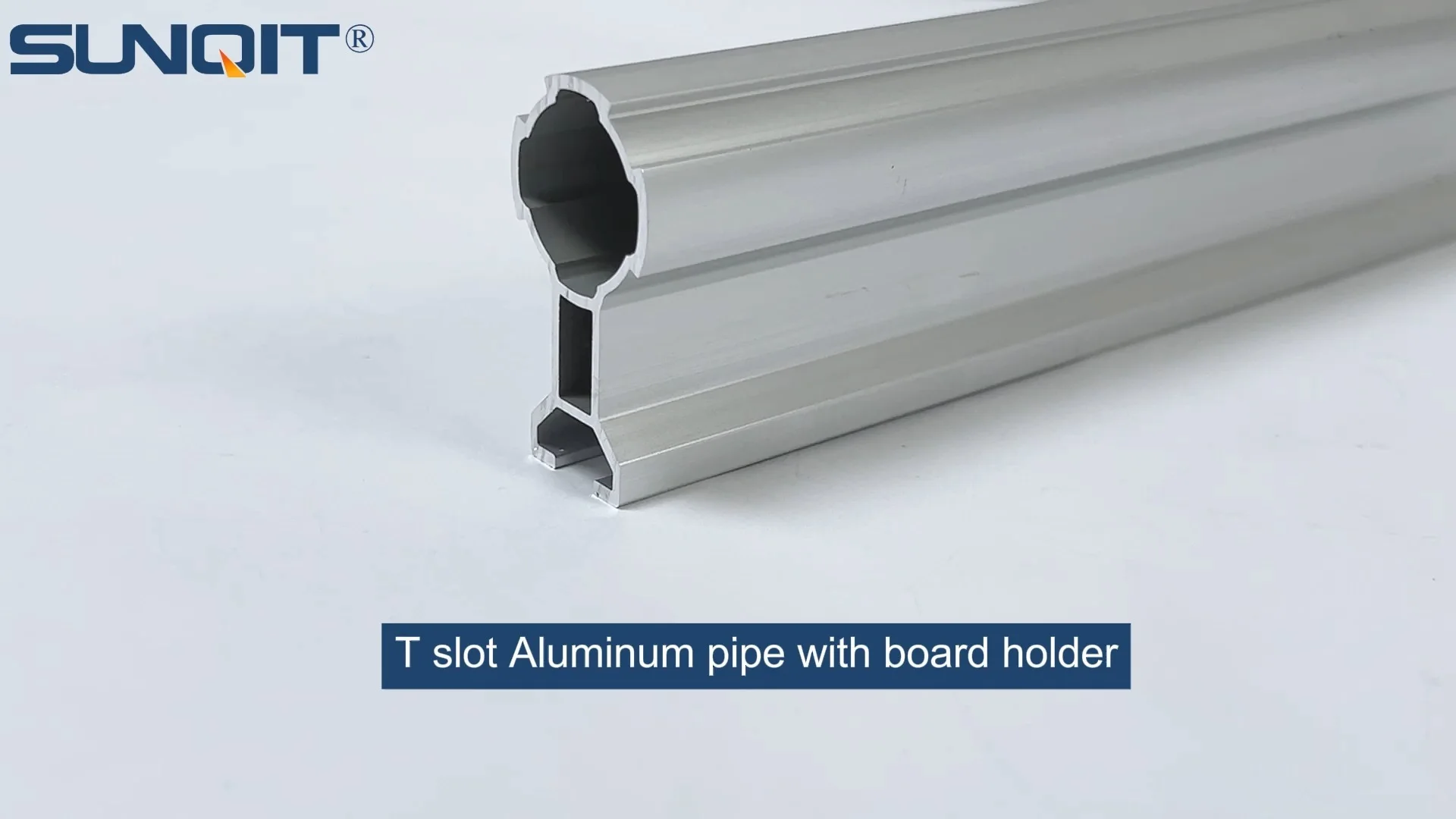
T Slot Aluminum Pipe with Board Holder
T slot Aluminum pipe with board holder,the pipe one side connected by a joint, the other side with a slot which can hold a tray or a aluminum pannel
In the world of modern manufacturing, workshops, and even DIY garages, flexibility and adaptability are everything. That's why T slot aluminum pipe systems have become a go-to solution for building everything from workbenches and material racks to assembly lines and lab setups. At the heart of many of these systems is the board holder—a simple yet critical component that secures shelves, work surfaces, or panels to the aluminum frame. Whether you're running a high-speed production facility or tinkering with a home project, a sturdy, reliable board holder ensures your setup stays functional and safe. But even the most well-designed systems hit snags. Loose boards, misaligned slots, and finicky adjustments can turn a smooth workflow into a frustrating ordeal. In this guide, we'll walk through the most common problems users face with T slot aluminum pipe and board holder setups, why they happen, and how to fix them—so you can get back to what matters: building, creating, and producing.
1. Loose Board Holder Connection: When Your Work Surface Wiggles
There's a special kind of annoyance that comes with a wobbly workbench top or a shelf that shifts every time you set something on it. In a professional setting—say, an electronics assembly line where precision is key—a loose board isn't just a nuisance; it can slow down production, damage delicate components, or even lead to mistakes. At home, it might mean spilled tools or a DIY project that takes twice as long. The root cause here is almost always a loose connection between the board holder and the T slot aluminum pipe. Let's break down why this happens and how to tighten things up.
Why It Happens
Most board holders attach to T slot aluminum pipe using bolts or screws that thread into T slot nuts (small, sliding nuts that fit inside the pipe's T-shaped channel). Over time, vibrations from daily use, temperature fluctuations, or even just repeated loading and unloading of the board can loosen these bolts. In some cases, the T slot nuts themselves might wear out—their threads get stripped, or they become deformed, making it impossible to get a tight grip. Another culprit? Over-tightening during initial setup. Aluminum is strong, but its threads are softer than steel; cranking a bolt too hard can strip the T slot or the nut, leading to a loose fit later. Finally, if the board itself is warped or uneven, it might not sit flush against the holder, creating uneven pressure that loosens the connection over time.
Troubleshooting Steps
Fixing a loose board holder starts with a methodical check. Here's how to do it:
- Safety first: Clear the board of tools, materials, or equipment to avoid spills or damage during repairs. If the setup is electrical (like a workbench with power strips), unplug it to prevent shocks.
- Inspect the bolts: Use a hex key or screwdriver to check each bolt securing the holder. Are they spinning freely, or do they feel tight? If they're loose, tighten them gradually—don't go all-in at once. Alternate tightening bolts (like you would with a car wheel) to distribute pressure evenly across the board.
- Check the T slot nuts: If tightening the bolts doesn't help, the issue might be the nuts inside the pipe. Remove the bolts and slide the nuts along the T slot—if they feel gritty, stick, or their threads look stripped, replace them. Opt for high-quality aluminum profile accessories here; cheap nuts wear out fast and aren't worth the hassle.
- Examine the board: Lay a straightedge across the board to check for warping. If it's bowed, sand down uneven spots with fine-grit sandpaper, or replace the board if the damage is severe. A warped board will never sit securely, no matter how tight the bolts are.
- Lock it in place: For high-vibration environments (think: near heavy machinery or in a garage with power tools), apply a small amount of thread-locking compound (like medium-strength Loctite) to the bolt threads before reinserting. This prevents future loosening without making the bolts impossible to remove later.
Prevention Tips
To keep connections tight long-term:
- Stick to torque specs: Most T slot aluminum pipe manufacturers recommend tightening bolts to 8–10 Newton-meters (Nm) of torque. Use a torque wrench if you have one, or get a feel for it—tighten until the bolt resists, then give it a quarter-turn more. Avoid "gorilla tightening."
- Inspect regularly: Do a quick check every week (or every month for low-use setups). A 30-second bolt-tightening session can prevent bigger issues down the line.
- Upgrade to metal nuts: If you're using plastic T slot nuts, consider switching to metal ones (like aluminum or steel) for heavier loads. They're more durable and less likely to strip.
2. Misaligned T Slot Channels: When the Pieces Just Won't Fit
There's a moment during assembly that every T slot aluminum pipe user dreads: you line up two pipes, go to slide a connector into the T slots, and… nothing. The slots are off by a hair, making it impossible to insert the bolt or accessory. Or maybe the holes in your board holder don't align with the T slots in the pipe, forcing you to drill new holes (a last resort no one enjoys). Misalignment is a common headache, especially when building complex setups with multiple pipes and angles. It's not just frustrating—it can compromise the structural integrity of your entire system.
Why It Happens
T slot aluminum pipe is designed to be modular, but that modularity relies on precision. Most misalignment issues stem from one of three causes: imprecise cutting , bent profiles , or rushed assembly . If your pipes were cut to length by hand (or by a supplier with less-than-stellar equipment), the ends might be slightly angled or uneven, throwing off the slot alignment when joined. Bent pipes are another culprit—even a small kink from rough handling can twist the T slot channel, making it impossible to line up with straight sections. Finally, assembly order matters. If you bolt together pipes before ensuring they're square and level, you'll lock in misalignments that get worse as you add more components.
Troubleshooting Steps
Fixing misaligned slots takes patience, but it's manageable with the right tools:
- Check for straightness: Lay the pipes on a flat surface (like a workbench or the floor) and use a 4-foot straightedge to check for bends. If a pipe curves upward or downward more than 1mm over its length, it's bent and should be replaced—trying to force it straight will only cause more alignment issues.
- Verify cuts: Use a square to check if the pipe ends are perfectly perpendicular to the length. If they're angled, you can clean them up with a file or a miter saw (use a blade designed for aluminum to avoid chipping). For severe miscuts, replace the pipe.
- Loosen and realign: If the misalignment is in an already assembled structure, start by loosening all nearby connections (bolts, connectors, brackets). This gives the pipes room to shift. Use a level to ensure vertical pipes are plumb and horizontal pipes are level, then retighten connections gradually, starting from the base and working upward.
- Use alignment tools: For tricky angles (like 90-degree corners), use angle brackets or corner connectors designed for T slot aluminum pipe. These act as guides, ensuring the slots line up. You can also use temporary clamps to hold pipes in place while you tighten bolts.
Prevention Tips
Avoid misalignment from the start:
- Buy from reputable suppliers: Quality T slot aluminum pipe is precision-extruded and cut, with slots that align consistently. Cheap, off-brand pipes often have irregular slot spacing or uneven cuts.
- Handle with care: Store pipes horizontally on racks to prevent bending, and avoid dropping or stacking heavy objects on them.
- Assemble in stages: Build your structure step by step, checking for level and square after each addition. Don't fully tighten bolts until the entire section is aligned—this gives you wiggle room to adjust.

3. Stiff or Stuck Board Height Adjustment: When Moving Up or Down Feels Like a Workout
One of the biggest perks of T slot aluminum pipe systems is their adjustability. Need to raise your workbench to stand while assembling? Lower a shelf to fit taller bins? No problem—at least, that's the idea. But when the height adjustment mechanism sticks or feels like it's fighting you, that flexibility goes out the window. Suddenly, a 2-minute task takes 20 minutes of grunting and jiggling, and you start avoiding adjustments altogether. If your board holder's height adjustment is more hassle than help, here's what's going on.
Why It Happens
Height-adjustable board holders typically use a sliding mechanism: the holder rides up and down the T slot aluminum pipe, secured by locking levers, cam bolts, or thumb screws. Over time, dust, debris, or even metal shavings from assembly can build up in the T slot, gumming up the works. In humid environments, tiny amounts of rust might form on steel components (like bolts or locking pins), adding friction. Another common issue is over-tightening the locking mechanism. If you crank down the lever or screw too hard, you can deform the T slot or the holder's sliding bracket, creating resistance that makes movement difficult. Finally, if the holder isn't properly aligned with the pipe (even slightly), it can bind as it slides, causing it to stick at certain heights.
Troubleshooting Steps
Getting your adjustment mechanism moving smoothly again is usually a matter of cleaning and lubricating, with a few tweaks:
- Clean the T slot: Start by loosening the locking mechanism and sliding the holder all the way to the bottom (or top) of the pipe. Use a small brush (a toothbrush works in a pinch) to sweep out dust and debris from the T slot. Follow up with compressed air to blast out any remaining particles—this is crucial, as even a tiny stone can cause sticking.
- Inspect for damage: Check the holder's sliding brackets and the T slot edges for dents, burrs, or deformation. A bent bracket can be gently straightened with pliers (if aluminum) or replaced if the damage is severe. Burrs on the pipe can be filed smooth with fine-grit sandpaper.
- Lubricate: Apply a small amount of silicone-based lubricant (avoid oil-based lubes, which attract dust) to the T slot and the holder's sliding surfaces. Work the holder up and down a few times to distribute the lube evenly. Wipe off excess to prevent gunk buildup.
- Adjust the locking mechanism: If the lever or screw is hard to turn, check for misalignment. The locking component (like a cam or a clamp) should sit flush against the pipe. If it's tilted, loosen the mechanism's mounting bolts, reposition it, and retighten. For lever-style locks, adjust the tension by bending the lever slightly (aluminum levers) or tightening the spring (steel levers) to reduce resistance.

4. Wear and Tear on Aluminum Profile Accessories: When the Small Parts Fail
T slot aluminum pipe systems are only as strong as their weakest link—and more often than not, those weak links are the small aluminum profile accessories that hold everything together: T slot nuts, connectors, brackets, and even the bolts themselves. These parts take a lot of abuse: they're tightened and loosened repeatedly, exposed to oils, chemicals, and moisture, and bear the brunt of the system's weight. Over time, they wear out, and when they do, your board holder (and the entire setup) becomes unstable. Recognizing worn accessories early can save you from bigger headaches later.
Signs of Wear to Watch For
Worn accessories don't always scream for attention—sometimes the signs are subtle. Keep an eye out for:
- Stripped threads: Bolts spin freely without tightening, or T slot nuts slide in the T slot even when bolts are tight.
- Cracks or deformation: Connectors or brackets with hairline cracks, especially at stress points (like where they attach to pipes).
- Loose fit: Accessories that rattle or shift even when fully tightened—this often happens when the mating surfaces (like the inside of a connector) wear down.
- Corrosion: White, powdery spots (aluminum oxide) or greenish buildup (from chemical exposure) that weakens the metal.
Troubleshooting and Replacement
The fix for worn accessories is straightforward: replace them. But not all replacements are created equal. Here's how to do it right:
- Identify the part: Take note of the accessory's size, shape, and function. Most manufacturers stamp part numbers on their accessories (e.g., "M6 T Slot Nut" or "4040 Corner Bracket"). If there's no part number, measure the T slot width (common sizes are 6mm, 8mm, 10mm) and the pipe profile (e.g., 2020, 3030, 4040) to ensure compatibility.
- Choose quality replacements: It's tempting to buy the cheapest T slot nuts or brackets online, but low-quality aluminum profile accessories are often cast from soft alloys that wear out quickly. Opt for accessories made from 6061 or 6063 aluminum (the same as most T slot pipes) or hardened steel for high-stress parts like bolts.
- Upgrade where needed: If a particular accessory wears out repeatedly (like T slot nuts in a high-vibration area), consider upgrading to a heavier-duty version. For example, flanged T slot nuts (which have a wider base) grip better than standard nuts, and quick-release bolts can reduce wear from frequent adjustments.
Pro Maintenance Tips to Extend Accessory Life
Clean regularly:
Wipe down accessories with a damp cloth to remove oils, dust, and chemicals. For stubborn grime, use a mild detergent (avoid abrasive cleaners that scratch the aluminum).
Apply anti-seize compound:
On bolts and threads that rarely need adjustment, apply a thin layer of anti-seize (graphite or copper-based) to prevent corrosion and make future removal easier.
Limit over-tightening:
Use a torque wrench to tighten bolts to the manufacturer's specs—this prevents stripping and deformation.
Store spare parts:
Keep a small stock of common accessories (T slot nuts, bolts, brackets) on hand. This way, you can replace worn parts immediately instead of waiting for a shipment.
5. Compatibility Issues: When Your Accessories Just Don't Fit
So you've bought a new board holder, excited to upgrade your workbench, only to find the bolts won't fit in the T slot. Or maybe you ordered T slot nuts online, and they're too wide for your pipe's channel. Compatibility issues are surprisingly common, especially with T slot aluminum pipe systems, which come in a dizzying array of sizes, profiles, and standards (metric vs. imperial, European vs. Asian specs). Using incompatible accessories doesn't just make assembly impossible—it can damage your pipes, strip threads, or create unsafe setups.
Common Compatibility Pitfalls
The most frequent compatibility issues involve:
- T slot size: T slots come in widths like 6mm, 8mm, 10mm, and 12mm. A nut designed for an 8mm slot won't fit in a 6mm slot, and vice versa.
- Pipe profile: Pipes are labeled by their cross-section dimensions (e.g., 2020 = 20mm x 20mm, 4040 = 40mm x 40mm). Accessories like brackets or connectors are often designed for specific profiles—using a 4040 bracket on a 3030 pipe will leave gaps and instability.
- Bolt thread size: Metric (M4, M5, M6) vs. imperial (1/4-20, 5/16-18) threads. Mixing them leads to stripped holes or bolts that won't tighten.
- Accessory design: Some accessories are made for "closed" T slots (with a narrow opening) vs. "open" slots (wider opening). A closed-slot nut will get stuck in an open slot.
How to Avoid Compatibility Headaches
The best way to avoid compatibility issues is to plan ahead:
- Know your pipe specs: Before buying accessories, measure your T slot width (use calipers for accuracy), note the pipe profile (2020, 3030, etc.), and check if the slots are open or closed. This info is usually on the pipe's label or the manufacturer's website.
- Stick to one brand (when possible): Most manufacturers design their accessories to work exclusively with their pipes. If you bought your T slot aluminum pipe from Brand X, buy Brand X accessories—this almost guarantees a perfect fit.
- Check compatibility charts: Many suppliers post charts online showing which accessories work with which pipes. Bookmark these charts, or print one out for reference when shopping.
- Test before buying in bulk: If you're unsure about an accessory, buy one first and test it on your pipe. It's cheaper to return a single nut than a box of 50 that don't fit.
| Common Problem | Key Cause | Quick Fix | Prevention |
|---|---|---|---|
| Loose board holder | Loose bolts or worn T slot nuts | Tighten bolts to 8–10 Nm; replace stripped nuts | Avoid over-tightening; use thread locker in high-vibration areas |
| Misaligned T slots | Bent pipes or imprecise cuts | replace bent pipes; clean up uneven cuts with a file | Buy precision-cut pipes; handle with care to avoid bending |
| Stiff height adjustment | Debris in T slot or worn brackets | Clean slot with compressed air; lubricate with silicone lube | Regular cleaning; avoid over-tightening locking levers |
| Worn accessories | Repeated use, corrosion, or low-quality parts | replace with 6061 aluminum or hardened steel accessories | Clean regularly; apply anti-seize to rarely adjusted bolts |
| Accessory compatibility issues | Mismatched T slot size or pipe profile | Check pipe specs; buy accessories from the same brand | Measure T slot width and pipe profile before purchasing |
Final Thoughts: Keeping Your T Slot System in Top Shape
T slot aluminum pipe with board holder systems are the unsung heroes of modern workspaces—they adapt to your needs, grow with your projects, and make even the most complex setups possible. But like any tool, they need a little care to perform their best. By knowing how to spot common issues—loose connections, misaligned slots, stiff adjustments, worn accessories, and compatibility problems—you can keep your system running smoothly for years. Remember, most problems start small: a loose bolt here, a little dust there. Catching them early with regular inspections and simple fixes saves you time, money, and frustration down the line. And when it comes to parts, don't skimp on quality. High-grade aluminum profile accessories might cost a few extra dollars, but they'll outlast cheap alternatives and keep your setup safe and stable. Whether you're running a factory floor or a garage workshop, a well-maintained T slot system isn't just a convenience—it's a foundation for success. Now go out there, tighten those bolts, clean those slots, and build something amazing.