- Company Articles
- Products and Technology
- Product knowledge
- T Slot Aluminum Pipe with Board Holder: Corrosion Resistance for Humid Environments

T Slot Aluminum Pipe with Board Holder: Corrosion Resistance for Humid Environments
Related Product
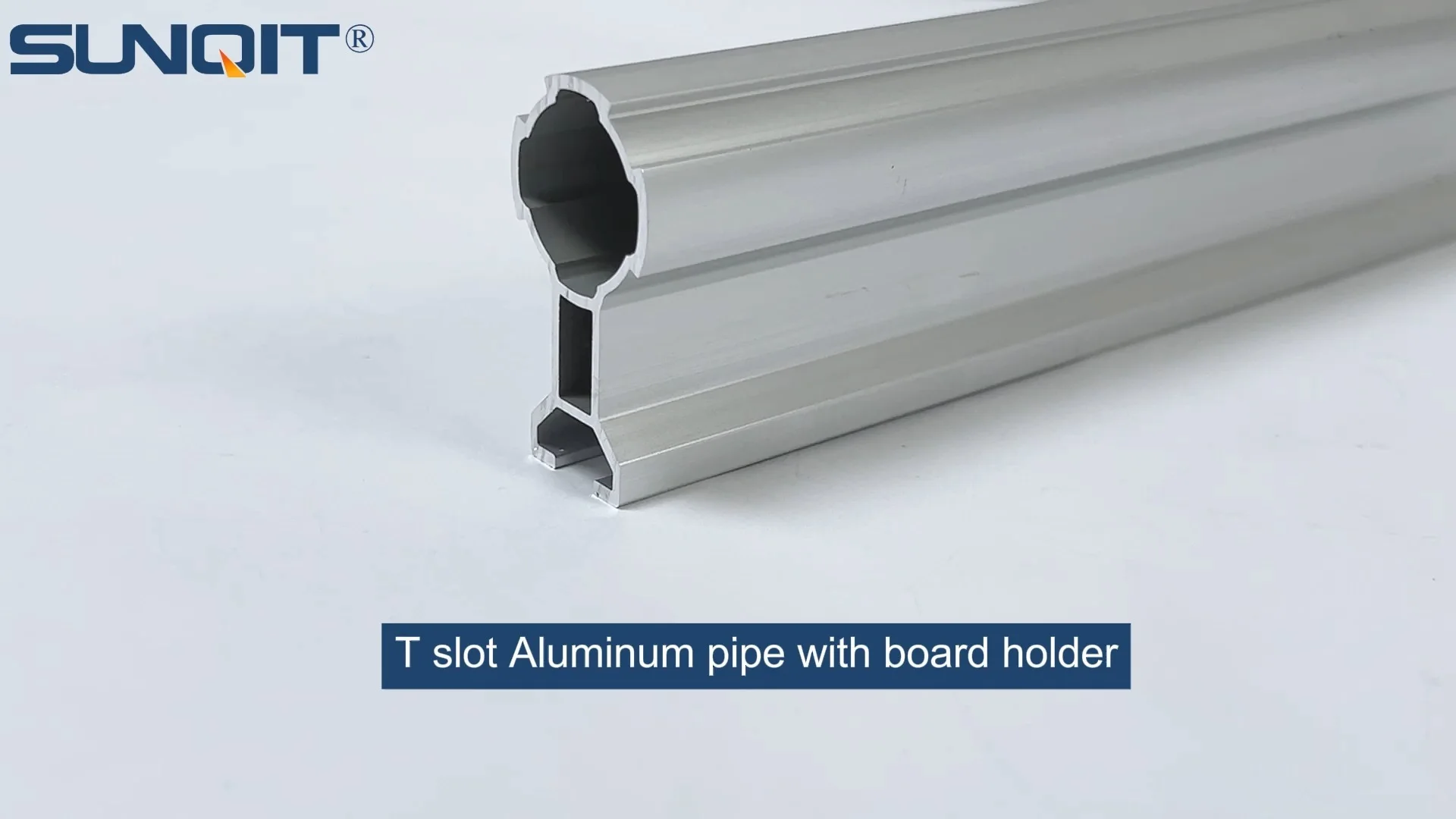
T Slot Aluminum Pipe with Board Holder
T slot Aluminum pipe with board holder,the pipe one side connected by a joint, the other side with a slot which can hold a tray or a aluminum pannel
Walk into any manufacturing plant, warehouse, or lab in a coastal city, a food processing facility, or a pharmaceutical cleanroom, and you'll likely notice a silent enemy: humidity. It creeps into every corner, settling on metal surfaces, seeping into joints, and slowly turning sturdy equipment into a patchwork of rust and decay. For years, facility managers and operations teams have grappled with this issue—replacing steel workbenches, repairing corroded material racks, and watching hard-earned budgets drain away on maintenance. But what if there was a solution that didn't just fight humidity, but laughed in its face? Enter the T Slot Aluminum Pipe with Board Holder —a yet revolutionary component that's changing how industries handle humid environments.
In this article, we'll dive deep into why this unassuming aluminum product is becoming a staple in humid workplaces. We'll explore its design, its superpower against corrosion, how it integrates with lean systems , and why it's more than just a pipe with a board holder—it's a long-term investment in durability and peace of mind. Whether you're running a seafood processing plant in Miami, a electronics factory in Singapore, or a lab in Seattle, this is one component you'll want to know about.
What Even Is a T Slot Aluminum Pipe with Board Holder?
Let's start with the basics. If you're not familiar with industrial aluminum products, the term "T Slot Aluminum Pipe with Board Holder" might sound like a mouthful. But break it down, and it's actually pretty straightforward. At its core, it's a modular system built around two key parts: the aluminum extrusion profile (the "T slot aluminum pipe") and a specialized holder designed to secure boards, panels, or work surfaces (the "board holder").
The Star of the Show: T Slot Aluminum Pipe
The pipe itself is made from aluminum extrusion profile —a process where aluminum is forced through a die to create a specific cross-sectional shape. In this case, that shape includes a "T-slot" running along the length of the pipe. Think of the T-slot as a built-in track: it allows you to slide in accessories like brackets, shelves, or in this case, the board holder, without drilling holes or welding. That T-slot is what makes the system so flexible—you can reconfigure it on the fly, add new components, or adjust heights in minutes, not days.
But not all aluminum pipes are created equal. The ones used here are typically made from high-grade aluminum alloys (often 6063-T5, a common choice for industrial profiles) that balance strength and lightness. They're also precision-extruded, meaning the T-slots are consistent and uniform, ensuring accessories fit snugly every time.
The Unsung Hero: The Board Holder
Now, the "board holder" part. This is exactly what it sounds like: a bracket or clamp designed to attach a flat surface (wood, plastic, metal, or even anti-static panels) to the T slot pipe. Unlike traditional workbenches where the tabletop is bolted or glued in place, the board holder uses the T-slot to lock the board securely. Want to swap out a damaged board? Just loosen the screws, slide off the old one, and pop on a new one. Need to raise the board by 6 inches? Adjust the holder's position in the T-slot. It's simplicity meets functionality.
Together, these two parts create a system that's both sturdy and adaptable. But what really makes it stand out isn't just the T-slot or the holder—it's the material: aluminum. And aluminum, as we'll see, is a humidity-fighting champion.
Corrosion Resistance: Why Aluminum Laughs at Humidity
Let's talk about the elephant in the room (or the rust on the workbench): corrosion. In humid environments, water vapor in the air reacts with metal surfaces to form rust (for iron/steel) or other corrosive byproducts. Over time, this weakens the metal, causes parts to seize up, and eventually renders equipment useless. Steel, for example, is strong, but even galvanized steel will start to corrode in high humidity—especially if there's salt in the air (looking at you, coastal factories).
Aluminum, though? It's a different story. Here's why:
The Invisible Shield: Aluminum Oxide
When aluminum is exposed to air, it forms a thin, invisible layer of aluminum oxide on its surface. This layer is only a few nanometers thick, but it's incredibly dense and tightly bonded to the metal. Unlike rust, which flakes off and exposes fresh metal to corrosion, aluminum oxide stays put. Even if the surface is scratched, the exposed aluminum quickly reacts with oxygen to form a new oxide layer. It's like having a self-healing shield that never needs reapplication.
No Rust, No Problem
Aluminum doesn't rust—period. Rust is iron oxide, and since aluminum has no iron, it can't form rust. What it can form is aluminum corrosion, but this is rare in normal humid environments. Unless the aluminum is exposed to highly acidic or alkaline conditions (think battery acid or industrial chemicals), that oxide layer will keep it safe. For most workplaces—food processing, electronics, labs, warehouses—aluminum's natural resistance is more than enough.
| Material | Corrosion Resistance in Humid Environments | Maintenance Needs | Typical Lifespan (Humid Setting) |
|---|---|---|---|
| T Slot Aluminum Pipe | Excellent – self-healing oxide layer, no rust | Minimal – occasional cleaning with water | 10–15+ years |
| Galvanized Steel Pipe | Fair – zinc coating can wear off, then rusts | Regular inspections, re-coating every 2–3 years | 3–5 years |
| Stainless Steel Pipe (304) | Good – resists rust but can corrode in salt air | Occasional cleaning with stainless steel cleaner | 7–10 years |
| Plastic Pipe | Excellent – no corrosion | Low, but prone to cracking/weakening in UV light | 5–7 years (outdoors), longer indoors |
As the table shows, aluminum holds its own against other materials, often outlasting steel by decades in humid settings. And when you factor in maintenance costs—no repainting, no rust removal, no part replacements—aluminum becomes not just a durable choice, but a cost-effective one too.

Beyond Corrosion: The T-Slot Design's Hidden Benefits
Okay, so aluminum is great against humidity. But what makes the T Slot Aluminum Pipe with Board Holder stand out from other aluminum products? The T-slot, of course. That little groove running along the pipe is a game-changer for flexibility and customization—two things that are crucial in dynamic workplaces.
Modularity: Build, Rebuild, Repeat
Imagine you need a workbench today, but next month, you need a material rack. With traditional steel furniture, you'd have to buy a whole new rack. With T slot aluminum, you can disassemble the workbench, reconfigure the pipes and aluminum profile accessories , and boom—you've got a rack. The T-slot lets you add or remove components like shelves, hooks, lights, or even roller tracks without cutting or welding. It's like industrial Lego for adults, and it's a cornerstone of lean system principles—reducing waste by maximizing the use of existing resources.
Board Holder Flexibility: More Than Just a Tabletop
The board holder itself is surprisingly versatile. Depending on your needs, you can attach:
- Wooden boards for a warm, classic workbench feel (great for assembly stations).
- Anti-static panels for electronics manufacturing, where static electricity can fry components.
- Plastic or metal sheets for easy-to-clean surfaces (perfect for food processing or labs).
- Perforated boards to hang tools, making everything within arm's reach.
And since the holder slides in the T-slot, you can adjust the board's height, angle, or position whenever you need. Need to lower the board for a shorter worker? No problem. Want to tilt it slightly to drain liquids in a lab? Just loosen the bolts and adjust. It's customization without the custom price tag.
Lightweight but Strong: A Surprising Combo
Aluminum is lighter than steel—about 1/3 the weight. That might not sound like a big deal until you need to move a workbench across the factory floor. With aluminum, two people can lift it; with steel, you'd need a forklift. But don't let the lightness fool you: aluminum extrusion profiles are engineered to be strong. A standard 20x40mm aluminum pipe can support hundreds of pounds, making it more than capable for most industrial tasks. It's the best of both worlds: easy to handle and tough enough to get the job done.

Real-World Applications: Where This Pipe Shines
Theory is great, but let's talk about real places where T Slot Aluminum Pipes with Board Holders are making a difference. Here are a few industries where humidity is a constant battle—and aluminum is the hero:
Food Processing: Humidity + Sanitation = Aluminum's Time to Shine
Food processing plants are humid by design—steam from cooking, washing stations, and refrigeration units create the perfect storm for corrosion. Steel workbenches here often rust within a year, and rust flakes can contaminate food (a major safety hazard). Aluminum, on the other hand, resists corrosion and is easy to sanitize with harsh cleaners. One seafood processing plant in Maine switched to aluminum workbenches with plastic board holders a few years back. Today, their workstations still look brand new, and they've cut maintenance costs by 60%.
Coastal Manufacturing: Salt Air? No Problem
Saltwater air is brutal on metal. In coastal cities like Houston or Bangkok, steel equipment can start rusting in months. Take a electronics factory in Vietnam, for example. They used to replace steel material racks every 2–3 years due to salt corrosion. After switching to T slot aluminum racks with board holders, the racks are still going strong after 8 years. The aluminum oxide layer has held up perfectly against the salt, and the modular design means they've been able to reconfigure the racks as their production lines changed.
Laboratories: Clean, Dry, and Corrosion-Free
Labs often have strict humidity controls, but even small fluctuations can cause issues. Stainless steel is common here, but it's expensive and hard to modify. A pharmaceutical lab in Germany recently swapped their stainless steel workbenches for aluminum ones. They loved that they could add aluminum profile accessories like reagent holders and microscope mounts via the T-slot, and the aluminum surfaces are easier to sterilize than steel. Plus, with no rust, there's zero risk of metal particles contaminating samples.
Case Study: A Bakery's Humidity Win
Let's zoom in on a real example: a small artisanal bakery in Portland, Oregon. Bakeries are humid by nature—ovens release steam, and dough needs moisture to rise. The bakery's old steel worktables were constantly rusting, and the wooden tabletops (attached with nails) would warp from the moisture. After researching options, they invested in a T Slot Aluminum Pipe with Board Holder system, using treated wooden boards for the tabletops.
Three years later, the results are clear: the aluminum pipes show no signs of corrosion, the board holders have kept the wooden tops secure (no warping, since they're not nailed down), and when they expanded their kitchen, they simply added more pipes and accessories instead of buying new tables. "It was the best business decision we made," said the head baker. "We haven't spent a dime on maintenance, and the tables still look new."
Choosing the Right T Slot Aluminum Pipe with Board Holder: What to Look For
So, you're sold on the idea. Now, how do you pick the right system for your needs? Here are the key factors to consider:
1. Pipe Size and Thickness
Aluminum pipes come in different sizes (e.g., 20x20mm, 30x30mm, 40x40mm) and wall thicknesses. Thicker walls mean more strength, but they're also heavier and more expensive. For most workbenches or small racks, 30x30mm with a 1.5mm wall is plenty. For heavier loads (like industrial material racks), go with 40x40mm or thicker.
2. Board Holder Type
Not all board holders are the same. Some are fixed, others are adjustable. Some clamp onto the board, others use screws. Think about how often you'll need to remove or adjust the board. If it's frequent, go for a quick-release holder. If the board is permanent, a fixed holder will do.
3. Accessories Compatibility
Make sure the T-slot size matches the aluminum profile accessories you need. Most manufacturers use standard slot sizes (e.g., 6mm, 8mm), but it's always good to double-check. You don't want to buy a pipe only to find your favorite shelf bracket doesn't fit.
4. Load Capacity
Check the manufacturer's specs for load capacity. A pipe that can hold 500 lbs on its own might only hold 300 lbs when extended horizontally (like a shelf). If you're unsure, ask the supplier—they can help you calculate based on your setup.
5. Finish
Most aluminum pipes come with a mill finish (natural aluminum color), but you can also get anodized finishes (darker colors like black or silver) for extra protection. Anodizing thickens the oxide layer, making it even more corrosion-resistant—great for extra-humid environments.
The Bottom Line: Why This Pipe is Worth Every Penny
At the end of the day, the T Slot Aluminum Pipe with Board Holder isn't just a piece of industrial equipment—it's a solution to a problem that's been costing industries time, money, and headaches for decades. Its corrosion resistance makes it a no-brainer for humid environments, but its flexibility, modularity, and strength make it a winner anywhere. Whether you're building a workbench , a material rack, or a custom production line, this system adapts to your needs, grows with your business, and outlasts traditional materials by years.
So, if you're tired of replacing rusted steel, dealing with constant maintenance, or feeling stuck with inflexible furniture, it's time to give aluminum a try. The initial investment might be a bit higher than steel, but when you factor in the years of service, the lack of upkeep, and the ability to reconfigure instead of replace, it's not just a purchase—it's an investment in your facility's future.
Humidity doesn't stand a chance against aluminum. And with the T Slot Aluminum Pipe with Board Holder, neither do your operational challenges. It's time to build something that lasts.