- Company Articles
- Products and Technology
- Product knowledge
- T Slot Aluminum Pipe with Board Holder for Clean Rooms: Meeting Sterility Requirements

T Slot Aluminum Pipe with Board Holder for Clean Rooms: Meeting Sterility Requirements
Related Product
T Slot Aluminum Pipe with Board Holder
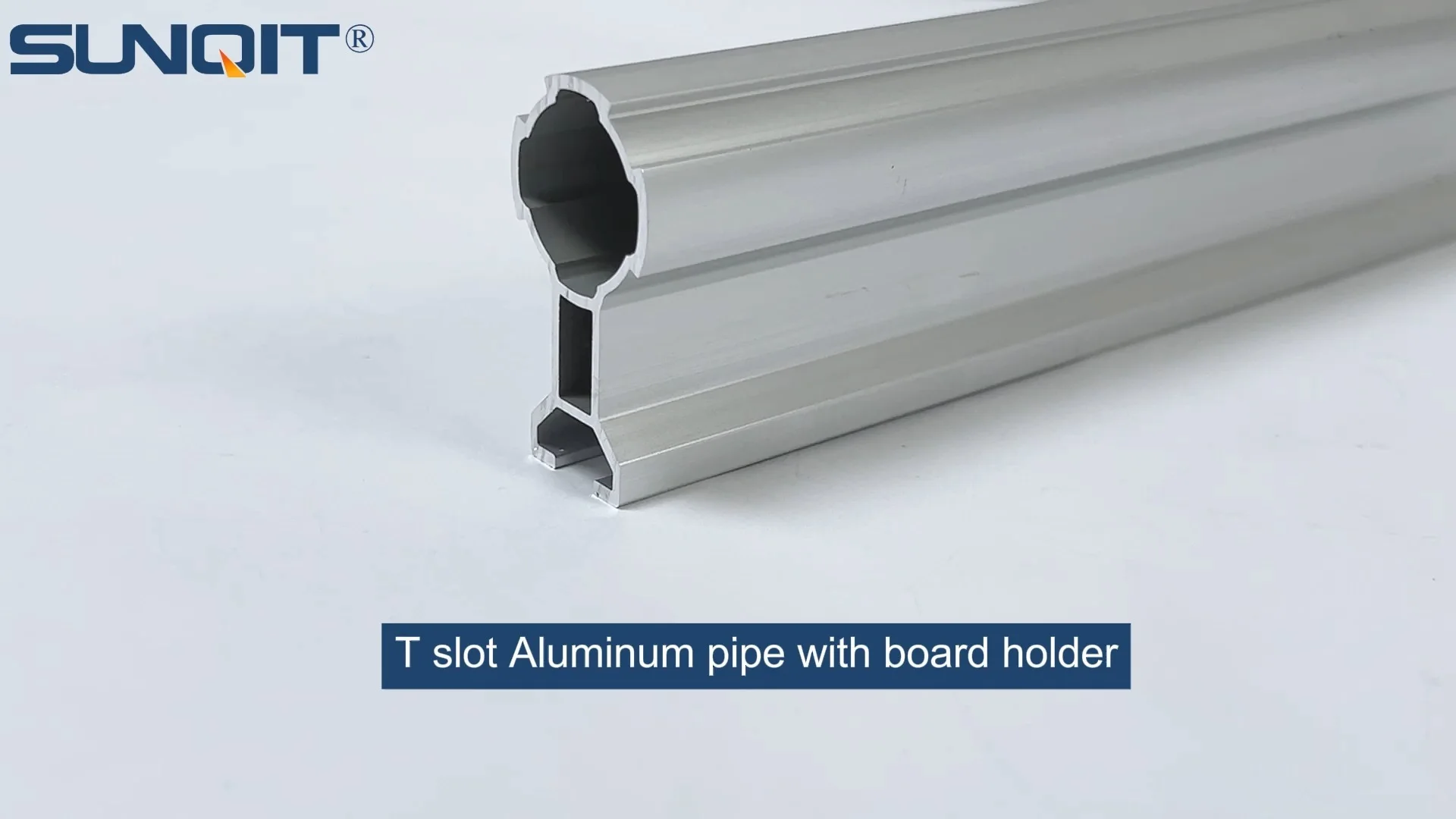
T slot Aluminum pipe with board holder,the pipe one side connected by a joint, the other side with a slot which can hold a tray or a aluminum pannel
Walk into any pharmaceutical lab, semiconductor fabrication plant, or biotech research facility, and you'll notice something immediately: the air feels different. Crisp, controlled, almost clinical. That's the mark of a clean room—an environment where even a single dust particle or stray microbe can derail months of work, cost thousands of dollars, or compromise patient safety. Sterility here isn't just a box to check; it's the invisible foundation that holds everything together. And in this high-stakes world, the tools and equipment you choose matter just as much as the protocols you follow.
Imagine a workbench that traps bacteria in its welded crevices, or a material rack that sheds tiny plastic particles every time you adjust a shelf. These aren't just inconveniences—they're ticking time bombs for contamination. So when facility managers and engineers start designing clean rooms, they're not just looking for "sturdy" or "functional" equipment. They're hunting for solutions that breathe sterility, from the ground up. That's where T slot aluminum pipe with board holder comes in. It's not just another piece of hardware; it's a sterility-focused design philosophy wrapped in lightweight, adaptable aluminum. Let's unpack why this combination has become the gold standard for clean room setups.
The Sterility Challenge: What Clean Rooms Really Need
Before we dive into the "how" of T slot aluminum systems, let's first understand the "why." Clean rooms are classified by ISO standards, with ISO 1 being the strictest (fewer than 10 particles of 0.1μm per cubic meter) and ISO 9 the most lenient. In industries like injectable pharmaceuticals or microchip manufacturing, even ISO 5 (fewer than 3,520 particles of 0.5μm per cubic meter) is non-negotiable. To hit these targets, every surface, joint, and material must be engineered to resist contamination.
Contaminants come in two flavors: particulate (dust, fibers, metal shavings) and microbial (bacteria, fungi, viruses). Both are equally dangerous. A stray fiber in a vaccine vial? It could trigger an immune response in a patient. A bacteria colony growing in the corner of a workbench? It could contaminate an entire batch of cell cultures. So, what do clean room equipment and structures need to do to fight back?
First, they must be non-porous . Porous materials like wood or untreated plastic act like sponges, soaking up liquids and harboring microbes. Second, they need smooth, crevice-free surfaces . Welds, rivets, and rough edges are perfect hiding spots for particles and bacteria. Third, they must be resistant to cleaning agents . Clean rooms use aggressive disinfectants—think 70% isopropyl alcohol, hydrogen peroxide, or quaternary ammonium compounds—and equipment that corrodes or degrades under these chemicals is useless. Finally, they need to be modular . Clean room workflows change: a new production line, a scaled-up experiment, a regulatory update. Any reconfiguration that requires drilling, welding, or painting risks releasing particles into the air—so adaptability without disruption is key.
T Slot Aluminum Pipe with Board Holder: A Sterility Powerhouse
At first glance, T slot aluminum pipe might look like just another metal tube. But take a closer look, and you'll see the genius: along its length, it features precision-engineered T-shaped grooves (the "T slots") that run parallel to the pipe. These slots aren't just for show—they're the secret to its adaptability. Slide a bolt, bracket, or accessory into the slot, tighten a screw, and it locks into place. No drilling, no welding, no mess. The board holder, a simple but clever accessory, mounts directly into these T slots, letting you attach work surfaces, dividers, shelves, or even clear acrylic barriers with minimal effort.
But why aluminum? Why not steel, or plastic, or stainless steel? Let's start with the material itself: aluminum extrusion profile . Unlike steel, which is heavy and prone to rust (even stainless steel can corrode if its protective layer is scratched), aluminum is naturally corrosion-resistant. When you anodize it—a process that thickens its surface oxide layer—it becomes even tougher, standing up to harsh disinfectants without pitting or peeling. And unlike plastic, which can warp under heat or shed microplastics over time, aluminum is inert. It doesn't off-gas, it doesn't degrade, and it doesn't leave behind tiny fragments that end up in your product.
The aluminum profile itself is a marvel of clean design. Extruded (pressed through a die) rather than welded or machined, it has a seamless, uniform surface. No weld beads to trap bacteria, no rough edges to catch dust. Even the T slots are precision-cut, with smooth, rounded corners that make wiping down a breeze. Run a lint-free cloth or alcohol wipe along the pipe, and it glides—no snags, no missed spots. Compare that to a wooden shelf with visible grain, or a steel rack with welded joints that require a toothbrush to clean (and even then, you're never sure you got everything). It's a night-and-day difference.

5 Key Features That Make It Sterility-Ready
Let's get specific. What exactly about T slot aluminum pipe with board holder makes it so clean-room friendly? Here are the standout features that set it apart:
1. No Crevices, No Compromises
Traditional equipment often has "microbial hotspots": the space between a welded shelf and its frame, the threads of a bolt that juts out, or the gap where two plastic parts meet. These are the places where bacteria thrive, hidden from cleaning agents. T slot aluminum systems eliminate this risk. The board holder attaches flush to the pipe, with no gaps. Accessories like end caps (which seal the open ends of the T slots) prevent dust from collecting inside the pipe. Even the joints—where two pipes connect via aluminum profile accessories like corner brackets—are tight and smooth, with no nooks for microbes to call home.
2. Modularity Without Disruption
Clean rooms aren't static. A pharmaceutical lab might need to reconfigure workstations for a new drug trial; a semiconductor plant might shift production to a smaller chip size. In the past, changing a workbench or rack meant bringing in tools, cutting materials, and generating dust—all of which require shutting down the clean room, rebalancing the air filtration, and revalidating sterility. With T slot aluminum, reconfiguration is tool-free. Loosen a few screws, slide the board holder to a new position, add an extra pipe for height, and you're done. No dust, no noise, no downtime. It's like building with giant, sterile Legos—except these Legos can support hundreds of pounds and withstand daily disinfection.
3. Lightweight but Heavy-Duty
Clean room floors are often delicate, designed to minimize particle generation. Hauling a 200-pound steel workbench across them? Risky. But T slot aluminum systems are surprisingly lightweight—aluminum is about 1/3 the weight of steel—so moving them is a one-person job. Don't let the weight fool you, though: aluminum extrusion profile is strong. A 2-inch diameter T slot pipe can easily support 100+ pounds per linear foot, making it perfect for holding heavy equipment, stacks of sterile containers, or even automated robotic arms. It's the best of both worlds: easy to maneuver, but tough enough to handle the demands of 24/7 clean room operations.
4. Accessories That Enhance Sterility
A T slot aluminum system is only as good as its accessories, and aluminum profile accessories are designed with clean rooms in mind. Take end caps: these simple plastic or aluminum plugs snap into the ends of the pipe, sealing off the T slots so dust and liquid can't seep inside. Then there are the board holders themselves—made from smooth, non-porous materials like anodized aluminum or food-grade plastic, they attach to the pipe with minimal contact, leaving no gaps. Even the screws and bolts are stainless steel or coated aluminum, so they won't rust or shed particles. Want to add a divider between work zones? Use a board holder with a clear acrylic panel. Need to route cables without creating a tripping hazard? There's a T slot cable management accessory for that. Every part is designed to work together seamlessly, with sterility as the priority.
5. Longevity That Reduces Waste (and Contamination Risk)
Clean rooms are expensive to build and maintain, so equipment that needs frequent replacement is a liability. T slot aluminum systems are built to last. The anodized aluminum profile resists scratches, dents, and corrosion for decades. Even if you need to reconfigure or expand, you can reuse the pipes and accessories—no need to throw out old parts and buy new ones (which introduces fresh packaging, shipping, and potential contamination). It's sustainable, cost-effective, and—most importantly—sterile for the long haul.

How It Stacks Up: T Slot Aluminum vs. Traditional Clean Room Gear
Still not convinced? Let's put T slot aluminum pipe with board holder head-to-head with three common alternatives. The results might surprise you.
| Feature | T Slot Aluminum Pipe with Board Holder | Stainless Steel (Welded) | Plastic (PVC/Polypropylene) | Wood (Plywood/Laminate) |
|---|---|---|---|---|
| Surface Smoothness | Seamless, anodized, no crevices | Welded joints create crevices; requires polishing | Smooth but prone to scratching; can warp | Porous grain; laminate edges can peel |
| Cleaning Ease | Wipes clean with alcohol/disinfectant; no tools needed | Requires scrubbing around welds; hard-to-reach spots | Can stain with harsh chemicals; scratches trap bacteria | Absorbs liquids; impossible to fully sanitize |
| Chemical Resistance | Resistant to most disinfectants (alcohol, peroxide, bleach) | Resistant but can corrode if scratched | Prone to warping or cracking with strong chemicals | Swells with moisture; degrades with cleaners |
| Modularity | Tool-free reconfiguration; accessories snap into T slots | Requires welding/cutting; not reusable | Limited adjustability; glued joints can fail | Fixed design; cutting generates dust |
| Particle Shedding | Zero shedding; inert material | Minimal, but polishing can release metal particles | Can shed microplastics over time | Sheds fibers and dust; laminate chips |
The verdict? T slot aluminum outperforms the competition in every category that matters for sterility. Stainless steel comes close, but its welded joints are a dealbreaker. Plastic is cheap but not durable. Wood? It's a non-starter in ISO 5+ clean rooms. For facilities that can't afford compromises, the choice is clear.
Real-World Impact: A Case Study
Let's ground this in reality. A mid-sized biotech company in California was struggling with contamination issues in their ISO 7 clean room. Their old setup included wooden workbenches (laminated, but still porous) and welded steel material racks. Despite rigorous cleaning protocols, they were seeing 2-3 "out-of-spec" particle counts per week, leading to batch rejections and costly delays.
They switched to T slot aluminum pipe workbenches with board holders (using HDPE boards for the work surface) and aluminum profile material racks. Within three months, contamination incidents dropped to zero. Why? The smooth aluminum surfaces were easier to sanitize, the modular design let them reconfigure workflows without shutting down, and the anodized finish stood up to their twice-daily peroxide cleanings. "It's like night and day," said their facility manager. "We used to spend hours scrubbing welds on the steel racks. Now, we wipe down the aluminum surfaces in 10 minutes and move on."
Choosing the Right Supplier: What to Look For
Not all T slot aluminum systems are created equal. To ensure you're getting a sterility-ready solution, keep these tips in mind when picking a supplier:
1. Focus on extrusion quality. The best aluminum extrusion profile is consistent—no warping, no surface defects, and precise T slot dimensions. Ask for samples and run your hand along the surface; it should feel smooth, not bumpy or uneven.
2. Check certifications. Look for suppliers with ISO 9001 (quality management) and ISO 13485 (medical device manufacturing) certifications. These ensure they follow strict quality control processes, from raw material sourcing to extrusion.
3. Ask about anodization. Not all anodization is the same. Type II anodization (standard) is fine for general use, but Type III (hard anodization) is better for clean rooms—it's thicker and more durable. Make sure they specify the anodize thickness (aim for 10-15μm).
4. Inspect the accessories. Aluminum profile accessories like board holders, end caps, and brackets should be smooth, burr-free, and made from compatible materials (no cheap plastic that could shed particles).
5. Look for customization. Every clean room is unique. A good supplier will work with you to design custom lengths, board holder configurations, or even specialty accessories (like antimicrobial board holders) to meet your specific needs.
The Future of Clean Rooms: T Slot Aluminum Leads the Way
As clean room standards get stricter (looking at you, ISO 1!), and industries like cell and gene therapy demand even lower contamination risks, T slot aluminum systems are evolving. We're already seeing innovations like antimicrobial anodization (infusing the oxide layer with silver ions to kill bacteria on contact) and "smart" T slots with embedded sensors that monitor surface cleanliness. And as 3D printing advances, we may soon see custom aluminum profile accessories printed on-demand, reducing lead times and waste.
But even without these high-tech add-ons, the core appeal of T slot aluminum pipe with board holder remains: it's simple, it's effective, and it's built to put sterility first. In a world where clean room failures make headlines (and cost careers), that's priceless.
Final Thoughts: Sterility Starts with the Right Tools
Clean rooms are the unsung heroes of modern manufacturing and research. They protect our medicines, our electronics, and our most groundbreaking scientific discoveries. And in these critical spaces, every detail counts—including the pipes and boards that hold everything together. T slot aluminum pipe with board holder isn't just a tool; it's a commitment to sterility. It's the difference between crossing your fingers and knowing, without a doubt, that your equipment is working with you, not against you.
So the next time you walk into a clean room, take a closer look at the workbenches and racks. Chances are, they're made of T slot aluminum. And now, you'll know why.