- Company Articles
- Products and Technology
- Product knowledge
- T Slot Aluminum Pipe with Board Holder for Conveyor Systems: Integration Tips

T Slot Aluminum Pipe with Board Holder for Conveyor Systems: Integration Tips
Related Product
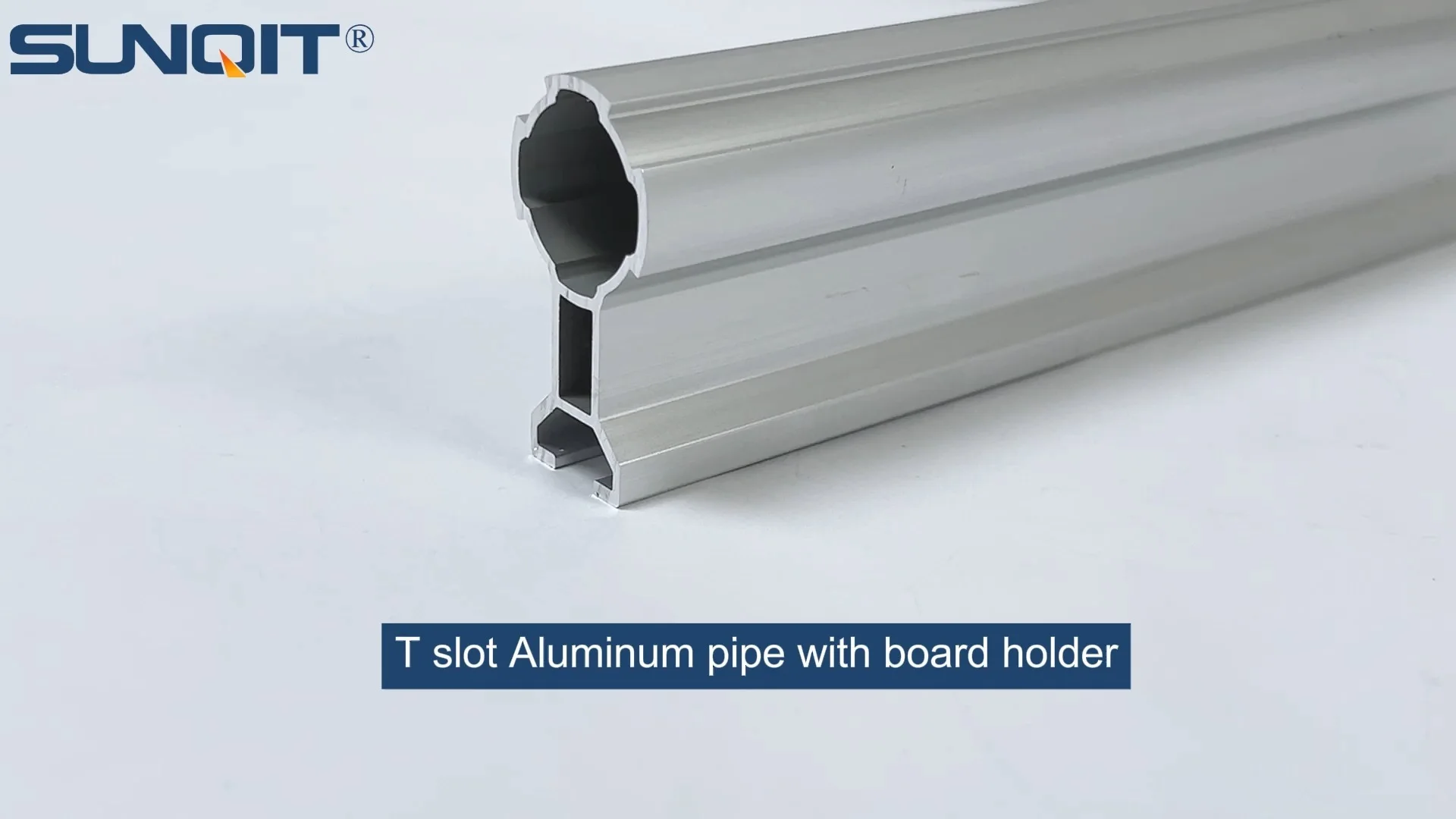
T Slot Aluminum Pipe with Board Holder
T slot Aluminum pipe with board holder,the pipe one side connected by a joint, the other side with a slot which can hold a tray or a aluminum pannel
Walk into any manufacturing plant, warehouse, or distribution center, and you'll likely hear the steady hum of conveyor systems—the unsung heroes that keep production lines moving, materials flowing, and deadlines on track. These systems are the backbone of efficiency, but their performance hinges on the smallest details: the components that guide, support, and streamline the movement of goods. Among these critical components, one stands out for its versatility and impact: the T Slot Aluminum Pipe with Board Holder. In this article, we'll explore how this unassuming tool can transform your conveyor system, share practical integration tips, and highlight why it's become a go-to choice for engineers and facility managers alike.
What Is T Slot Aluminum Pipe with Board Holder, and Why Does It Matter?
First, let's break down the basics. T Slot Aluminum Pipe is exactly what it sounds like: lightweight, durable aluminum tubing with a T-shaped groove (or "slot") running along its length. This slot isn't just a design quirk—it's a gateway to customization. It allows you to attach accessories, brackets, and tools directly to the pipe without drilling or welding, making adjustments and upgrades quick and hassle-free. Paired with a Board Holder—a simple yet clever attachment that provides a flat, stable surface for supporting materials—the T Slot Aluminum Pipe becomes a dynamic tool for organizing, guiding, and controlling the flow of items on a conveyor.
But why does this matter for conveyor systems? Conveyors are rarely one-size-fits-all. They handle everything from small electronic components to heavy machinery parts, and their needs change as production demands shift. A rigid, fixed conveyor setup can quickly become a bottleneck when workflows evolve. T Slot Aluminum Pipe with Board Holder solves this problem by offering flexibility: you can reposition the board holder, add dividers, or even attach roller tracks to adapt to new products or processes—all without overhauling the entire system. It's like having a conveyor that can "learn" and grow with your business.
The Key Benefits of Integrating T Slot Aluminum Pipe with Board Holder
Before diving into integration steps, let's take a closer look at why so many facilities are swapping traditional conveyor components for T Slot Aluminum Pipe with Board Holder. These benefits aren't just theoretical—they translate to real-world improvements in efficiency, cost savings, and worker satisfaction.
1. Unmatched Flexibility
Traditional conveyor guides or support structures are often welded or bolted in place, making them difficult to modify. If you need to adjust the width of a material path or add a new section, you're looking at hours (or days) of work. T Slot Aluminum Pipe changes the game. The T-slot design lets you slide accessories like board holders, brackets, or even small tools into place and secure them with simple bolts or clips. Need to widen the conveyor path for a new product? Loosen a few screws, reposition the board holder, and you're done. This flexibility is a lifesaver for facilities with variable production runs or frequent product changes.
2. Durability Without the Weight
Aluminum is renowned for its strength-to-weight ratio. T Slot Aluminum Pipe is lightweight enough to be handled by a single worker during installation or adjustments, but strong enough to support heavy loads—think metal parts, boxes, or even small machinery components. Unlike steel, it's also resistant to corrosion, which is a huge plus in environments with moisture, dust, or chemicals. This durability means fewer replacements over time, reducing long-term maintenance costs.
3. Cost-Effective Customization
Custom conveyor solutions can be expensive, especially if you need to hire fabricators or buy specialized parts. T Slot Aluminum Pipe with Board Holder eliminates this barrier. Aluminum profile accessories—like internal rotatary joints, end caps, or clamp brackets—are affordable and widely available, and they're designed to work seamlessly with T Slot Pipe. Instead of paying for a custom metal bracket, you can pick up a standard aluminum profile accessory from a supplier and attach it in minutes. Over time, these savings add up, making T Slot Aluminum Pipe a budget-friendly choice for both small businesses and large corporations.
4. Improved Worker Safety and Ergonomics
A cluttered or disorganized conveyor can lead to jams, spills, or even injuries. The Board Holder helps keep items aligned and stable, reducing the risk of products falling off the conveyor or getting stuck. Additionally, since T Slot Aluminum Pipe is easy to adjust, you can position the board holder at the optimal height for workers loading or unloading the conveyor, reducing strain and fatigue. It's a small change that makes a big difference in daily operations.

Key Components to Know Before Integration
Integrating T Slot Aluminum Pipe with Board Holder into your conveyor system isn't just about slapping a pipe onto a frame. To do it right, you'll need to understand the ecosystem of components that work together to create a smooth, functional setup. Let's break down the essentials:
T Slot Aluminum Pipe: The Foundation
The pipe itself is the starting point. T Slot Aluminum Pipes come in various diameters and lengths, but the most common sizes for conveyors are 20mm, 30mm, or 40mm in width (measured across the T-slot opening). For heavier loads, opt for thicker-walled pipes (e.g., 1.5mm or 2.0mm); for lighter items, 1.0mm or 1.2mm walls work well. Look for pipes with smooth, deburred edges to prevent snags on materials or injury to workers.
Board Holder: The Workhorse
The board holder is the part that does the heavy lifting—literally. It's typically a flat aluminum or plastic plate attached to the T Slot Pipe, providing a surface to support boxes, bins, or loose parts as they move along the conveyor. Some board holders come with raised edges (called "guides") to keep items from sliding off, while others are adjustable to tilt at angles for controlled movement (e.g., directing items into a sorting bin). When choosing a board holder, consider the size and weight of the items you'll be conveying—larger, heavier items may require reinforced holders or multiple support pipes.
Roller Track: Smoothing the Flow
While T Slot Aluminum Pipe and Board Holder handle support and guidance, roller track is what makes movement effortless. Roller tracks are sets of small wheels (rollers) mounted on a frame, allowing items to glide along the conveyor with minimal friction. The beauty of T Slot Aluminum Pipe is that it pairs seamlessly with roller track—you can attach roller track brackets directly to the T-slot, creating a hybrid system where the board holder supports the edges of a bin, and the roller track carries the weight. This is especially useful for irregularly shaped items that might get stuck on a flat conveyor belt.
Roller tracks come in different materials and configurations, each suited to specific needs. For example, 40 Steel Roller Track with black ESD wheels is ideal for electronics manufacturing, where static control is critical, while 38 Aluminum Roller Track with yellow wheels is lightweight and corrosion-resistant, perfect for food processing or pharmaceutical facilities. The table below compares common roller track options and their best uses:
| Roller Track Type | Material | Load Capacity (per meter) | Best For | Compatibility with T Slot Aluminum Pipe |
|---|---|---|---|---|
| 40 Steel Roller Track (Black ESD Wheel) | Steel frame, ESD-safe plastic wheels | Up to 150kg | Heavy electronic components, static-sensitive items | Use aluminum profile accessories (e.g., flat brackets) to attach to T-slot |
| 38 Aluminum Roller Track (Yellow with Side Guide) | Aluminum frame, yellow plastic wheels | Up to 80kg | Light to medium boxes, food-grade applications | Direct T-slot mounting via built-in brackets |
| Mini Aluminum Roller Track (Black) | Aluminum frame, black plastic wheels | Up to 30kg | Small parts, cosmetic packaging | Ideal for narrow T Slot Pipes (20mm or 30mm) |
Aluminum Profile Accessories: The Glue That Holds It All Together
You can't talk about T Slot Aluminum Pipe without mentioning aluminum profile accessories—the nuts, bolts, brackets, and joints that turn a simple pipe into a functional system. These accessories are designed to work with T-slot profiles, making assembly a breeze. Here are the must-haves for conveyor integration:
- Internal Rotary Aluminum Joints: These allow you to connect two T Slot Pipes at angles (e.g., 90°, 45°) while keeping the connection smooth and sturdy. Perfect for conveyor corners or branching paths.
- Flat Brackets: Used to mount T Slot Pipes to conveyor frames or walls. They slide into the T-slot and secure with bolts, providing a stable base.
- End Caps: Simple plastic or aluminum caps that cover the ends of T Slot Pipes, preventing snags and adding a finished look.
- Clamps: For attaching the board holder to the pipe. Look for adjustable clamps that let you reposition the holder without removing it entirely.

Step-by-Step Guide to Integrating T Slot Aluminum Pipe with Board Holder
Now that we've covered the "why" and "what," let's get to the "how." Integrating T Slot Aluminum Pipe with Board Holder into your conveyor system is a straightforward process, but it requires careful planning to ensure it meets your specific needs. Follow these steps to get started:
Step 1: Assess Your Conveyor's Needs
Before picking up a pipe cutter, take time to map out your current conveyor setup and identify pain points. Ask: What items are you conveying? How heavy are they? Do they tend to slide, tip, or get stuck? Are there bottlenecks where items pile up? For example, if you're conveying small plastic parts that frequently fall off the edge, a board holder with side guides would be a priority. If heavy boxes are causing the conveyor belt to sag, adding roller track supported by T Slot Pipe could reduce strain on the belt.
Also, consider future needs. Are you planning to expand production or introduce new products? If so, factor in extra space for adding more board holders or extending the roller track later.
Step 2: Design Your Setup
With your needs in mind, sketch a rough design of how the T Slot Aluminum Pipe and Board Holder will fit into the conveyor. Measure the conveyor's width, height, and length to determine how much pipe you'll need. Don't forget to account for supports—T Slot Pipe should be mounted to the conveyor frame at regular intervals (every 60-80cm for heavier loads) to prevent sagging. If you're adding roller track, mark where it will align with the board holder to ensure items transition smoothly from the holder to the track.
Pro tip: Use 3D modeling software or even cardboard cutouts to test the design before purchasing materials. This can save you from costly mistakes later.
Step 3: Gather Materials and Tools
Once your design is finalized, gather your materials. You'll need:
- T Slot Aluminum Pipe (cut to your measured lengths)
- Board Holder (choose size and style based on your items)
- Roller Track (if adding, select type from the table above)
- Aluminum profile accessories (joints, brackets, clamps, end caps)
- Basic tools: T-slot bolts, hex keys, a rubber mallet (for gently tapping joints into place), and a pipe cutter or saw (if cutting pipes to length)
Step 4: Assemble the T Slot Frame
Start by building the frame with T Slot Aluminum Pipe. Use internal rotary joints or 90° brackets to connect pipes at corners, and secure them with T-slot bolts. If you're mounting the frame to the conveyor, use flat brackets to attach it to the conveyor's side rails or legs. Make sure the frame is level—use a spirit level to check, as an uneven frame can cause items to slide off or jam.
Step 5: Attach the Board Holder and Roller Track
Next, mount the board holder to the T Slot Pipe. Slide the holder's clamps into the T-slot, position it where needed, and tighten the bolts. If your board holder has adjustable guides, set them to the width of your items (leave a small gap—about 5mm—on each side to prevent jamming). Then, attach the roller track using brackets or built-in T-slot mounts. Align the track so that it's flush with the board holder—this ensures items move smoothly from the holder to the track without catching.
Step 6: Test and Adjust
Now comes the fun part: testing! Run a few items through the conveyor to see how they interact with the new setup. Do they slide smoothly? Do they stay centered on the board holder? If items tip, adjust the board holder's angle or add taller side guides. If the roller track feels stiff, lubricate the wheels with a dry silicone spray (avoid oil-based lubricants, which can attract dust). Keep tweaking until the flow is consistent and reliable.
Step 7: Optimize for Long-Term Use
Once everything works, take a step back and think about optimization. Can you add labels to the board holder to indicate where each item should go? Would casters (small wheels) on the T Slot frame make it easier to move the setup for cleaning or maintenance? Small touches like these can turn a good integration into a great one.
Case Study: How a Small Electronics Plant Improved Efficiency by 25% with T Slot Aluminum Pipe
To put these tips into context, let's look at a real-world example. A mid-sized electronics manufacturer in Ohio was struggling with their conveyor system: small circuit boards kept falling off the edge, and workers were spending 15-20 minutes per hour picking up parts and reloading them. The plant manager, Sarah, decided to try integrating T Slot Aluminum Pipe with Board Holder after seeing it at a trade show.
Sarah's team followed the steps above: they assessed the problem (falling parts), designed a setup with a board holder and 38 Aluminum Roller Track (yellow with side guides), and assembled the frame in a single afternoon. They added side guides to the board holder to keep the circuit boards centered and aligned the roller track to carry the boards to the next workstation. The result? Within a week, part loss dropped by 90%, and workers reclaimed those 15-20 minutes per hour for more valuable tasks. Over three months, the plant saw a 25% increase in throughput—and Sarah estimates the T Slot setup paid for itself in under two months.
Maintenance Tips to Keep Your System Running Smoothly
Like any conveyor component, T Slot Aluminum Pipe with Board Holder needs regular care to stay in top shape. Here's how to keep it performing at its best:
- Clean regularly: Wipe down the T-slot and board holder with a damp cloth to remove dust, debris, or oil. For stubborn grime, use a mild detergent (avoid harsh chemicals that can damage aluminum).
- Check connections: Every month, tighten any loose T-slot bolts or brackets. Vibration from the conveyor can loosen them over time, leading to wobbling or misalignment.
- Lubricate roller track wheels: If you're using roller track, lubricate the wheels every 3-6 months with dry silicone spray to keep them rolling smoothly.
- Inspect for wear: Look for signs of damage, like bent pipes, cracked board holders, or worn roller wheels. replace parts as needed—aluminum profile accessories are affordable, so don't wait for a small issue to become a big problem.
Final Thoughts: Why T Slot Aluminum Pipe with Board Holder Is a Conveyor Game-Changer
Conveyor systems are the lifeblood of modern manufacturing and logistics, but their success depends on the details. T Slot Aluminum Pipe with Board Holder may seem like a small component, but it's a powerful tool for unlocking flexibility, improving efficiency, and future-proofing your operations. By following the integration tips in this article—assessing your needs, designing carefully, and leveraging aluminum profile accessories and roller track—you can create a conveyor system that adapts to change, reduces waste, and keeps your team productive.
Whether you're running a small workshop or a large factory, the message is clear: don't overlook the power of customization. With T Slot Aluminum Pipe with Board Holder, you're not just building a conveyor—you're building a system that works for you, today and tomorrow.