- Company Articles
- Products and Technology
- Product knowledge
- T Slot Aluminum Pipe with Board Holder for Material Rack B: Enhanced Storage Capacity

T Slot Aluminum Pipe with Board Holder for Material Rack B: Enhanced Storage Capacity
Related Product
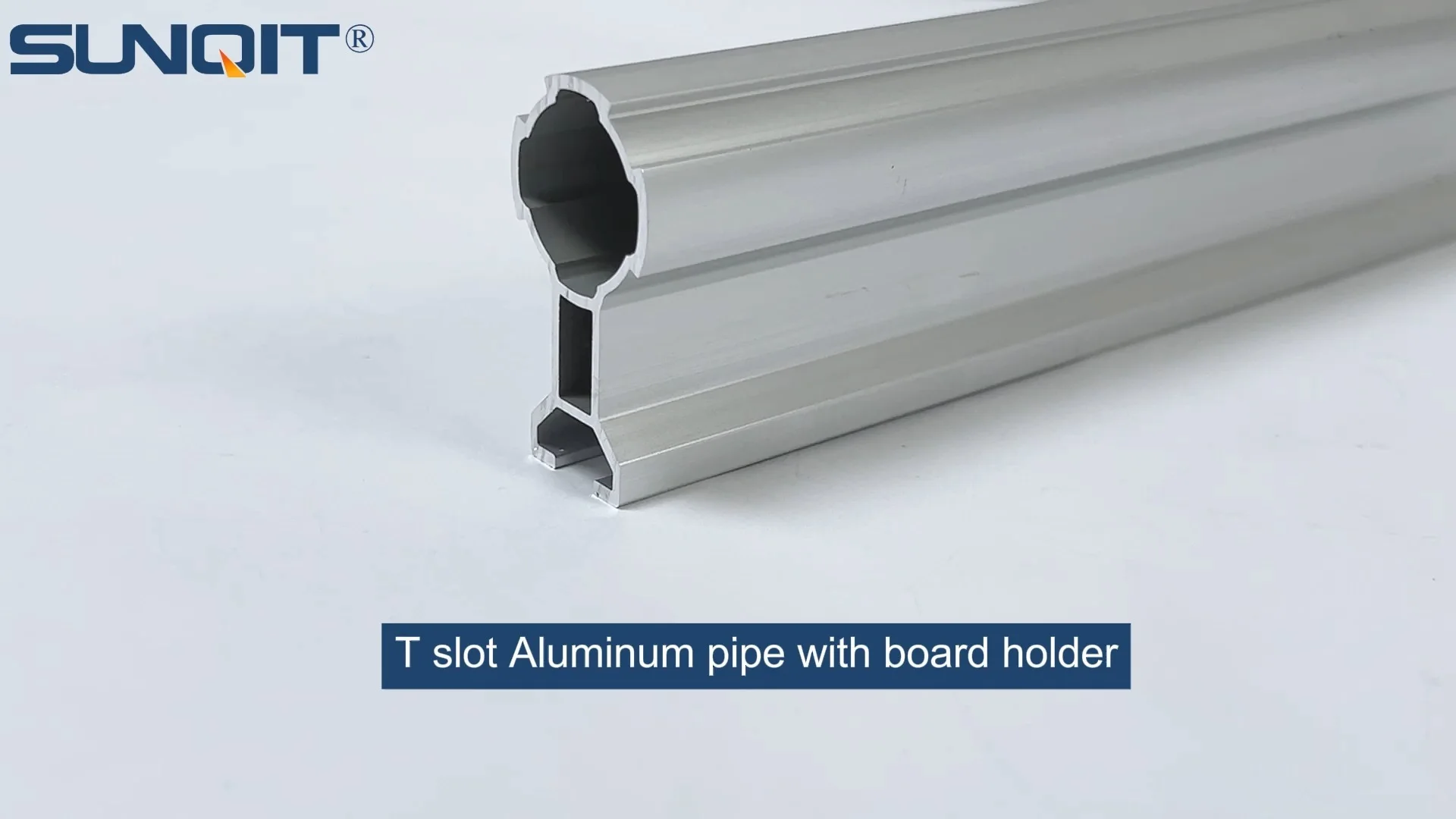
T Slot Aluminum Pipe with Board Holder
T slot Aluminum pipe with board holder,the pipe one side connected by a joint, the other side with a slot which can hold a tray or a aluminum pannel
The Frustration of Stagnant Storage: A Warehouse Manager's Journey
Imagine walking into a warehouse where every inch of space feels like a puzzle—boxes stacked haphazardly, tools scattered across workbenches, and employees spending 20 minutes just hunting for a single component. That was Maria's reality. As the operations supervisor at a mid-sized electronics assembly plant, she'd spent months wrestling with a storage system that felt more like a roadblock than a support tool. "Our old steel racks were rigid," she recalls. "Once you bolted a shelf in place, it might as well have been cemented to the floor. When we launched a new product line with bulkier components, we had to cram items on top of each other, and that's when mistakes started happening—parts getting damaged, orders delayed. I knew we needed something that could grow with us, not hold us back."
That "something" turned out to be a combination of T slot aluminum pipe , a cleverly designed board holder, and a reimagined Material Rack B (3 row and 3 floor) . Today, Maria's warehouse is unrecognizable: shelves adjust in minutes, floor space has opened up by 35%, and her team's picking accuracy has jumped to 99.7%. But how did a simple pipe and a bracket transform chaos into efficiency? Let's dive in.
What Is T Slot Aluminum Pipe, and Why Does It Matter?
At first glance, T slot aluminum pipe might look like any other metal tube—but that unassuming exterior hides a game-changing design. Unlike traditional pipes, which are smooth and featureless, T slot aluminum pipe has long, narrow channels (the "T slots") running along its length. These slots aren't just for show; they're the backbone of a modular system that lets you attach, adjust, and reconfigure accessories without welding, drilling, or specialized tools. Think of it as a storage Swiss Army knife—adaptable, versatile, and ready to tackle whatever your workflow throws at it.
But why aluminum? For starters, it's lightweight. A 10-foot length of aluminum extrusion profile weighs roughly half as much as a steel pipe of the same size, making it easy for a single person to handle during assembly. Yet despite its lightness, aluminum is surprisingly strong—strong enough to support heavy loads, from stacks of circuit boards to bulky machinery parts. It's also naturally resistant to rust and corrosion, which is a huge win in warehouses where humidity or occasional spills are part of daily life. Steel racks might start to show red streaks after a year; aluminum? It stays bright and functional for decades.
The real magic, though, is in those T slots. Picture sliding a bracket into the slot, twisting a knob, and locking it in place—no nuts, bolts, or headaches. That's the flexibility Maria needed. "With our old steel racks, if we wanted to lower a shelf by 6 inches, we'd have to unbolt everything, drill new holes, and hope the measurements were right," she says. "With T slot aluminum, my team can adjust a shelf in 2 minutes flat. If a new shipment comes in with taller boxes, we just loosen the knobs, slide the board holder up, and we're good to go. It's like having a storage system that thinks on its feet."

The Board Holder: Small Accessory, Big Impact
If T slot aluminum pipe is the backbone, the board holder is the muscle. This unassuming accessory—a simple bracket with a clamp that fits into the T slot—turns empty pipes into sturdy shelves. But not all board holders are created equal. The ones Maria chose were designed specifically for Material Rack B, with reinforced edges to prevent warping and a non-slip grip to keep shelves from sliding. "We tried cheap plastic brackets first," she admits. "They cracked under the weight of our heavier parts. The aluminum board holders? We've got 50-pound boxes sitting on them, and they don't budge. Plus, they're powder-coated, so they match the pipes—small detail, but it makes the warehouse look more put-together, which boosts morale."
The board holder's design is deceptively simple: a flat base that slides into the T slot, a vertical arm that rises to meet the shelf, and a lip that curls over the edge of the board to hold it in place. Some models even have adjustable angles, letting you tilt shelves slightly for easier access to items in the back. "We use tilted shelves for our most frequently picked parts," Maria explains. "It's like a mini gravity feed—items roll forward as you take them, so you never have to reach to the back of a deep shelf. Our pickers love it; they say it cuts down their bending and stretching by half."
But the board holder's biggest trick? It turns almost any material into a shelf. Wood, plywood, metal, even plastic—if it's flat, the board holder can secure it. Maria's team uses a mix: thick plywood for heavy tools, metal sheets for ESD-sensitive components (to prevent static damage), and lightweight plastic boards for small parts bins. "We're not locked into one type of shelf," she says. "If a wood board gets scratched, we just swap it out for a new one—no need to replace the entire rack. It's saved us thousands in replacement costs alone."

Material Rack B (3 Row and 3 Floor): Redefining Storage Capacity
Now, let's talk about the star of the show: Material Rack B. Designed as a 3-row, 3-floor system, this rack isn't just about storing more—it's about storing smarter. Traditional racks often waste space with fixed shelves that are either too tall (leaving empty air above items) or too short (forcing you to stack items precariously). Material Rack B, paired with T slot aluminum pipe and board holders, eliminates that waste.
Let's break down the specs. Each row of Material Rack B spans 6 feet wide, with 3 floors (shelves) per row, creating 9 separate storage areas in total. But here's the kicker: each shelf's height can be adjusted in 1-inch increments, from 12 inches off the ground to 72 inches. That means you can tailor the space to the items you're storing. "For our tiny resistor bins, we set shelves 8 inches apart—no more wasted space between small items," Maria says. "For our power supply units, which are 18 inches tall, we bump the shelves up to 20 inches apart. We're using every inch of vertical space without cramming."
But numbers tell the real story. Before Material Rack B, Maria's team was storing 120 items per 100 square feet of floor space. Now? They're up to 210 items per 100 square feet—a 75% increase in storage density. "We used to have 4 steel racks taking up 400 square feet," she says. "Now we have 3 Material Rack B units in 300 square feet, and we're storing more items. That freed up 100 square feet for a new assembly station. It's like adding a whole new room to the warehouse without breaking ground."
How Does It Compare to Traditional Racks? Let's Take a Look
| Feature | Traditional Steel Rack | Material Rack B (with T Slot Aluminum Pipe) |
|---|---|---|
| Storage Capacity (items per 100 sq ft) | 120 | 210 (+75%) |
| Shelf Adjustment Time | 1–2 hours (requires tools/drilling) | 2–5 minutes (no tools needed) |
| Weight Capacity per Shelf | 500 lbs (fixed) | 300–600 lbs (adjustable with bracket strength) |
| Corrosion Resistance | Low (prone to rust in humid environments) | High (aluminum resists rust; powder coating adds protection) |
| Assembly Time (per rack) | 4–6 hours (requires 2 people) | 1–2 hours (can be assembled by 1 person) |
| Long-Term Cost (10-year lifespan) | $8,000 (including replacement parts for rust/damage) | $4,500 (no replacement parts needed; modular design reduces waste) |
Beyond Storage: How Aluminum Profile Accessories Elevate the System
A great storage system isn't just about pipes and shelves—it's about the extras that make it work for your unique needs. That's where aluminum profile accessories come in. Maria's team added four key accessories to their Material Rack B units, turning basic storage into a full-fledged workflow solution.
1. Internal Rotary Aluminum Joints: These nifty connectors let pipes pivot 360 degrees, so Maria's team could add angled shelves in tight corners. "We have a weird L-shaped space between two workbenches," she says. "With internal rotary joints, we bent a section of T slot aluminum at 45 degrees and added a shelf there. It's like we discovered hidden storage space we didn't even know existed."
2. Caster Wheels: By adding lockable caster wheels to the base of one Material Rack B unit, Maria created a mobile storage cart. "If the assembly line needs a batch of capacitors, we just roll the cart over instead of having someone carry a heavy bin," she explains. "It's cut down on walking time by 30%."
3. ESD Workbench Tops: For storing sensitive electronics, Maria replaced some wooden shelves with ESD (electrostatic discharge) workbench tops, which dissipate static electricity to protect components. "We used to have separate ESD storage cabinets," she says. "Now we just swap out a shelf on Material Rack B—no more wasted space on standalone cabinets."
4. Label Holders: Small but mighty, these T slot-compatible label holders clip onto the board holders, letting Maria's team print and update labels in seconds. "No more handwritten sticky notes falling off," she laughs. "Now every shelf has a clear, professional label, and our new hires can find parts on day one."
From Chaos to Clarity: A Day in Maria's Warehouse Now
Let's fast-forward to a typical Monday morning at Maria's plant. The 8 AM shift starts, and the first order is for 50 circuit boards, each requiring 12 components. Here's how the day unfolds with Material Rack B:
8:05 AM: Picker Juan grabs a cart and heads to Row 2, Floor 1 of Material Rack B. The label reads "Resistors – 1k Ohm," and the shelf is adjusted to exactly 10 inches high, perfectly fitting the 8-inch-tall bins. He pulls 50 resistors in 30 seconds.
8:10 AM: Next, he needs capacitors, stored on Row 1, Floor 3. The shelf here is tilted at 15 degrees, so the bins roll forward as he takes them. No bending, no stretching—just grab and go.
8:20 AM: A new shipment of power supplies arrives, taller than the previous model. Juan flags Maria, who grabs a wrench, loosens the board holder knobs on Row 3, Floor 2, slides the shelf up by 4 inches, and locks it in place. Total time: 90 seconds.
12:30 PM: The mobile Material Rack B unit (with caster wheels) is rolled to the assembly line, delivering a batch of diodes directly to the workers. No one leaves their station, and production stays on track.
"Before, that same order might have taken 45 minutes, with Juan searching for misplaced parts and struggling to reach bins on high shelves," Maria says. "Now it's 20 minutes flat. And that's every order, every day. The difference is night and day."
Why Aluminum Extrusion Profile Beats the Competition
You might be wondering: Why not use stainless steel or plastic instead of aluminum extrusion profile? Let's break down the pros and cons.
Stainless Steel: Strong, but heavy. A 10-foot stainless steel pipe weighs 35 pounds, compared to 18 pounds for aluminum. That makes assembly a two-person job and increases shipping costs. Stainless steel also doesn't have T slots—you're stuck with fixed shelves unless you weld, which adds time and expense.
Plastic: Lightweight, but flimsy. Plastic racks might work for office supplies, but for industrial parts weighing 20+ pounds, they sag or crack. Plus, plastic fades in sunlight and melts under heat—bad news for warehouses with overhead lights or near assembly lines.
Aluminum Extrusion Profile: The sweet spot. It's 48% lighter than steel, so one person can handle assembly. It's rust-resistant, so it lasts decades in humid environments. And the T slot design? Unmatched for flexibility. "We looked at all three options," Maria says. "Aluminum was the only one that checked every box: strong enough for our parts, light enough to adjust, and flexible enough to grow with us."
Is Material Rack B Right for You? 3 Signs It's Time to Upgrade
Not sure if T slot aluminum pipe and Material Rack B are worth the investment? Here are three signs you're ready for an upgrade:
1. You're Constantly "Making It Work": If your team is stacking boxes on the floor, using bungee cords to secure items, or avoiding new product lines because "we don't have space," you're wasting time and limiting growth. Material Rack B turns "making it work" into "working smarter."
2. Shelf Adjustments Take Hours (or Days): If changing a shelf height requires a maintenance request, a trip to the hardware store, and a team of people, you're losing productivity. With T slot aluminum, adjustments are a one-person, 5-minute task.
3. You're Replacing Racks Every Few Years: Rust, warped shelves, and broken brackets are signs your current system isn't built to last. Aluminum extrusion profile resists corrosion and wear, so your investment will pay off for decades.
Final Thoughts: Storage That Grows With You
Maria's story isn't unique. Warehouses, factories, and workshops everywhere are struggling with storage systems that can't keep up with changing needs. But Material Rack B, paired with T slot aluminum pipe, board holders, and aluminum profile accessories, offers a solution that's less about "storage" and more about "adaptability." It's not just a rack—it's a promise that your storage system will evolve with your business, not hold it back.
"The best part?" Maria says, grinning. "Last month, we launched our biggest product line yet—a new line of industrial sensors that come in giant cases. My team looked at the specs, adjusted three shelves on Material Rack B, and we had the space ready by lunch. No stress, no delays, no panic. That's the power of a system that works with you. Storage shouldn't be a headache. It should be the foundation that helps you grow."
So if you're tired of wrestling with rigid, outdated racks, it might be time to give T slot aluminum pipe and Material Rack B a closer look. Your warehouse (and your team) will thank you.