- Company Articles
- Products and Technology
- Product knowledge
- T Slot Aluminum Pipe with Board Holder for Medical Device Assembly: Compliance & Safety

T Slot Aluminum Pipe with Board Holder for Medical Device Assembly: Compliance & Safety
Related Product
T Slot Aluminum Pipe with Board Holder
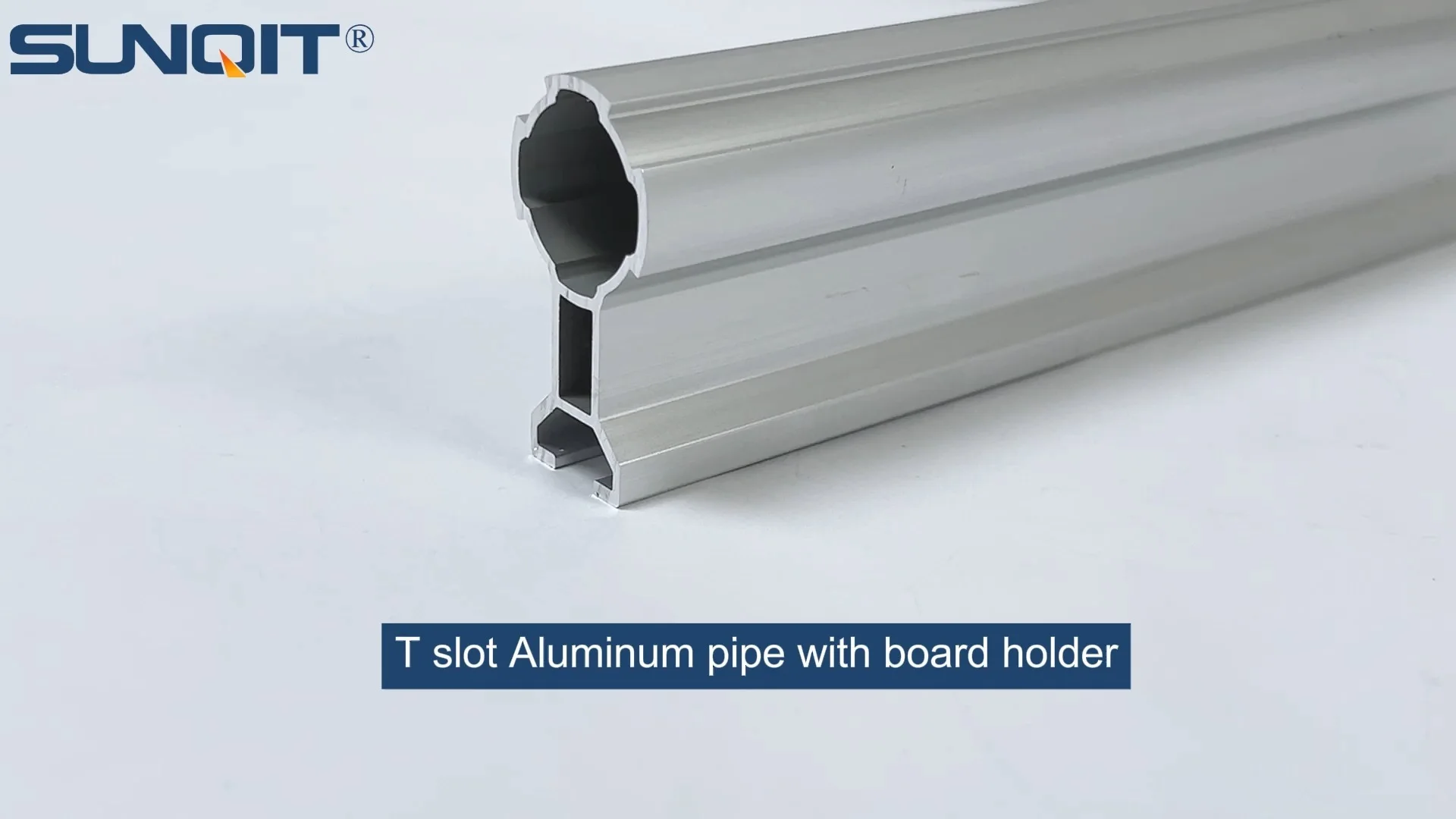
T slot Aluminum pipe with board holder,the pipe one side connected by a joint, the other side with a slot which can hold a tray or a aluminum pannel
T Slot Aluminum Pipe with Board Holder for Medical Device Assembly: Compliance & Safety
In the world of medical device manufacturing, where precision can mean the difference between life and death, every component of the production process matters. From the tiniest screw in a pacemaker to the frame of a surgical robot, the assembly line is the heart of quality control. Yet, for years, many manufacturers have grappled with a silent enemy: rigid, outdated assembly setups that hinder compliance, compromise safety, and slow down workflows. Enter the
T Slot Aluminum Pipe with Board Holder
—a seemingly simple innovation that's revolutionizing how medical devices are built. More than just a workbench upgrade, it's a commitment to meeting the strictest industry standards while keeping operators safe and production lines efficient. Let's dive into why this system has become indispensable in modern medical assembly.
1. The Critical Role of Assembly in Medical Device Quality
Medical devices are unique in their demand for perfection. Unlike consumer electronics or automotive parts, a single flaw in a device like an insulin pump or a defibrillator can have catastrophic consequences. That's why regulatory bodies like the FDA and ISO have established rigorous guidelines for every stage of production, with assembly being a particular focus. The assembly line isn't just where parts come together—it's where quality is tested, documented, and ensured.
Traditional assembly setups often fall short here. Welded steel workbenches, for example, are fixed in place, making it nearly impossible to reconfigure workflows when new device models are introduced or when regulatory requirements change. Wooden surfaces, meanwhile, harbor bacteria and are prone to splintering, posing contamination risks. And perhaps most critically, many older systems lack built-in features to address electrostatic discharge (ESD), a silent threat that can damage sensitive electronic components in devices like MRI machines or implantable sensors.
This is where the
aluminum extrusion profile
—the backbone of the T Slot Aluminum Pipe system—shines. Aluminum's inherent properties—lightweight yet strong, corrosion-resistant, and easy to clean—make it ideal for medical environments. When combined with a board holder, which securely holds documentation, tools, or even small components, the system becomes a dynamic, compliance-ready workspace that adapts to the unique needs of medical assembly.
2. Understanding T Slot Aluminum Pipe with Board Holder: What Makes It Unique?
At first glance, a T Slot Aluminum Pipe might look like any other metal tube, but its design is ingenious. The "T slot" refers to the groove running along the length of the pipe, which allows for easy attachment of accessories—think brackets, shelves, lights, or in this case, a board holder. Unlike traditional fixed workbenches, which require welding or drilling to modify, T Slot systems let operators add, remove, or reposition components in minutes using simple fasteners. This flexibility is a game-changer in medical manufacturing, where product lines often shift to accommodate new device designs or updated safety protocols.
The board holder itself is a deceptively simple accessory with outsized impact. Mounted directly to the T Slot Aluminum Pipe, it can hold everything from assembly checklists and blueprints to electrostatic discharge (ESD) wristband monitors. In a field where documentation is mandatory for compliance audits, having critical information within arm's reach reduces errors and ensures every step is followed to the letter. For example, when assembling a neurostimulation device, an operator can reference a step-by-step guide on the board holder, ensuring no component is missed or installed incorrectly.
But the real magic lies in the
aluminum profile
itself. Medical assembly environments demand materials that can withstand frequent cleaning with harsh disinfectants like isopropyl alcohol or hydrogen peroxide. Aluminum resists corrosion and doesn't harbor bacteria, unlike porous materials like wood or even some plastics. It's also non-magnetic, making it safe for use near devices that rely on magnetic fields, such as pacemakers during testing. And because aluminum is lightweight, the entire system can be reconfigured without heavy lifting, reducing the risk of operator injury—a critical safety consideration in busy production facilities.
3. Compliance: Meeting the Stringent Standards of Medical Manufacturing
Compliance isn't optional in medical device manufacturing—it's the law. The FDA's Quality System Regulation (QSR), outlined in 21 CFR Part 820, requires manufacturers to establish and maintain procedures that ensure devices are safe and effective. Similarly, ISO 13485 sets international standards for quality management systems specific to medical devices. Falling short of these standards can result in fines, product recalls, or even shutdowns. The T Slot Aluminum Pipe with Board Holder is engineered to help manufacturers not just meet these standards, but exceed them.
Take documentation, for instance. Under FDA guidelines, every step of the assembly process must be documented, from component inspection to final testing. The board holder simplifies this by keeping records visible and organized. Operators can attach digital tablets (secured via T Slot brackets) to display electronic work instructions, which are automatically updated when protocols change—eliminating the risk of using outdated paper checklists. This digital integration also makes it easier to log data in real time, a requirement for traceability in case of a product issue.
ESD protection is another critical compliance area. Many medical devices contain microelectronics that are sensitive to static electricity, which can damage components without any visible signs. An
esd workstation
—a workspace designed to prevent static buildup—is mandatory in such environments. T Slot Aluminum Pipe systems can be grounded directly to the facility's ESD protection system, ensuring that any static charge dissipates safely. The board holder, often made from ESD-safe materials, adds an extra layer of protection by preventing static from accumulating on tools or documentation placed on its surface.
Cleanliness is also a regulatory must. Medical device assembly areas are classified as controlled environments, meaning surfaces must be easy to sanitize and resistant to chemical cleaners. The smooth, non-porous surface of
aluminum extrusion profile
leaves no crevices for bacteria to hide, and it stands up to daily wipe-downs with hospital-grade disinfectants. Unlike painted steel workbenches, which can chip and peel over time, aluminum maintains its integrity, ensuring the workspace remains compliant for years.
4. Safety First: Protecting Operators and Products Alike
In medical manufacturing, safety has two faces: protecting the operators who build the devices and protecting the devices themselves from damage during assembly. The T Slot Aluminum Pipe with Board Holder addresses both. Let's start with operator safety. Assembly line workers often spend 8–10 hours a day at their workstations, performing repetitive tasks. Poor ergonomics can lead to musculoskeletal disorders (MSDs), which not only harm employees but also increase absenteeism and errors. T Slot systems solve this by allowing full customization of the workspace height, angle, and layout. The board holder, for example, can be positioned at eye level to reduce neck strain, while tool hooks mounted on the T Slot pipes keep frequently used instruments within easy reach, minimizing stretching.
Then there's the risk of physical injury from heavy or sharp objects. Aluminum's lightweight nature means that even fully loaded workstations are easier to move than their steel counterparts, reducing the risk of back injuries during reconfiguration. The rounded edges of T Slot Aluminum Pipes (a standard feature in medical-grade systems) also prevent cuts and scrapes, a small detail that makes a big difference in high-traffic assembly areas.
For product safety, the system's stability is paramount. Medical devices, especially delicate ones like endoscopes or hearing aids, can be damaged if dropped or jostled. The T Slot Aluminum Pipe's rigid frame, combined with non-slip feet and secure locking mechanisms for accessories, ensures the workstation remains stable even during fast-paced assembly. The board holder, with its adjustable clips, keeps small components like screws or washers from rolling off the surface—a common cause of lost parts and assembly delays.
5. Lean System Integration: Streamlining Workflows for Efficiency
Beyond compliance and safety, medical device manufacturers are increasingly turning to
lean system
principles to eliminate waste and improve productivity. Lean manufacturing focuses on maximizing value while minimizing non-essential activities, and the T Slot Aluminum Pipe with Board Holder is a lean dream come true. Traditional workbenches are static, meaning they can only support one type of workflow. If a manufacturer switches from assembling syringes to IV pumps, the entire setup might need to be replaced—a costly and time-consuming process. T Slot systems, by contrast, are modular. Need to add a shelf for larger components? Just slide a bracket into the T slot. Want to reposition the board holder to accommodate a new documentation format? Loosen a few screws and adjust. This adaptability reduces downtime and allows for continuous workflow optimization.
The board holder also plays a role in lean efficiency by reducing "search time"—the minutes operators waste looking for tools, blueprints, or components. By keeping everything organized and visible, the holder ensures that every second at the workstation is spent on value-adding tasks. For example, a study by the Medical Device Manufacturers Association found that workstations with integrated tool and document holders reduced assembly time by up to 15% compared to disorganized setups. In an industry where margins are tight and demand is high, those minutes add up to significant cost savings.
6. Traditional vs. T Slot Aluminum: A Comparison
| Feature | Traditional Steel Workbench | T Slot Aluminum Pipe System with Board Holder |
|---|---|---|
| Compliance | Fixed design makes updates for new regulations difficult; porous surfaces may harbor bacteria. | Modular design adapts to changing regulations; ESD-groundable and easy to sanitize. |
| Safety | Heavy, hard to reconfigure (injury risk); sharp edges; non-ESD-safe surfaces. | Lightweight, rounded edges, ESD-groundable; customizable for ergonomics. |
| Flexibility | Fixed layout; requires welding/drilling to modify. | Tool-free reconfiguration via T slots; accessories added/removed in minutes. |
| Durability | Prone to rust and chipping paint; may degrade with chemical cleaning. | Corrosion-resistant aluminum; withstands frequent sanitization. |
| Efficiency (Lean System) | Static setup leads to workflow bottlenecks; search time for tools/documents. | Modular design optimizes workflow; board holder reduces search time. |
7. Real-World Impact: A Case Study
To understand the real impact of T Slot Aluminum Pipe with Board Holder, let's look at a case study. ABC Medical Devices, a mid-sized manufacturer of cardiac monitors, was struggling with compliance issues and low productivity. Their assembly line used welded steel workbenches that hadn't been updated in a decade. During an FDA audit, inspectors noted several violations: outdated paper documentation, ESD-related component failures, and difficulty sanitizing work surfaces. The audit resulted in a warning letter, and ABC faced potential delays in launching their new monitor model.
The solution? ABC invested in T Slot Aluminum Pipe systems with integrated board holders. Within weeks, the changes were noticeable. The modular workstations were reconfigured to match the new monitor's assembly steps, with board holders displaying digital work instructions that updated automatically. ESD grounding was added, reducing component failures by 92%. And the aluminum surfaces passed sanitization tests with flying colors, leading to a clean bill of health in the follow-up FDA audit.
But the benefits didn't stop there. Operators reported less fatigue thanks to adjustable workbench heights, and assembly time per unit dropped by 12%. ABC launched their new monitor on schedule and saw a 20% increase in customer satisfaction due to improved product reliability. As the plant manager put it: "The T Slot system wasn't just an upgrade—it was a transformation. We're now more compliant, safer, and more efficient than ever before."
8. Choosing the Right System: Key Considerations
Not all T Slot Aluminum Pipe systems are created equal, especially in medical manufacturing. When selecting a system, there are several factors to keep in mind. First, material quality: Look for
aluminum profile
made from medical-grade aluminum (typically 6061-T6), which offers the best combination of strength, corrosion resistance, and machinability. Avoid cheaper aluminum alloys, which may not stand up to frequent cleaning or heavy loads.
Second, ESD compatibility: Ensure the system can be grounded to your facility's ESD protection network. This includes not just the pipes but also accessories like the board holder, which should be made from ESD-safe plastic or coated aluminum. Third, customization options: The best systems offer a wide range of accessories—from LED task lights to tool hooks—to tailor the workstation to your specific device assembly needs. And finally, supplier support: Choose a supplier with experience in medical manufacturing who can provide documentation (like material safety data sheets) for compliance audits.
9. The Future of Medical Assembly: Where T Slot Aluminum Goes Next
As medical device technology advances—think smaller, more complex devices with integrated AI and IoT capabilities—assembly requirements will only grow stricter. T Slot Aluminum Pipe systems are poised to evolve alongside these changes. We're already seeing innovations like smart board holders with built-in barcode scanners, which automatically log when a step is completed, further streamlining documentation. Some manufacturers are even integrating sensors into the T Slot pipes to monitor temperature, humidity, or vibration—critical factors in sensitive device assembly.
Sustainability is another trend shaping the future. Aluminum is 100% recyclable, making T Slot systems an eco-friendly alternative to disposable or hard-to-recycle workbenches. As more manufacturers adopt green manufacturing practices, the environmental benefits of aluminum will become an even bigger selling point.
10. Conclusion: Investing in Excellence
In medical device manufacturing, there's no room for compromise. Compliance isn't a box to check—it's a promise to patients that their devices are safe and reliable. Safety isn't a guideline—it's a commitment to the workers who build those devices. And efficiency isn't just about profits—it's about getting life-saving technology to those who need it faster. The T Slot Aluminum Pipe with Board Holder delivers on all three fronts. Its flexibility adapts to changing regulations, its design protects operators and products, and its lean integration streamlines workflows. For manufacturers looking to stay ahead in a competitive, highly regulated industry, this system isn't just an investment in equipment—it's an investment in excellence.
As we've seen through case studies and real-world examples, the right assembly setup can transform a struggling production line into a model of compliance, safety, and efficiency. The T Slot Aluminum Pipe with Board Holder isn't just a tool—it's a partner in building a better, safer future for medical device manufacturing. And in an industry where every detail matters, that partnership is invaluable.