- Company Articles
- Products and Technology
- Product knowledge
- T Slot Aluminum Pipe with Board Holder for Small Parts Storage: Organization Hacks

T Slot Aluminum Pipe with Board Holder for Small Parts Storage: Organization Hacks
Related Product
T Slot Aluminum Pipe with Board Holder
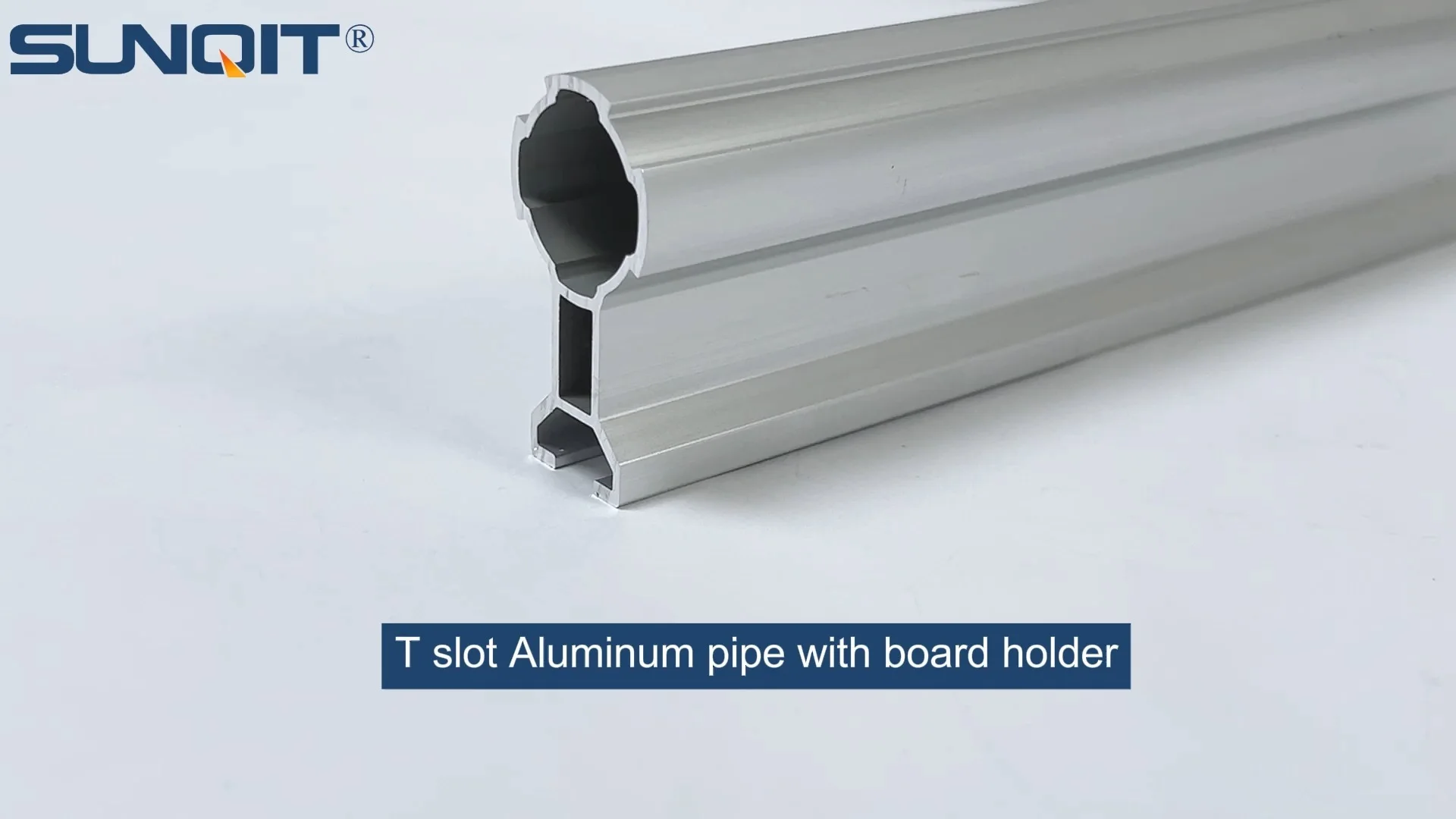
T slot Aluminum pipe with board holder,the pipe one side connected by a joint, the other side with a slot which can hold a tray or a aluminum pannel
We've all been there: you're knee-deep in a project, focused on the task at hand, when suddenly you need that tiny screw—you know, the one that was just here a minute ago. You rummage through a jumble of bins, dump out a drawer, and spend 10 precious minutes searching, only to find it hiding under a pile of washers. Sound familiar? For anyone who works with small parts—whether you're a hobbyist, a small business owner, or a professional in manufacturing, repair, or DIY—disorganization isn't just a nuisance. It's a productivity killer, a source of frustration, and even a risk factor for mistakes (like grabbing the wrong bolt size because you couldn't read the label). But what if there was a way to turn that chaos into calm? Enter the unsung hero of workshop organization: the T Slot Aluminum Pipe with Board Holder. This simple yet versatile system isn't just about tidying up—it's about reclaiming your time, your focus, and your sanity. Let's dive into how this tool, paired with the right know-how, can transform your small parts storage from a headache into a highlight of your workspace.
The Problem with "Good Enough" Storage Solutions
Before we talk about solutions, let's acknowledge the problem: most small parts storage setups are built on compromise. Maybe you started with a few plastic bins from the hardware store, stacked haphazardly on a shelf. Then you added a drawer divider, but it broke after a month. Then you tried a pegboard, but the hooks kept slipping, and small parts fell through the gaps. Or perhaps you invested in a pre-made cabinet, only to realize the shelves are too deep—so you're always digging to the back, knocking over the front bins to reach what you need. These solutions aren't bad , exactly—they're just not designed to grow with you, adapt to your unique parts, or make access truly effortless. And when your storage system isn't working for you, it's working against you. Studies have shown that the average worker spends 20% of their time searching for tools and materials—for someone working 40 hours a week, that's 8 hours a week wasted. That's a full workday lost to chaos. For small parts, the problem is even worse: their size makes them easy to misplace, and their quantity (who hasn't accumulated 50 different types of screws?) makes categorization a nightmare. So why keep settling for "good enough" when there's a better way?
Meet Your New Organizational Sidekick: T Slot Aluminum Pipe with Board Holder
If you're not familiar with T Slot Aluminum Pipe, let's start with the basics. T Slot Aluminum Pipe is exactly what it sounds like: lightweight, durable aluminum tubing with a T-shaped groove (the "T slot") running along its length. This groove isn't just for show—it's a built-in connection point for a wide range of accessories, from brackets and shelves to hooks and holders. The Board Holder, as you might guess, is a specialized accessory designed to attach wooden, plastic, or metal boards to the T Slot Aluminum Pipe. Together, they form a modular system that lets you build custom storage solutions tailored to your exact needs. Unlike fixed shelves or one-size-fits-all cabinets, T Slot Aluminum Pipe with Board Holder is all about flexibility. Need a shelf that's 12 inches high? Adjust the Board Holder. Want to add a divider to separate screws from nails? Slide an accessory into the T slot. Need to move the whole setup to a new wall? Unscrew the pipes and reattach—no power tools required (well, maybe a hex key). But what really sets this system apart is its ability to grow with you. As your collection of small parts expands, you can add more pipes, more board holders, and more accessories—no need to buy a whole new storage unit. It's like having a storage system that learns your habits and adapts to your workflow.

Why Aluminum? The Material That Makes It All Work
You might be wondering: why aluminum? Why not steel, or plastic? Great question. Aluminum checks all the boxes for small parts storage. First, it's lightweight—so mounting it on walls or building mobile carts is a one-person job, no need to recruit a friend to help lift heavy steel pipes. Second, it's strong. Aluminum has a high strength-to-weight ratio, meaning it can hold the weight of bins full of metal parts without bending or warping over time. Third, it's resistant to rust and corrosion—important if you're storing metal parts that might leave behind moisture, or if your workspace isn't climate-controlled. And finally, it's clean and professional-looking. Unlike plastic, which can yellow or crack, or steel, which needs painting to avoid rust, aluminum maintains its sleek, neutral finish with minimal maintenance. Wipe it down with a damp cloth, and it looks as good as new. For anyone who takes pride in their workspace (and let's be honest, that's most of us), that's a big plus.

Key Components: More Than Just Pipes and Boards
A T Slot Aluminum Pipe with Board Holder system is only as good as its parts. Let's break down the essentials, including a few unsung stars that make the whole thing functional: the pipes, the board holders, and—perhaps most importantly—the aluminum profile accessories. These are the little pieces that turn a basic setup into a customized storage solution.
First, the T Slot Aluminum Pipe itself. Pipes come in different lengths and widths, but the most common size for small parts storage is 20mm or 30mm in diameter (about ¾ to 1¼ inches). This size is large enough to support shelves and bins but small enough to feel unobtrusive in your workspace. Look for pipes with a smooth T slot—this ensures accessories slide in easily and stay put once tightened.
Next, the Board Holder. This is the bridge between the pipe and your storage surface (the board). Board Holders are typically L-shaped brackets with a T-slot nut on one end (to attach to the pipe) and a clamp or screw on the other end (to secure the board). Some are fixed, while others are adjustable, letting you tilt the board slightly (handy for flow rack setups, which we'll get to later). The best ones have rubberized grips to prevent the board from slipping—no more parts sliding off because the board shifted.
Then there are the aluminum profile accessories—the "secret sauce" that makes the system truly customizable. These include things like divider brackets (to split a board into sections for different parts), label holders (so you'll never mix up M3 and M4 screws again), bin clips (to attach small plastic bins directly to the board), and even tool hooks (to hang pliers, screwdrivers, or tweezers right where you need them). Aluminum profile accessories are designed to fit into the T slot of the pipe, so they're easy to add, remove, or reposition as your needs change. For example, if you start storing more washers, you can add an extra divider bracket to create a larger section. If you switch to smaller bins, swap out the bin clips for a smaller size. It's this adaptability that makes the system so powerful.
3 Game-Changing Organization Hacks with T Slot Aluminum Pipe with Board Holder
Now that we understand the "what" and "why," let's get to the "how." Below are three actionable, real-world hacks to organize your small parts using T Slot Aluminum Pipe with Board Holder. These aren't just theoretical—they're tested by people who've been in your shoes, and they work for everything from screws and nails to electronic components, jewelry findings, and craft supplies.
Hack #1: The Wall-Mounted "Grab-and-Go" Parts Station
If you're short on floor space (and let's be real, who isn't?), look up—your walls are a goldmine of unused storage potential. A wall-mounted parts station using T Slot Aluminum Pipe with Board Holder turns empty wall space into a visual, accessible storage hub. Here's how to build it:
Step 1: Plan your layout. Start by taking inventory of your most-used parts. Which ones do you reach for daily? Which are used less often? The daily-use parts should be at eye level, within arm's reach. Less frequently used parts can go higher or lower. Measure the space on your wall—you'll need at least 2 feet of width to make the station useful, but it can be as long as your wall allows. Sketch a rough layout: mark where the pipes will go (horizontal is best for boards), how many board holders you'll need (one every 12–18 inches to support the board), and where accessories like dividers or hooks will go.
Step 2: Mount the T Slot Aluminum Pipes. Use heavy-duty wall anchors (the type depends on your wall material—drywall, concrete, or wood) to mount the aluminum pipes horizontally. Space them 16–24 inches apart vertically, depending on how tall your boards will be. For example, if you're using 12-inch tall boards, 24 inches between pipes gives you room for the board plus a small gap for visibility. Tighten the anchors securely—you don't want the pipes to sag when loaded with parts.
Step 3: Attach the Board Holders and Boards. Slide the T-slot nuts on the Board Holders into the grooves of the aluminum pipes. Position them so they line up with the edges of your boards (plywood, MDF, or even acrylic work well—just make sure the material is at least ½ inch thick for strength). Secure the Board Holders to the pipes with the included screws (a hex key works best here). Then, place the boards on the holders and clamp them down—most Board Holders have a screw or lever to tighten the clamp, so the board won't shift.
Step 4: Customize with Aluminum Profile Accessories. Now the fun part: making it yours. Use divider brackets (a must-have aluminum profile accessory) to split the boards into sections. For example, a 3-foot board could have 6 sections for different screw sizes ( #6, #8, #10, etc.). Add label holders above each section—write the part type or size on a piece of paper, slide it into the holder, and you'll never second-guess which bin has the right parts. For tiny parts like washers or cotter pins, use small plastic bins with bin clips (another aluminum profile accessory) that attach directly to the board. And don't forget tool hooks—mount them on the pipes above or below the boards to hang tweezers, small pliers, or a magnetic parts dish for the project you're working on. The result? A wall that's not just storage, but a command center for your small parts. No more digging, no more guessing, no more wasted time.
Pro Tip: Use different colored boards or dividers to color-code parts by category. For example, red dividers for electrical parts (resistors, capacitors), blue for mechanical parts (bolts, nuts), and green for hardware (screws, nails). It adds a visual cue that speeds up retrieval even more.
Hack #2: Under-Workbench Storage That Actually Works (No Crawling Required)
If wall space is limited, or if you prefer to keep parts close to your work surface, look down—under your workbench is another untapped storage zone. But let's be clear: we're not talking about shoving bins under there and forgetting about them (we've all done that, and it just becomes a black hole). We're talking about a purpose-built under-workbench system using T Slot Aluminum Pipe with Board Holder that keeps parts accessible, organized, and visible . This is especially game-changing if you use a lean pipe workbench—a common setup in workshops and manufacturing facilities, known for its durability and adaptability. Adding T Slot Aluminum Pipe storage under a lean pipe workbench turns an already functional surface into a storage powerhouse.
Step 1: Assess your workbench height. Measure the distance from the floor to the bottom of your workbench. Most workbenches are 30–36 inches tall, leaving 24–30 inches of vertical space underneath—plenty of room for storage. Make sure there's at least 18 inches of clearance from the floor to the bottom of your storage system, so you can still cross your legs comfortably while sitting (or stand without hitting your shins).
Step 2: Mount vertical T Slot Aluminum Pipes. Attach short lengths of T Slot Aluminum Pipe vertically to the legs of your lean pipe workbench. Use pipe clamps (another handy aluminum profile accessory) to secure the pipes to the workbench legs—no drilling into the workbench itself, which is great if you're renting or don't want to damage the surface. Space the pipes 24–30 inches apart along the length of the bench—this will be the frame for your under-bench storage.
Step 3: Add sliding board holders for pull-out shelves. Instead of fixed boards, use adjustable board holders that can slide along the vertical pipes. Attach the board holders to the pipes, then mount plywood or melamine boards to the holders. The result? Pull-out shelves that glide forward when you need them and tuck back when you don't. No more kneeling on the floor and reaching blindly under the bench—just pull the shelf out, grab what you need, and push it back. For extra convenience, install small handles on the front of the boards (you can even use T-slot accessories like handle brackets for a clean look).
Step 4: Organize the shelves by workflow. The key to under-bench storage is to organize parts by how you use them during a project. For example, if you're a woodworker, the top shelf might hold glue, sandpaper, and small clamps (things you use at the start of a project). The middle shelf could hold screws and nails (used during assembly). The bottom shelf might hold finishing supplies like stain rags or touch-up paint (used at the end). This way, you're not constantly shuffling shelves around—each shelf has a purpose, and your workflow flows right along with it.
Hack #3: Flow Rack Integration for "First In, First Out" Efficiency
If you work with large quantities of small parts—like a repair shop that goes through hundreds of screws a week, or a small manufacturer that needs to track inventory—you need more than just storage. You need a system that ensures parts are used in the order they're received (to avoid expiration or obsolescence) and that you never run out of critical items. That's where integrating T Slot Aluminum Pipe with Board Holder into a flow rack comes in. Flow racks are designed with inclined shelves, so parts slide forward as the front ones are used—no more digging to the back of a bin. Adding T Slot Aluminum Pipe with Board Holder to a flow rack lets you customize the shelving to fit your exact parts, making the system even more efficient.
Step 1: Choose a flow rack (or build your own). You can buy a pre-made flow rack, or build a simple one using T Slot Aluminum Pipe (since we're already familiar with it!). For a DIY version, build a frame with vertical and horizontal aluminum pipes, then angle the horizontal pipes slightly upward (about 5–10 degrees) from back to front—this creates the incline needed for parts to slide. If you're using a pre-made flow rack, check that the vertical supports are compatible with T Slot Aluminum Pipe (most are, or you can use pipe clamps to attach the aluminum pipes to the rack's frame).
Step 2: Attach Board Holders at an angle. Instead of mounting the board holders horizontally, angle them to match the flow rack's incline. This ensures the boards (which will hold your parts bins) slope forward, so when you take a bin from the front, the bin behind it slides down to take its place. Use adjustable board holders here—you may need to tweak the angle a few times to get the right slide speed (too steep, and bins might slide too fast; too shallow, and they won't slide at all).
Step 3: Use uniform bins with the board holder system. For flow racks to work well, bins need to be the same size and shape so they stack evenly and slide smoothly. Use plastic bins with a lip that rests on the board—this prevents them from falling off the edge. Label each bin clearly with the part name, size, and quantity (you can use label holders from aluminum profile accessories for this, too). Pro tip: color-code bins by supplier or expiration date, so you know at a glance which ones to use first.
Step 4: Add a "low stock" indicator. Here's where aluminum profile accessories really shine: attach a small flag holder (a simple bracket from the accessory lineup) to the back of each shelf. When you add a new bin of parts to the back of the shelf, raise the flag. As bins slide forward and the back bin is exposed, lower the flag—that's your signal to reorder. No more last-minute panic when you realize you're out of ¼-inch washers in the middle of a job. It's inventory management, simplified.
| Storage Hack | Best For | Key Components Needed | Space Required | Pro Level (1–5) |
|---|---|---|---|---|
| Wall-Mounted Parts Station | Daily-use small parts, limited floor space | T Slot Aluminum Pipe, Board Holders, divider brackets, label holders, bin clips | 2+ ft width of wall space | 2 (easy to install, great for beginners) |
| Under-Workbench Pull-Out Shelves | Lean pipe workbench users, parts used during projects | T Slot Aluminum Pipe, sliding Board Holders, plywood boards, pipe clamps | Under-bench area (varies by bench size) | 3 (requires measuring, but still DIY-friendly) |
| Flow Rack Integration | High-volume parts, inventory tracking, "first in, first out" systems | T Slot Aluminum Pipe, angled Board Holders, uniform bins, flag holders (aluminum profile accessories) | 3+ ft of floor space (for rack) | 4 (requires building/modifying a flow rack, best for intermediate users) |
Real-Life Success Stories: From Chaos to Order
Don't just take my word for it—let's hear from people who've actually transformed their workspaces with T Slot Aluminum Pipe with Board Holder. Take Maria, for example, who runs a small electronics repair shop in Chicago. Before using the wall-mounted parts station, she estimates she spent 15–20 minutes per repair searching for capacitors, resistors, and diodes. "I had bins everywhere—on the desk, on the shelf, even in a shoebox under the counter," she says. "I'd mix up 1k and 10k resistors all the time because the labels fell off the bins. Now, my wall station has dividers for each resistor value, with clear labels. I can grab what I need in 10 seconds flat. Repairs are faster, and I haven't made a resistor mistake in months. It's like night and day."
Then there's Tom, a hobbyist woodworker who added under-workbench pull-out shelves to his lean pipe workbench. "I used to keep all my small hardware—screws, brad nails, hinges—in a drawer under my bench. Every time I opened it, something would fall out, and I'd spend 5 minutes picking up nails," he laughs. "Now, I have three pull-out shelves: one for screws, one for nails, one for hinges and brackets. I labeled each shelf with a picture of what's inside (since I'm visual), and I can just slide the shelf out, grab the bin, and slide it back. No more spills, no more searching. It's made woodworking fun again, instead of frustrating."
And finally, Mike, who manages a small manufacturing facility that assembles custom metal brackets. They use a flow rack with T Slot Aluminum Pipe and Board Holder for their small parts inventory. "Before, we were always running out of washers or misplacing bolts because the back of the shelf was a mystery," he explains. "Now, with the flow rack, bins slide forward, so we always use the oldest parts first. The low stock flags have cut our reordering time in half—no more emergency orders. And because we used aluminum, the system looks clean and professional, which impresses clients when they tour the facility. It's not just about organization; it's about running a tighter, more efficient business."
Pro Tips to Make Your System Even Better
Ready to build your own T Slot Aluminum Pipe with Board Holder system? Here are some pro tips to ensure it's not just functional, but optimized for your workflow:
- Measure twice, cut once (but with aluminum, you can adjust!) Unlike wood, aluminum is forgiving—if you cut a pipe too short, you can always add an extension with a straight connector (another aluminum profile accessory). But it's still smart to measure your space and parts before buying materials. For example, if your smallest parts are ½-inch washers, you don't need a divider bracket that's 2 inches wide—save space with narrower dividers.
- Don't overcrowd the T slots. It's tempting to add every accessory under the sun, but too many brackets or hooks can make the system feel cluttered and hard to use. Stick to the essentials: dividers, labels, and one or two tool hooks per pipe. You can always add more later if you need them.
- Use friction-fit accessories when possible. Some aluminum profile accessories (like label holders or small bin clips) are friction-fit—they slide into the T slot and stay put without screws. These are great for items you might want to move around, like temporary labels for a new part.
- Test the weight before final mounting. Before securing the pipes to the wall or workbench, load them with your heaviest bins and let them sit for a day. This ensures the Board Holders and pipes can handle the weight without sagging. If you notice bending, add more Board Holders for extra support.
- Clean as you go. Aluminum is easy to clean, but dust and grime can build up in the T slots over time, making accessories harder to slide. Wipe down the pipes and accessories with a dry cloth every week, and use a small brush (like a toothbrush) to clean out the T slots monthly.
Final Thoughts: Organization as a Superpower
At the end of the day, organization isn't just about having a tidy workspace. It's about giving yourself the freedom to focus on what matters—the project, the craft, the creativity—instead of fighting against chaos. The T Slot Aluminum Pipe with Board Holder system is more than a storage solution; it's a tool that empowers you to work smarter, not harder. Whether you're a hobbyist looking to spend less time searching and more time creating, or a business owner aiming to boost productivity and impress clients, this system delivers. And the best part? It's accessible. You don't need to be a DIY expert, and you don't need to spend a fortune. With a few pipes, some board holders, and the right aluminum profile accessories, you can transform your small parts storage from a source of stress into a source of pride. So what are you waiting for? Grab a measuring tape, pick out your first T Slot Aluminum Pipe, and start building the organized workspace you've been dreaming of. Your future self (and your small parts) will thank you.