- Company Articles
- Products and Technology
- Application Cases
- T Slot Aluminum Pipe with Board Holder in Aerospace Manufacturing: Precision Applications

T Slot Aluminum Pipe with Board Holder in Aerospace Manufacturing: Precision Applications
Related Product
T Slot Aluminum Pipe with Board Holder
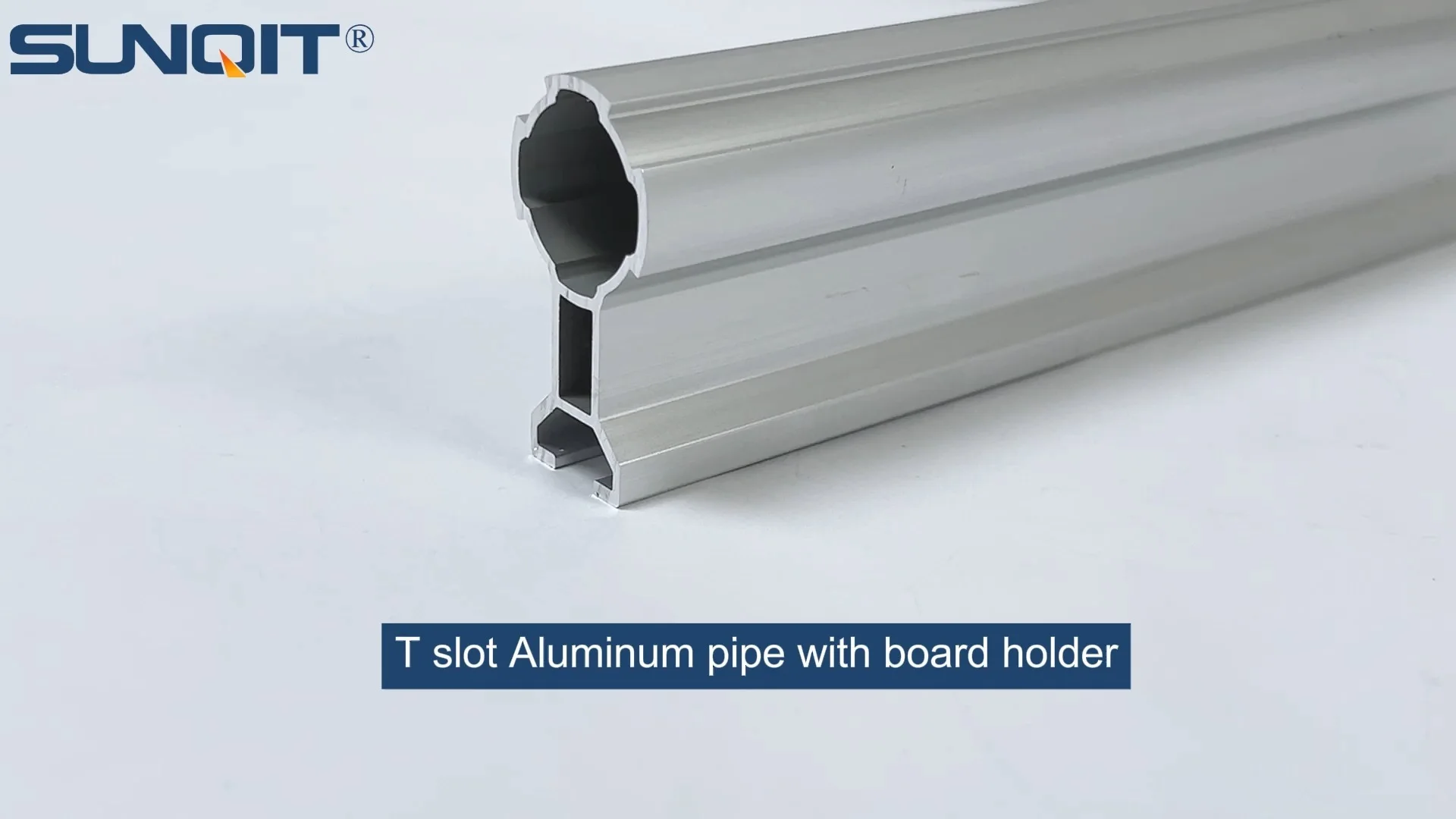
T slot Aluminum pipe with board holder,the pipe one side connected by a joint, the other side with a slot which can hold a tray or a aluminum pannel
Aerospace manufacturing is a world where precision isn't just a goal—it's the foundation of safety, reliability, and innovation. Every component, from the tiniest screw in a cockpit panel to the massive wings of a commercial airliner, must meet exacting standards that leave no room for error. But behind these engineering marvels lies another critical element: the tooling, workspaces, and systems that bring them to life. In recent years, one solution has emerged as a quiet game-changer in this high-stakes industry: the T slot aluminum pipe with board holder. Far more than just "pipes and brackets," this system combines flexibility, durability, and adaptability to address the unique challenges of aerospace production. Let's dive into how it's reshaping workbenches, assembly lines, and even lean manufacturing principles—one T slot at a time.
The Demands of Aerospace Manufacturing: Why Traditional Tooling Falls Short
To understand why T slot aluminum pipe with board holder has become indispensable, we first need to grasp the demands of modern aerospace manufacturing. Unlike automotive or consumer goods production, aerospace operates on a different scale of complexity. Projects can span years, with frequent design iterations to incorporate new materials (like carbon fiber composites) or regulatory updates. Workspaces must accommodate everything from delicate avionics assembly to heavy structural component fabrication. And with safety certifications like AS9100 governing every process, consistency and traceability are non-negotiable.
Traditional tooling—think fixed steel workbenches, welded material racks, or custom-built assembly jigs—often struggles to keep up. A steel bench, for example, might be rock-solid for stability, but if an engineer needs to adjust its height by 6 inches to accommodate a taller technician or a larger component, that's not just a minor tweak. It could mean hiring a welder, shutting down the work cell for hours, and incurring unnecessary costs. Similarly, paper documentation or loose tools scattered across a work surface? In aerospace, where a misplaced torque wrench or an outdated blueprint can lead to catastrophic failures, disorganization is a liability.
This is where the need for adaptable, organized, and precision-focused tooling comes into play. Enter T slot aluminum pipe with board holder: a system designed to grow, change, and evolve alongside the dynamic world of aerospace manufacturing.
What Is T Slot Aluminum Pipe with Board Holder? Breaking Down the Basics
At its core, T slot aluminum pipe is exactly what it sounds like: lightweight yet strong aluminum extrusion profiles with a continuous "T-shaped" groove running along their length. This groove isn't just a design quirk—it's the secret to the system's versatility. Unlike traditional pipes, which require drilling, welding, or bolts to attach accessories, T slot pipes let you slide, lock, and secure components directly into the groove using simple fasteners. No special tools, no permanent modifications, no downtime.
Paired with a board holder, this system becomes a powerhouse of organization. The board holder itself is a simple but clever attachment: a flat, rigid surface (often made of aluminum or high-density plastic) that clamps securely into the T slot. It can hold everything from digital tablets displaying 3D assembly models to printed checklists, torque specifications, or even small parts bins. Some board holders come with additional features, like integrated LED lighting for low-light tasks or magnetic strips to secure metal tools—details that matter when assembling a jet engine's fuel injectors at 2 a.m.
But the real magic lies in the materials. Aluminum, long favored in aerospace for its strength-to-weight ratio, brings unique benefits here. It's corrosion-resistant, which is critical in environments where humidity or coolants might otherwise rust steel components. It's also non-magnetic, making it safe for use near sensitive avionics that could be disrupted by magnetic interference. And because aluminum is lighter than steel, even large structures built with T slot pipes are easier to reposition—no forklift required for a quick workspace redesign.
Key Takeaway: T slot aluminum pipe combines the structural integrity of aluminum with the flexibility of a modular T slot design. When paired with a board holder, it transforms static workspaces into dynamic, organized hubs where tools, documentation, and components are always exactly where they need to be.

The Marriage of T Slot Aluminum and Aerospace Precision: Why Material Matters
Aerospace manufacturing isn't just about "strong enough"—it's about "strong enough, light enough, and precise enough." Aluminum extrusion profiles, the building blocks of T slot systems, excel in all three areas. Let's break down why aluminum is the ideal material for aerospace tooling:
Strength Without the Weight
Aluminum has a tensile strength comparable to many steels but weighs roughly one-third as much. For aerospace workbenches, this means a bench can support heavy components (like a 50-pound avionics bay assembly) without requiring a reinforced concrete floor. It also makes mobile carts—used to transport parts between work cells—easier to maneuver, reducing the risk of operator fatigue (and subsequent errors) during long shifts.
Thermal Stability
Aerospace components are often tested under extreme temperature conditions, from sub-zero cryogenics for fuel systems to high-heat simulations for engine parts. T slot aluminum pipes maintain their structural integrity across a wide temperature range, ensuring workbenches and racks don't warp or flex when exposed to these extremes. This stability is critical for inspection stations, where even a 0.001-inch deviation in the work surface could throw off measurements of a turbine blade's tolerance.
Corrosion Resistance
Many aerospace manufacturing processes involve coolants, lubricants, or cleaning agents that can eat away at steel over time. Aluminum's natural oxide layer acts as a barrier, preventing rust and corrosion. This longevity isn't just about reducing replacement costs—it's about consistency. A rusted steel rack might develop sharp edges that damage delicate composite materials; an aluminum rack, by contrast, stays smooth and safe for decades.
Precision Machining
T slot aluminum pipes are extruded, meaning they're formed by forcing molten aluminum through a die to create the T slot shape. This process ensures uniform dimensions along the entire length of the pipe—no variations in groove width or wall thickness that could affect how accessories (like the board holder) fit. In aerospace, where a loose-fitting bracket might cause a tool to slip during assembly, that precision is non-negotiable.

Key Applications in Aerospace Manufacturing: Where T Slot Aluminum Shines
Now that we understand the "why" behind T slot aluminum pipe with board holder, let's explore the "how"—specifically, how aerospace manufacturers are using this system to solve real-world challenges. From assembly workbenches to material handling, the applications are as diverse as the industry itself.
1. Custom Assembly Workbenches: Tailored to Every Component
Aerospace components come in all shapes and sizes, and so do the workbenches that build them. A T slot aluminum workbench with an integrated board holder can be customized to fit everything from a 2-foot-long sensor array to a 10-foot wing spar. Here's how:
- Adjustable Heights: Using T slot joints and aluminum profile accessories like height extenders, a bench can be raised or lowered by as little as 1 inch to match the ergonomics of the technician using it. For example, a bench assembling cockpit displays might sit at 36 inches for standing work, while one building small wiring harnesses could drop to 30 inches for seated tasks.
- Modular Accessories: The T slot groove lets workers add (or remove) tools on the fly. Need a vice to hold a metal bracket? Slide in a vice mount. Want to mount a magnifying lamp for inspecting solder joints? Clip it into the T slot. The board holder, positioned at eye level above the work surface, keeps critical documents (like torque charts or wiring diagrams) within arm's reach—no more flipping through binders or scrolling through a tablet while holding a tool.
- ESD Protection: Many aerospace components (like circuit boards) are sensitive to electrostatic discharge (ESD). T slot aluminum pipes can be paired with ESD-safe board holders and conductive work surfaces, grounding static electricity to prevent damage to delicate electronics. This is a must for avionics assembly, where a single static spark could render a $10,000 component useless.
Consider a real-world example: A major aerospace OEM recently redesigned its landing gear assembly line using T slot aluminum workbenches. Previously, each bench was a fixed steel structure with bolted-on tool holders. When the company introduced a new landing gear model with slightly different dimensions, they had to replace 12 benches at $5,000 each. With T slot aluminum, they simply adjusted the pipe lengths, repositioned the board holder to display the new assembly guide, and added a few extra brackets for specialized tools—all in a single day, at a fraction of the cost.
2. Inspection Stations: Clutter-Free and Compliance-Ready
Inspection is the gatekeeper of aerospace quality. Every component must pass rigorous checks before moving to the next production stage, and inspectors need clear, organized workspaces to do their jobs. T slot aluminum pipe with board holder transforms inspection stations into havens of precision:
- Document Control: Inspection checklists, CAD drawings, and certification forms can be secured to the board holder, ensuring inspectors always use the latest version (critical for compliance with FAA or EASA regulations). Some board holders even have built-in document sleeves that protect papers from spills or grease, keeping records legible for audits.
- Tool Integration: Calipers, micrometers, and coordinate measuring machines (CMMs) need to be within easy reach but safely stored when not in use. T slot hooks and tool holders keep these precision instruments secure, while the board holder can display calibration certificates to prove tools are within tolerance.
- Lighting and Camera Mounts: High-resolution cameras or borescopes (used to inspect internal component surfaces) can be mounted directly to T slot pipes, with the board holder positioned to show live feeds from the camera. This setup lets inspectors compare real-time images to reference photos without juggling multiple screens.
3. Material Racks and Flow Systems: Streamlining Lean Manufacturing
Lean manufacturing isn't just a buzzword in aerospace—it's a survival strategy. With tight margins and long production cycles, eliminating waste (whether time, space, or materials) is essential. T slot aluminum pipe with board holder fits seamlessly into lean systems by enabling "just-in-time" material storage and retrieval.
For example, a material rack built with T slot pipes can be designed to hold exactly the number of fasteners, adhesives, or brackets needed for a shift's production run—no overstocking, no wasted shelf space. The board holder at the front of the rack can display a digital inventory tracker (or a printed checklist) to ensure workers take only what they need, reducing the risk of misplaced parts. And if production demand spikes, the rack can be expanded by adding more T slot sections—no need to buy a whole new rack.
Roller tracks, another common aluminum profile accessory, can be integrated into T slot racks to create gravity-fed flow systems. Parts move smoothly from the back of the rack to the front as they're used, ensuring first-in, first-out (FIFO) inventory rotation—a critical practice for materials with expiration dates (like sealants or adhesives). The board holder here acts as a "stop sign," displaying the part number and quantity to prevent over-picking.
4. Mobile Work Carts: Taking the Workbench to the Component
Not all aerospace components can be brought to the workbench—some, like fuselage sections or large wing panels, are simply too big. That's where mobile T slot carts shine. Built with aluminum pipe, caster wheels, and a board holder, these carts bring tools, documentation, and even small assembly stations directly to the component.
Imagine a technician working on a 40-foot fuselage section in a hangar. Instead of walking 50 feet back to a fixed workbench every time they need a tool or a blueprint, they can wheel a T slot cart right up to the fuselage. The cart's board holder displays the assembly steps, while T slot-mounted tool hooks keep wrenches, drills, and rivet guns within arm's reach. When the job moves to the next section of the fuselage, the cart moves with it—no disassembly required.
Traditional vs. T Slot: A Comparison Table
| Feature | Traditional Steel Tooling | T Slot Aluminum Pipe with Board Holder |
|---|---|---|
| Flexibility | Fixed design; modifications require welding or drilling | Reconfigurable in minutes with basic tools; no permanent changes |
| Weight | Heavy (e.g., 200 lbs for a 4-foot workbench) | Lightweight (e.g., 60 lbs for the same 4-foot workbench) |
| Corrosion Resistance | Prone to rust in humid or coolant-rich environments | Naturally corrosion-resistant; ideal for aerospace clean rooms |
| Assembly Time | Hours to days (requires skilled labor) | Minutes to hours (assembled by technicians, not welders) |
| Cost Over Time | High (replacement needed for design changes) | Low (reusable components; expandable as needs grow) |
| Organization | Limited; tools and docs often scattered or bolted down | Built-in board holder and T slot accessories keep everything organized |
Selecting the Right T Slot System: Key Considerations for Aerospace
Not all T slot aluminum pipe systems are created equal, and in aerospace, choosing the right one can make the difference between a smooth production run and costly delays. Here are the factors to keep in mind when selecting a system:
Load Capacity: Matching the System to the Component
Aluminum pipes come in different wall thicknesses and diameters, each with its own load rating. A system built for small electronics assembly might use 20mm diameter pipes, while one supporting engine components could require 40mm pipes. Always check the manufacturer's load charts—overloading a T slot structure can lead to bending or failure, risking damage to components or injury to workers.
Compliance: Meeting Aerospace Standards
Aerospace manufacturing is governed by strict standards, and your tooling should be too. Look for T slot systems made from aluminum alloys that meet aerospace specifications (like 6061-T6, a common high-strength alloy). If you're working with ESD-sensitive components, ensure the board holder and work surface are ESD-certified (e.g., ANSI/ESD S20.20 compliance).
Accessory Compatibility: Building a Complete System
A T slot pipe is only as good as the accessories it works with. Choose a supplier that offers a wide range of aluminum profile accessories—from end caps (to prevent sharp edges) to cable management clips (to keep wires organized) to locking casters (for mobile carts that stay put when needed). The board holder itself should be adjustable (tiltable, swivelable) to accommodate different viewing angles and document sizes.
Supplier Support: Beyond the Sale
Aerospace projects don't end when the tooling is delivered. Look for a T slot aluminum pipe supplier with a track record of supporting customers long-term—whether that means providing replacement parts, helping redesign a workbench for a new component, or offering training on how to best use the system. In an industry where downtime costs thousands per minute, responsive supplier support is priceless.
Future Trends: T Slot Aluminum in the Age of Industry 4.0
Aerospace manufacturing is on the cusp of a digital revolution, with Industry 4.0 technologies like IoT sensors, AI-driven analytics, and digital twins transforming production. T slot aluminum pipe with board holder is poised to play a key role in this transformation, acting as a bridge between physical and digital workspaces.
Imagine a T slot workbench where the board holder isn't just holding paper—it's a touchscreen display connected to the factory's IoT network. As a technician assembles a component, sensors in the T slot pipes (powered via cable management clips in the groove) track torque values, assembly time, and even the technician's movements. The board holder displays real-time feedback: "Torque wrench reading 5% low—adjust to 25 Nm." After assembly, the data is automatically logged to the component's digital twin, ensuring full traceability.
Sustainability is another trend shaping aerospace, and aluminum's recyclability makes T slot systems a greener alternative to disposable or single-use tooling. When a workbench reaches the end of its useful life, the aluminum pipes can be melted down and recycled into new extrusions, reducing waste and lowering the industry's carbon footprint.
Conclusion: The Backbone of Modern Aerospace Production
In the world of aerospace manufacturing, where precision, safety, and efficiency are paramount, the tools we use matter as much as the components we build. T slot aluminum pipe with board holder may not have the glamour of a new jet engine or a cutting-edge satellite, but it's the unsung hero working behind the scenes to make those innovations possible. Its flexibility adapts to changing designs, its durability stands up to harsh manufacturing environments, and its organization keeps technicians focused on what they do best: building the future of flight.
As aerospace continues to push the boundaries of technology—with electric aircraft, hypersonic travel, and even space tourism on the horizon—one thing is clear: the need for adaptable, precise tooling will only grow. T slot aluminum pipe with board holder isn't just a solution for today's challenges; it's a foundation for tomorrow's breakthroughs. And in an industry where the sky is never the limit, that's a system worth investing in.