In the fast-paced world of consumer electronics manufacturing, where product lifecycles shrink and customization demands grow, the need for flexible, adaptable production tools has never been greater. Among the innovations driving this flexibility is the
T Slot Aluminum Pipe
with Board Holder—a modular solution that combines the structural integrity of aluminum with the versatility of customizable work surfaces. This article explores real-world applications of this system in consumer electronics assembly, highlighting how it addresses industry challenges, enhances workflow efficiency, and supports the dynamic needs of modern production lines. We'll dive into three detailed case examples, examining the specific problems faced, the solutions implemented, and the tangible benefits observed. Along the way, we'll touch on key components like
Aluminum Profile
,
Aluminum Extrusion Profile
, and
Aluminum Profile Accessories
that make these solutions possible, as well as their integration with essential tools like
ESD Workstations
for sensitive component handling.
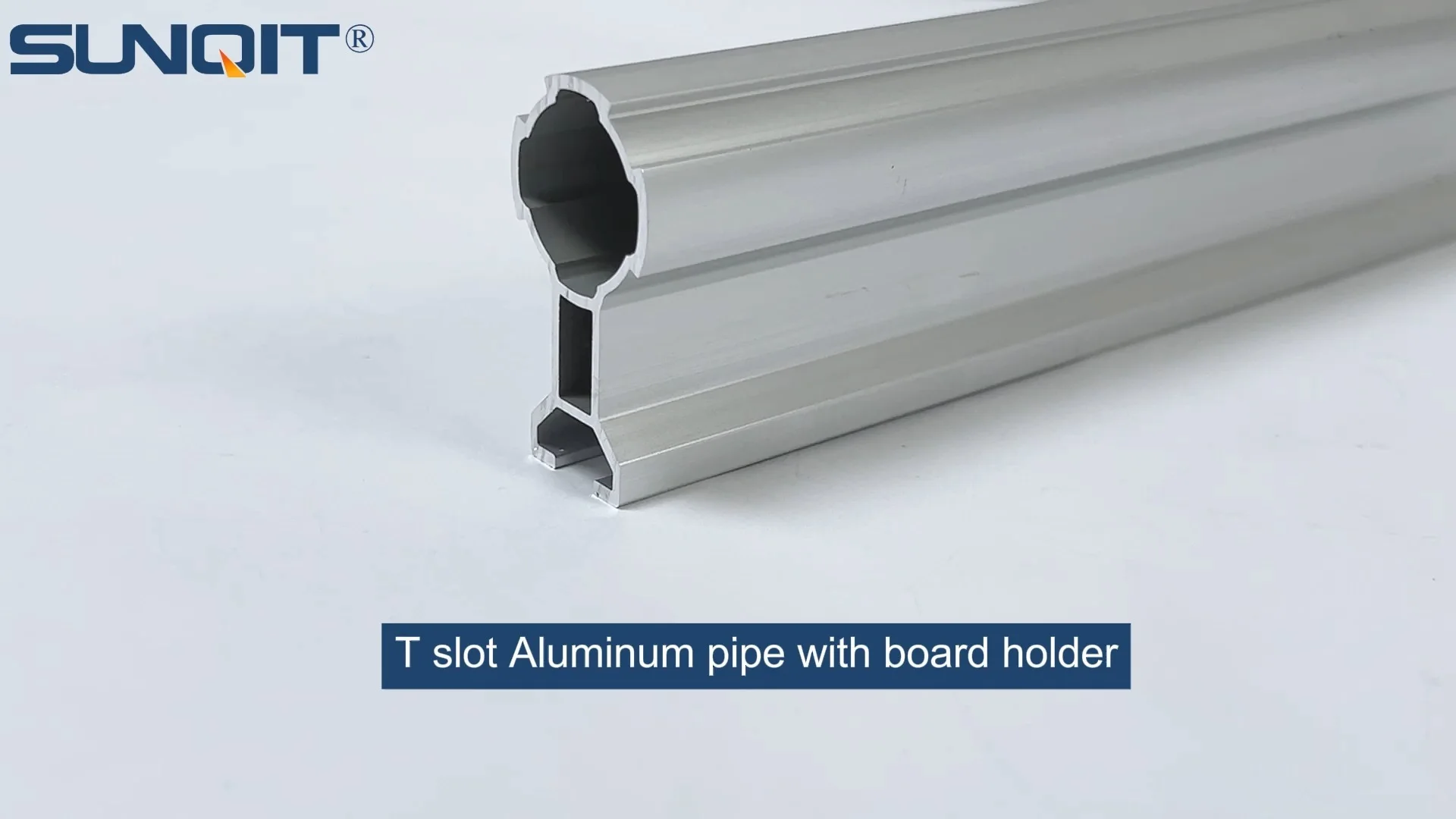
Before delving into case studies, let's clarify what makes T Slot Aluminum Pipe with Board Holder a game-changer. At its core, the system revolves around
Aluminum Extrusion Profile
—hollow aluminum bars with T-shaped grooves running along their length. These grooves allow for quick attachment of accessories like brackets, connectors, and, critically, board holders. The board holder itself is a flat or angled surface (often made of aluminum, plywood, or ESD-safe materials) mounted to the aluminum frame, serving as a workspace, storage area, or display surface for tools, components, or instructions.
What sets this system apart is its modularity. Unlike fixed steel workbenches or custom-built fixtures, T Slot Aluminum Pipes can be reconfigured in hours, not days.
Aluminum Profile Accessories
—such as corner brackets, end caps, and sliding nuts—enable workers to adjust heights, add shelves, or reposition the board holder without welding or specialized tools. This flexibility is a lifeline for electronics manufacturers, where a single production line might switch from assembling smartwatches to wireless earbuds in a matter of weeks.
Case Example 1: Smartphone Assembly Line Reconfiguration at a Leading OEM
The Challenge: Frequent Product Iterations and Downtime
A major smartphone original equipment manufacturer (OEM) based in Guangdong, China, faced a critical challenge: with new models launching every 6–8 months, their production lines required constant reconfiguration. Traditional workstations, built with fixed steel frames and wooden boards, took 2–3 days to disassemble and rebuild for each new model. This downtime cost the company an estimated $150,000 per line per reconfiguration, not to mention delays in meeting market demand.
Workers also struggled with organization. Each assembly step required different tools, component trays, and instruction sheets, but the fixed boards offered limited storage. Tools were often misplaced, and workers wasted time searching for small parts, leading to a 12% error rate in component placement during peak production.
The Solution: T Slot Aluminum Pipe Workstations with Custom Board Holders
In 2023, the OEM partnered with a supplier to overhaul 12 assembly lines using T Slot Aluminum Pipe with Board Holder systems. The key components included:
-
T Slot Aluminum Pipes (40x40mm Aluminum Extrusion Profile)
: Chosen for their strength-to-weight ratio, supporting up to 150kg per linear meter while remaining lightweight enough for manual reconfiguration.
-
Adjustable Board Holders
: Made of 18mm aluminum composite panels, mounted to the T Slot Aluminum Pipes using sliding T-nuts and bolts. The boards featured pre-drilled holes for attaching tool hooks, magnetic strips for small parts, and slots for inserting instruction sheets.
-
Aluminum Profile Accessories
: Including 90° corner brackets, end caps (to prevent sharp edges), and cable management clips (to route power cords and data lines through the T slots, reducing clutter).
The system was designed to be reconfigurable in hours, not days. Workers could adjust the height of the board holder (from 75cm to 95cm) using quick-release levers, swap out tool organizers, or add side shelves by simply sliding new brackets into the T slots. For new model launches, the OEM pre-built "kit" of aluminum profile sections and accessories, allowing teams to rebuild a workstation in under 2 hours per line.
The Results: 60% Faster Reconfiguration and 8% Error Reduction
The impact was immediate. Reconfiguration time per line dropped from 3 days to just 8 hours, cutting downtime costs by 60% (saving ~$90,000 per line per iteration). Worker productivity improved as well: the organized board holders reduced tool-search time by 40%, and the error rate in component placement fell from 12% to 4%. Employees reported higher job satisfaction, noting that the adjustable height reduced back strain during long shifts.
One unexpected benefit was scalability. When the OEM secured a large order for a budget smartphone model, they were able to add 10 new workstations in a single day by reusing aluminum profiles and board holders from a temporarily idled high-end model line—something that would have taken weeks with traditional steel setups.

Case Example 2: ESD-Safe Motherboard Assembly with T Slot Aluminum Pipe
The Challenge: Static Damage and Delicate Component Handling
A manufacturer of laptop motherboards in Taiwan faced a different set of challenges: static electricity and the need for precise, ergonomic workspaces. Motherboards contain sensitive microchips and circuits that can be permanently damaged by electrostatic discharge (ESD), even at levels undetectable to humans. Traditional
ESD Workstations
often used fixed wooden or steel frames with ESD mats, but these were heavy, hard to adjust, and offered limited storage for ESD-safe tools and component trays.
Workers complained that the fixed height of the ESD mats forced them into awkward postures, leading to fatigue and occasional drops of small components (e.g., resistors, capacitors). Additionally, the lack of integrated storage meant ESD-safe bins were often placed on the floor, increasing the risk of contamination from dust or accidental kicks.
The manufacturer turned to T Slot Aluminum Pipe to create a custom
ESD Workstation
system. The key innovation was integrating ESD protection directly into the modular design:
-
ESD-Safe T Slot Aluminum Pipes
: The aluminum extrusion profiles were treated with an anti-static coating, ensuring they dissipated static charges to ground. This replaced the need for separate ESD mats on the frame itself.
-
Anti-Static Board Holder
: The work surface was made of ESD-safe phenolic resin, mounted to the aluminum frame via conductive brackets. The board featured built-in ESD wrist strap jacks and a grounding port, ensuring workers and components remained at the same electrical potential.
-
Aluminum Profile Accessories for ESD Storage
: Sliding ESD-safe bins (attached via T-slot brackets) were mounted under the board holder, keeping components at waist height and reducing bending. Adjustable dividers in the bins allowed for quick reorganization between motherboard models.
The system also prioritized ergonomics. The height of the board holder could be adjusted in 5cm increments using crank handles, and the angle of the work surface tilted from 0° (flat) to 30° (sloped), reducing glare and neck strain during detailed soldering or inspection tasks.
The Results: 95% Reduction in ESD Damage and Improved Ergonomics
Within three months of implementation, ESD-related component damage dropped from 5% to 0.25% of total production—saving the company over $200,000 annually in wasted parts. Worker-reported fatigue decreased by 35%, and the number of dropped components fell by 70%, as tools and bins were now within easy reach.
Quality control inspectors noted another advantage: the tilted board holder improved visibility of fine solder joints, reducing the number of defective motherboards rejected during final testing by 18%. The manufacturer later expanded the system to its repair department, where the modular design allowed technicians to customize workspaces for different laptop models.

Case Example 3: Wearable Device Testing Stations with Modular Board Holders
The Challenge: Testing Diversity and Space Constraints
A California-based manufacturer of wearable devices (smartwatches, fitness trackers) needed to streamline its testing process. With over 20 product variants in production at any time—each requiring unique testing equipment (e.g., heart rate sensor calibrators, water-resistance testers)—the company's testing floor was cluttered with fixed testing stations. Each station was dedicated to a single product, wasting valuable floor space and making it hard to scale production for high-demand models.
Technicians spent significant time moving between stations, and reconfiguring a station for a new variant required custom brackets and drilling, which risked damaging equipment. The lack of flexible storage also meant test cables and adapters were often tangled, leading to 20-minute delays per test session.
The Solution: T Slot Aluminum Pipe Testing Stations with Tool-Integrated Board Holders
The solution was to replace fixed stations with T Slot Aluminum Pipe testing workbenches, each featuring a
Tool-Integrated Board Holder
designed to mount testing equipment directly. Key elements included:
-
Lightweight Aluminum Profile (20x20mm and 30x30mm)
: Chosen for portability, allowing technicians to wheel stations across the factory floor using caster wheels (attached via T-slot brackets).
-
Custom Board Holders with Equipment Mounts
: The phenolic resin board holders included pre-cut holes and T-slot rails for securing testing tools (e.g., oscilloscopes, pressure gauges) at eye level. Cable management channels in the board routed wires neatly to a power strip mounted under the workstation.
-
Quick-Release Aluminum Profile Accessories
: Magnetic tool holders, adapter storage bins, and fold-down writing surfaces (for test logs) could be added or removed in seconds using snap-on brackets.
For example, a station testing heart rate sensors could be reconfigured for a GPS tracker by swapping the sensor calibrator with a satellite signal simulator—all without tools. The lightweight aluminum frame (weighing ~30kg per station) allowed two technicians to move a station in under 5 minutes, freeing up floor space for high-demand production runs.
The Results: 40% More Tests per Day and 25% Space Savings
The impact was transformative. The number of tests per technician increased by 40%, as time spent moving between stations and untangling cables was eliminated. Floor space usage dropped by 25%, as the 20+ fixed stations were replaced with 12 modular stations that could be reconfigured on demand. The company estimates the system paid for itself within 8 months through increased testing capacity and reduced labor costs.
Perhaps most notably, the modular design supported rapid innovation. When the manufacturer launched a new fitness tracker with a blood oxygen sensor, the testing team built a prototype station in one day using spare aluminum profiles and a modified board holder—accelerating time-to-market by two weeks.
Across all three case studies, several key benefits emerged, reinforcing why T Slot Aluminum Pipe with Board Holder has become a staple in consumer electronics assembly:
-
Modularity
:
Aluminum Profile Accessories
like brackets, T-nuts, and end caps enable quick reconfiguration, reducing downtime and supporting frequent product changes.
-
Cost Efficiency
: Reusable aluminum profiles and board holders lower long-term costs compared to custom-built steel fixtures, which often end up in landfills after a single product cycle.
-
Ergonomics
: Adjustable heights, tiltable board holders, and integrated storage reduce worker fatigue and injuries, boosting productivity and retention.
-
ESD Compatibility
: When paired with anti-static materials, the system integrates seamlessly with
ESD Workstations
, protecting sensitive electronics from static damage.
-
Scalability
: Lightweight yet strong aluminum extrusion profiles make it easy to add or reposition workstations as production demands grow.
Comparison of Case Studies
|
Case Study
|
Key Challenge
|
T Slot Aluminum Pipe Features Used
|
Primary Benefit
|
|
Smartphone Assembly Line
|
Long reconfiguration time for new models
|
40x40mm Aluminum Extrusion Profile, adjustable board holders, T-slot brackets
|
60% reduction in downtime costs
|
|
Laptop Motherboard ESD Workstation
|
Static damage and ergonomic strain
|
Anti-static T Slot Aluminum Pipe, ESD-safe board holder, conductive brackets
|
95% reduction in ESD-related damage
|
|
Wearable Device Testing Stations
|
Space constraints and testing diversity
|
20x20mm/30x30mm Aluminum Profile, tool-integrated board holders, caster wheels
|
40% increase in tests per day
|
As consumer electronics manufacturing continues to evolve, T Slot Aluminum Pipe with Board Holder systems are poised to adapt. Emerging trends include:
-
IoT Integration
: Embedding sensors in aluminum profiles to track workstation usage, monitor ESD levels, or alert maintenance teams to loose brackets.
-
3D-Printed Accessories
: Custom
Aluminum Profile Accessories
(e.g., specialized board holder mounts) printed on-demand for niche product lines.
-
Sustainability
: Using recycled aluminum in extrusion profiles and biodegradable materials for board holders, aligning with electronics manufacturers' carbon-neutral goals.
Conclusion
The T Slot Aluminum Pipe with Board Holder is more than just a tool—it's a catalyst for agility in consumer electronics assembly. By combining the strength of
Aluminum Extrusion Profile
with the flexibility of modular
Aluminum Profile Accessories
, it addresses the industry's most pressing challenges: rapid reconfiguration, ESD protection, ergonomics, and space efficiency. The case studies highlighted here—from smartphone assembly lines to ESD-safe motherboard workstations—demonstrate that this system isn't just about reducing costs; it's about empowering manufacturers to innovate faster, adapt to market demands, and create better working environments for their teams.
As consumer electronics continue to push the boundaries of what's possible, the tools that build them must keep pace. T Slot Aluminum Pipe with Board Holder is leading that charge—one modular, adaptable workstation at a time.
