- Company Articles
- Products and Technology
- Application Cases
- T Slot Aluminum Pipe with Board Holder in Mechanical Manufacturing: Workbench Applications

T Slot Aluminum Pipe with Board Holder in Mechanical Manufacturing: Workbench Applications
Related Product
T Slot Aluminum Pipe with Board Holder
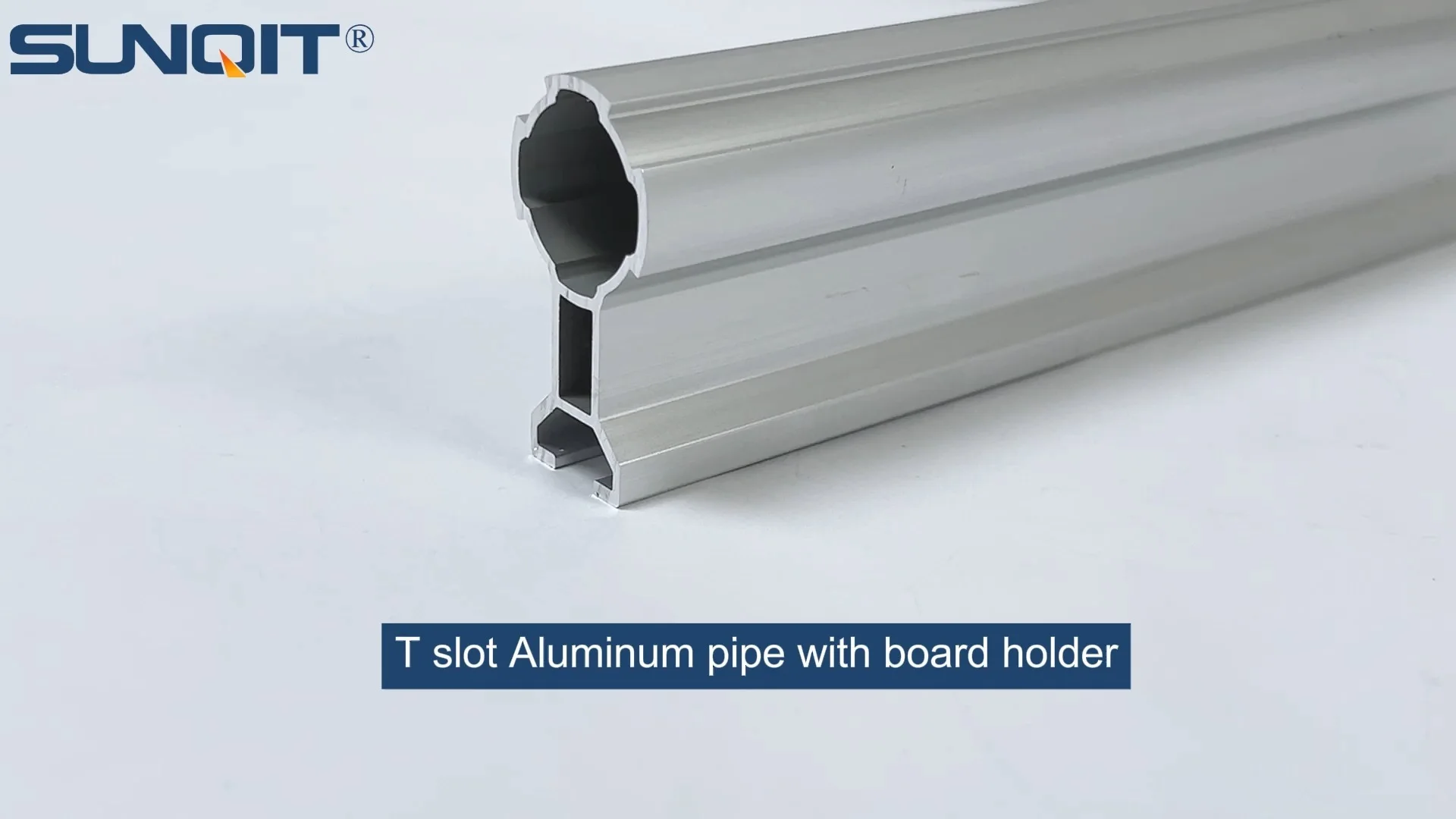
T slot Aluminum pipe with board holder,the pipe one side connected by a joint, the other side with a slot which can hold a tray or a aluminum pannel
How modular solutions are reshaping productivity and flexibility on the factory floor
The Problem with Static Workbenches: A Manufacturing Reality
Walk into any mechanical manufacturing facility, and you'll likely find the heartbeat of the operation: workbenches. These unassuming structures are where assembly happens, tools are organized, and products take shape. But for many plant managers and frontline workers, the same workbenches that drive production can also become bottlenecks. Picture this: an automotive parts assembly line where a sudden design change requires reconfiguring the workbench layout. The current setup, built with welded steel or heavy wooden frames, takes days to modify. Workers waste hours adjusting to awkward heights, and tools end up scattered because there's no built-in storage. Sound familiar? This is the reality of static workbenches—rigid, unforgiving, and increasingly out of step with the demands of modern manufacturing.
In today's fast-paced production environments, adaptability isn't just a nice-to-have; it's a necessity. Industries from electronics to aerospace are shifting toward smaller batch sizes, custom orders, and rapid prototyping. A workbench that worked for last month's product might not fit this week's. Add to that the need for ergonomic designs—workers spend 8+ hours a day at these benches, and discomfort leads to fatigue, errors, and even injuries. Traditional workbenches often fail here too, with fixed heights and limited adjustability.
This is where T Slot Aluminum Pipe with Board Holder enters the conversation. More than just a piece of equipment, it's a solution built for the way manufacturing works now: dynamic, worker-centric, and endlessly customizable. Let's dive into how this modular system is transforming workbenches from static obstacles into tools that boost productivity, reduce costs, and keep teams agile.
What Is T Slot Aluminum Pipe with Board Holder? Breaking Down the Basics
At its core, T Slot Aluminum Pipe is a lightweight, durable building block made from aluminum extrusion profile —a process where aluminum is forced through a die to create consistent, precision shapes. The "T slot" refers to the longitudinal groove running along the pipe, which acts as a universal connection point for accessories. Pair this with a board holder—a simple yet ingenious attachment that secures work surfaces (wood, plastic, or metal) to the frame—and you have a foundation for a workbench that can be modified in minutes, not days.
Unlike traditional materials, T Slot Aluminum Pipe balances strength and flexibility. Aluminum's natural resistance to corrosion makes it ideal for factory floors where oils, coolants, or humidity might damage steel or wood. And while it's lightweight (about 1/3 the weight of steel), it's surprisingly strong: a properly assembled frame can support hundreds of pounds, enough for heavy tools, machinery, or raw materials.
The board holder itself is a study in simplicity. Typically made from the same aluminum extrusion, it clamps onto the T Slot Aluminum Pipe using aluminum profile accessories like bolts, nuts, or sliding brackets. This means the work surface—whether a solid wood top for assembly or a non-slip rubber mat for electronics—can be easily adjusted for height, tilted, or even removed entirely. No welding, no drilling, no specialized tools. Just a few turns of a wrench, and the bench adapts.
But what really sets this system apart is its modularity. T Slot Aluminum Pipe isn't sold as a single "workbench kit." Instead, it's a collection of components—pipes, joints, brackets, casters, and holders—that can be mixed and matched. Need a longer bench? Add more pipes. Want to mount a tool rack above? Attach vertical pipes with T-slot connectors. Need to move the bench to a new location? Swap fixed feet for casters. This modularity turns the workbench from a one-time purchase into a long-term investment that grows with your needs.

Key Features: Why T Slot Aluminum Pipe Stands Out
To understand why T Slot Aluminum Pipe with Board Holder is revolutionizing workbenches, let's break down its most impactful features:
1. Unmatched Flexibility
The T-slot design is the star here. Those grooves aren't just for show—they're a standardized interface for hundreds of accessories. Need to add a monitor arm for digital work instructions? Slide a bracket into the T-slot and tighten. Want to mount a power strip? Use a T-slot clamp to secure it. Even specialized tools like vice grips or parts bins can be attached without modifying the frame itself. This flexibility means the same workbench can transition from an assembly station in the morning to a testing bench in the afternoon, with zero downtime.
2. Lightweight but Heavy-Duty
Aluminum extrusion profile is engineered for strength. The hollow, ribbed design of T Slot Aluminum Pipe distributes weight evenly, making it resistant to bending or warping under load. For example, a 2-inch diameter pipe with 1/8-inch wall thickness can support over 500 pounds when properly braced—more than enough for most manufacturing tasks. Yet, because aluminum is so light, even a large workbench can be moved by two people (or one person with casters), eliminating the need for forklifts or heavy machinery during reconfigurations.
3. Corrosion and Wear Resistance
Manufacturing floors are tough environments. Oils, chemicals, and constant use can take a toll on traditional materials. Steel rusts, wood warps, and plastic cracks. Aluminum, however, forms a natural oxide layer that protects against corrosion. For extra protection, many T Slot Aluminum Pipes are anodized—a process that thickens this oxide layer, giving the pipe a sleek, scratch-resistant finish. This durability means the workbench will look and perform like new for years, even in high-traffic areas.
4. Tool-Free Adjustments (Mostly)
Remember the earlier example of reconfiguring a steel workbench taking days? With T Slot Aluminum Pipe, most changes take minutes. Thanks to aluminum pipe clamp and quick-connect joints, workers can adjust the height of the board holder, add accessories, or even disassemble the bench without welding or drilling. This not only saves time but also empowers frontline teams to make adjustments on the fly. If a worker needs the bench higher to avoid bending, they don't have to wait for maintenance—they can do it themselves.

From Parts to Productivity: Real-World Workbench Applications
Talk of features and flexibility is helpful, but how does this translate to actual productivity on the factory floor? Let's look at three common scenarios where T Slot Aluminum Pipe with Board Holder is making a measurable difference:
1. Electronics Assembly: Precision and Organization
In electronics manufacturing—where components are tiny, and precision is critical—cluttered workbenches lead to lost parts, errors, and delays. A T Slot Aluminum Pipe workbench solves this by integrating specialized storage. For example, a manufacturer of circuit boards might use aluminum profile accessories like sliding drawers (mounted via T-slot brackets) to organize resistors, capacitors, and diodes by value. Above the work surface, vertical pipes with tool hooks hold soldering irons, tweezers, and magnifying glasses within arm's reach. The board holder secures an anti-static mat to protect sensitive components, and the entire bench can be adjusted to a height that reduces eye strain during hours of meticulous work.
When the product line switches to a new circuit board design, the team doesn't need a new bench. They simply reposition the drawers, add a second level of shelving with T-slot joints, or adjust the board holder to accommodate a larger work surface. What once took a day of downtime now takes 30 minutes.
2. Automotive Repair: Durability and Mobility
Automotive repair shops face a unique challenge: workbenches need to handle heavy parts (like engine components) while being mobile enough to move near the vehicle. T Slot Aluminum Pipe's strength-to-weight ratio shines here. A bench built with 3-inch diameter pipes can support an engine block, while adding locking casters (via T-slot mounts) lets mechanics roll the bench right to the car. The board holder, paired with a steel-reinforced worktop, resists scratches from tools and oil spills, and aluminum's corrosion resistance ensures the bench won't rust even in garages with frequent power washing.
One automotive shop in Michigan reported a 20% reduction in repair time after switching to T Slot Aluminum Pipe workbenches. "Before, we'd carry parts back and forth from the bench to the car," said the shop foreman. "Now, we roll the bench to the job. And when we need to install a transmission, we just lower the work surface to waist height—no more bending over."
3. Aerospace Testing: Customization and Stability
Aerospace manufacturing demands workbenches that are both stable (for precision measurements) and customizable (for testing unique components). T Slot Aluminum Pipe delivers on both. A testing bench for aircraft parts might include a fixed base (with heavy-duty leveling feet) for stability, while the board holder supports a vibration-dampening worktop. Aluminum profile accessories like adjustable clamps secure the part being tested, and vertical pipes with T-slot brackets mount sensors, cameras, or data loggers at exact angles. When testing a new component—say, a turbine blade—the team can reposition the clamps, add a larger work surface, or even tilt the board holder to simulate in-flight angles, all without compromising stability.
An aerospace supplier in Washington noted that their T Slot Aluminum Pipe workbenches reduced setup time for new tests by 40%. "We used to build custom fixtures for every part," said a lead engineer. "Now, we just reconfigure the bench. It's like having a Swiss Army knife for testing."
Comparing Materials: Why Aluminum Beats Wood, Steel, and Plastic
To truly appreciate T Slot Aluminum Pipe, it helps to see how it stacks up against traditional workbench materials. Below is a comparison of key factors that matter most to manufacturers:
| Factor | T Slot Aluminum Pipe | Traditional Steel | Wood | Plastic |
|---|---|---|---|---|
| Flexibility | High: Modular design allows easy reconfiguration with accessories | Low: Welded or bolted frames require cutting/welding to modify | Low: Fixed shape; cutting/drilling damages structural integrity | Medium: Some modularity, but limited weight capacity |
| Durability | High: Corrosion-resistant, scratch-resistant anodized finish | Medium: Prone to rust without regular maintenance | Low: Warps with moisture; dents/scratches easily | Low: Cracks under heavy load; fades in sunlight |
| Weight | Light: ~1/3 the weight of steel, easy to move with casters | Heavy: Difficult to reposition; requires machinery for moves | Medium: Solid wood is heavy, but less dense than steel | Light: But limited strength for heavy use |
| Cost (Long-Term) | Medium-High: Higher upfront cost, but reusable/modular (lower total cost of ownership) | Medium: Low upfront cost, but high maintenance and replacement costs | Low: Cheap upfront, but frequent replacements needed | Low-Medium: Cheap, but short lifespan in industrial settings |
| Customization | Excellent: T-slot accessories enable endless configurations | Poor: Requires custom fabrication for changes | Limited: Can add shelves, but permanently alters the bench | Limited: Molded designs restrict changes |
The takeaway? While steel or wood might seem cheaper upfront, T Slot Aluminum Pipe offers better long-term value by reducing downtime, maintenance, and replacement costs. And for manufacturers prioritizing agility—like those in electronics or aerospace—its flexibility is irreplaceable.
Installation and Setup: How Easy Is It, Really?
One common misconception about modular systems is that they're "easy to assemble" in theory but require engineering degrees in practice. Not so with T Slot Aluminum Pipe. Most users describe the process as "like building with adult Legos"—intuitive, even for those with minimal technical skills. Here's a step-by-step overview of setting up a basic workbench:
Step 1: Plan the Layout
Start with a simple sketch. Measure the space where the bench will go, and decide on dimensions (width, depth, height). Consider accessories: Will you need shelves, tool hooks, or casters? Most suppliers offer free design tools online, or you can work with a rep to finalize the plan.
Step 2: Gather Components
Order the pipes (cut to length by the supplier), board holder brackets, work surface, and accessories. For a basic 6-foot bench, you'll need 4 vertical pipes (for legs), 4 horizontal pipes (for the frame), 8 corner joints, a board holder kit, and either fixed feet or casters.
Step 3: Assemble the Frame
Connect the horizontal and vertical pipes using T-slot joints. Most joints slide into the T-slot and lock with a bolt or cam lever—no drilling required. Tighten until snug, but not over-tight (aluminum is strong but can dent if forced).
Step 4: Attach the Board Holder
Mount the board holder brackets to the horizontal frame pipes using aluminum profile accessories like T-nuts and bolts. Slide the work surface into the holder, then secure with screws or clamps (depending on the holder design).
Step 5: Add Accessories
Install casters, shelves, or tool racks by sliding accessories into the T-slots. For example, a tool hook can be positioned anywhere along a vertical pipe, and a shelf bracket can be adjusted for height in seconds.
Total setup time for a basic bench? About 1-2 hours, even for first-timers. And if you make a mistake? Just loosen the joints and reposition—no harm done. This ease of assembly is a game-changer for manufacturers with limited maintenance staff or tight deadlines.
Future Trends: Why T Slot Aluminum Pipe Will Only Grow in Popularity
Manufacturing is evolving, and workbenches are evolving with it. Here are three trends that make T Slot Aluminum Pipe with Board Holder more relevant than ever:
1. The Rise of Smart Manufacturing
Industry 4.0 is bringing sensors, IoT devices, and data analytics to the factory floor. T Slot Aluminum Pipe's T-slot design makes it easy to integrate these technologies. Need to mount a barcode scanner above the workbench? Slide a bracket into the T-slot. Want to add a weight sensor under the work surface? Use aluminum profile accessories to secure it. Unlike traditional benches, which require drilling holes or welding mounts, T Slot Aluminum Pipe lets manufacturers future-proof their workspaces for smart tools.
2. Focus on Worker Wellbeing
Ergonomics is no longer a buzzword—it's a business imperative. Poorly designed workbenches lead to musculoskeletal disorders, which cost U.S. manufacturers over $20 billion annually in workers' compensation and lost productivity. T Slot Aluminum Pipe's adjustable height, tiltable work surfaces, and customizable layouts help reduce strain. For example, a worker with back issues can raise the bench to standing height, while a colleague can lower it for seated work—all on the same frame. As companies prioritize employee health, demand for ergonomic, adaptable workbenches will soar.
3. Sustainability and Circular Economy
Manufacturers are under increasing pressure to reduce waste and carbon footprints. T Slot Aluminum Pipe aligns with this goal. Aluminum is 100% recyclable, and modular designs mean components can be reused or repurposed instead of landfilled. A pipe from an old workbench can be cut down and used in a new shelf; a board holder can be swapped between benches. This reduces raw material use and lowers environmental impact—a win for both companies and the planet.
Conclusion: Investing in Flexibility for the Future
In the end, T Slot Aluminum Pipe with Board Holder isn't just a workbench—it's a mindset shift. It's about recognizing that in manufacturing, the only constant is change, and your tools should keep up. Whether you're assembling electronics, repairing cars, or testing aerospace components, a workbench that adapts to your needs isn't a luxury; it's a competitive advantage.
From its modular design and lightweight strength to its compatibility with aluminum profile accessories, T Slot Aluminum Pipe solves the core challenges of modern manufacturing: downtime, inefficiency, and worker discomfort. It's an investment that pays off in faster production, happier teams, and a workspace that grows with your business.
So, the next time you walk through your facility and see workers struggling with rigid, outdated workbenches, remember: there's a better way. A way that turns "we can't" into "we can—just adjust the bench." That's the power of T Slot Aluminum Pipe with Board Holder. It's not just building a workbench; it's building a more productive future.