- Company Articles
- Products and Technology
- Product knowledge
- T Slot Aluminum Pipe with Board Holder: Key Components and Structure Explained

T Slot Aluminum Pipe with Board Holder: Key Components and Structure Explained
Related Product
T Slot Aluminum Pipe with Board Holder
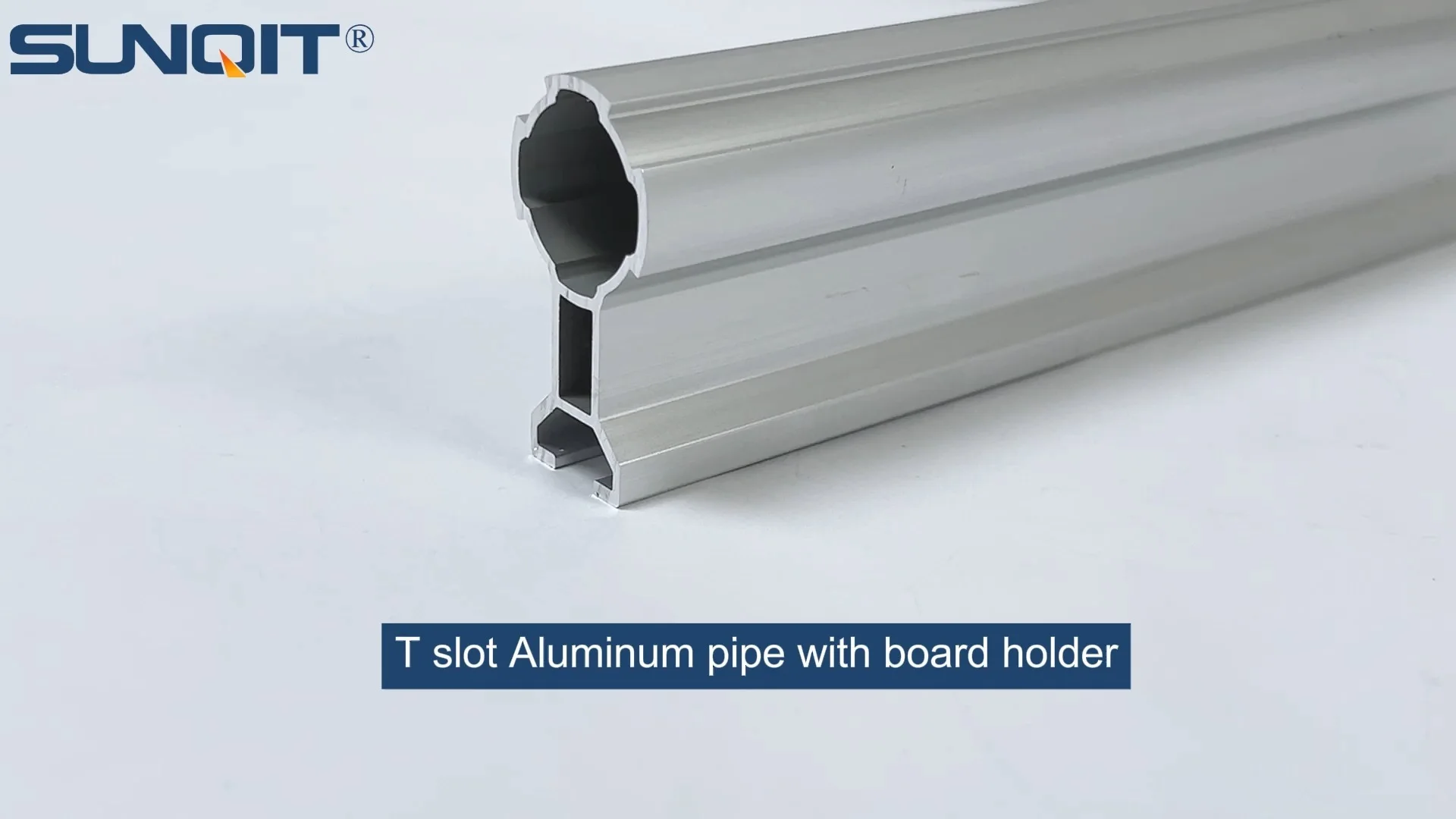
T slot Aluminum pipe with board holder,the pipe one side connected by a joint, the other side with a slot which can hold a tray or a aluminum pannel
In the fast-paced world of manufacturing, warehousing, and industrial operations, the need for flexible, durable, and cost-effective workspace solutions has never been greater. Whether you're setting up a new assembly line, revamping a workshop, or optimizing material flow, the tools and components you choose can make or break efficiency. One such component that has become indispensable in modern industrial setups is the T slot aluminum pipe with board holder . This unassuming yet versatile system combines the strength of aluminum with the adaptability of T-slot design, offering a level of customization that traditional rigid structures simply can't match. In this article, we'll dive deep into its key components, structural design, real-world applications, and why it has become a cornerstone of lean system implementations across industries.
What Is a T Slot Aluminum Pipe with Board Holder?
At its core, a T slot aluminum pipe with board holder is a modular system designed to create adjustable, lightweight, and sturdy structures for workbenches, material racks, production lines, and more. The "T slot" refers to the groove running along the length of the aluminum pipe, which allows accessories—like the board holder—to be attached, repositioned, or removed without drilling or welding. The board holder itself is a specialized accessory that secures flat surfaces (such as wooden or plastic boards) to the aluminum pipe, turning the system into a functional workspace or storage solution.
Unlike traditional steel pipes or fixed wooden frames, this system thrives on flexibility. Need to raise a workbench by a few inches? Adjust the board holder's position. Want to add a shelf to a material rack? Slide on a new holder. This adaptability makes it a favorite among facilities that prioritize lean system principles, where minimizing waste and maximizing workflow efficiency are top priorities.
Key Components: Breaking Down the System
To truly understand how a T slot aluminum pipe with board holder works, let's break down its essential components. Each part plays a critical role in ensuring the system is strong, versatile, and easy to assemble.
1. T Slot Aluminum Pipe
The backbone of the system is the T slot aluminum pipe itself. Made from high-grade aluminum alloy (typically 6063-T5, known for its excellent strength-to-weight ratio), these pipes are extruded to form a continuous T-shaped groove along their length. The extrusion process ensures consistent dimensions and a smooth finish, while the aluminum material offers several advantages: it's lightweight (making installation and reconfiguration easy), corrosion-resistant (ideal for humid or industrial environments), and recyclable (aligning with sustainability goals).
T slot aluminum pipes come in various sizes, with common widths ranging from 20mm to 40mm (e.g., 20x20mm, 30x30mm, 40x40mm). The size you choose depends on the application: smaller pipes work well for lightweight shelving, while larger ones support heavier loads, such as workbenches or heavy material racks. The T-slot groove, usually 6mm or 8mm wide, is the system's "secret sauce"—it accepts T-nuts, bolts, and accessories, allowing for tool-free adjustments.
2. Board Holder
The board holder is the component that bridges the gap between the aluminum pipe and the work surface (e.g., a plywood board, acrylic sheet, or ESD-safe panel). Designed to clamp onto the board and secure it to the T slot pipe, board holders are typically made from durable plastic (like ABS) or aluminum, depending on the load capacity needed. Most models feature a "jaw" that tightens around the board and a T-slot compatible base that slides into the pipe's groove. Some even include rubberized grips to prevent slippage and protect the board from scratches.
Board holders come in different styles: fixed-angle holders for flat surfaces, adjustable-angle holders for tilting workbenches (common in drafting or inspection stations), and heavy-duty holders for thick or heavy boards. For example, a standard plastic board holder might support up to 15kg per pair, while an aluminum heavy-duty model can handle 50kg or more—perfect for holding metal sheets or tool chests.
3. Aluminum Profile Accessories
No T slot aluminum system is complete without aluminum profile accessories —the small but mighty components that turn basic pipes into fully functional structures. These include:
- T-nuts and bolts: Inserted into the T-slot to attach accessories like board holders, brackets, or shelves. They slide freely along the slot, allowing for precise positioning.
- End caps: Plastic or aluminum caps that cover the ends of the pipe, preventing dust buildup and eliminating sharp edges (a safety must in busy workplaces).
- Connectors: Corner brackets, straight connectors, and 3-way joints that link pipes together to form frames, shelves, or workbench legs.
- Leveling feet: Adjustable feet that stabilize structures on uneven floors, ensuring workbenches or racks remain steady.
These accessories are what make the system modular. For instance, adding a set of casters (via caster mounting brackets) to the bottom of a T slot frame transforms a stationary workbench into a mobile cart—ideal for moving materials between workstations.
4. Aluminum Guide Rail A
While not always part of the basic board holder setup, aluminum guide rail A is a valuable addition for systems that require linear motion or material guidance. Often used in conjunction with T slot aluminum pipes, this rail features a smooth, grooved surface that supports rollers or slides, allowing for easy movement of materials along a production line or workbench. For example, in an electronics assembly workbench , an aluminum guide rail A might be mounted parallel to the T slot pipes, with a sliding tray (attached via the T-slot) that glides along the rail to deliver components to the operator.
Aluminum guide rail A is typically made from the same high-grade aluminum as the T slot pipes, ensuring compatibility and uniform strength. Its design minimizes friction, reducing wear and tear on both the rail and the moving parts—a key consideration for high-volume production environments.

Structure Explained: How It All Comes Together
The beauty of the T slot aluminum pipe with board holder system lies in its simplicity of assembly. Even someone with minimal DIY experience can put together a basic structure in under an hour, thanks to the modular design and tool-free adjustments. Let's walk through the typical assembly process for a simple workbench —one of the most common applications.
Step 1: Frame Construction
Start by cutting the T slot aluminum pipes to your desired dimensions. For a standard workbench, you'll need four vertical legs (e.g., 900mm tall) and four horizontal rails (e.g., 1200mm long for the top and bottom frames). Use a miter saw or pipe cutter to ensure clean, square cuts—this ensures the frame will be level. Next, connect the pipes using corner brackets (aluminum profile accessories) and T-nuts: slide a T-nut into the T-slot of the horizontal rail, align the corner bracket, and tighten the bolt with a hex key. Repeat this for all four corners to form a rectangular frame for the top and bottom, then attach the vertical legs to connect the two frames.
Step 2: Attaching the Board Holder
Once the frame is built, it's time to add the work surface. Lay your chosen board (e.g., a 18mm plywood sheet cut to match the top frame dimensions) on top of the horizontal rails. Position the board holders along the rails—space them evenly (about 300mm apart) to distribute weight. For each holder, slide the T-slot base into the rail's groove, adjust the jaw to clamp the board, and tighten the locking screw. Most board holders feature a quick-release lever or thumb screw, making this step tool-free. For extra stability, add a second row of board holders on the bottom side of the board, securing it to the lower horizontal rails.
Step 3: Adding Accessories (Optional)
Now comes the fun part: customizing the workbench with accessories. If you need storage, attach shelf brackets (using T-nuts) to the vertical legs and add a second board (secured with board holders) halfway up the frame. For mobility, bolt casters to the bottom of the legs using caster mounting plates (another aluminum profile accessory). If the workbench is for electronics assembly, add an aluminum guide rail A along the back edge to support a sliding tool tray. End caps can be pressed onto the pipe ends to tidy up the look and improve safety.

Applications: Where T Slot Aluminum Pipe with Board Holder Shines
The versatility of this system means it finds use in almost every industry that values flexibility and efficiency. Here are a few standout applications:
Manufacturing and Assembly Lines
In automotive, electronics, and consumer goods manufacturing, production lines need to adapt quickly to new product designs. T slot aluminum workbenches with board holders allow for on-the-fly adjustments: raising or lowering the work surface to match operator height, adding tool racks via T-slot accessories, or integrating aluminum guide rail A to move components along the line. For example, a smartphone assembly plant might use these systems to create ergonomic workstations that can be reconfigured in minutes when switching from assembling a 6-inch to a 7-inch model.
Warehousing and Material Handling
Warehouses rely on efficient storage, and T slot aluminum racks (built with board holders) are a game-changer. Unlike fixed steel racks, these can be adjusted to fit different box sizes—simply reposition the board holders to create taller or shorter shelves. They're also lightweight enough to be moved (with casters) to where they're needed most, reducing time spent searching for materials. In e-commerce fulfillment centers, for instance, mobile T slot racks with board holders are used to sort orders by priority, with shelves adjusted to fit small envelopes or large boxes.
Laboratories and Clean Rooms
Laboratories require sterile, stable workspaces, and aluminum's corrosion resistance makes T slot systems ideal for this environment. ESD-safe board holders (made from conductive materials) can be used to create workbenches that dissipate static electricity, protecting sensitive electronic components. Aluminum guide rail A can be integrated to move samples or tools between testing stations without contamination, as the smooth aluminum surface is easy to sanitize.
Benefits Over Traditional Workspace Solutions
Why choose a T slot aluminum pipe with board holder over traditional wood, steel, or fixed plastic systems? The advantages are clear:
- Unmatched Flexibility: Traditional wood or steel frames require drilling, sawing, or welding to modify. With T slot aluminum, you can reposition board holders, add shelves, or disassemble and rebuild the structure in minutes—no special tools needed.
- Cost-Effective in the Long Run: While the initial investment may be higher than basic wooden shelves, the durability of aluminum (it can last 10+ years with minimal maintenance) and reusability (components can be repurposed for new projects) make it cheaper over time.
- Lightweight Yet Strong: Aluminum is 30% lighter than steel, making installation and reconfiguration easy for a single person. Despite its light weight, it can support heavy loads—40x40mm T slot pipes, for example, can handle up to 200kg per linear meter when properly braced.
- Sustainability: Aluminum is 100% recyclable, and the modular design reduces waste (no need to cut new materials for every change). Many manufacturers also use recycled aluminum in their pipes, lowering the carbon footprint.
- Lean System Alignment: By enabling quick adjustments and reducing setup time, the system supports lean manufacturing principles like 5S (Sort, Set in Order, Shine, Standardize, Sustain) and continuous improvement—key drivers of operational efficiency.
Comparison Table: Board Holder Types
| Board Holder Type | Material | Weight Capacity (per pair) | Attachment Method | Best For |
|---|---|---|---|---|
| Standard Plastic Holder | ABS Plastic | 15-20kg | Thumb screw (tool-free) | Light shelves, display racks, hobby workbenches |
| Heavy-Duty Aluminum Holder | Aluminum Alloy | 50-75kg | Hex bolt (requires hex key) | Industrial workbenches, material racks, heavy tool storage |
| Adjustable-Angle Holder | Aluminum + Rubber Grip | 25-30kg | Locking lever (adjustable 0-90°) | Drafting tables, inspection stations, |
| ESD-Safe Holder | Conductive Plastic | 15-20kg | Anti-static thumb screw | Electronics assembly workbenches, clean rooms |
Installation and Maintenance Tips
To get the most out of your T slot aluminum pipe with board holder system, follow these best practices:
Installation Tips
- Measure Twice, Cut Once: Accurate measurements ensure the frame is square and the board fits perfectly. Use a tape measure and square tool to check angles before cutting.
- Don't Over-Tighten Bolts: T-nuts and bolts should be snug but not overly tight—over-tightening can strip the T-slot or warp the pipe.
- Use Leveling Feet: On uneven floors, adjustable leveling feet prevent wobbling and ensure the workbench or rack remains stable.
- Test Weight Capacity: Before loading the structure, test it with a gradually increasing weight to ensure the board holders and connections can handle the load.
Maintenance Best Practices
- Clean T-Slots Regularly: Dust and debris can build up in the T-slot, making it hard to slide accessories. Use a soft brush or compressed air to clean the grooves monthly.
- Lubricate Moving Parts: If using aluminum guide rail A or sliding components, apply a dry lubricant (like graphite powder) to reduce friction and wear.
- Inspect Connections Quarterly: Check bolts and T-nuts for looseness, especially in high-vibration environments (e.g., near machinery). Tighten as needed to prevent instability.
- replace Damaged Parts: Cracked plastic holders or bent pipes should be replaced immediately—damaged components compromise the system's strength and safety.
Conclusion: A Foundation for Modern Industrial Efficiency
The T slot aluminum pipe with board holder is more than just a workspace component—it's a catalyst for efficiency, adaptability, and innovation. By combining the strength of aluminum, the flexibility of T-slot design, and the functionality of modular accessories like board holders and aluminum guide rail A, it empowers businesses to build the exact structures they need, when they need them—without the hassle of traditional construction.
Whether you're a small workshop owner looking to organize your space or a large manufacturer optimizing a production line, this system delivers on its promise: durability without rigidity, customization without complexity, and value without compromise. As industries continue to evolve, the T slot aluminum pipe with board holder will undoubtedly remain a key player in the future of lean, efficient, and sustainable workspaces.