- Company Articles
- Products and Technology
- Product knowledge
- T Slot Aluminum Pipe with Board Holder: Thermal Conductivity and Its Impact on Use

T Slot Aluminum Pipe with Board Holder: Thermal Conductivity and Its Impact on Use
Related Product
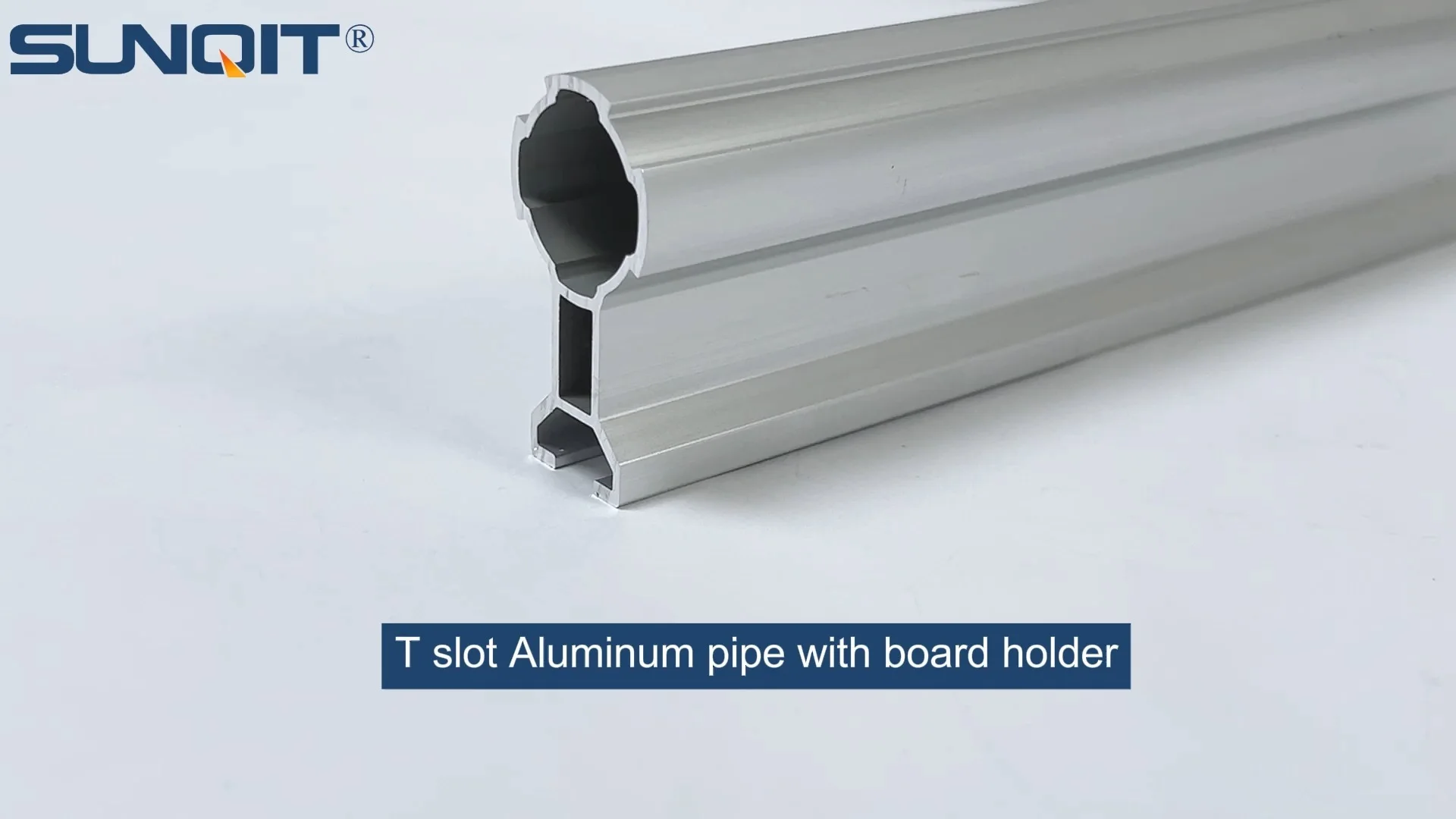
T Slot Aluminum Pipe with Board Holder
T slot Aluminum pipe with board holder,the pipe one side connected by a joint, the other side with a slot which can hold a tray or a aluminum pannel
Introduction: The Backbone of Modern Workspaces
Walk into any modern manufacturing facility, electronics assembly line, or even a well-organized workshop, and you'll likely spot a familiar sight: sleek, modular structures that seem to adapt effortlessly to their surroundings. Chances are, those structures are built with T Slot Aluminum Pipe with Board Holder. This unassuming yet versatile component has quietly revolutionized how we design workspaces, blending flexibility with durability to meet the ever-changing demands of today's industries. But beyond its obvious adaptability, there's a key property that makes it stand out: thermal conductivity. In this article, we'll explore why this scientific term matters in the day-to-day use of T Slot Aluminum Pipe with Board Holder, how it shapes everything from workbench stability to lean system efficiency, and why it's become a cornerstone of modern industrial design.
Understanding Thermal Conductivity: More Than Just "Heat Transfer"
Before diving into the specifics of aluminum, let's break down what thermal conductivity actually means. In simple terms, it's a material's ability to transfer heat. Think of it as how quickly a metal spoon left in a hot cup of coffee gets warm compared to a plastic spoon—metals, like aluminum, have high thermal conductivity, while plastics have low. For industrial materials, this property isn't just a fun science fact; it's a make-or-break factor. In settings where equipment generates heat, where precision is critical, or where workers interact with surfaces daily, how a material handles heat can impact safety, efficiency, and even product quality. For T Slot Aluminum Pipe with Board Holder, which often forms the skeleton of workbenches, material racks, and production lines, thermal conductivity isn't an afterthought—it's a design advantage.

Aluminum's Thermal Edge: Why It's the Material of Choice
Aluminum has long been a favorite in industrial applications, and its thermal conductivity is a big reason why. Unlike steel, which is heavy and conducts heat unevenly, or plastic, which traps heat, aluminum strikes a perfect balance: it's lightweight, strong, and excels at transferring heat across its surface. This is thanks to its atomic structure—aluminum atoms are arranged in a way that allows heat energy to move freely, distributing it evenly rather than letting it pool in one spot. For T Slot Aluminum Pipe with Board Holder, this means stability even in environments with temperature fluctuations, whether that's a workshop with hot machinery or a lab with sensitive equipment.
To put this into perspective, let's compare aluminum's thermal conductivity with other common materials used in industrial settings:
| Material | Thermal Conductivity (W/m·K) | Key Trait for Industrial Use |
|---|---|---|
| Aluminum (6061 alloy, common in extrusion profiles) | 160–200 | High conductivity; even heat distribution |
| Steel (mild steel) | 45–50 | Low conductivity; heat tends to concentrate |
| Plastic (PVC) | 0.1–0.2 | Very low conductivity; heat retention |
| Stainless Steel (304) | 16–17 | Low conductivity; slow heat transfer |
As the table shows, aluminum's thermal conductivity is significantly higher than steel and exponentially higher than plastic. This isn't just a numbers game—it translates to real-world benefits. For example, in a workbench built with T Slot Aluminum Pipe, heat from a soldering iron or a running motor won't get "stuck" in one part of the structure. Instead, the aluminum will spread that heat out, preventing hotspots that could warp the material or make the surface uncomfortable to touch. This even distribution is why aluminum extrusion profiles, like the T Slot Aluminum Pipe, are trusted in environments where consistency matters most.

Impact on Workbench Design: Comfort, Safety, and Precision
Workbenches are the heart of any workspace, and their design directly affects productivity. When built with T Slot Aluminum Pipe with Board Holder, thermal conductivity plays a starring role in making these workbenches both functional and worker-friendly. Let's start with comfort: imagine a technician spending hours soldering circuit boards on a plastic workbench. The heat from the soldering iron would build up in the surface, making it hot to the touch and forcing the worker to pause or use heat-resistant mats. With aluminum, that heat spreads across the bench's frame, keeping the surface temperature stable. This isn't just about comfort—it's about focus. A worker who isn't distracted by a hot work surface can stay concentrated, reducing errors and speeding up tasks.
Then there's safety. In industries like electronics assembly, where static electricity or excessive heat can damage components, aluminum's thermal conductivity acts as a safeguard. By dissipating heat quickly, it reduces the risk of overheating sensitive parts placed on the workbench. Even in automotive workshops, where power tools generate friction and heat, an aluminum frame ensures that the workbench itself doesn't become a fire hazard or a source of heat-related wear and tear. And let's not forget precision: materials that expand or contract with temperature changes can throw off measurements. Aluminum's ability to handle heat evenly minimizes thermal expansion, keeping the workbench stable—critical for tasks like measuring parts or assembling delicate machinery.
Take the "Workbench E (single deck-without caster)" as an example. This popular model, often built with T Slot Aluminum Pipe, relies on the material's thermal properties to stay level and steady, even when tools or equipment generate prolonged heat. Without aluminum's conductivity, the bench might warp over time, leading to wobbly surfaces and frustrated workers. Instead, it remains reliable, day in and day out.
Role in Lean Systems: Efficiency Meets Thermal Intelligence
Lean manufacturing isn't just a buzzword—it's a philosophy centered on minimizing waste and maximizing value. Lean systems thrive on adaptability, and T Slot Aluminum Pipe with Board Holder fits this ethos perfectly. But how does thermal conductivity tie into lean principles? Let's break it down. In a lean environment, every component must serve multiple purposes, and downtime is the enemy. Aluminum's thermal properties support both goals.
Consider a material rack in a lean production line, like "Material Rack B (3 row and 3 floor)". Built with aluminum profile, this rack needs to handle everything from cold storage items to parts that come straight from a heat-treating process. If the rack material trapped heat, those hot parts could damage others or make the rack unstable. But aluminum's high conductivity means the heat from those parts spreads quickly across the rack, cooling down faster and reducing the risk of damage. This translates to less waste—no more scrapping parts because they overheated on the rack—and less downtime spent waiting for parts to cool. It's a small detail, but in lean systems, small details add up to big efficiency gains.
Another example is in just-in-time (JIT) manufacturing, where materials move quickly from one station to the next. Roller tracks, often paired with T Slot Aluminum Pipe, are essential here. Aluminum guide rails, like "Aluminum Guide Rail A" or "Plastic Roller Track Guide Rail Yellow", work with the pipe's thermal properties to ensure smooth movement. Heat from friction (as rollers glide over the track) is dissipated by the aluminum, preventing the rails from warping or the plastic rollers from melting. This keeps the production line moving without interruptions, a cornerstone of lean efficiency.
Aluminum Pipe Accessories: Complementing Thermal Performance
A T Slot Aluminum Pipe system is only as good as its accessories. From joints to brackets, these components don't just hold the structure together—they enhance its thermal performance. Take internal rotary aluminum joints, for instance. These joints allow the pipe to pivot or adjust, but they're also designed to maintain the material's heat-distributing properties. Unlike plastic joints, which can melt or degrade under heat, aluminum joints conduct heat just as well as the pipe itself, ensuring the entire structure works as a unified thermal system. This means even if one part of the structure gets warm, the joints won't act as "blockages" to heat flow, keeping the system stable.
Casters are another key accessory. A workbench or trolley with casters needs to move smoothly, but if the caster mount conducts heat poorly, it could create weak points in the structure. Aluminum caster accessories, like "Caster Install Base" or "Flat Adjustable Swivel Caster Wheel", are made from the same high-conductivity aluminum as the pipe. This ensures that heat from the floor (say, near a hot oven) or from the workbench surface doesn't get trapped at the caster mount, preventing warping or loosening over time. It's these small, thoughtful design choices that make aluminum pipe accessories indispensable for maintaining the system's thermal integrity.
Even something as simple as end caps plays a role. "Plastic Pipe End Cap" might seem like a minor detail, but when paired with aluminum pipe, it acts as a thermal buffer. By covering the end of the pipe, it prevents dust or debris from entering (which could insulate the pipe and reduce heat flow) while still allowing the aluminum to do its job. It's a reminder that in thermal conductivity, every part of the system matters—even the ones you might overlook.
Practical Applications: Where Thermal Conductivity Shines
To truly appreciate the impact of thermal conductivity in T Slot Aluminum Pipe with Board Holder, let's look at real-world scenarios where it makes a tangible difference.
Electronics Assembly: In electronics manufacturing, static electricity and heat are public enemies. Circuit boards, microchips, and sensitive components can be damaged by even small temperature fluctuations. ESD workstations, built with aluminum profile, rely on the material's thermal conductivity to dissipate static charges and heat. For example, an ESD workbench with a T Slot Aluminum frame won't accumulate static because the aluminum conducts it away, and heat from soldering irons or hot components is spread out, preventing hotspots that could fry delicate parts. This isn't just about protecting equipment—it's about ensuring product quality and reducing defects.
Automotive Workshops: Mechanics deal with hot engines, welding torches, and tools that generate significant heat. A workbench built with aluminum extrusion profile can handle a hot engine part placed on it without warping. The heat spreads across the bench, cooling down quickly, so the next task—whether it's assembling a carburetor or measuring a part—can start immediately. Even turnover trolleys, used to transport parts around the shop, benefit: aluminum's thermal conductivity means they won't retain heat from a-welded bracket, preventing burns or damage to other parts on the trolley.
Laboratories: In research labs, precision is everything. A lab workbench holding a Bunsen burner or a hot plate needs to maintain a stable surface temperature. Aluminum's thermal conductivity ensures that the heat from the burner spreads evenly across the bench, so the surface doesn't get too hot in one spot (risking burns) or too cold in another (affecting experiments). This level of control is why aluminum profile is a top choice for lab furniture, where even a 1°C temperature difference can ruin an experiment.
Maintenance and Longevity: Thermal Properties and Durability
Thermal conductivity doesn't just impact performance—it affects how long a T Slot Aluminum Pipe system lasts. Materials that trap heat are prone to thermal stress, where repeated heating and cooling cause them to expand and contract, leading to cracks or weakening over time. Aluminum, with its ability to distribute heat evenly, minimizes this stress. For example, a roller track exposed to daily temperature changes (from a cold warehouse morning to a warm afternoon) won't warp because the aluminum expands and contracts uniformly across its entire length. This means less maintenance—no need to replace warped tracks or loose joints—and a longer lifespan for the system.
To keep your aluminum system performing at its best, maintenance is straightforward. Unlike steel, aluminum doesn't rust, so a quick wipe with a damp cloth is usually enough to remove dust or grime that could insulate the surface (and reduce thermal conductivity). For joints and moving parts, like swivel roller balls or caster wheels, a light coating of lubricant (avoiding heavy oils that can trap heat) will keep them moving smoothly without interfering with heat transfer. Simple steps like these ensure the thermal properties of the aluminum remain intact for years.
Conclusion: Thermal Conductivity—The Unsung Hero of Modular Design
When we think about T Slot Aluminum Pipe with Board Holder, we often focus on its flexibility, strength, or sleek appearance. But thermal conductivity is the unsung hero that makes all those other benefits possible. It's why aluminum extrusion profiles are trusted in labs and factories, why workbenches stay stable under heat, and why lean systems run efficiently day in and day out. By evenly distributing heat, aluminum ensures safety, precision, and durability—qualities that matter in every workspace, from small workshops to large-scale manufacturing plants.
As industries continue to evolve, demanding more adaptability and efficiency, the role of thermal conductivity in modular systems will only grow. Whether you're designing a new workbench, upgrading a production line, or building a custom material rack, remember: the T Slot Aluminum Pipe with Board Holder isn't just a frame—it's a thermal system that works as hard as you do. And in a world where every detail counts, that's a difference you can feel.