- Company Articles
- Products and Technology
- Product knowledge
- T Slot Aluminum Pipe with Board Holder vs. Composite Pipe Systems: Performance Review

T Slot Aluminum Pipe with Board Holder vs. Composite Pipe Systems: Performance Review
Related Product
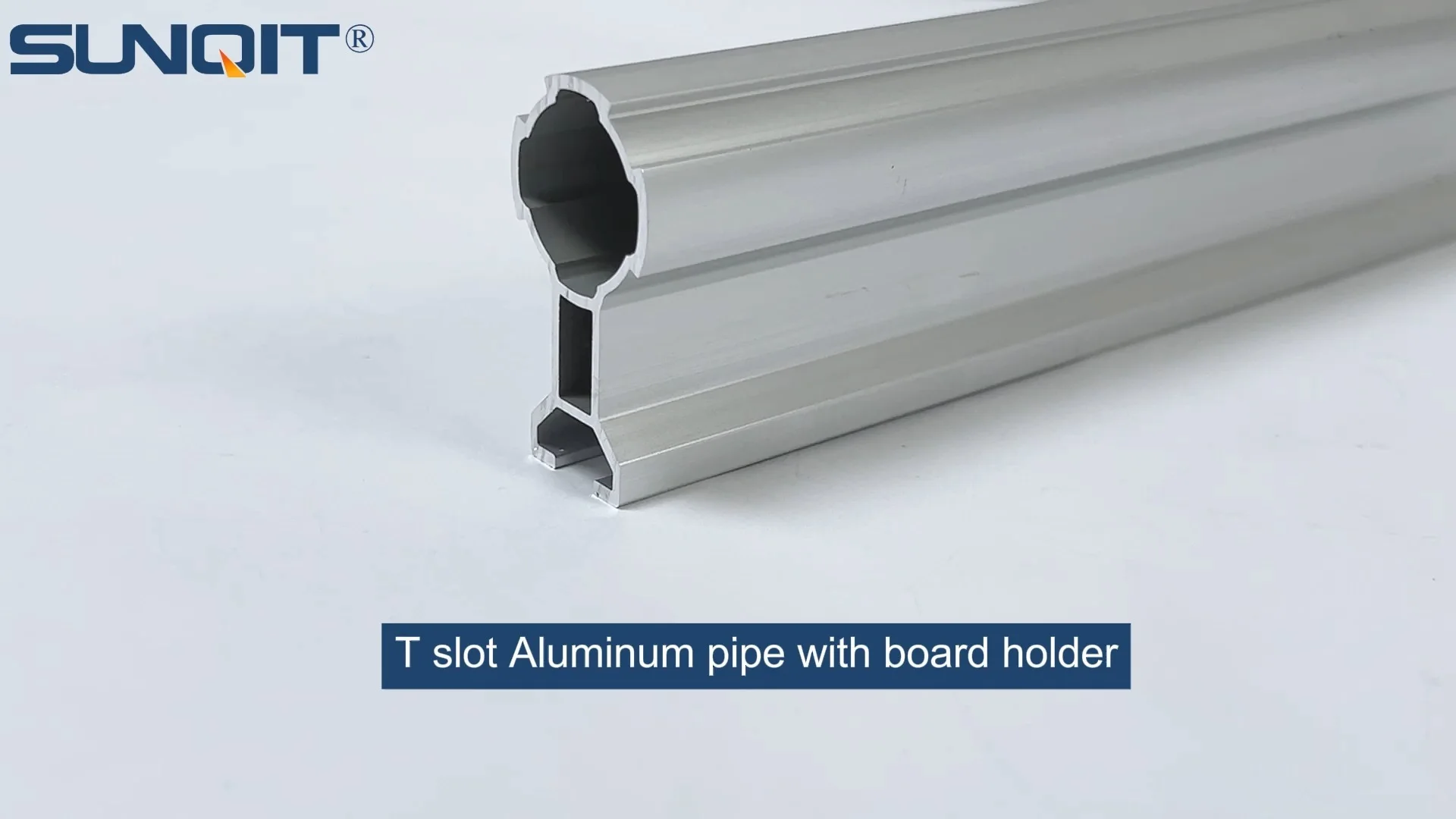
T Slot Aluminum Pipe with Board Holder
T slot Aluminum pipe with board holder,the pipe one side connected by a joint, the other side with a slot which can hold a tray or a aluminum pannel
Introduction: The Backbone of Modern Manufacturing Workspaces
Walk into any modern factory, warehouse, or assembly line, and you'll notice an unsung hero quietly holding everything together: pipe systems. From workbenches and flow racks to material handling trolleys and conveyor supports, these systems form the backbone of efficient, organized, and adaptable workspaces. But not all pipe systems are created equal. In recent years, two contenders have risen to the top of the debate: T Slot Aluminum Pipe with Board Holder and Composite Pipe Systems (often exemplified by lean pipe solutions). Each brings unique strengths to the table, but choosing between them can feel like navigating a maze of technical specs, cost figures, and vague marketing claims.
This article isn't just another product comparison—it's a deep dive into how these systems perform in the real world. We'll break down their design, durability, flexibility, and cost to help you answer the critical question: Which pipe system is right for your operation? Whether you're setting up a new aluminum workbench, revamping a flow rack, or scaling your production line, the choice between aluminum and composite could mean the difference between a workspace that adapts and grows with you and one that becomes a costly bottleneck.
Understanding T Slot Aluminum Pipe with Board Holder: The Precision Player
Let's start with the newer kid on the block, though "newer" might be a misnomer—aluminum pipe systems have been around for decades, but advancements in T-slot design and accessory integration have catapulted them to fame in recent years. At its core, T Slot Aluminum Pipe with Board Holder is exactly what it sounds like: a system of aluminum pipes featuring a continuous T-shaped groove (the "T slot") along their length, paired with specialized board holders that secure panels, shelves, or work surfaces. But to truly appreciate its value, we need to look beyond the basics.
Aluminum, by nature, is a material that balances strength and lightness. Unlike steel, it resists corrosion without the need for heavy coatings, making it ideal for environments where moisture or chemicals are present. The T-slot design is where the magic happens, though. That groove isn't just a design quirk—it's a universal interface. Using bolts, nuts, or specialized brackets that slide into the T-slot, you can attach almost any accessory imaginable: from tool hooks and lighting fixtures to sensors and even small machinery. And the board holder? It's a perfect example of how this system prioritizes functionality. Whether you're mounting a wooden worktop, a metal panel, or a (ESD) surface, the board holder creates a secure, level connection that won't loosen over time—no drilling or welding required.
Key components of a T Slot Aluminum system often include aluminum profile accessories like end caps (to smooth rough edges), corner connectors (for 90° or 45° joints), and gussets (to reinforce load-bearing points). These accessories are designed to work seamlessly with the T-slot, turning a collection of pipes into a cohesive, customizable structure. It's this attention to detail that makes aluminum systems a favorite for applications where precision and repeatability matter.

Understanding Composite Pipe Systems: The Adaptable Workhorse
On the other side of the ring, we have Composite Pipe Systems, with lean pipe (also known as "flexible pipe" or "production pipe") leading the charge. Lean pipe systems emerged from the principles of lean manufacturing—think minimal waste, maximum efficiency, and continuous improvement. At first glance, a lean pipe might look simple: a steel or aluminum core wrapped in a plastic coating (often polyethylene). But its simplicity is its greatest strength. These pipes are lightweight, affordable, and incredibly easy to assemble, disassemble, and reconfigure.
The magic of lean pipe systems lies in their joints. Instead of T-slots, lean pipes use friction-fit or threaded joints that clamp onto the pipe's outer surface. This design means you don't need specialized tools to build or modify a structure—just a hex key or a pair of pliers. Need to add a shelf to your workbench? Slide a joint onto the pipe, tighten the screw, and you're done. Want to shorten a flow rack? Loosen the joints, remove the excess pipe, and reassemble. It's this "plug-and-play" mentality that made lean pipe a staple in lean manufacturing environments, where production lines are often reconfigured to accommodate new products or processes.
Composite pipes also come in a range of colors, which isn't just for aesthetics. Colored coatings can help with workplace organization—red for safety zones, blue for raw materials, green for finished goods—or indicate special properties, like ESD-safe coatings for electronics manufacturing. And while they might not have the T-slot's accessory versatility, lean pipe systems offer a wide range of compatible components: wheels for trolleys, brackets for shelves, and even roller tracks for flow racks. For small to medium-sized operations or teams that need to iterate quickly, composite systems feel less like a permanent installation and more like a set of building blocks.

Head-to-Head Performance Comparison: Which System Delivers?
Now that we understand the basics, let's put these systems to the test. We'll compare them across six critical categories: durability, flexibility, cost, assembly, maintenance, and application suitability. This isn't just about specs on paper—it's about how they perform when the pressure is on, and your operation's efficiency is on the line.
Durability & Strength: When the Going Gets Tough
In manufacturing, "durable" isn't a nice-to-have—it's a requirement. Your pipe system needs to withstand daily wear and tear, heavy loads, and sometimes harsh environments. Let's start with T Slot Aluminum. Aluminum is inherently strong for its weight; 6061-T6 aluminum (a common alloy in these systems) has a tensile strength of around 45,000 psi, which is more than enough for most workshop applications. The T-slot design also adds structural rigidity—since accessories are mounted directly into the pipe's body, there's less stress on joints, reducing the risk of bending or warping under load.
But what about corrosion? Aluminum forms a natural oxide layer that resists rust, making it ideal for humid environments, cleanrooms, or even outdoor use (with proper anodization). Compare that to composite lean pipe, which typically has a steel core. While the plastic coating protects against minor scratches, a deep nick or cut can expose the steel, leading to rust over time. That said, composite pipes excel in impact resistance. The plastic coating acts as a shock absorber, so if a heavy tool is dropped on a lean pipe workbench, it's more likely to bounce than dent—unlike aluminum, which can bend or crease under sudden impacts.
So, which is more durable? It depends on your environment. For clean, dry, or corrosive settings, aluminum has the edge. For high-traffic areas where impacts are common, composite might outlast it. But in terms of long-term structural integrity under constant load (think a heavy-duty aluminum workbench supporting machinery), aluminum's rigidity gives it a clear advantage.
Flexibility & Customization: Adapting to Change
In today's fast-paced manufacturing world, "set it and forget it" is a thing of the past. Your workspace needs to adapt to new products, seasonal demand spikes, or process improvements. Here's how the two systems stack up.
T Slot Aluminum systems thrive on precision customization. The T-slot groove runs the entire length of the pipe, so you can attach accessories at any point—not just at pre-defined joint locations. Need to mount a sensor 3 inches from the edge of a shelf? No problem—slide a T-nut into the slot, tighten the bolt, and you're done. This flexibility extends to complex structures, too. Aluminum profiles can be cut to exact lengths, and with the right aluminum profile accessories (like angle brackets or 3-way connectors), you can build everything from L-shaped workbenches to multi-tiered flow racks with ease.
Composite lean pipe systems, though, are all about speed. Since they use friction-fit joints, reconfiguring a structure takes minutes, not hours. If your team needs to shift from assembling laptops to tablets and requires a narrower workbench, you can disassemble the lean pipe frame, cut down the pipes, and rebuild it during a lunch break. The downside? Joints can loosen over time, especially under vibration or heavy loads, which means you might need to retighten them periodically. And because accessories attach via clamps (not T-slots), you're limited to mounting points where joints are placed—no "anywhere" customization here.
In short: Aluminum offers precision flexibility for complex, long-term setups; composite offers rapid flexibility for simple, frequently changing setups.
Cost & Long-Term Value: Beyond the Initial Price Tag
Cost is often the first factor people consider, but it's rarely the most important. Let's break it down: upfront costs, ongoing costs, and total cost of ownership (TCO).
Upfront, composite lean pipe systems are almost always cheaper. A 1-meter length of lean pipe might cost $5–$10, while a comparable T Slot Aluminum pipe could run $15–$30. Joints and accessories for composite systems are also more affordable, with basic connectors costing $2–$5 each. For small operations or temporary setups, this lower initial investment is hard to beat.
But TCO tells a different story. Aluminum systems have a longer lifespan—10–15 years on average, compared to 5–7 years for composite (thanks to corrosion resistance and structural rigidity). Aluminum also requires less maintenance; you won't need to replace rusted pipes or tighten loose joints as frequently. And because aluminum is recyclable, you might even recoup some value at the end of its life, whereas composite pipes (with their mixed materials) are often sent to landfills.
Let's crunch the numbers for a hypothetical scenario: A 10-station assembly line with workbenches and flow racks. Composite setup might cost $5,000 initially, but you'll need to replace 30% of the pipes and joints every 3 years (around $1,500 per replacement). Over 10 years, that's $5,000 + ($1,500 x 3) = $9,500. An aluminum setup might cost $10,000 upfront, but with minimal maintenance and no replacements needed, TCO is $10,000 over 10 years. For long-term operations, aluminum becomes the more cost-effective choice.
Assembly & Installation: Time Is Money
How easy is it to get your system up and running? Composite lean pipe systems win the "quick start" award. With no special tools required (a hex key or adjustable wrench is usually enough), a small team can assemble a basic workbench in under an hour. The friction-fit joints are intuitive—even someone with no prior experience can figure out how to connect pipes and brackets. This makes lean pipe ideal for startups or teams that need to hit the ground running.
Aluminum systems, on the other hand, require a bit more know-how. Cutting aluminum profiles to length often requires a miter saw or hacksaw (though many suppliers offer pre-cut lengths). Attaching accessories via T-slots involves aligning T-nuts, tightening bolts, and ensuring everything is level—tasks that might take a trained technician 2–3 hours for a comparable workbench. However, aluminum assembly is more of a "measure twice, cut once" process. Once it's built, it stays aligned and secure, whereas composite systems might need (fine-tuning) after initial assembly to ensure stability.
Maintenance & Lifespan: Keeping Your System Running Smoothly
Maintenance is the silent cost that can eat into your budget if you're not careful. Composite lean pipe systems require regular check-ins. The plastic coating can wear thin in high-friction areas (like where a trolley wheel rubs against a pipe), exposing the steel core to rust. Joints, especially those under heavy loads, tend to loosen over time, so you'll need to tighten them every few months. And if a pipe gets bent or the coating is damaged, you'll likely need to replace the entire length—repairs are rarely feasible.
Aluminum systems, by contrast, are low-maintenance. The anodized or powder-coated finish resists scratches and corrosion, so you won't need to worry about rust. T-slot joints, once tightened, rarely loosen, and if they do, a quick turn of a wrench fixes the issue. Even if an aluminum pipe gets scratched, the oxide layer reforms, preventing further damage. In terms of lifespan, aluminum systems often outlast composite by 2–3 times, making them a better fit for operations planning for long-term growth.
Application Suitability: Matching the System to the Task
Not every system is right for every job. Let's look at two common applications to see how they stack up.
Aluminum Workbench: An aluminum workbench built with T Slot Aluminum Pipe with Board Holder is a workhorse for precision tasks. The rigid structure minimizes vibration, which is critical for electronics assembly or quality inspection. The T-slot allows for easy mounting of tools, ESD mats, and even small conveyors. If you need to add a shelf for parts bins or a monitor arm, you can do it without disrupting the entire setup. It's also easy to clean—aluminum surfaces wipe down quickly, making it ideal for cleanrooms or food processing environments.
Flow Rack: Flow racks, which use gravity to move materials from the back to the front, are a staple in warehouses. Composite lean pipe flow racks are popular for lightweight items like small parts or packages. They're easy to build and adjust the angle of the rollers. However, for heavier loads (like automotive components or large boxes), aluminum flow racks are better. The T-slot allows for secure mounting of roller tracks, and the rigidity of aluminum prevents sagging over time—ensuring materials flow smoothly, even with constant use.
Other scenarios: For temporary setups (e.g., trade show booths or short-term projects), composite is better. For high-corrosion environments (e.g., marine manufacturing or chemical plants), aluminum is a must. For high-vibration areas (e.g., near heavy machinery), aluminum's rigidity reduces noise and wear.
Real-World Performance: Case Studies in Action
To put theory into practice, let's look at two real-world examples where the choice between aluminum and composite made a measurable difference.
Case Study 1: Electronics Manufacturer Upgrades to Aluminum A mid-sized electronics company was using lean pipe workbenches for circuit board assembly. Over time, they noticed two issues: joints were loosening, causing workbenches to wobble (which affected soldering precision), and the plastic coating on the pipes was wearing thin, exposing steel and creating ESD risks. They switched to T Slot Aluminum workbenches with ESD-safe board holders. Within six months, solder defects dropped by 15%, and maintenance time for re-tightening joints decreased by 80%. The upfront cost was higher, but the improved quality and reduced downtime paid for the upgrade in under a year.
Case Study 2: Small Bakery Opts for Composite A small artisanal bakery needed a way to organize ingredients and tools in their tight kitchen. They chose lean pipe systems to build custom shelving and a mobile cart for mixing bowls. The team reconfigures the setup seasonally (adding more space for holiday baking supplies) and appreciates how easy it is to disassemble and clean. Since the loads are light (flour bags, mixing tools) and the environment is dry, composite works perfectly—no need for the extra cost of aluminum.
Head-to-Head Comparison Table
| Feature | T Slot Aluminum Pipe with Board Holder | Composite Pipe Systems (Lean Pipe) | Notes |
|---|---|---|---|
| Durability | High (10–15 year lifespan, corrosion-resistant) | Medium (5–7 year lifespan, impact-resistant but prone to rust if coating is damaged) | Aluminum better for long-term, harsh environments. |
| Flexibility | Precision customization (accessories mount anywhere via T-slot) | Rapid reconfiguration (easy to disassemble/rebuild) | Aluminum for complex, stable setups; composite for quick changes. |
| Cost (Upfront) | Higher ($15–$30 per meter of pipe) | Lower ($5–$10 per meter of pipe) | Composite better for short-term budgets. |
| Cost (TCO) | Lower (minimal maintenance, longer lifespan) | Higher (frequent replacements, maintenance) | Aluminum better for long-term ROI. |
| Assembly Time | Longer (2–3 hours for basic workbench) | Shorter (30–60 minutes for basic workbench) | Composite better for rapid deployment. |
| Maintenance | Low (occasional bolt tightening) | Medium (regular joint tightening, occasional pipe replacement) | Aluminum saves time on upkeep. |
| Best For | Precision work, heavy loads, cleanrooms, long-term setups | Light loads, temporary setups, frequent reconfigurations | Match to your environment and needs. |
Table 1: A summary comparison of key features for T Slot Aluminum Pipe with Board Holder and Composite Pipe Systems.
Making the Right Choice: Factors to Consider
Choosing between T Slot Aluminum Pipe with Board Holder and Composite Pipe Systems isn't about picking a "winner"—it's about picking the right tool for your job. Here are the key factors to weigh:
- Time Horizon: Are you setting up for the next 6 months or the next 6 years? Aluminum is better for long-term; composite for short-term.
- Load Requirements: Will your system support lightweight parts or heavy machinery? Aluminum handles heavier loads more reliably.
- Environment: Is your workspace humid, corrosive, or high-vibration? Aluminum resists corrosion and vibration better.
- Customization Needs: Do you need to mount accessories in specific locations, or is basic functionality enough? T-slot aluminum offers more precision.
- Budget: Can you invest more upfront for lower long-term costs, or do you need to minimize initial spending? Aluminum has higher upfront costs but lower TCO.
- Team Expertise: Do you have technicians who can assemble aluminum systems, or does your team need something anyone can build? Composite is more user-friendly for beginners.
Conclusion: Building for the Future
At the end of the day, both T Slot Aluminum Pipe with Board Holder and Composite Pipe Systems have their place in modern manufacturing. Composite systems excel in adaptability, affordability, and speed—making them ideal for startups, temporary setups, or teams that need to pivot quickly. T Slot Aluminum systems, with their durability, precision, and long-term value, are better suited for established operations, heavy loads, and environments where reliability and customization matter most.
If you're still on the fence, consider a hybrid approach. Many operations use composite systems for lightweight, frequently changed areas (like temporary storage racks) and aluminum for critical, long-term structures (like assembly workbenches). The key is to align your choice with your operational goals—whether that's rapid iteration or stable, scalable growth.
Whichever system you choose, remember: the best pipe system is the one that fades into the background, letting your team focus on what they do best—creating, building, and innovating. After all, the goal isn't to have the fanciest pipes; it's to have a workspace that works for you.