- Company Articles
- Products and Technology
- Product knowledge
- T Slot Aluminum Pipe with Board Holder vs. Plastic Pipe Systems: Strength Comparison

T Slot Aluminum Pipe with Board Holder vs. Plastic Pipe Systems: Strength Comparison
Related Product
T Slot Aluminum Pipe with Board Holder
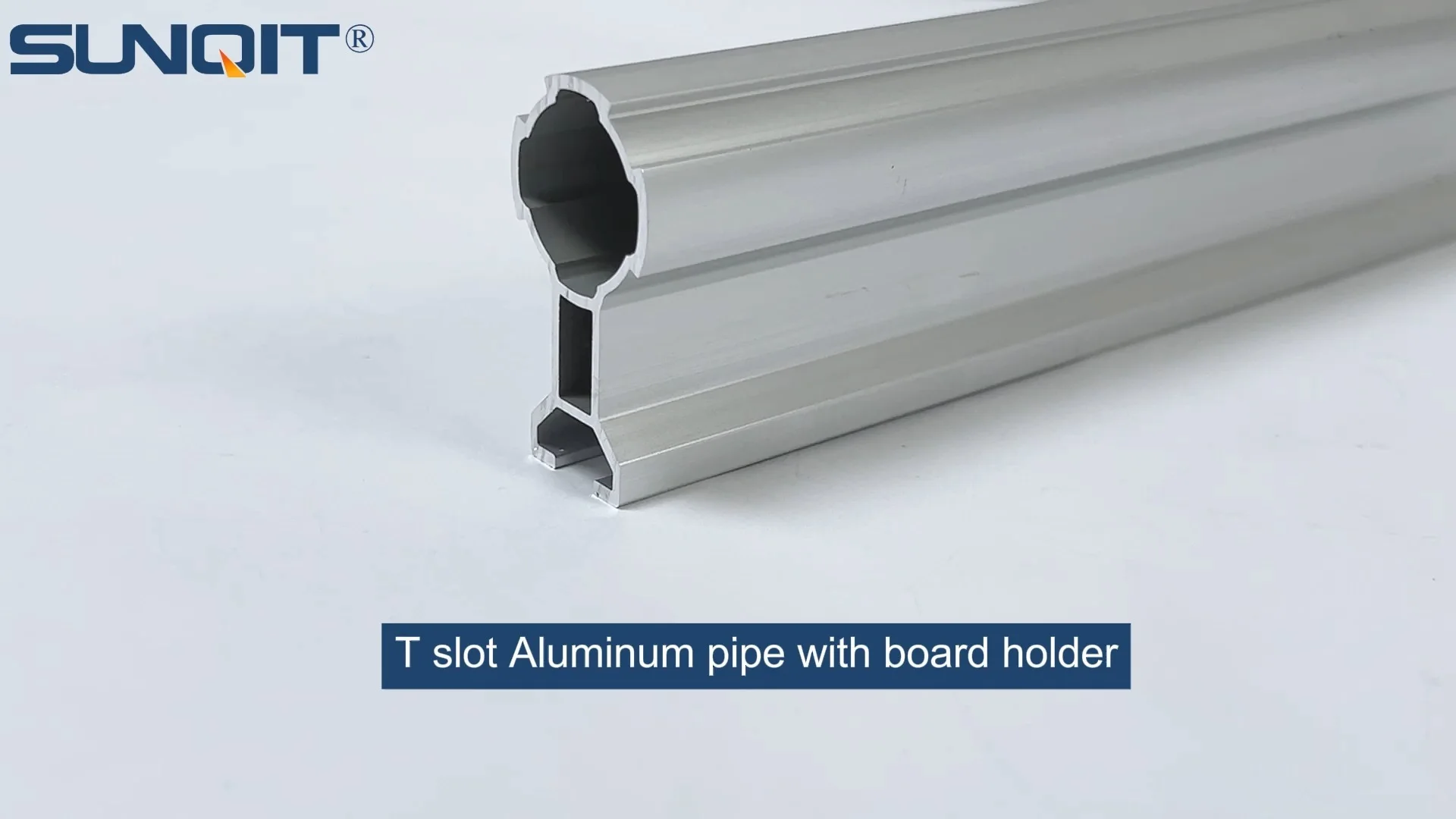
T slot Aluminum pipe with board holder,the pipe one side connected by a joint, the other side with a slot which can hold a tray or a aluminum pannel
In the world of manufacturing, warehousing, and workshop design, the choice of structural materials can make or break operational efficiency. From workbenches where precision assembly happens to material racks that keep inventory organized, the pipes and frameworks we rely on must balance strength, flexibility, and longevity. Two common contenders in this space are T Slot Aluminum Pipe with Board Holder systems and traditional Plastic Pipe Systems. While both serve the purpose of building functional structures, their inherent strengths—and weaknesses—can drastically impact performance, especially in high-demand environments. In this article, we'll dive deep into a strength comparison between these two systems, exploring everything from material composition to real-world durability, to help you decide which is right for your needs.
Understanding T Slot Aluminum Pipe with Board Holder Systems
Before we compare, let's first unpack what a T Slot Aluminum Pipe with Board Holder system actually is. At its core, this system is built around aluminum extrusion profiles —hollow, lightweight tubes with a distinctive "T-slot" groove running along their length. These slots are the secret to their versatility: they allow for easy attachment of accessories like brackets, shelves, and, as the name suggests, board holders. The board holder itself is a specialized accessory designed to secure work surfaces (wood, plywood, or metal) to the aluminum pipes, creating sturdy workbenches, tables, or shelving units.
What sets these systems apart is their construction. The aluminum pipes are typically made from 6063-T5 or 6061-T6 aluminum alloys—grades prized for their excellent strength-to-weight ratio, corrosion resistance, and machinability. Unlike solid metal pipes, the hollow design reduces weight without sacrificing structural integrity, making them easy to handle during assembly while still supporting heavy loads. Add in aluminum profile accessories like corner brackets, end caps, and bolts, and you have a modular system that can be customized to fit almost any workspace need.
Take, for example, a manufacturing facility building a workbench for electronics assembly. Using T Slot Aluminum Pipes, they can attach a board holder to secure a (ESD) work surface, add tool hooks along the T-slots, and mount shelves above for component storage—all without welding or complex tools. The result is a rigid, stable workbench that can withstand the daily grind of assembly line operations.
Understanding Plastic Pipe Systems
On the other side of the spectrum, Plastic Pipe Systems are a more budget-friendly alternative. These systems are typically made from materials like polyvinyl chloride (PVC), acrylonitrile butadiene styrene (ABS), or polyethylene (PE). Like their aluminum counterparts, they're modular, using plastic connectors to join pipes into structures such as racks, shelving, or lightweight workbenches. Plastic pipes are often sold in standard diameters (e.g., 20mm, 25mm) and are popular in settings where cost, weight, or corrosion resistance (to a point) are priorities.
Plastic pipe systems gained traction in small workshops, retail stockrooms, and temporary setups because they're inexpensive, lightweight, and easy to assemble—no special tools required. For instance, a small bakery might use PVC pipes and plastic connectors to build a simple rack for cooling trays, or a home garage enthusiast might construct a tool organizer from ABS pipes. Their appeal lies in their low barrier to entry: you can pick up pipes and connectors at a local hardware store and have a structure built in an afternoon.
However, plastic pipes have limitations. Most are made from thermoplastics, which soften when heated and become brittle in cold temperatures. Their connectors, often friction-fit or glued, can loosen over time under stress or vibration. And while they work well for light to moderate loads, push them beyond their limits, and you'll likely see sagging, bending, or even cracking.

Strength Comparison: The Key Factors
Now, let's get to the heart of the matter: strength. When we talk about "strength" in pipe systems, we're referring to a combination of factors: material composition, load-bearing capacity, durability, environmental resistance, and structural integrity. Let's break down how T Slot Aluminum Pipe with Board Holder systems and Plastic Pipe Systems stack up in each category.
1. Material Composition & Inherent Strength
At a fundamental level, aluminum and plastic have vastly different material properties that influence their strength. Aluminum is a metal with a density of about 2.7 g/cm³, while most plastics (like PVC) have a density of 1.3-1.4 g/cm³—meaning aluminum is denser, but its atomic structure gives it far greater inherent strength.
Consider tensile strength: the maximum stress a material can withstand before breaking. 6063-T5 aluminum has a tensile strength of around 180 MPa (megapascals), while PVC plastic typically maxes out at 40-50 MPa. That's a 3-4x difference! Modulus of elasticity, which measures stiffness, tells a similar story: aluminum has a modulus of ~69 GPa, compared to PVC's ~3 GPa. In practical terms, this means aluminum pipes are far less likely to bend or flex under load, while plastic pipes may sag noticeably even with moderate weights.
The T-slot design of aluminum pipes further enhances their strength. The groove reinforces the pipe's cross-section, acting like a rib to distribute stress evenly. Plastic pipes, by contrast, are often smooth-walled, offering less structural reinforcement. Even when plastic pipes are thicker, their lower modulus of elasticity means they lack the rigidity needed for heavy-duty applications.
2. Load-Bearing Capacity: How Much Can They Handle?
Load-bearing capacity is where the rubber meets the road—literally. A pipe system's ability to support static loads (like stored materials) and dynamic loads (like workers leaning on a workbench or moving equipment) is critical for safety and functionality.
Let's run a real-world test: a 1.5-meter span of pipe (the distance between two supports, like the legs of a workbench). For T Slot Aluminum Pipe with a 20mm outer diameter and 1.2mm wall thickness, static load capacity can exceed 500 kg without permanent deformation. That's enough to support a fully loaded tool chest, several large parts bins, and a worker standing on the workbench (though we don't recommend that!).
Now, swap that with a plastic pipe of the same dimensions (20mm OD, 1.2mm wall). PVC pipes of this size typically max out at 80-100 kg on a 1.5m span—barely enough for a few light boxes. Go beyond that, and you'll see visible sagging; push to 150 kg, and the pipe may buckle or crack at the joints. Even thicker plastic pipes (e.g., 32mm OD) struggle to match aluminum's load capacity, topping out around 200-250 kg on the same span—still less than half of aluminum's capability.
Dynamic loads, like the vibrations from machinery or the impact of tools being set down, are even tougher on plastic. Aluminum's high fatigue strength (resistance to repeated stress) means it can handle daily impacts without weakening over time. Plastic, however, is prone to "creep"—slow, permanent deformation under sustained stress—and repeated impacts can cause microcracks that grow into larger fractures.
3. Durability & Longevity: Built to Last?
Strength isn't just about handling weight today—it's about maintaining that strength tomorrow, next year, and a decade from now. Here, aluminum systems have a clear edge.
Aluminum is naturally resistant to corrosion, thanks to a thin oxide layer that forms on its surface. Anodized aluminum pipes (a common finish) enhance this resistance, making them suitable for humid environments like warehouses or outdoor use. Plastic pipes, while also corrosion-resistant, face a different enemy: UV radiation. Sunlight breaks down plastic's molecular bonds over time, causing it to become brittle and discolored—a process called photodegradation. Even indoor plastic pipes can degrade from fluorescent lighting, though more slowly.
Impact resistance is another area where aluminum shines. drop a heavy tool on an aluminum workbench leg, and you might get a small dent; do the same to a plastic pipe, and you could crack or shatter it. This is why plastic pipe systems are rarely used in industrial settings with high foot traffic or heavy equipment—they simply can't withstand accidental bumps and drops.
Longevity data backs this up. T Slot Aluminum systems often last 10-15 years in industrial environments with minimal maintenance (just occasional tightening of bolts). Plastic systems, by contrast, typically need replacement every 3-5 years, even in moderate-use settings. In one study of retail warehouses, plastic material racks showed 30% sagging after 2 years of use, while aluminum racks retained their original shape.
4. Environmental Resistance: Thriving in Tough Conditions
Workspaces aren't always climate-controlled. From freezing cold storage facilities to hot, humid factories, pipe systems must stand up to extreme conditions. Aluminum handles temperature swings with ease: it remains stable from -40°C to 80°C (-40°F to 176°F), making it suitable for both refrigerated warehouses and automotive plants with high heat from machinery.
Plastic pipes, however, are temperature-sensitive. PVC, for example, softens at around 60°C (140°F)—meaning in a hot factory, a plastic workbench might start to warp under load. In cold conditions, plastic becomes rigid and prone to cracking; a sudden impact in sub-zero temperatures could shatter a plastic pipe entirely. Even ambient temperature fluctuations can cause plastic to expand and contract, loosening connectors over time.
Moisture is another challenge. While both materials resist water, aluminum's rigidity ensures it won't swell or warp, unlike plastic, which can absorb small amounts of moisture and expand slightly. In damp environments like food processing plants, this expansion can lead to loose joints and unstable structures. Aluminum, with its corrosion-resistant finish, stays dimensionally stable, even in high humidity.
5. Joint Strength: The Weakest Link?
A structure is only as strong as its weakest joint, and here's where T Slot Aluminum systems truly outperform plastic. Aluminum joints rely on mechanical fasteners: bolts, nuts, and brackets that clamp into the T-slot, creating a rigid, secure connection. These joints can be tightened as needed, ensuring the structure remains stable over time.
Plastic pipe joints, by contrast, are often friction-fit or glued. Friction-fit joints (like push-on connectors) rely on pressure to stay in place, but vibration or thermal expansion can cause them to loosen. Glued joints are stronger initially but become brittle over time, and once they fail, the pipe must be cut and re-glued—a time-consuming repair. In high-vibration environments (like near heavy machinery), plastic joints can loosen within months, leading to wobbly racks or workbenches.
Aluminum's T-slot design also allows for "over-engineering" joints when needed. For extra strength, you can add multiple bolts to a single joint or use reinforced brackets—something plastic systems can't match. This flexibility makes aluminum ideal for custom structures where joint strength is critical, like cantilevered shelves or overhead racks.
6. A Side-by-Side Comparison Table
| Strength Criteria | T Slot Aluminum Pipe with Board Holder | Plastic Pipe Systems |
|---|---|---|
| Material | 6063-T5/6061-T6 Aluminum Alloy | PVC, ABS, or PE Plastic |
| Tensile Strength | 180-200 MPa | 40-50 MPa |
| Modulus of Elasticity | ~69 GPa (high rigidity) | ~3 GPa (low rigidity) |
| Max Static Load (1.5m Span) | 500+ kg | 80-100 kg (PVC) |
| Impact Resistance | High (dents, no cracks) | Low (prone to cracking/shattering) |
| UV Resistance | Excellent (anodized finish) | Poor (brittles over time) |
| Temperature Range | -40°C to 80°C | 0°C to 60°C (limited by softening/brittleness) |
| Joint Strength | High (bolted T-slot connections) | Low (friction-fit or glued; loosens over time) |
| Expected Lifespan (Industrial Use) | 10-15 years | 3-5 years |

Real-World Applications: When to Choose Which?
Understanding the strength differences is one thing; applying that knowledge to real-world scenarios is another. Let's explore when T Slot Aluminum Pipe with Board Holder systems are the clear choice, and when plastic might (just barely) suffice.
When to Choose T Slot Aluminum Pipe with Board Holder
Industrial Workbenches & Assembly Lines: Any workspace where heavy tools, equipment, or materials are handled needs the rigidity of aluminum. For example, automotive plants use aluminum workbenches to support engine parts weighing 50+ kg; plastic would buckle under the strain.
Material Racks & Shelving for Heavy Inventory: Warehouses storing metal parts, machinery, or bulk goods rely on aluminum racks to prevent collapse. A single pallet of automotive components can weigh 1,000+ kg—aluminum's load capacity ensures the rack stays stable.
Outdoor or Harsh Environments: Aluminum's corrosion and UV resistance make it ideal for outdoor storage racks, construction site temporary structures, or marine workshops where moisture is constant.
Lean Manufacturing Systems: Lean system principles emphasize efficiency and durability. Aluminum's modularity allows for quick reconfiguration (adding/removing shelves as needs change), while its longevity reduces waste from frequent replacements.
When Plastic Might Suffice (But Proceed With Caution)
Light-Duty Storage for Small Items: Retail backrooms storing clothing, office supplies, or lightweight electronics can use plastic racks—just avoid overloading them.
Temporary or Short-Term Setups: Pop-up shops, trade show booths, or seasonal storage might use plastic systems to save costs, knowing they'll be disassembled within a year or two.
Dry, Climate-Controlled Indoor Spaces: In environments with stable temperatures and low humidity (like an office supply closet), plastic pipes can last longer—though still not as long as aluminum.
Case Study: Aluminum vs. Plastic in a Electronics Factory
A mid-sized electronics manufacturer in Texas recently faced a dilemma: upgrade their aging plastic workbenches or switch to T Slot Aluminum systems. Their plastic benches, installed 3 years prior, were already showing signs of wear: sagging surfaces, cracked legs, and loose connectors. Workers complained that tools would slide off uneven surfaces, slowing down assembly.
The factory tested both systems side-by-side for 6 months. They installed 10 aluminum workbenches (using T Slot Aluminum Pipe with Board Holder) and kept 10 plastic benches as controls. The results were clear:
- Aluminum benches showed no measurable sagging, even with 80 kg of tools and components on the surface.
- Plastic benches sagged an average of 12mm under the same load, causing assembly errors due to uneven surfaces.
- Aluminum joints required only 2 tightenings in 6 months; plastic joints needed weekly adjustments to prevent wobbling.
- One plastic bench leg cracked after a worker accidentally dropped a 10 kg tool—no damage occurred when the same tool was dropped on an aluminum leg.
The factory ultimately replaced all plastic benches with aluminum, citing improved worker safety, reduced downtime from repairs, and the ability to reconfigure the aluminum benches as production needs changed. While the upfront cost was 3x higher, the plant manager projected a 2-year ROI from reduced maintenance and fewer errors.
Cost vs. Value: The Long-Term Perspective
It's no secret that aluminum systems cost more upfront. A basic T Slot Aluminum workbench kit (6ft x 3ft) costs $300-$500, while a plastic equivalent might be $100-$150. But focusing solely on initial cost ignores the bigger picture: total cost of ownership (TCO).
Aluminum's 10-15 year lifespan means lower replacement costs. Plastic systems, replaced every 3-5 years, end up costing more over time. For example, over 10 years, you'd buy 2-3 plastic benches ($200-$450) vs. 1 aluminum bench ($300-$500)—and that's not counting maintenance: plastic requires frequent part replacements (connectors, pipes), while aluminum needs only occasional bolt tightening.
Then there's the cost of downtime. A plastic rack collapse in a warehouse could damage inventory worth thousands, not to mention the hours lost cleaning up and rebuilding. Aluminum's strength drastically reduces this risk, making it a safer, more cost-effective choice in the long run.
Conclusion: Strength Wins the Day
When it comes to strength, T Slot Aluminum Pipe with Board Holder systems outperform Plastic Pipe Systems in nearly every category: material strength, load capacity, durability, environmental resistance, and joint integrity. While plastic might seem like a budget-friendly option upfront, its lack of rigidity, susceptibility to damage, and short lifespan make it a poor choice for high-demand environments.
For businesses invested in efficiency, safety, and long-term value—whether building workbenches, material racks, or lean system structures—aluminum is the clear winner. Its modularity, strength, and longevity ensure that your workspace can adapt and thrive, even as demands grow. Plastic has its place in light-duty, temporary setups, but when strength matters, there's no substitute for T Slot Aluminum Pipe with Board Holder.
So, the next time you're designing a workspace, ask yourself: Do I need something that just works for now, or something that will work for years ? The answer will likely point you toward aluminum.