- Company Articles
- Products and Technology
- Product knowledge
- T Slot Aluminum Pipe with Board Holder vs. PVC Pipe Systems: Cost and Durability

T Slot Aluminum Pipe with Board Holder vs. PVC Pipe Systems: Cost and Durability
Related Product
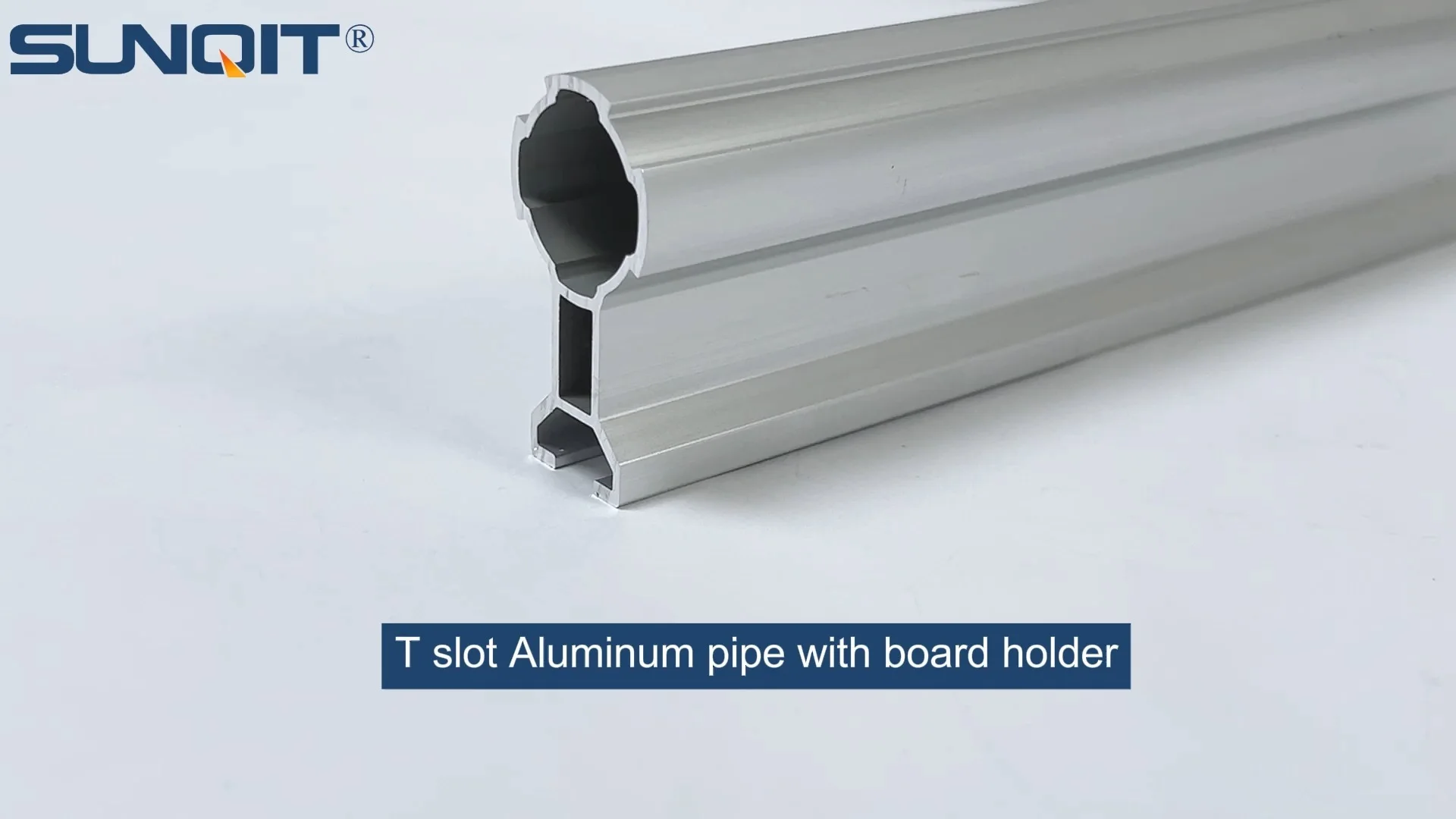
T Slot Aluminum Pipe with Board Holder
T slot Aluminum pipe with board holder,the pipe one side connected by a joint, the other side with a slot which can hold a tray or a aluminum pannel
When you're setting up a workspace—whether it's a factory floor, a warehouse, or a small workshop—every material choice ripples through your daily operations. The pipes and frames you pick don't just hold things up; they shape how efficiently you work, how often you'll need to repair or replace parts, and yes, how much money you'll sink into the setup over time. Two common options you'll come across are T Slot Aluminum Pipe with Board Holder systems and good old PVC pipe systems. At first glance, they might seem interchangeable—both are tubes, right? But dig a little deeper, and the differences in cost and durability become clear. Let's break this down like we're chatting over a cup of coffee, no jargon, just real talk about which one might actually work better for you.
First Off: What Are We Even Comparing?
Let's start with the basics. T Slot Aluminum Pipe with Board Holder is exactly what it sounds like: lightweight but sturdy aluminum pipes with a T-shaped slot along their length, paired with accessories (like brackets, connectors, and board holders) that slide into those slots to build structures. Think workbenches, material racks, or conveyor supports—things that need to stay solid but might need tweaking as your needs change. The "board holder" part is key here; it's a small but genius accessory that lets you attach wooden or metal boards directly to the aluminum frame, turning a simple pipe setup into a functional workspace.
On the flip side, PVC pipe systems are the budget-friendly workhorses many of us first used for DIY projects. PVC (polyvinyl chloride) is a plastic that's easy to cut, glue, and assemble with basic tools. You've probably seen it under sinks or in garden irrigation, but it's also used to build lightweight racks, temporary shelves, or even simple workbenches in garages. It's cheap, widely available, and feels like a no-brainer when you're watching your pennies upfront.
So, both can build frames. But that's where the similarities start to fade. Let's talk about the two biggies: cost and durability.
The Cost Talk: Upfront Savings vs. Long-Term Headaches
Here's the thing everyone notices first: PVC is cheap. Like, really cheap. A 10-foot length of 1-inch PVC pipe might run you $5 at the hardware store, while a comparable T Slot Aluminum Pipe could be $20 or more. If you're building a small shelf or a temporary project, that price difference feels huge. But here's the catch: cost isn't just about what you pay today. It's about what you'll pay tomorrow, next year, and five years from now. Let's break it down.
Upfront Costs: PVC Wins… at First
Let's say you need to build a basic material rack for your workshop—something to hold boxes of supplies, maybe 4 feet tall with 3 shelves. With PVC, you'd need pipes, elbows, T-joints, and maybe some glue. Total cost? Probably around $50–$75, depending on how fancy you get. With aluminum, you're looking at aluminum pipes, aluminum profile accessories (like internal rotary joints or T-slot connectors), and a board holder to attach the shelves. That might set you back $150–$200 upfront. Ouch, right? PVC seems like the obvious choice if you're pinching pennies today.
But Then There's the Long Game: Maintenance and Replacement
PVC is great until it's not. Let's say you set up that PVC rack in your garage. It works fine for a few months, but then summer hits, and the garage gets hot—like, 100°F hot. PVC softens in heat, so your rack might start to sag under the weight of those boxes. Then winter comes, and if your garage gets cold, the PVC becomes brittle. One day, you bump into the rack while moving a heavy tool, and— crack —a joint splits. Now you're buying new pipes and glue, spending an hour fixing it, and crossing your fingers it holds. Repeat this every year or two, and those "cheap" PVC pipes start adding up.
Aluminum, on the other hand, laughs at temperature swings. It doesn't soften in the heat or shatter in the cold. The T-slot design also means you don't need glue—connectors slide into the slots and tighten with a screw, so if a joint loosens, you just grab a hex key and snug it up. No replacing entire pipes, no waiting for glue to dry. And because aluminum is naturally resistant to rust and corrosion, even if you spill a little oil or water on it, it won't degrade. I've seen aluminum workbenches in auto shops that look beat up but are still solid after 10 years; try that with PVC, and you'd be on your fifth replacement by then.
Let's Crunch Some Numbers (Don't Worry, It's Simple)
To make this real, let's compare the total cost of owning a basic structure (like that 4-foot material rack) over 5 years. We'll assume average use—no extreme abuse, just daily loading and unloading of boxes.
| Cost Factor | PVC Pipe System | T Slot Aluminum Pipe with Board Holder |
|---|---|---|
| Initial Setup Cost | $60 (pipes, joints, glue) | $180 (aluminum pipes, board holder, aluminum profile accessories) |
| Annual Maintenance/Repairs | $30 (replace cracked pipes/joints, glue, tools) | $5 (occasional hex key tightening, no part replacements) |
| Replacement Frequency | Every 2 years (full system replacement) | 10+ years (no replacement needed) |
| Total Cost After 5 Years | $60 (initial) + ($30 x 5) + ($60 x 2 replacements) = $60 + $150 + $120 = $330 | $180 (initial) + ($5 x 5) = $180 + $25 = $205 |
Wait, so after 5 years, the "cheap" PVC ends up costing more than the aluminum? Yep. Because PVC needs constant babying and replacement, while aluminum just… works. And that's not even counting the time you'll spend fixing PVC—time you could be using to actually get work done. Time, as they say, is money too.

Durability: When "Good Enough" Isn't Enough
Cost is one thing, but durability is where aluminum really shines. Let's talk about the scenarios where PVC might let you down, and why aluminum handles them like a champ.
1. Moisture, Chemicals, and the Elements
PVC is technically waterproof, but that doesn't make it invincible. If you're using it in a damp environment—like a basement workshop or a warehouse near the coast—PVC can develop mold if water gets trapped in the joints (and trust me, it will). Over time, that mold weakens the plastic, making it more likely to crack. And if you spill something acidic (like battery fluid or cleaning chemicals) on PVC? It might not dissolve immediately, but it'll discolor and become brittle over months. I once saw a PVC rack in a janitorial closet that held cleaning supplies—after a year, the pipes were pockmarked and sticky to the touch, like they were melting from the inside out.
Aluminum, though? It's naturally corrosion-resistant, thanks to a thin oxide layer that forms on its surface. That layer acts like a shield, so even if you splash water, oil, or mild chemicals on it, it won't rust or degrade. I visited a seafood processing plant last year where they used aluminum material racks near the cleaning stations—salty water, constant hosing down, and those racks looked as good as the day they were installed. PVC wouldn't last 6 months in that environment.
2. How Much Weight Can They Actually Hold?
PVC is great for light loads—think a few boxes of paper or a potted plant. But if you need to hold something heavy, like power tools or metal parts, it starts to struggle. A 1-inch PVC pipe can maybe hold 20–30 pounds before it bends; stack more than that, and you'll come back to a sagging mess. And forget about dynamic loads—if you're sliding heavy bins onto a PVC shelf, the impact can crack the pipes at the joints.
Aluminum, on the other hand, is surprisingly strong for its weight. A 1-inch T Slot Aluminum Pipe can easily hold 50–75 pounds per linear foot, and because the T-slot connections lock into place, it doesn't wiggle or bend under pressure. I've seen aluminum workbenches in manufacturing plants holding 200-pound machinery with no problem—no sagging, no creaking, just solid stability. That's the difference between plastic and metal; aluminum doesn't just hold weight, it supports it consistently.
3. Wear and Tear: Scratches, Dents, and Everyday Abuse
Let's be real: workshops and warehouses are messy places. Things get dropped, bumped, and dragged. PVC doesn't handle abuse well. A stray hammer drop or a forklift nudge can leave a permanent dent or crack. And once PVC is cracked, there's no fixing it—you have to cut out the damaged section and glue in a new one. It's like when you crack a plastic bucket; sure, you can tape it, but it'll never be as strong as before.
Aluminum, while not indestructible, is much more forgiving. It can take a dent, but it won't crack—so even if you bump it with a pallet jack, it might look a little beat up, but it'll still hold its shape and function. And because the T-slot accessories are metal, they don't strip or break like plastic PVC joints. I've seen aluminum frames with visible dents from years of use, but the shelves still lined up perfectly, and the board holder still clamped down tight on the workbench top. That's durability you can actually see.

When Might PVC Still Make Sense?
I don't want to bash PVC entirely—it has its place. If you're building something temporary (like a pop-up market stall that you'll take down after a weekend), or if you need a super lightweight structure that you'll move around constantly, PVC is hard to beat. It's also great for non-industrial uses, like a kids' play structure or a garden trellis, where the load is light and you don't mind replacing it every few years. And let's not forget: PVC is easy to work with. You don't need special tools—just a hacksaw, some sandpaper, and PVC glue. If you're a DIYer with limited experience, PVC feels approachable in a way aluminum (which sometimes requires drill bits or hex keys) might not.
But if we're talking about a workspace that's critical to your business—where downtime, repairs, and replacement costs eat into your profits—PVC starts to look like a false economy. It's the difference between buying a $5 umbrella that breaks in the first rainstorm and a $30 one that lasts 5 years. The cheap option feels good until you're standing in the rain, soaking wet, wishing you'd spent a little more.
The X-Factor: Flexibility (Because Needs Change)
Here's something I haven't mentioned yet: flexibility . One of the best things about T Slot Aluminum Pipe with Board Holder systems is how easy they are to reconfigure. Need to add a shelf to your workbench? Slide a new bracket into the T-slot, tighten a screw, and done. Want to move the board holder up a few inches to make space for taller tools? Loosen the clamp, adjust, and retighten. No cutting, no glue, no waiting. PVC, on the other hand, is pretty much set in stone once you glue the joints. If you need to change the height or add a shelf, you're basically starting over from scratch. In a world where businesses have to pivot fast—maybe you're adding a new product line, or your team size doubled—aluminum's adaptability alone can save you time and money.
I worked with a small electronics manufacturer a while back that started with PVC racks. When they landed a bigger client, they needed to expand their assembly line—fast. The PVC setup took 2 days to tear down and rebuild. They switched to aluminum, and the next time they needed to adjust, two people reconfigured the entire line in 3 hours. That's the kind of difference that turns "we can't take that order" into "we'll have it done by Friday."
So, What's the Verdict?
At the end of the day, it comes down to this: PVC is cheaper upfront, but aluminum saves you money (and headaches) in the long run . If you're building something temporary or super lightweight, PVC might be the way to go. But if you need a structure that will stand up to daily use, resist the elements, and adapt as your needs change—whether it's a workbench, a material rack, or a conveyor support—T Slot Aluminum Pipe with Board Holder is worth the investment. It's not just about the pipes; it's about the peace of mind that comes with knowing your setup won't let you down, and that you're not throwing money away on constant repairs and replacements.
Think of it like buying a car: a used economy car might cost less now, but if it breaks down every month, you're not actually saving. Aluminum is the reliable sedan that costs a bit more upfront but runs smoothly for years, with minimal maintenance. And when you factor in the aluminum profile accessories that make it so versatile? It's not just a purchase—it's a tool that helps your workspace grow with you.
So next time you're staring at a pile of PVC pipes at the hardware store, ask yourself: Is this going to be a quick fix, or am I building something that needs to last? Your future self (and your budget) will thank you for choosing wisely.