- Company Articles
- Products and Technology
- Product knowledge
- T Slot Aluminum Pipe with Board Holder vs. Steel Pipe Systems: Cost-Efficiency Analysis

T Slot Aluminum Pipe with Board Holder vs. Steel Pipe Systems: Cost-Efficiency Analysis
Related Product
T Slot Aluminum Pipe with Board Holder
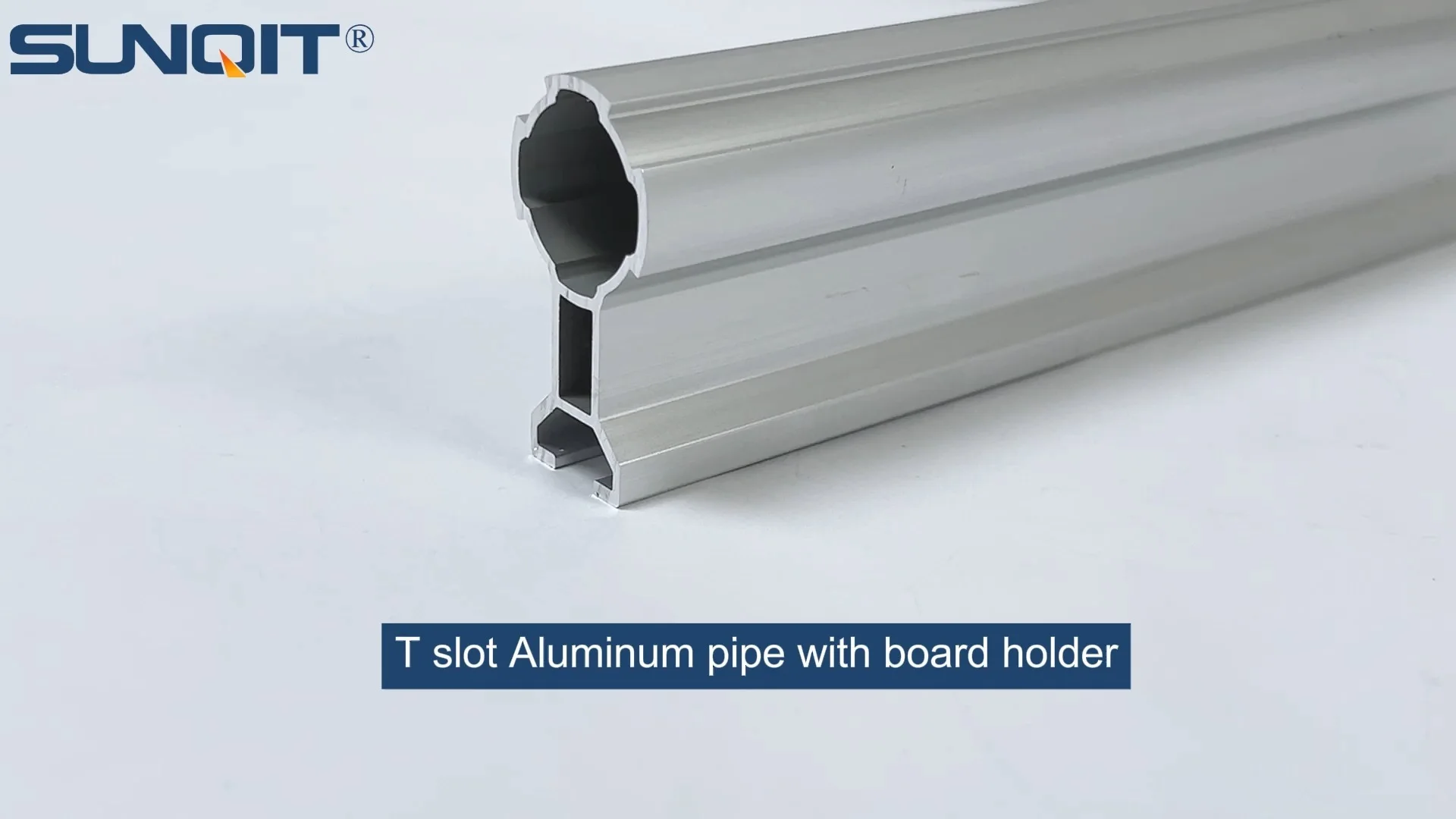
T slot Aluminum pipe with board holder,the pipe one side connected by a joint, the other side with a slot which can hold a tray or a aluminum pannel
Walk into any modern manufacturing plant, warehouse, or assembly line, and you'll notice a silent hero keeping operations running smoothly: the humble pipe system. Whether it's holding up workbenches, guiding materials along conveyor belts, or organizing tools on a rack, these structures are the backbone of efficient workflows. But here's the thing—not all pipe systems are created equal. In recent years, a debate has been brewing among facility managers and operations teams: T slot aluminum pipe with board holder versus traditional steel pipe systems. Which one delivers better value for your hard-earned budget? Let's dive in.
This isn't just about picking a material; it's about investing in a system that grows with your business, stands up to daily wear and tear, and doesn't drain your maintenance funds. Over the next few sections, we'll break down the costs—both obvious and hidden—compare durability, customization flexibility, and long-term ROI. By the end, you'll have a clear picture of which system makes sense for your unique needs, whether you're a small startup scaling up or a large enterprise looking to optimize existing processes.
The Basics: What Are We Actually Comparing?
Before we crunch numbers, let's make sure we're on the same page. What exactly is a T slot aluminum pipe with board holder? Think of it as a modular building block. Made from aluminum extrusion profile —a process where aluminum is pushed through a die to create consistent, precise shapes—these pipes have T-shaped slots running along their length. These slots let you attach accessories like board holders, shelves, or brackets without welding or drilling. The "board holder" part? That's a simple, often adjustable clamp that secures flat surfaces (like plywood or metal sheets) to the pipe, turning it into a workbench, a shelf, or a material bin in minutes.
On the other side, steel pipe systems are the tried-and-true veterans. Typically made from carbon steel or, in some cases, stainless steel pipe series for corrosion resistance, these pipes rely on welded joints, bolts, or heavy-duty clamps to stay together. They're the ones you might picture in older factories—sturdy, utilitarian, and built to handle heavy loads. But as we'll see, "sturdy" doesn't always translate to "cost-effective."
Initial Costs: The Sticker Price Showdown
Let's start with the most obvious factor: how much do these systems cost upfront? If you're scanning catalogs or supplier quotes, steel might seem like the cheaper option at first glance. A standard 1-inch steel pipe, for example, can cost anywhere from $5 to $10 per linear foot, depending on thickness. Aluminum extrusion profiles, on the other hand, often start at $8 to $15 per linear foot. That's a 60% price jump right out of the gate—enough to make any budget-conscious manager pause.
But wait—initial cost isn't just about the pipes themselves. Steel systems require additional hardware that adds up fast. Welding equipment, specialized tools for cutting and threading, and heavy-duty brackets (which can cost $3 to $8 each) all factor into the total. If you don't have an in-house welder, you'll also pay for labor—$50 to $100 per hour, minimum. Suddenly, that "cheap" steel pipe isn't looking so cheap.
Aluminum systems, by contrast, are designed for modularity . Most aluminum profile accessories —like T-slot nuts, end caps, and board holders—are pre-engineered to snap or screw into place without special tools. A basic aluminum pipe with a board holder setup can be assembled by a single person with a hex key and a rubber mallet. No welding, no cutting torches, no expensive labor bills. Let's put this in numbers: a 10-foot workbench using steel pipes might cost $150 in materials plus $200 in labor, totaling $350. The same workbench in aluminum? $200 in materials and $0 in labor. That's a 43% savings upfront, even with the higher pipe cost.
| Cost Component | Steel Pipe System | Aluminum T-Slot System |
|---|---|---|
| Material Cost (10ft pipe + basic accessories) | $150 | $200 |
| Labor (assembly/welding) | $200 (2 hours @ $100/hour) | $0 (DIY assembly) |
| Special Tools Required | Welder, pipe cutter, drill ($500+ investment) | Hex key, rubber mallet (included with purchase) |
| Total Initial Cost | $350+ | $200 |

Durability: When "Tough" Doesn't Mean "Long-Lasting"
Steel has a reputation for being "tougher" than aluminum, and in terms of raw strength, that's true—steel can handle more weight per square inch. But durability isn't just about how much weight a pipe can hold; it's about how well it holds up over time, especially in harsh environments.
Let's talk about rust. Unless you're using stainless steel (which costs 2–3x more than carbon steel), standard steel pipes will rust when exposed to moisture, oil, or chemicals. A warehouse in a humid climate might see rust spots within 6 months. Once rust starts, it spreads—weakening the pipe, staining products, and creating a safety hazard (rust flakes can contaminate sensitive parts). To prevent this, you'll need to paint or coat steel pipes every 1–2 years, adding $50–$100 per system in maintenance costs. Even then, scratches or dents can expose fresh metal to the elements, restarting the cycle.
Aluminum, by nature, resists corrosion. When exposed to air, it forms a thin oxide layer that acts as a protective barrier—no painting, no coating, no rust. This is a game-changer in industries like food processing, pharmaceuticals, or marine manufacturing, where moisture is constant. I once worked with a bakery that switched from steel to aluminum racks after their steel shelves started rusting near the dough mixers. Within a year, they saved $800 on repainting and replacement parts. "We used to replace steel racks every 3 years," the facility manager told me. "The aluminum ones? They're 5 years old and still look brand new."
But what about impact resistance? Steel proponents argue that aluminum dents easier. It's true—if you drop a 50-pound toolbox on an aluminum pipe, it might dent. But here's the flip side: steel bends permanently , while aluminum is more malleable . A dented aluminum pipe can often be bent back into shape with a clamp and a little pressure. A bent steel pipe? You'll need to cut it out and weld a new section—costing time and money. In high-traffic areas like loading docks, where forklifts occasionally nudge racks, aluminum's "dent-and-repair" quality beats steel's "bend-and-replace" flaw.

Customization: Adapting to Your Needs (Without Breaking the Bank)
Businesses change—orders spike, product lines expand, workflows get redesigned. A pipe system that works today might be obsolete in a year. How easily can your system adapt? This is where aluminum truly shines.
Steel systems are fixed . Once welded, they're stuck in that shape forever. If you need to add a shelf or reposition a workbench, you'll have to cut the old welds, buy new pipes, and start over. That's not just expensive—it's disruptive. I visited a electronics manufacturer last year that had to shut down their assembly line for two days to reconfigure a steel workbench. The downtime cost them $10,000 in lost production. "We should've planned better," the operations director sighed. "But who knew we'd need to add a third conveyor belt?"
Aluminum systems, with their T-slot design, are built for change . Want to add a shelf? Slide a T-slot nut into the pipe, bolt on the shelf bracket, and you're done—10 minutes, no downtime. Need to lower a workbench? Loosen the joints, adjust the height, retighten. Moving to a new facility? Disassemble the entire system, pack it in boxes, and reassemble it at the new location. One warehouse I consulted for moved their aluminum racking twice in three years—no tools, no labor, no lost production. "It's like building with Legos," the team lead laughed. "We even reused the pipes for a new conveyor when we expanded."
This flexibility is especially valuable for startups and small businesses. If you're not sure how your needs will evolve, aluminum lets you start small and scale up. A basic aluminum workbench today can become a multi-tiered material rack tomorrow, just by adding more pipes and accessories. Steel? You'll either overbuild (wasting money on unused capacity) or underbuild (paying to replace it later). It's a lose-lose.
Long-Term ROI: The 5-Year Test
Initial costs and durability are important, but the real measure of value is return on investment over time. Let's fast-forward five years and see how both systems stack up.
Scenario 1: Steel pipe system. Year 1: $350 initial cost. Year 2: $150 repainting. Year 3: $200 replacing rusted joints. Year 4: $300 welding repairs after a forklift collision. Year 5: $400 full replacement (rusted beyond repair). Total 5-year cost: $350 + $150 + $200 + $300 + $400 = $1,400.
Scenario 2: Aluminum T-slot system. Year 1: $200 initial cost. Year 2: $0 maintenance. Year 3: $50 replacing a worn board holder (a $5 part, but let's round up). Year 4: $0 maintenance. Year 5: $0 replacement (still functional). Total 5-year cost: $200 + $50 = $250. That's an 82% savings over five years. Even if you factor in a 10% annual increase in aluminum prices, the total is still only $300—less than a quarter of the steel system's cost.
But ROI isn't just about money; it's about time . Steel systems require constant attention—inspecting for rust, scheduling repairs, shutting down lines for modifications. Aluminum systems? Set it and forget it. A maintenance manager at an auto parts plant told me, "We used to spend 8 hours a month fixing steel racks. Now, with aluminum, we spend 1 hour checking bolts. That's 84 hours a year back to focus on other tasks—like training staff or improving safety protocols." Time, as they say, is money.
Real-World Applications: When to Choose Steel (Yes, There Are Cases)
Before we crown aluminum the clear winner, let's be fair: there are situations where steel still makes sense. If you're supporting extreme weights—think 1,000+ pounds per linear foot—steel's higher tensile strength is better. Heavy machinery bases, industrial presses, or outdoor structural supports might need steel. But these cases are rare in most facilities. For 90% of applications—workbenches, material racks, conveyors, assembly lines—aluminum has the strength to handle the load (most aluminum pipes support 200–500 pounds per foot) with none of the drawbacks.
Another edge case: extremely high temperatures. Steel can withstand 1,500°F, while aluminum melts at 1,220°F. If you're working near furnaces or foundries, steel might be necessary. But again, this is niche. Most warehouses and factories operate at room temperature, where aluminum performs just as well.
Making the Switch: A Step-by-Step Guide
If you're convinced aluminum is the way to go, how do you transition without disrupting operations? Start small. replace one steel workbench or rack first, train your team on assembly, and measure the impact. Once you see the savings and flexibility, scale up gradually. Most aluminum suppliers offer free design consultations—take advantage of them. They can help you map out a system that fits your space and budget, and even provide samples to test durability.
Don't forget to factor in the resale value of your old steel system. Scrap steel sells for $0.10–$0.30 per pound. While it won't cover the cost of new aluminum, it's extra cash in your pocket. I worked with a brewery that sold their old steel keg racks for $200 in scrap—enough to buy three new aluminum shelves.
Final Thoughts: It's About More Than Pipes
At the end of the day, choosing between T slot aluminum pipe with board holder and steel pipe systems isn't just about materials—it's about mindset . Steel represents the old way: rigid, labor-intensive, and costly to maintain. Aluminum represents the new way: flexible, efficient, and built for the future. In a world where businesses need to adapt faster than ever, aluminum isn't just a cost-saving choice; it's a strategic one.
So, what's the verdict? If you're looking for a system that saves you money upfront, lasts longer, adapts to change, and frees up your team to focus on what matters—growing your business—aluminum is the clear winner. Steel has its place, but for most of us, it's time to leave the welding torches behind and embrace the modular revolution.
After all, your pipe system should work for you, not against you. And with aluminum, that's exactly what you get.