- Company Articles
- Products and Technology
- Product knowledge
- T Slot Aluminum Pipe with Board Holder: Why It's Preferred for Modular Workstations

T Slot Aluminum Pipe with Board Holder: Why It's Preferred for Modular Workstations
Related Product
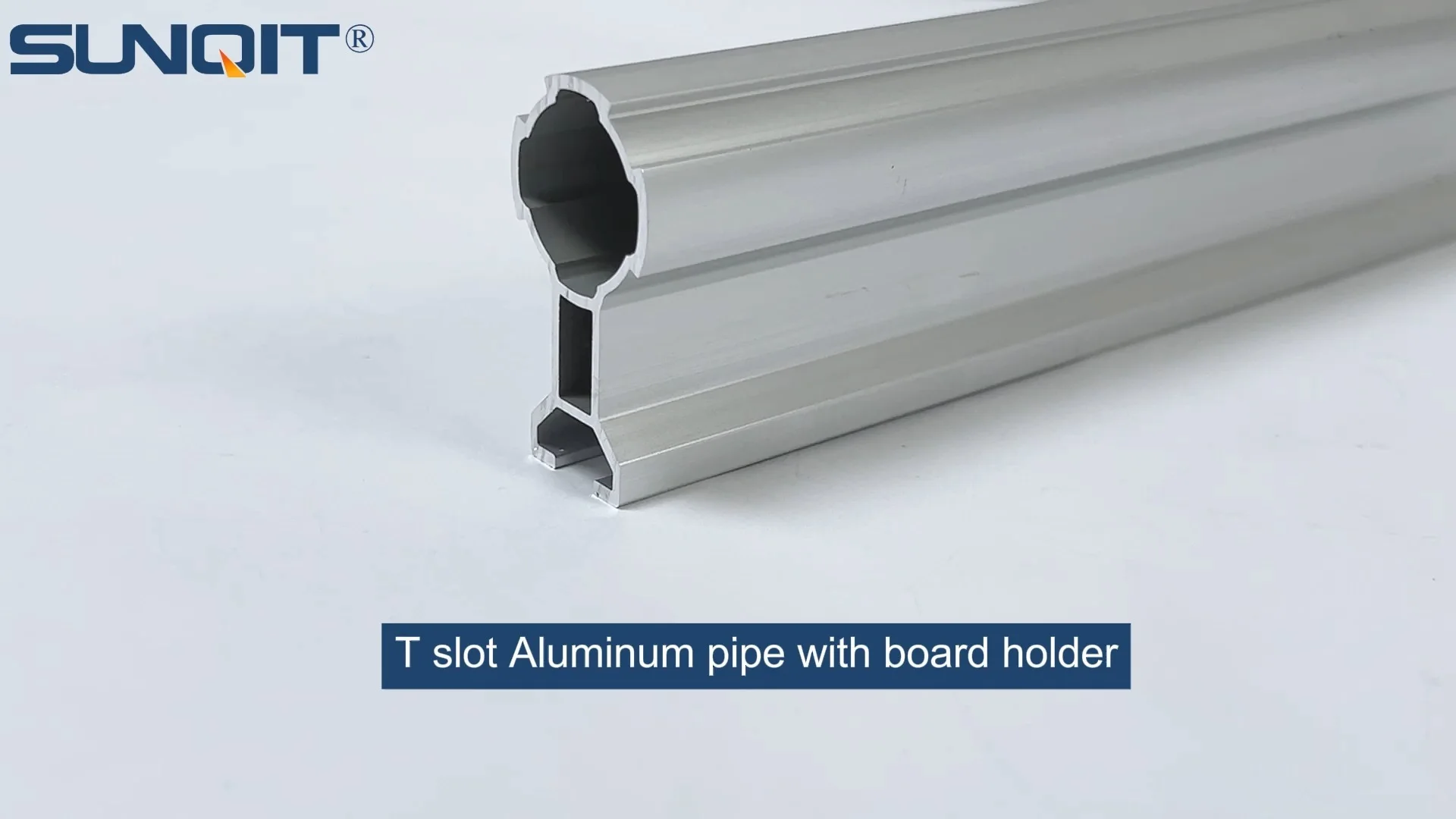
T Slot Aluminum Pipe with Board Holder
T slot Aluminum pipe with board holder,the pipe one side connected by a joint, the other side with a slot which can hold a tray or a aluminum pannel
The Rise of Modular Workstations in Modern Operations
Walk into any thriving manufacturing plant, tech workshop, or even a busy laboratory today, and you'll notice a common theme: workspaces that feel less like rigid, permanent structures and more like dynamic, adaptable ecosystems. This shift isn't just about aesthetics—it's a response to the fast-paced, ever-changing demands of modern business. Production lines expand overnight, teams reorganize to tackle new projects, and floor plans get reimagined to boost efficiency. In this environment, the traditional "one-size-fits-all" workstation—built with fixed steel frames, glued wooden tops, or clunky plastic shelving—simply can't keep up. Enter modular workstations: flexible setups designed to evolve with your needs. And at the heart of these systems, one component stands out for its ability to balance strength, versatility, and ease of use: the T Slot Aluminum Pipe with Board Holder.
But what makes this particular component so essential? Why not stick with older materials or simpler designs? To answer that, let's start by understanding what modular workstations truly require. They need to be easy to assemble without specialized tools, quick to reconfigure when workflows change, durable enough to withstand daily wear and tear, and lightweight enough to move (or dismantle and rebuild) without heavy machinery. Oh, and they should look clean and professional, too—because a cluttered, outdated workspace can drag down team morale as much as it slows down production. The T Slot Aluminum Pipe with Board Holder checks all these boxes, and then some. Let's break down why it's become the go-to choice for engineers, facility managers, and operations leaders alike.
What Exactly Is a T Slot Aluminum Pipe with Board Holder?
Let's start with the basics. At its core, a T Slot Aluminum Pipe is a length of aluminum extrusion profile—think of it as a pipe with precision-machined grooves (called "T-slots") running along its length. These grooves aren't just for show: they're designed to let you slide in bolts, brackets, or specialized accessories, lock them in place, and create custom structures in minutes. The "board holder" part is exactly what it sounds like: a (accessory) that attaches to the T-slot and securely holds flat surfaces, like a workbench top, a tool shelf, or a material tray. Together, they form a system that's as strong as it is flexible.
To visualize this, imagine building a workbench. With traditional materials, you might need to weld steel pipes, drill holes in wooden boards, or use glue that takes hours to dry. With a T Slot Aluminum Pipe and Board Holder? You cut the aluminum pipes to your desired length (or order pre-cut ones), slide the board holder into the T-slot, tighten a few screws, and place your workbench top onto the holder. Done. No welding, no drilling, no waiting. And if next month you need that workbench to be two feet longer? Just add another pipe section, attach a new board holder, and extend the top. It's that simple.
But the magic isn't just in the assembly—it's in the material itself. Aluminum extrusion profile is lightweight (about a third the weight of steel) but surprisingly strong, thanks to its structural design. The T-slots, which run the entire length of the pipe, are engineered to distribute weight evenly, so even when you attach heavy tools or stacks of materials, the system stays stable. And because aluminum is naturally resistant to rust and corrosion, these pipes hold up in damp workshops, dusty warehouses, or even outdoor settings—unlike steel, which can start to rust if not painted, or wood, which warps with moisture.

Key Features That Make T Slot Aluminum Pipe Stand Out
To understand why T Slot Aluminum Pipe with Board Holder has become a staple in modular workstations, let's dive into its standout features. These aren't just "nice-to-haves"—they're the qualities that solve real pain points for businesses trying to stay agile.
1. Tool-Free (or Minimal-Tool) Assembly
Remember the last time you tried to assemble furniture with a tiny Allen wrench and a confusing instruction manual? Frustrating, right? Now multiply that by 10 for a traditional workstation. T Slot Aluminum Pipe eliminates that hassle. Most setups require nothing more than a hex key (Allen wrench) or a simple screwdriver to tighten bolts into the T-slots. The Board Holder, in particular, is designed with quick-lock mechanisms: slide it into the T-slot, twist a knob or tighten a screw, and it's secure. This means your team can assemble a full workstation in an hour or two, not a full day. And when you need to take it apart? Just reverse the steps—no prying, no breaking, no wasted time.
2. Endless Customization with Aluminum Profile Accessories
The T-slot design isn't just for holding boards. It's a universal interface that works with hundreds of aluminum profile accessories. Need a shelf above your workbench? Attach a bracket to the T-slot. Want to add a tool hook for your wrench set? Slide a hook into the groove and lock it. Need to mount a monitor arm for digital work instructions? There's an accessory for that, too. The Board Holder is just the starting point—it's the gateway to a system where every part of your workstation can be tailored to your team's exact needs. And because these accessories are standardized, you can mix and match from different manufacturers without compatibility issues. That means if you need a longer Board Holder next year, you don't have to replace the entire pipe—just swap out the holder.
3. Lightweight but Heavy-Duty
Aluminum's biggest advantage might be its strength-to-weight ratio. A 6-foot T Slot Aluminum Pipe weighs about half as much as a steel pipe of the same size, making it easy for two people to carry and position—no forklift needed. But don't let the weight fool you: these pipes can handle serious loads. A standard 40mm x 40mm aluminum extrusion profile (a common size for workstations) can support up to 500 pounds when properly mounted. That's more than enough for power tools, stacks of inventory, or even small machinery. And when paired with reinforced Board Holders (designed to distribute weight across the pipe), you can trust that your workbench top won't sag or shift, even under daily use.
4. Corrosion Resistance and Low Maintenance
Workshops are tough environments. Oil spills, chemical splashes, dust, and humidity can take a toll on equipment. Steel workstations need regular painting to prevent rust; wood tops stain and warp; plastic cracks under heavy loads. Aluminum? It's naturally resistant to corrosion thanks to a thin oxide layer that forms on its surface, protecting it from rust and decay. That means you can wipe down a T Slot Aluminum Pipe with a damp cloth, and it'll look as good as new. No sanding, no repainting, no replacing rotting wood. For busy teams, this low maintenance is a game-changer—it frees up time to focus on production, not workstation upkeep.

Why Board Holders Are the Unsung Hero of Modular Workstations
So far, we've talked a lot about the T Slot Aluminum Pipe, but what makes the Board Holder so important? After all, can't you just place a board on top of any pipe? Technically, yes—but the Board Holder turns a "good enough" setup into a reliable, safe, and adaptable one.
First, stability. A loose board on top of pipes is a disaster waiting to happen. It slides around, wobbles under weight, and could even fall off, risking injury or damage to tools. Board Holders lock the board in place. Most designs use a clamp-like mechanism: you place the board edge into the holder, then tighten a screw or lever to secure it. Some even have rubber gaskets to prevent slipping and protect the board from scratches. The result? A workbench top that stays put, even when someone leans on it or drops a heavy tool.
Second, flexibility. Let's say you need to replace a damaged workbench top. With a traditional setup, you might have to unscrew dozens of bolts, pry the top off, and drill new holes for the replacement. With a Board Holder? Just loosen the clamp, lift off the old board, and drop in the new one. It takes 5 minutes, not an hour. Or maybe you want to switch from a wooden top to a metal one for better durability—same process. The Board Holder doesn't care what material the board is made of (as long as it fits the holder's dimensions), so you're never locked into a single type of surface.
Third, compatibility with lean system principles. Lean manufacturing (and lean operations in general) is all about eliminating waste—whether that's wasted time, wasted space, or wasted effort. A workstation that's hard to adjust creates waste: if your team needs a taller workbench to reduce bending, but you can't adjust the height without rebuilding the entire setup, you're wasting time and risking ergonomic injuries. The T Slot Aluminum Pipe with Board Holder aligns perfectly with lean system goals. It lets you adjust heights, add shelves, or reposition surfaces in minutes, so your workstation always supports the most efficient workflow. No more working around a "permanent" setup—your setup works around you.
How T Slot Aluminum Pipe Stacks Up Against Other Materials
Still not convinced? Let's put T Slot Aluminum Pipe with Board Holder head-to-head with other common workstation materials. The table below compares key factors like cost, durability, and flexibility to show why aluminum often comes out on top.
| Feature | T Slot Aluminum Pipe | Traditional Steel Pipe | Wooden Workbench | Plastic Modular Systems |
|---|---|---|---|---|
| Weight | Lightweight (easy to move/assemble) | Heavy (requires tools/machinery to move) | Medium (wooden tops are heavy; frames may be light) | Very lightweight (but less stable for heavy loads) |
| Customization | High (T-slots work with endless accessories) | Low (requires welding/drilling to modify) | Low (fixed structure; hard to add shelves/surfaces) | Medium (some snap-on accessories, but limited weight capacity) |
| Durability | High (corrosion-resistant, no rust/warping) | High (but prone to rust without paint) | Low (wood warps, stains, or rots over time) | Low (plastic cracks under heavy loads; fades in sunlight) |
| Assembly Time | Fast (30 mins–2 hours for a full workstation) | Slow (requires welding, drilling, painting) | Medium (cutting wood, screwing frames together) | Fast (snap-together design), but less stable |
| Long-Term Cost | Medium upfront, low over time (reusable, low maintenance) | High upfront (materials + labor), high over time (maintenance/painting) | Low upfront, high over time (replacement costs due to wear) | Low upfront, high over time (needs replacement every 1–3 years) |
| Ergonomic Adaptability | High (easily adjust heights, angles, and surface positions) | Low (fixed height/angle; hard to modify) | Low (fixed structure; requires rebuilding to adjust) | Medium (some height adjustment, but limited by plastic strength) |
As the table shows, T Slot Aluminum Pipe balances the best of all worlds: it's lightweight but strong, customizable but easy to assemble, and durable without the high maintenance costs of steel or the short lifespan of wood or plastic. For businesses that need their workstations to grow and change with them, there's really no comparison.
Real-World Applications: Where T Slot Aluminum Pipe Shines
Theory is great, but let's look at how T Slot Aluminum Pipe with Board Holder works in real life. Here are a few examples of industries and use cases where it's made a tangible difference:
Electronics Manufacturing: Precision Workbenches
In electronics assembly, workstations need to be precise. Technicians handle small components, use delicate tools, and often need to position monitors or magnifying glasses at eye level. A T Slot Aluminum Pipe setup lets them build a workbench with adjustable shelves (for tools), a tiltable board holder (to angle the work surface and reduce neck strain), and integrated cable management (using T-slot cable clips). When a new product line requires a different layout, the team can reconfigure the workstation in an hour—no downtime, no lost productivity.
Warehousing: Material Racks and Picking Stations
Warehouses thrive on speed. Picking stations need to hold boxes, scanners, and packing materials in easy reach. T Slot Aluminum Pipe with Board Holder is perfect here: build a rack with adjustable shelves (using Board Holders to secure shelf boards), add a small workbench top for packing, and even attach hooks for tape dispensers or label printers. When inventory sizes change (e.g., switching from small boxes to larger ones), just move the Board Holders up or down to adjust shelf heights. No need to buy a whole new rack—just reposition the existing one.
Laboratories: Clean, Adaptable Workspaces
Laboratories need workspaces that are easy to sanitize, resistant to chemicals, and adaptable to different experiments. Aluminum's corrosion resistance makes it ideal here—spills wipe off easily, and the smooth surface doesn't harbor bacteria like porous wood. A T Slot Aluminum Pipe workstation with a stainless steel board (held securely by Board Holders) can be reconfigured to hold microscopes, test tubes, or lab equipment, then wiped down with disinfectant at the end of the day. And if a new experiment requires a fume hood or extra counter space? Just add more pipes and Board Holders.
Addressing Common Concerns
We've covered a lot of positives, but it's fair to ask: Are there any downsides? Let's address the most common concerns businesses have when considering T Slot Aluminum Pipe with Board Holder.
"It Seems More Expensive Than Steel or Wood Upfront."
It's true: aluminum extrusion profile costs more per foot than basic steel pipe or lumber. But think long-term. A steel workstation needs to be repainted every 1–2 years to prevent rust; a wooden one might need a new top every 3–5 years. With aluminum, you buy it once and use it for decades. Plus, when you need to reconfigure, you don't have to buy new materials—you reuse the pipes and Board Holders. Over 5–10 years, aluminum often ends up being cheaper than replacing or maintaining traditional workstations.
"Is It Strong Enough for Heavy Machinery?"
For extremely heavy loads (e.g., industrial presses or large CNC machines), you might still need steel. But for most workbench-level tasks—holding tools, materials, or small equipment—aluminum is more than strong enough. Manufacturers offer different thicknesses of aluminum extrusion profile (e.g., 1.5mm vs. 3mm walls), so you can choose a pipe that matches your load requirements. And with reinforced Board Holders and support brackets, even heavier boards (like thick metal tops) stay secure.
"What If I Need a Custom Size That's Not Standard?"
Most suppliers offer custom cutting for aluminum pipes—you can order them pre-cut to your exact length, so you don't have to saw them yourself. And Board Holders come in various sizes (to fit different board thicknesses), so as long as you measure your board first, you can find a holder that works. If you need something truly unique, many suppliers also offer custom aluminum profile accessories (including Board Holders) for specialized applications.
Conclusion: The Future of Workstations Is Modular—And Aluminum Leads the Way
In a world where businesses can't afford to stand still, the T Slot Aluminum Pipe with Board Holder isn't just a "nice upgrade"—it's a strategic choice. It's a component that turns static workspaces into dynamic tools for productivity, adaptability, and lean system success. Whether you're running a small workshop or a large manufacturing plant, this system lets you build workstations that grow with your team, reduce waste, and keep up with the demands of modern operations.
From its tool-free assembly to its endless customization options, from its lightweight strength to its alignment with sustainability goals (aluminum is 100% recyclable), T Slot Aluminum Pipe with Board Holder checks every box. It's no wonder that more and more businesses are making the switch—and wondering how they ever worked with traditional workstations.
So, if you're looking to build a workstation that can keep up with your team's ambition, don't settle for rigid, outdated materials. Choose flexibility. Choose durability. Choose T Slot Aluminum Pipe with Board Holder. Your workflow (and your bottom line) will thank you.