- Company Articles
- Products and Technology
- Product knowledge
- T-Slot Rubber Seal Cover Design Features: What to Look for When Buying for Flexible Production Lines

T-Slot Rubber Seal Cover Design Features: What to Look for When Buying for Flexible Production Lines
Related Product
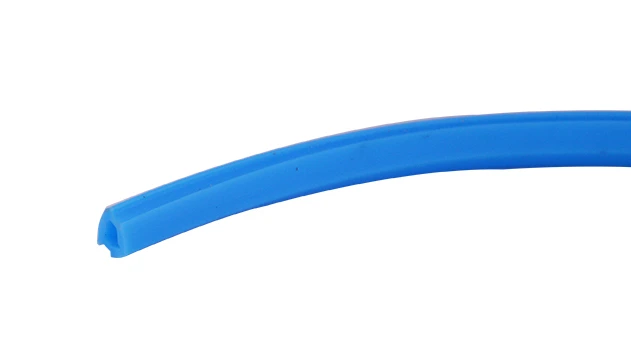
T-slot Rubber Seal Cover
The rubber T-slot seal cover prevents dust and debris buildup, covers wires in the T-slot channel, and adds an extra layer of protection to applications. It rolls into the T-slot, making it easy to assemble.
Introduction: The Unsung Hero of Smooth Production
Let's start with a scenario we've all seen (or maybe even experienced): A busy production line, where parts zip along roller tracks, workers assemble components at workbenches, and every second counts. Then suddenly—*clunk*. A tool slips, a part jams, or a worker pauses to fish a tiny screw out of a narrow groove. What caused the hold-up? More often than not, it's the little things—the components we don't notice until they fail. Today, we're shining a light on one of those unsung heroes: the
T-slot rubber seal cover
.
You might be thinking, "A rubber cover? Really?" But here's the thing: In flexible production setups—where lines need to adapt quickly, tools need to shift positions, and every inch of space matters—T-slot rubber seal covers play a critical role. They're the quiet guardians of the
aluminum extrusion profiles
that form the backbone of modern workbenches, material racks, and assembly stations. These profiles, with their signature T-shaped grooves, are the reason production lines can reconfigure on the fly. But without proper protection, those T-slots become magnets for dust, debris, and even spilled liquids—all of which can gum up the works, slow down operations, and shorten the life of your equipment.
So, if you're in the market for T-slot rubber seal covers, or just want to make sure you're not overlooking a key detail in your production setup, you're in the right place. In this article, we'll break down the design features that matter most, why they're critical for flexible production, and how to choose the right one for your needs. Let's dive in.
What Even Is a T-Slot Rubber Seal Cover?
First, let's get clear on the basics. If you work with
aluminum extrusion profiles
—those modular, groove-filled beams that make up everything from workbenches to conveyor frames—you know about T-slots. These are the long, narrow channels running along the length of the profile, designed to hold fasteners, brackets, and other
lean pipe accessories
in place. They're what make the profiles "flexible": slide a bracket into the T-slot, tighten a screw, and you've got a custom setup in minutes.
Now, imagine that T-slot is like an open wound on your production line. Every day, it's exposed to metal shavings from cutting, dust from sanding, oil from machinery, and even accidental spills. Over time, that debris builds up. When you try to slide a new bracket into the slot, it gets stuck. Or worse, the debris scratches the inside of the slot, making future adjustments harder. That's where the T-slot rubber seal cover comes in.
Think of it as a protective sleeve for the T-slot. It's a long, flexible strip of rubber (or similar material) that fits snugly into the groove, sealing it off from the environment. When you need to use the slot—say, to attach a new tool holder or adjust a roller track—you simply peel back the cover, make your change, and press it back into place. Simple, right? But not all seal covers are created equal. The design features can make a world of difference in how well they protect your slots, how easy they are to use, and how long they last.

Why Does This Tiny Cover Matter for Flexible Production?
Let's talk about the cost of downtime. In manufacturing, every minute a line is stopped can cost hundreds—even thousands—of dollars. A jammed roller track because of debris in a T-slot? That's downtime. A worker spending 10 minutes cleaning out a slot before they can attach a new bracket? That's lost productivity. And over time, those small delays add up.
Then there's maintenance. If T-slots get gunked up, they require more frequent cleaning, which takes time and resources. Scratched or damaged slots might even mean replacing the entire aluminum extrusion profile—a far costlier fix than investing in a quality seal cover upfront.
Safety is another angle. A T-slot filled with sharp metal shavings is a hazard. A worker reaching into the slot to adjust a fastener could get a cut. Spilled liquids in slots can make surfaces slippery. The seal cover acts as a barrier, reducing these risks.
Finally, flexibility itself. The whole point of using aluminum extrusion profiles is to adapt quickly. If your T-slots are clogged or damaged, reconfiguring your workbench or material rack becomes a chore. You might avoid making necessary changes because the process is too time-consuming. A good seal cover keeps the slots clean and ready, so you can adjust on the fly—exactly what flexible production demands.

Key Design Features to Look for: A Closer Look
Now that we've covered why T-slot rubber seal covers matter, let's get into the nitty-gritty: the design features that separate a "meh" cover from a "must-have" one. Not all covers are designed with the same care, so knowing what to look for will help you avoid wasting money on products that fail after a month. Below is a breakdown of the most important features, along with what to prioritize.
1. Flexibility and Conformity
A T-slot rubber seal cover needs to bend and flex without cracking, especially if you're using it on curved or angled aluminum extrusion profiles. Think about it: if the cover is too stiff, it won't sit flush in the slot, leaving gaps where debris can sneak in. On the flip side, if it's too floppy, it might slide out of place or tear when you peel it back. What to look for: A cover that feels "springy" when you bend it. High-quality rubber blends (like EPDM or silicone) tend to offer the best balance of flexibility and durability. Avoid covers that feel brittle, especially in colder temperatures—they'll crack.2. Sealing Edge Design
The edges of the seal cover are where the magic (or the failure) happens. If the edges don't seal tightly against the inside of the T-slot, dust and liquids will find their way in. Some covers have a single, flat edge, while others have a "lip" or "flange" that wraps slightly over the top of the profile, creating a better barrier. What to look for: A cover with a dual-lip design if possible. This means two thin, flexible lips that press against the slot walls, creating a tighter seal. You can test this by pressing the cover into a sample T-slot—if you can see light between the cover and the slot walls, it's not sealing well.3. Durability and Resistance
Production lines are tough environments. The seal cover will be exposed to oils, solvents, high temperatures (from machinery), and physical abrasion (from workers peeling it back repeatedly). A cheap cover might start to degrade after a few weeks—cracking, hardening, or discoloring. What to look for: Check the material specs. EPDM rubber is a good all-around choice—it resists oils, heat, and UV light. Silicone is better for extreme temperatures (both high and low) but can be pricier. Avoid generic "rubber" covers without specific material info—they might be made of low-quality synthetic rubber that breaks down quickly.4. Compatibility with Aluminum Extrusion Profiles
Not all T-slots are the same size. Aluminum extrusion profiles come in different series (like 2020, 3030, 4040), and each has T-slots with specific widths and depths. A cover designed for a 2020 profile won't fit a 4040 profile, and vice versa. Using the wrong size leaves gaps or stretches the cover, reducing its effectiveness. What to look for: Always check the product description for compatibility with your specific profile series. Some manufacturers offer covers in multiple sizes, so you can match them to your existing setup. If you're unsure, measure the width and depth of your T-slot and compare it to the cover's dimensions.5. Ease of Installation and Removal
If installing the cover takes 20 minutes per profile, or if peeling it back to access the slot is a struggle, you and your team will probably avoid using it. That defeats the purpose. A good cover should be easy to install and simple to remove when needed. What to look for: Look for covers with a self-adhesive backing (though this is less common, as adhesive can leave residue) or a design that "snaps" into the T-slot with friction. The best covers stay in place during normal use but can be peeled back with minimal effort—no tools required. To summarize these features, here's a quick reference table:| Design Feature | What to Look For | Why It Matters |
|---|---|---|
| Flexibility | Springy, crack-resistant material (EPDM/silicone) | Fits snugly in slots; bends without damage |
| Sealing Edge | Dual-lip design; tight, gap-free fit | Blocks debris, dust, and liquids effectively |
| Durability | Resistance to oils, heat, and abrasion | Longer lifespan; fewer replacements needed |
| Compatibility | Matching T-slot size (width/depth) for your aluminum profile | No gaps or stretching; optimal protection |
| Ease of Use | Snaps into place; easy to peel back without tools | Encourages regular use; saves time during reconfigurations |
Material Matters: Choosing the Right Rubber for Your Environment
We touched on materials earlier, but it's worth diving deeper because the type of rubber (or elastomer) used in the seal cover has a huge impact on performance. Let's break down the most common options and when to choose each:
EPDM Rubber
EPDM (Ethylene Propylene Diene Monomer) is the workhorse of the rubber world, and for good reason. It's affordable, widely available, and offers excellent resistance to:- Oils and greases (common in manufacturing environments)
- UV light (if your production line is near windows or outdoors)
- Heat (up to around 150°C/302°F, depending on the formulation)
- Weathering (rain, humidity, ozone)
Silicone Rubber
Silicone is the premium option, known for its extreme temperature resistance. It can handle heat up to 200°C/392°F (and some formulations go higher) and cold down to -60°C/-76°F. This makes it ideal for environments with high-heat machinery, like plastic molding or metalworking. Silicone also resists most chemicals, including many solvents, and doesn't degrade in UV light. However, it's more expensive than EPDM, and it's not as resistant to abrasion. If your seal covers will be peeled back and pressed into place hundreds of times a month, silicone might wear out faster than EPDM.Neoprene Rubber
Neoprene is another option, though less common for T-slot covers. It's resistant to oils, water, and some chemicals, but it's not as flexible as EPDM or silicone, especially in cold temperatures. It's also more prone to hardening over time. Unless you're specifically dealing with oil-heavy environments where EPDM isn't sufficient, neoprene is probably overkill.Generic Synthetic Rubber
Be wary of covers labeled simply as "rubber" without a specific type. These are often made from low-quality synthetic blends that lack the resistance and durability of EPDM or silicone. They might work for light-duty applications (like a home workshop), but in a busy production line, they'll crack, tear, or become brittle within months. Save your money and invest in a known material.Compatibility with Your Setup: It's All About the T-Slot
We mentioned compatibility earlier, but it's so important that it deserves its own section. Let's say you order a batch of T-slot rubber seal covers, excited to protect your aluminum extrusion profiles—only to find they're too wide for your T-slots. Now you've wasted time and money, and your slots are still exposed. Avoid this by getting the measurements right.
First, identify your aluminum profile series. Common series include 2020 (20mm x 20mm), 3030 (30mm x 30mm), 4040 (40mm x 40mm), and 4080 (40mm x 80mm). Each series has T-slots with standard dimensions, but it's always best to measure your specific profiles—manufacturers sometimes have slight variations.
To measure your T-slot:
- Width: Measure the opening of the slot (the distance across the top). For example, a 4040 profile might have a T-slot width of 8mm or 10mm.
- Depth: Measure from the top of the profile to the bottom of the slot. This ensures the cover is long enough to reach the bottom, creating a full seal.
- Under-cut: Some T-slots have an "under-cut" (a wider section at the bottom). The cover should fit into this under-cut to stay in place via friction.
Installation and Maintenance: Making It Work for You
Even the best T-slot rubber seal cover won't perform well if it's installed incorrectly. Let's walk through the basics of installation and maintenance to ensure you get the most out of your covers.
Installation Steps
1. Clean the T-slot first: Before installing the cover, make sure the slot is free of debris, dust, and oil. A quick wipe with a clean cloth (or a solvent like isopropyl alcohol for stubborn grime) will help the cover adhere better and seal more effectively. 2. Align the cover: Start at one end of the aluminum extrusion profile. Line up the cover with the T-slot, ensuring the lips (if it has a dual-lip design) are facing the correct direction (toward the inside of the slot). 3. Press into place: Gently press the cover into the slot, working your way down the length of the profile. Apply even pressure to ensure it seats fully and there are no gaps. For longer profiles, you might need to unroll the cover as you go—avoid stretching it, as this can cause it to loosen over time. 4. Trim if necessary: Most covers come in standard lengths (e.g., 2 meters). If your profile is shorter, use sharp scissors to trim the cover to size. Make sure the cut is clean to avoid fraying.Maintenance Tips
- Regular inspection: Every few weeks, check the covers for signs of wear—cracks, tears, or areas where they've come loose. replace any damaged covers promptly to avoid exposing the T-slot. - Clean the covers: Wipe them down occasionally with a damp cloth to remove surface dust or oil. Avoid harsh chemicals, as they can degrade the rubber. - Re-seat if needed: If a cover starts to lift at the edges, press it back into place. If it won't stay, it might be worn out and need replacement. - Store extra covers properly: If you have spare covers, store them in a cool, dry place away from direct sunlight and chemicals. Extreme temperatures or UV exposure can degrade rubber even when it's not in use.Common Mistakes to Avoid When Buying
Even with the best intentions, it's easy to make missteps when purchasing T-slot rubber seal covers. Here are some common mistakes and how to steer clear of them:
Mistake #1: Choosing the Cheapest Option
It's tempting to go for the lowest-priced covers, especially if you're buying in bulk. But remember: a cheap cover might cost $1 per meter, but if it needs replacing every 3 months, it's more expensive than a $3 per meter cover that lasts a year. Invest in quality upfront—your maintenance team (and budget) will thank you.Mistake #2: Ignoring Material Specifications
Don't buy a cover just because it's labeled "rubber." Check if it's EPDM, silicone, or another material, and ensure it's suitable for your environment. For example, using a generic rubber cover in a high-heat area will lead to premature failure.Mistake #3: Assuming "One Size Fits All"
As we discussed, T-slots vary in size. Don't assume a cover that works for one profile will work for another. Always check compatibility with your specific aluminum extrusion profile series and T-slot dimensions.Mistake #4: Overlooking Quantity Needs
Calculate how many meters of cover you need before ordering. Measure all your aluminum profiles, add a little extra for waste or future projects, and order in bulk if possible (many suppliers offer discounts for larger orders). Running out mid-installation is frustrating and delays the process.Mistake #5: Not Testing Before Bulk Ordering
If you're buying a new type or brand of cover, order a small sample first. Test it on your profiles to check fit, flexibility, and sealing. This way, you can avoid committing to a large batch that doesn't work.Conclusion: Small Investment, Big Returns
At the end of the day, T-slot rubber seal covers might seem like a minor detail in the grand scheme of a production line. But as we've explored, they play a crucial role in keeping your aluminum extrusion profiles clean, your operations efficient, and your workers safe. By prioritizing key design features like flexibility, sealing efficiency, durability, and compatibility, you can choose a cover that protects your investment and supports the flexibility your production line needs.
Remember, the goal of flexible production is to adapt quickly, reduce downtime, and stay competitive. A quality T-slot rubber seal cover is a small investment that delivers big returns by keeping your T-slots clean, functional, and ready for whatever changes come your way. So next time you're setting up a new workbench, reconfiguring a roller track, or simply maintaining your existing setup, don't overlook this unsung hero. Your future self (and your bottom line) will be glad you didn't.