- Company Articles
- Products and Technology
- Product knowledge
- T-Slot Rubber Seal Cover Sizing Mistakes to Avoid: Common Errors and How to Fix Them

T-Slot Rubber Seal Cover Sizing Mistakes to Avoid: Common Errors and How to Fix Them
Related Product
T-slot Rubber Seal Cover
The rubber T-slot seal cover prevents dust and debris buildup, covers wires in the T-slot channel, and adds an extra layer of protection to applications. It rolls into the T-slot, making it easy to assemble.
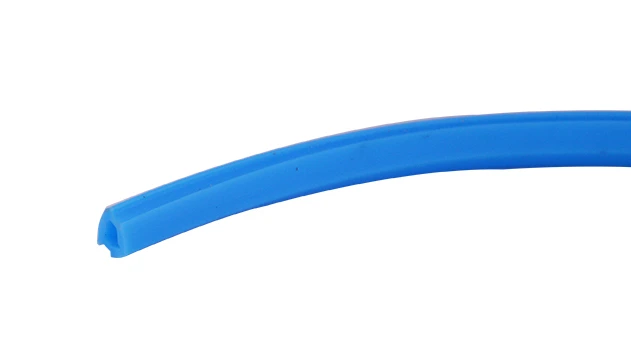
If you've ever worked with aluminum profiles—whether building a custom workbench, assembling a material rack, or setting up a production line—you know the small details matter. Among those details, T-slot rubber seal covers might seem, but they play a critical role in protecting your aluminum profile's T-slots from dust, debris, and damage. They also enhance safety by smoothing sharp edges and improve aesthetics by giving your setup a polished, finished look. But here's the catch: getting the sizing right for these seal covers is trickier than it looks. A mismatch in size can turn a simple installation into a frustrating ordeal, leading to loose covers that fall out, tight ones that tear, or even damage to your aluminum profiles themselves. In this guide, we'll walk through the most common T-slot rubber seal cover sizing mistakes, why they happen, and how to fix them—so you can get the most out of your aluminum profile accessories.
Why T-Slot Rubber Seal Cover Sizing Matters
Before diving into mistakes, let's clarify why sizing is so critical. T-slot rubber seal covers are designed to fit snugly into the T-shaped grooves (T-slots) of aluminum profiles. These slots are where you attach accessories like brackets, shelves, or panels, so keeping them clean and undamaged is key to maintaining functionality. A well-sized seal cover stays in place without effort, resists wear from temperature changes, and doesn't interfere with accessory installation. On the flip side, a poorly sized cover can:
- Fall out easily, leaving T-slots exposed to dirt and moisture.
- Tear during installation, wasting materials and time.
- Bulge or warp, making it hard to slide accessories into the T-slot.
- Degrade faster due to unnecessary stress on the rubber material.
Common Sizing Mistakes and How to Fix Them
Mistake 1: Guessing Sizes Instead of Measuring the T-Slot
One of the biggest blunders is assuming you know the T-slot size based on the aluminum profile's nominal size. For example, you might think a "2020 aluminum profile" has a T-slot width of 20mm—after all, the name includes "2020." But that's not how it works. The "2020" refers to the profile's cross-sectional dimensions (20mm x 20mm), not the T-slot width. In reality, a standard 2020 aluminum profile typically has a T-slot width of 6mm, while a 4040 aluminum profile (40mm x 40mm) often has an 8mm or 10mm T-slot, depending on the manufacturer.
Consequences: Guessing leads to buying seal covers that are either too narrow (they slide out) or too wide (they get stuck or tear). For instance, using an 8mm seal cover in a 6mm T-slot will result in a tight fit that's nearly impossible to install without damaging the rubber. Conversely, a 5mm cover in a 6mm slot will pop out at the slightest vibration.
How to Fix: Always measure the T-slot width with a digital caliper. Open the caliper jaws, insert them into the T-slot, and gently close until they touch the inner edges. Record the measurement (round to the nearest 0.5mm) and use it to select the seal cover. Most manufacturers list seal cover sizes by T-slot width (e.g., "6mm T-slot rubber seal cover"), so this measurement is your best guide.
Consequences: Guessing leads to buying seal covers that are either too narrow (they slide out) or too wide (they get stuck or tear). For instance, using an 8mm seal cover in a 6mm T-slot will result in a tight fit that's nearly impossible to install without damaging the rubber. Conversely, a 5mm cover in a 6mm slot will pop out at the slightest vibration.
How to Fix: Always measure the T-slot width with a digital caliper. Open the caliper jaws, insert them into the T-slot, and gently close until they touch the inner edges. Record the measurement (round to the nearest 0.5mm) and use it to select the seal cover. Most manufacturers list seal cover sizes by T-slot width (e.g., "6mm T-slot rubber seal cover"), so this measurement is your best guide.
Mistake 2: Ignoring Aluminum Profile Series Differences
Aluminum profiles come in various series, each with unique T-slot designs. Even profiles with the same nominal size (like two different 4040 aluminum profiles) can have different T-slot widths or depths if they're from different series—for example, EU standard vs. national standard profiles. A 4040 EU standard profile might have an 8mm T-slot, while a 4040 national standard profile could have a 10mm slot. Mixing up these series is a recipe for sizing errors.
Consequences: Using a seal cover designed for an EU standard profile on a national standard profile will leave gaps or cause overstretching. This is especially common when ordering from suppliers who stock multiple profile series without clearly labeling them.
How to Fix: Check the profile's specifications before buying seal covers. Look for details like "EU standard 4040A" or "national standard 3030A" on the product label or datasheet. If you're unsure, ask your aluminum profile supplier for the T-slot dimensions of the specific series you're using. To simplify, refer to the table below for common profile series and their typical T-slot widths:
Consequences: Using a seal cover designed for an EU standard profile on a national standard profile will leave gaps or cause overstretching. This is especially common when ordering from suppliers who stock multiple profile series without clearly labeling them.
How to Fix: Check the profile's specifications before buying seal covers. Look for details like "EU standard 4040A" or "national standard 3030A" on the product label or datasheet. If you're unsure, ask your aluminum profile supplier for the T-slot dimensions of the specific series you're using. To simplify, refer to the table below for common profile series and their typical T-slot widths:
| Aluminum Profile Series | Nominal Size (mm) | Typical T-Slot Width (mm) | Recommended Seal Cover Size (mm) |
|---|---|---|---|
| 2020 EU Standard | 20x20 | 6 | 6 |
| 3030 EU Standard | 30x30 | 8 | 8 |
| 4040 EU Standard (A/B series) | 40x40 | 8 | 8 |
| 4040 EU Standard (C/D series) | 40x40 | 10 | 10 |
| 2040 National Standard | 20x40 | 6 | 6 |
| 3060 National Standard | 30x60 | 10 | 10 |
Pro Tip:
If you're unsure about the series, take a photo of the profile's cross-section and send it to your supplier. Most aluminum profile suppliers can identify the series and T-slot size from a clear image.
Mistake 3: Overlooking Rubber Material Thickness and Hardness
T-slot rubber seal covers aren't just about width—material thickness and hardness (measured in Shore A durometer) also affect fit. A seal cover with the correct width but too thin walls will collapse in the T-slot, while one with overly thick walls will be too rigid to conform to the slot's shape. Similarly, rubber that's too soft (low durometer, e.g., 50 Shore A) will stretch and tear easily, while rubber that's too hard (high durometer, e.g., 80 Shore A) won't flex enough to install smoothly.
Consequences: A thin, soft seal cover might fit initially but will degrade quickly, especially in high-traffic areas like a workbench where tools frequently brush against the T-slots. A thick, hard cover might require excessive force to install, damaging both the cover and the profile's T-slot edges.
How to Fix: Match the seal cover's thickness and hardness to your application. For general-purpose use (e.g., covering T-slots on a material rack), a medium thickness (1.5–2mm) and 60–70 Shore A hardness work best. For heavy-duty applications (e.g., production lines with constant accessory adjustments), opt for thicker walls (2–3mm) and 70–80 Shore A hardness. For delicate environments (e.g., cleanrooms), choose softer rubber (50–60 Shore A) to avoid scratching the profile.
Consequences: A thin, soft seal cover might fit initially but will degrade quickly, especially in high-traffic areas like a workbench where tools frequently brush against the T-slots. A thick, hard cover might require excessive force to install, damaging both the cover and the profile's T-slot edges.
How to Fix: Match the seal cover's thickness and hardness to your application. For general-purpose use (e.g., covering T-slots on a material rack), a medium thickness (1.5–2mm) and 60–70 Shore A hardness work best. For heavy-duty applications (e.g., production lines with constant accessory adjustments), opt for thicker walls (2–3mm) and 70–80 Shore A hardness. For delicate environments (e.g., cleanrooms), choose softer rubber (50–60 Shore A) to avoid scratching the profile.
Mistake 4: Disregarding Environmental Temperature Swings
Rubber is a thermoplastic material, meaning it expands in heat and contracts in cold. If you install seal covers in a warm workshop and then move the profile to a cold storage area, the rubber will shrink, leaving gaps. Conversely, seal covers installed in a cold environment and then exposed to heat will expand, potentially warping or bulging out of the T-slot.
Consequences: Inconsistent temperatures cause seal covers to loosen or tighten over time, leading to premature wear. For example, a seal cover installed in a 25°C (77°F) factory and then used in a 5°C (41°F) warehouse will shrink by 2–3% in width, making it too loose to stay in place.
How to Fix: Account for temperature variations when selecting size. If your profile will be exposed to extreme temperatures (below 10°C or above 35°C), choose a seal cover with a width 0.5–1mm larger than the measured T-slot. This extra room allows for contraction in cold conditions without leaving gaps. For stable temperatures (15–30°C), stick to the exact measured width. Additionally, look for seal covers made with EPDM rubber, which has better temperature resistance than standard rubber (EPDM works well from -40°C to 120°C).
Consequences: Inconsistent temperatures cause seal covers to loosen or tighten over time, leading to premature wear. For example, a seal cover installed in a 25°C (77°F) factory and then used in a 5°C (41°F) warehouse will shrink by 2–3% in width, making it too loose to stay in place.
How to Fix: Account for temperature variations when selecting size. If your profile will be exposed to extreme temperatures (below 10°C or above 35°C), choose a seal cover with a width 0.5–1mm larger than the measured T-slot. This extra room allows for contraction in cold conditions without leaving gaps. For stable temperatures (15–30°C), stick to the exact measured width. Additionally, look for seal covers made with EPDM rubber, which has better temperature resistance than standard rubber (EPDM works well from -40°C to 120°C).
Mistake 5: Misaligning Seal Cover Type with Application Needs
Not all T-slot rubber seal covers are created equal. Some are designed for standard use, others for ESD (electrostatic discharge) protection, and still others for chemical resistance. Using the wrong type for your application can lead to sizing issues indirectly. For example, ESD seal covers often have conductive additives that make the rubber stiffer, requiring a slightly larger size than standard covers to install properly. Using a standard seal cover size for an ESD application will result in a tight fit due to the stiffer material.
Consequences: An ESD seal cover that's too tight won't lay flat, reducing its ability to dissipate static electricity. A chemical-resistant cover that's too loose in a laboratory setting might absorb spills, defeating its purpose.
How to Fix: Identify your application first, then adjust size accordingly. ESD seal covers: Add 0.5mm to your measured T-slot width to account for stiffness. Chemical-resistant covers (e.g., for use with oils or solvents): Opt for a snugger fit (same width as T-slot) since the material is often more rigid. Standard covers: Stick to the exact T-slot width measurement.
Consequences: An ESD seal cover that's too tight won't lay flat, reducing its ability to dissipate static electricity. A chemical-resistant cover that's too loose in a laboratory setting might absorb spills, defeating its purpose.
How to Fix: Identify your application first, then adjust size accordingly. ESD seal covers: Add 0.5mm to your measured T-slot width to account for stiffness. Chemical-resistant covers (e.g., for use with oils or solvents): Opt for a snugger fit (same width as T-slot) since the material is often more rigid. Standard covers: Stick to the exact T-slot width measurement.

Preventive Measures: Avoid Sizing Mistakes Altogether
The best way to avoid sizing errors is to be proactive. Here's a checklist to follow before buying T-slot rubber seal covers:
- Measure Twice, Buy Once: Always measure the T-slot width with a caliper, even if you think you know the size. Repeat the measurement on multiple profiles (especially if buying in bulk) to account for manufacturing tolerances.
- Order Samples First: If you're buying in large quantities, order a few sample seal covers in your measured size. Test them on your profiles to ensure they fit snugly but install easily. Most aluminum profile accessories suppliers offer free or low-cost samples.
- Check Compatibility with Accessories: Install a seal cover, then attach a test accessory (e.g., a bracket or shelf) to ensure the cover doesn't interfere with sliding or clamping. The accessory should move smoothly without dislodging the cover.
- Store Seal Covers Properly: Keep unopened seal covers in a cool, dry place away from direct sunlight. Heat and UV rays can degrade rubber before installation, leading to unexpected shrinkage or brittleness.

Conclusion: Small Sizing Steps, Big Results
T-slot rubber seal covers might seem like a minor part of your aluminum profile setup, but their sizing has a major impact on performance and longevity. By avoiding these common mistakes—guessing sizes, ignoring profile series, overlooking material properties, and disregarding the environment—you'll ensure a snug, durable fit that protects your aluminum profiles and keeps your workspace running smoothly. Remember: the goal is to make the seal covers feel like a natural extension of the profile, not an afterthought. With the right size, they'll do their job quietly and effectively, letting you focus on what matters most—using your aluminum profile setup to build, create, and produce.
So, grab that caliper, check your profile series, and choose your seal covers with confidence. Your aluminum profiles (and your sanity during installation) will thank you.
So, grab that caliper, check your profile series, and choose your seal covers with confidence. Your aluminum profiles (and your sanity during installation) will thank you.