- Company Articles
- Products and Technology
- Product knowledge
- T-Slot Rubber Seal Cover Thickness: Does Thicker Always Mean Better Sealing?

T-Slot Rubber Seal Cover Thickness: Does Thicker Always Mean Better Sealing?
Related Product
T-slot Rubber Seal Cover
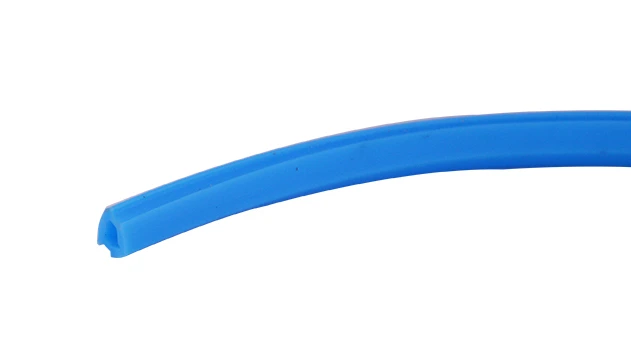
The rubber T-slot seal cover prevents dust and debris buildup, covers wires in the T-slot channel, and adds an extra layer of protection to applications. It rolls into the T-slot, making it easy to assemble.
Walk into any modern manufacturing facility, and you'll likely spot aluminum extrusion profiles hard at work. From assembly line workbenches to conveyor systems, these versatile structures form the backbone of efficient production. But look closer at the T-slots running along their edges, and you'll notice something small but critical: t-slot rubber seal covers. These unassuming strips of rubber are the unsung heroes that keep dust, debris, and moisture out of the slots, protecting both the aluminum profile itself and the sensitive equipment it supports. Yet, a common question lingers among engineers and facility managers: when it comes to these seal covers, is thicker always better for sealing?
It's a logical assumption. After all, thicker materials often feel more durable, more substantial, like they'd create a tighter barrier. But in the world of industrial sealing, things are rarely that straightforward. To truly answer this question, we need to dig into what t-slot rubber seal covers actually do, the factors that influence their performance, and why thickness is just one piece of a much larger puzzle. Let's start by breaking down the basics.
What Are T-Slot Rubber Seal Covers, Anyway?
If you're new to aluminum extrusion profiles, T-slots are the longitudinal grooves cut into the profiles' edges. They're designed to let you attach accessories—like brackets, panels, or handles—using bolts or nuts that slide into the slot. But when those slots aren't in use, they become open channels. Left uncovered, they can collect dust, metal shavings, or spilled liquids, which over time can corrode the aluminum, jam moving parts, or contaminate products (especially in sensitive industries like electronics or food processing).
Enter t-slot rubber seal covers: flexible strips of rubber (or sometimes plastic) that press-fit into these slots, creating a tight seal. Think of them as the "weatherstripping" for industrial aluminum profiles. They come in various sizes, shapes, and materials, but their core job is simple: block unwanted intruders while still allowing easy access if you need to use the slot later. They're also used to reduce noise from vibrating components and protect workers from sharp edges on the T-slot openings.
Now, when manufacturers shop for these seal covers, one of the first specs they notice is thickness. Common options range from 0.5mm to 3mm, with 1mm and 2mm being the most popular. But does stepping up to 3mm guarantee a better seal than 1mm? Let's explore.
The Role of Thickness: It's About Compression, Not Just Bulk
At first glance, thickness seems like a direct indicator of sealing power. A thicker seal cover, you might think, would fill the T-slot more completely, leaving less room for gaps. But sealing isn't just about filling space—it's about how well the material compresses and conforms to the slot's shape. Aluminum extrusion profiles, for all their precision, aren't perfectly uniform. Minor variations in the slot's width or depth (due to manufacturing tolerances) mean the seal cover needs to adapt. That's where flexibility comes in.
Imagine two seal covers: one 3mm thick made of rigid rubber, and another 1.5mm thick made of soft, flexible rubber. The 3mm cover might be too stiff to compress properly into a slightly narrower slot, leaving tiny gaps around the edges. The thinner, softer one, though, could squeeze into those tight spots, forming a continuous seal. In this case, thickness works against performance because rigidity prevents the material from adapting.
Compression also affects durability. When a seal cover is compressed into the T-slot, it exerts a small amount of pressure against the slot walls, creating friction that holds it in place. If the material is too thick and rigid, that pressure can become uneven—high in some areas, low in others—causing the cover to pop out over time (especially if the profile is vibrated, like on a conveyor system). Thinner, more flexible materials, by contrast, distribute pressure more evenly, staying put even in dynamic environments.
So, thickness matters, but only when paired with the right level of flexibility. A thick seal cover made of a soft, pliable material might work well, while a thin one made of hard plastic might not. It's the combination that counts.

Beyond Thickness: The Other Factors That Make or Break a Seal
To really understand why "thicker = better" is a myth, let's look at the other critical factors that influence a t-slot rubber seal cover's performance. These are the variables that often matter more than thickness alone.
Material: The "What" Matters More Than the "How Thick"
The material of the seal cover is perhaps the single biggest determinant of its sealing ability. Most t-slot seal covers are made from rubber compounds like EPDM, silicone, or neoprene, or sometimes PVC for lower-cost applications. Each material has unique properties:
- EPDM: Excellent weather resistance, stands up to heat, cold, and UV rays. Good flexibility across a wide temperature range (-40°C to 150°C). A popular choice for outdoor or general industrial use.
- Silicone: Extreme temperature resistance (-60°C to 230°C), making it ideal for high-heat environments like automotive engine bays or food processing ovens. Also highly chemical-resistant.
- Neoprene: Great for oil and solvent resistance, often used in mechanical applications where lubricants are present.
- PVC: Cost-effective, but less durable than rubber. Best for indoor, low-wear applications.
Here's why this matters: A 1mm silicone seal cover will outperform a 3mm PVC cover in high-temperature settings, because silicone remains flexible when heated, while PVC becomes brittle and cracks. Similarly, a 1.5mm EPDM cover will seal better against rain and snow than a 2mm neoprene cover, because EPDM resists water absorption. Material trumps thickness when the environment pushes the limits of what the seal can handle.
Hardness: The "Softness" Scale That Makes All the Difference
Even within the same material, there's a key spec called "hardness," measured on the Shore A scale. Shore A ranges from 0 (super soft, like gel) to 100 (hard, like rubber tires). For t-slot seal covers, most fall between 40 Shore A (soft) and 70 Shore A (firm).
Soft materials (40-50 Shore A) compress easily, conforming to irregularities in the T-slot. They're great for sealing rough or slightly warped aluminum profiles, as they "mold" to the surface. But they're less durable in high-wear areas—if workers frequently slide tools along the seal, a soft cover might tear or wear thin quickly.
Firm materials (60-70 Shore A) are more resistant to abrasion but less flexible. They work well in high-traffic zones but need a smoother T-slot to seal properly—if the slot has burrs or uneven edges, a firm cover might not compress enough to fill the gaps.
Thickness interacts with hardness here. A thick, firm cover (say, 2.5mm and 70 Shore A) might be too rigid to seal a slightly misshapen slot, while a thin, soft cover (1mm and 45 Shore A) could wrap around those imperfections and create a better seal. Again, thickness alone doesn't tell the whole story.
Design: Shape Matters More Than You Think
Not all t-slot seal covers are created equal in shape, either. The most common design is a simple "U" or "T" shape that matches the T-slot's profile, with a top lip that sits flush with the aluminum profile's surface. But some have added features:
- Bulb seals: A rounded "bulb" in the center of the seal that compresses more easily, creating a tighter seal with less pressure.
- Lip seals: Flared edges that grip the T-slot walls, preventing the seal from popping out during vibration.
- Ribbed designs: Internal ribs that add structural support while maintaining flexibility.
A well-designed 1.5mm bulb seal will often seal better than a generic 2mm flat seal, because the bulb design focuses compression where it's needed most. The shape ensures that even with less material, the seal makes maximum contact with the T-slot walls.

When Thicker Is Better: The Right Scenarios for Thicker Seal Covers
None of this is to say thickness never matters. There are situations where a thicker seal cover is the better choice. Let's break down when "thicker" makes sense:
High-Wear Environments
If the seal cover is going to be subjected to frequent physical contact—like on a workbench edge where tools are constantly slid across it, or on a conveyor side rail where packages rub against it—thickness adds durability. A 2mm or 3mm cover made of a tough material like neoprene will resist tearing and abrasion better than a thinner one. For example, in automotive assembly plants, where workers lean on aluminum profile workbenches or drag heavy parts across them, thicker seal covers are a practical choice to extend lifespan.
Extreme Temperature Fluctuations
In environments with wild temperature swings—like outdoor manufacturing facilities or warehouses that aren't climate-controlled—thicker seal covers can help maintain flexibility. For instance, EPDM seal covers thicker than 2mm tend to hold their shape better in freezing temperatures, where thinner ones might become too stiff to seal properly. Similarly, in high-heat environments (though here, material choice like silicone matters more than thickness), a thicker seal can provide a buffer against heat degradation.
Heavy-Duty Sealing Needs
If you're dealing with aggressive substances—like industrial chemicals, oils, or high-pressure water (for washdowns)—a thicker seal cover can offer an extra layer of protection. For example, in a metalworking shop where coolant frequently splashes onto aluminum profile racks, a 3mm neoprene seal cover will resist chemical breakdown longer than a 1mm one, ensuring the T-slot stays protected over time.
When Thicker Falls Short: The Pitfalls of Overlooking Other Factors
On the flip side, there are plenty of cases where choosing a thicker seal cover leads to worse performance, not better. Here are the most common pitfalls:
Poor Compression on Irregular T-Slots
Aluminum extrusion profiles are precision-made, but no manufacturing process is perfect. Minor variations in T-slot width or depth (as little as 0.1mm) can happen, especially with lower-cost profiles. A thick, rigid seal cover (say, 2.5mm PVC) might not compress enough to fill these tiny gaps, leaving space for dust or liquids to seep in. A thinner, softer EPDM cover (1.5mm) would flex to match the slot's shape, creating a tighter seal.
I saw this firsthand at a small electronics assembly plant a few years back. They'd switched from 1mm EPDM to 2mm PVC seal covers on their workbenches, thinking it would keep solder flux and dust out better. Instead, workers started complaining about dust buildup in the slots after just a month. The issue? The PVC was too stiff to conform to slight variations in their aluminum profiles, leaving micro-gaps. They switched back to 1mm EPDM, and the problem vanished.
Installation Headaches
Thicker seal covers can be a nightmare to install, especially in long lengths. They're stiffer, so they resist bending, making it hard to press them into the T-slot without kinking or tearing. This is a bigger issue with manually installed covers (as opposed to machine-applied ones). A 3mm cover might take twice as long to install as a 1mm one, and if it's not installed perfectly—if there are gaps where it didn't seat properly—it won't seal anyway.
Unnecessary Cost
Thicker materials cost more. If you're using 3mm seal covers everywhere when 1.5mm would work just as well, you're throwing money away. For large facilities with hundreds of meters of aluminum extrusion profiles, those extra millimeters add up fast. It's like buying a sledgehammer to hang a picture—overkill, and costly overkill at that.
How to Choose: A Practical Guide
So, with all these factors in play, how do you pick the right thickness for your t-slot rubber seal covers? Here's a step-by-step approach:
Step 1: Know Your Environment
Start by answering these questions:
- What's the temperature range? (Indoor, outdoor, high-heat, freezing?)
- Are there chemicals, oils, or moisture present?
- Will the seal be exposed to UV light (sunlight)?
- How much vibration or movement does the aluminum profile undergo?
This will narrow down your material options. For example, if you're in a food processing plant with washdowns, silicone is a must (it's FDA-approved). If you're outdoors, EPDM is better for UV resistance.
Step 2: Assess the T-Slot Condition
Check the T-slots on your aluminum profiles. Are they smooth and uniform, or do they have burrs, dents, or slight width variations? If they're less than perfect, lean toward a thinner, softer seal (40-50 Shore A) that can conform to irregularities. If they're precision-machined, a firmer, possibly thicker seal might work.
Step 3: Consider Wear and Installation
Will workers or equipment frequently contact the seal? If yes, prioritize thickness (2mm+) and durability (higher Shore A, neoprene or EPDM). If it's a low-traffic area, focus on sealing performance over thickness. Also, think about installation: do you have tools to press in thick covers, or will workers be installing them by hand? Thinner covers are easier to handle manually.
Step 4: Test Before Committing
If possible, order samples of 1mm, 1.5mm, and 2mm seal covers in your chosen material and test them in your actual environment. Install them on a test section of aluminum profile, then simulate real-world conditions: spray with water, expose to heat/cold, check for dust accumulation after a week. This hands-on testing will tell you more than any spec sheet.
Real-World Examples: Thickness in Action
To make this concrete, let's look at a few real scenarios where thickness did (or didn't) matter:
Case 1: Automotive Parts Manufacturing
A tier-1 automotive supplier uses aluminum extrusion profiles for conveyor systems transporting engine components. The conveyors operate in a warm environment (80-90°C) with occasional oil spills. They initially used 2mm neoprene seal covers, but found that the oil was causing the neoprene to degrade over 6 months. They switched to 2mm silicone (same thickness, better material), and the seals now last over a year with no degradation. Thickness stayed the same, but material made all the difference.
Case 2: Furniture Manufacturing
A company making modular office furniture with aluminum profiles wanted to reduce dust in their assembly area. They tried 3mm PVC seal covers, thinking thicker would be better. But the PVC was too rigid to conform to their budget-friendly (slightly irregular) aluminum profiles, leaving gaps. They switched to 1.5mm EPDM bulb seals (softer, better design), and dust accumulation dropped by 80%. Thinner, but smarter, won out.
Case 3: Outdoor Solar Panel Racks
A solar installer uses aluminum extrusion profiles for ground-mounted panel racks. The racks are exposed to rain, snow, and UV rays. They tested 1mm, 2mm, and 3mm EPDM seal covers. The 1mm covers cracked after 6 months in the sun, while the 2mm and 3mm held up. They chose 2mm to balance durability and cost—3mm was overkill and added unnecessary weight to the racks.
The Verdict: Thicker Isn't Always Better—It's About Balance
So, does thicker always mean better sealing for t-slot rubber seal covers? The answer is a resounding no. Thickness can enhance durability in high-wear or extreme environments, but it's just one factor alongside material, hardness, design, and the condition of the T-slot itself. A thin, well-designed, high-quality seal cover (like a 1.5mm silicone bulb seal) will often outperform a thick, generic one (like a 3mm PVC flat seal) in most real-world scenarios.
The key is to match the seal cover to your specific needs: the environment, the aluminum profile's condition, and how the seal will be used. Thickness should be chosen to complement, not replace, these other factors. After all, the best seal is the one that does its job reliably, without adding unnecessary cost or complexity.
So, next time you're shopping for t-slot rubber seal covers, remember: don't just reach for the thickest option. Ask yourself what your aluminum extrusion profiles really need, and let that guide your choice. Your equipment, your workers, and your bottom line will thank you.
Comparison Table: Thickness Options & Best Uses
| Thickness | Common Materials | Hardness (Shore A) | Best For | Limitations |
|---|---|---|---|---|
| 0.5mm-1mm | EPDM, Silicone | 40-50 (soft) | Irregular T-slots, low-wear indoor use, easy manual installation | Less durable in high-traffic areas; may tear with heavy contact |
| 1mm-2mm | EPDM, Silicone, Neoprene | 45-60 (medium) | General industrial use, moderate wear, most aluminum profile conditions | May need tools for installation; not ideal for extreme chemicals |
| 2mm-3mm | Neoprene, EPDM (firm), Silicone (high-temp) | 60-70 (firm) | High-wear areas, outdoor use, aggressive environments (oils, UV) | Stiff; hard to install manually; may not seal well on irregular slots |