- Company Articles
- Products and Technology
- Product knowledge
- T-Slot Rubber Seal Covers: Are They Compatible with All Lean Pipe Sizes and Types?

T-Slot Rubber Seal Covers: Are They Compatible with All Lean Pipe Sizes and Types?
Related Product
T-slot Rubber Seal Cover
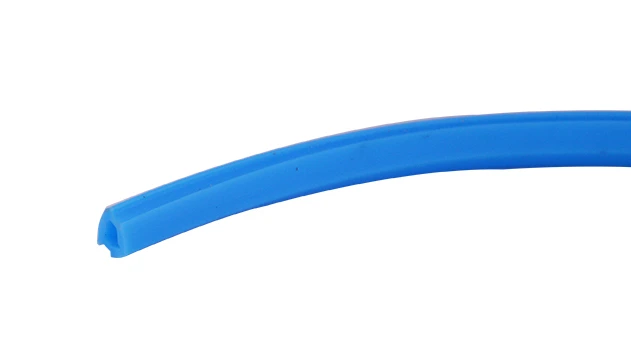
The rubber T-slot seal cover prevents dust and debris buildup, covers wires in the T-slot channel, and adds an extra layer of protection to applications. It rolls into the T-slot, making it easy to assemble.
In the world of lean manufacturing and efficient workflow design, it's often the smallest components that make the biggest difference. Think about it: a well-oiled production line relies on precision, from the conveyor belts moving parts to the workbenches where assembly happens. But what about the tiny details—like the rubber strips that line the T-slots of aluminum profiles or lean pipes? These unassuming pieces, known as T-slot rubber seal covers, might not grab headlines, but they play a critical role in keeping systems running smoothly. They seal gaps, block dust and debris, reduce noise, and even add a layer of safety by softening sharp edges. But here's the question many engineers, facility managers, and procurement teams find themselves asking: Are these T-slot rubber seal covers compatible with every lean pipe size and type out there?
If you've ever ordered a batch of seal covers only to find they're too loose, too tight, or just plain wrong for your setup, you know the frustration. Mismatched covers can lead to wasted time, increased costs, and even production delays. In this article, we'll dive deep into the world of T-slot rubber seal covers, exploring what they are, why compatibility matters, and how to ensure you're choosing the right ones for your specific lean pipe system—whether you're working with aluminum extrusion profiles, PE-coated lean pipes, or stainless steel series. Let's start by breaking down the basics.
What Are T-Slot Rubber Seal Covers, Anyway?
Before we jump into compatibility, let's make sure we're all on the same page about what T-slot rubber seal covers actually are. At their core, these are flexible strips made from rubber, silicone, or PVC, designed to fit snugly into the T-shaped slots found on aluminum profiles, lean pipes, and other structural components used in lean systems. Picture the grooves running along the edges of a workbench or a flow rack—those are T-slots, and seal covers are the soft, protective liners that fill them.
Their primary job? To seal the slot. But that simple task has ripple effects across your operation. By covering the slot, they prevent dust, dirt, and small debris from collecting inside—debris that could otherwise jam moving parts, like the rollers on a flow rack or the sliding mechanisms of a conveyor. They also dampen vibrations and noise, which might not seem critical until you've spent a day on a factory floor with a dozen uncovered T-slots rattling. And let's not forget safety: exposed T-slots can have sharp edges, especially on aluminum extrusion profiles, and a rubber cover softens those edges, reducing the risk of cuts or scrapes for workers.
Most T-slot rubber seal covers are designed to be flexible and easy to install. They're often sold in rolls or pre-cut lengths, and you can simply press them into the T-slot by hand (though a rubber mallet might help for a tighter fit). Materials vary: rubber is durable and cost-effective, silicone handles high temperatures better, and PVC offers flexibility for irregular slot shapes. But regardless of the material, the key to their effectiveness lies in one thing: how well they fit the slot they're meant to seal .
Why Compatibility Isn't Just a "Nice-to-Have"—It's Critical
You might be thinking, "How much can a misfit rubber strip really affect my operation?" Let's paint a picture. Imagine you've just set up a new aluminum extrusion profile workbench (maybe a 4040 series, common for heavy-duty tasks) and ordered T-slot seal covers based on a quick glance at the specs. When they arrive, you notice they're about 2mm too narrow for the T-slot. You press them in, but they slide around loosely. At first, it seems minor—until a week later, when you walk by the workbench and see dust, metal shavings, and even small screws collecting in the gaps around the covers. Over time, that debris builds up, making it harder to adjust accessories (like tool holders or shelves) that slide into the T-slots. Eventually, a chunk of debris jams a sliding part, halting production while someone cleans it out. Suddenly, that "minor" misfit is costing you time and money.
Or consider the opposite scenario: the seal covers are too tight. You force them into the T-slots, but the rubber stretches and tears at the corners. Now you've got frayed edges that catch on gloves or clothing, creating a safety hazard. Worse, the torn sections no longer seal the slot, so you're back to square one—plus you've wasted money on covers that need to be replaced. And let's not overlook aesthetics: mismatched or damaged covers make even the most well-designed lean system look unprofessional, which can matter if clients or auditors visit your facility.
The bottom line? Compatibility isn't just about making things look neat. It's about protecting your equipment, ensuring safety, maintaining efficiency, and avoiding unnecessary costs. To avoid these headaches, you need to understand what factors influence whether a T-slot rubber seal cover will work with your specific lean pipe or profile.

Key Factors That Determine Compatibility
T-slot rubber seal covers aren't one-size-fits-all, and their compatibility depends on a few key variables. Let's break them down so you can make informed choices.
1. T-Slot Dimensions: Size Really Does Matter
The most obvious factor is the size of the T-slot itself. T-slots come in different widths and depths, and these measurements vary depending on the type of lean pipe or profile you're using. For example, a small 2020 aluminum extrusion profile (common in lightweight workbenches) might have a T-slot that's 6mm wide and 6mm deep, while a heavy-duty 4080 profile (used in industrial conveyors) could have a slot that's 12mm wide and 10mm deep. If your seal cover is designed for a 6x6mm slot, it won't stand a chance in a 12x10mm slot—and vice versa.
But it's not just width and depth. The "shape" of the T-slot matters too. Most standard aluminum extrusion profiles have a classic T-shape: a narrow opening at the top that widens into a larger channel below. This design helps the seal cover stay in place, as the wider base of the cover "locks" into the slot. However, some custom profiles or older lean pipes might have irregular slot shapes—like rounded edges or tapered channels. In those cases, a standard T-slot cover might not fit, even if the width and depth are close.
2. Lean Pipe/Profile Material: It's Not Just About the Slot
The material of your lean pipe or profile also plays a role in compatibility. Let's say you're working with two different types of pipes: an aluminum extrusion profile and a PE-coated lean pipe. Aluminum profiles have rigid, precise T-slots machined to tight tolerances. PE-coated pipes, on the other hand, have a plastic coating over a metal core, which can add thickness to the pipe's outer surface. While the T-slot itself (the inner channel) might be the same size as an uncoated pipe, the coating can affect how you install the cover—for example, making it harder to use a mallet without damaging the coating. You might need a more flexible cover material (like PVC) that can conform to slight irregularities in the slot caused by the coating.
Stainless steel pipe series present another consideration. Stainless steel is smoother than aluminum, which can make it harder for rubber seal covers to grip. In this case, you might need a cover with a slightly tighter fit or a material with more friction (like rubber with a textured surface) to prevent slipping. Meanwhile, if you're using a corrugated aluminum pipe (less common, but used in some specialized applications), the slot edges might be uneven, requiring a more malleable cover material like silicone.
3. Profile Type: Not All "Lean Pipes" Are Created Equal
The term "lean pipe" can refer to a range of products, from basic PE-coated steel pipes to precision-engineered aluminum extrusion profiles. Each type has its own T-slot design, and thus its own compatibility needs. Let's focus on the three most common categories:
- Aluminum Extrusion Profiles : These are the workhorses of modern lean systems. Brands like 2020, 3030, 4040, and 4080 refer to their dimensions (e.g., 20mm x 20mm, 40mm x 40mm). Their T-slots are standardized, meaning manufacturers often produce seal covers specifically for these series. This makes compatibility more straightforward—if you know you have a 3030 aluminum extrusion profile, you can usually find a seal cover labeled for 3030 slots.
- PE-Coated Lean Pipes : These are steel pipes coated in polyethylene, popular for their affordability and flexibility in building custom racks or workstations. The coating adds thickness (typically 0.8mm to 2.0mm), which can affect the inner T-slot dimensions. For example, a 28mm PE-coated pipe might have the same inner slot size as a 25mm uncoated pipe, but the outer diameter is larger. This doesn't change the seal cover size, but it's important to measure the inner slot (not the outer pipe) when ordering.
- Stainless Steel Pipe Series : Used in environments where corrosion resistance is key (like food processing or pharmaceutical facilities), stainless steel pipes often have smoother T-slots. However, some are threaded or have slightly different tolerances than aluminum, so seal covers designed for aluminum might not grip as well here.

Compatibility Breakdown: Which Covers Work with Which Pipes?
Now that we understand the factors at play, let's get specific. Below is a breakdown of how T-slot rubber seal covers perform with common lean pipe sizes and types, including real-world examples and a compatibility table to simplify your decision-making.
Aluminum Extrusion Profiles: The Most Standardized Option
Aluminum extrusion profiles are the easiest to work with when it comes to T-slot seal covers, thanks to their standardized designs. Most manufacturers (like those producing 2020, 3030, or 4040 profiles) publish detailed specs for their T-slots, and seal cover suppliers tailor their products to match. For example:
2020 Aluminum Extrusion Profile : These small, lightweight profiles are ideal for light-duty workbenches or shelving. Their T-slots are typically 6mm wide and 6mm deep. A standard 6x6mm rubber or PVC seal cover will fit snugly here. Since the profiles are small, flexibility isn't a huge concern—even a rigid rubber cover will work, as long as the dimensions match.
3030 Aluminum Extrusion Profile : A step up in size, 3030 profiles are common in medium-duty applications like flow racks or assembly stations. Their T-slots are usually 8mm wide and 8mm deep. Look for 8x8mm seal covers here. If you're using the profile in a high-temperature environment (near ovens or furnaces), opt for silicone covers, as they'll hold up better than standard rubber.
4040 Aluminum Extrusion Profile : The workhorse of industrial settings, 4040 profiles handle heavy loads, from conveyor supports to large workbenches. T-slots here are often 10mm wide and 10mm deep, so 10x10mm covers are the norm. Durability is key—rubber or EPDM (ethylene propylene diene monomer) covers work best, as they resist tearing under frequent use.
4080 Aluminum Extrusion Profile : These extra-wide profiles (40mm x 80mm) are used for large structures like machine guards or heavy equipment bases. T-slots can be up to 12mm wide and 10mm deep. You'll need 12x10mm covers here, and since the slots are longer, consider buying longer rolls to minimize seams (which can let debris in).
PE-Coated Lean Pipes: Watch the Coating Thickness
PE-coated lean pipes are trickier because the polyethylene coating adds a layer that can obscure the inner T-slot dimensions. For example, a pipe labeled "28mm PE-coated" might have a steel core of 25mm and a 1.5mm coating. The T-slot is cut into the steel core, so the slot size depends on the core, not the outer diameter. To avoid confusion, always measure the T-slot directly with a caliper. Common PE-coated pipe T-slot sizes include 8x7mm (for 1.5mm coating) and 10x9mm (for 2.0mm coating). Flexible PVC covers work best here, as they can conform to slight irregularities in the slot caused by the coating process.
Stainless Steel Pipe Series: Smooth Surfaces Need Tighter Fits
Stainless steel pipes have smooth, non-porous surfaces, which means seal covers can slip more easily than on aluminum (which has a slightly rougher texture). To combat this, look for covers with a slightly tighter fit—for example, if the T-slot is 10mm wide, a 10.5mm cover (stretched slightly during installation) will grip better. Silicone covers are a good choice here too, as they have more friction than rubber. Avoid PVC if the environment involves chemicals, as some solvents can degrade PVC over time (stainless steel is often used in chemical-heavy settings, so compatibility here is doubly important).
| Lean Pipe/Profile Type | Common Size | T-Slot Width (mm) | T-Slot Depth (mm) | Recommended Seal Cover Size (mm) | Best Material | Notes |
|---|---|---|---|---|---|---|
| Aluminum Extrusion Profile | 2020 Series | 6 | 6 | 6x6 | Rubber/PVC | Standard for light-duty workbenches; minimal flexibility needed. |
| Aluminum Extrusion Profile | 3030 Series | 8 | 8 | 8x8 | Silicone/EPDM | Good for flow racks; silicone resists high temps. |
| Aluminum Extrusion Profile | 4040 Series | 10 | 10 | 10x10 | Rubber/EPDM | Heavy-duty workstations; durability is key. |
| PE-Coated Lean Pipe | 1.5mm Coating | 8 | 7 | 8x7 | Flexible PVC | Measure inner slot (not outer diameter); coating adds thickness. |
| Stainless Steel Pipe Series | 2.0mm Wall | 10 | 9 | 10x9 | Silicone | Smooth surface requires tighter fit; resist chemicals. |
Custom or Non-Standard Profiles: What If Your Pipe Isn't on the List?
Not every lean system uses off-the-shelf profiles. Maybe you're working with a custom aluminum extrusion for a specialized machine, or an older stainless steel pipe with non-standard T-slots. In these cases, the golden rule is: measure twice, order once . Use a digital caliper to measure the T-slot width (the opening at the top) and depth (from the opening to the bottom of the slot). Note any irregularities, like rounded edges or tapered sides. Many seal cover suppliers offer custom cutting or can adjust dimensions for non-standard slots—just be prepared to share your measurements and possibly a sample of the slot (if the supplier offers that service).
Installation Tips to Ensure a Perfect Fit
Even with the right-sized cover, poor installation can lead to issues. Here are a few pro tips to get the best fit:
- Clean the T-Slot First : Dust, grease, or old adhesive can prevent the cover from seating properly. Wipe the slot with a dry cloth or alcohol wipe before installing.
- Start at One End : Align the cover with the end of the slot and press it in firmly, working your way to the other end. This prevents wrinkles or gaps.
- Use a Rubber Mallet for Tight Fits : If the cover is slightly larger (for a snug grip), tap it gently with a rubber mallet to seat it. Avoid metal hammers—they can damage the cover or the profile.
- Trim Excess Length : Use sharp scissors or a utility knife to cut the cover to the exact length of the slot. A clean cut prevents fraying.
- Check for Gaps : After installation, run your finger along the cover. If you feel gaps, the cover might be too small, or there might be debris under it. Remove, clean, and try again with a new piece if needed.
Troubleshooting Common Compatibility Issues
Even with careful planning, you might run into problems. Here's how to fix the most common issues:
Issue: Covers keep sliding out of the slot. This means the cover is too loose. Solution: Try a larger size (e.g., 10x10mm instead of 9x9mm) or a material with more friction (like rubber instead of PVC). If custom sizes aren't available, you can add a small dot of adhesive (like super glue) at the ends to hold the cover in place (just avoid getting adhesive in the slot itself, as it can make future removal hard).
Issue: Covers tear when installing. This usually happens if the cover is too tight or the material is too rigid. Solution: Switch to a smaller size or a more flexible material (like PVC instead of hard rubber). If the slot has sharp edges, file them down slightly before installing.
Issue: Covers discolor or degrade quickly. This could be due to chemical exposure (like oils or solvents in the workspace) or UV light (if the profile is near a window). Solution: Choose a chemical-resistant material (like EPDM or silicone) or UV-stabilized PVC. If discoloration is purely cosmetic, consider a darker color (black or gray) that hides stains better than white or yellow.
Final Thoughts: Compatibility Starts with Knowledge
T-slot rubber seal covers might be small, but their impact on your lean system's efficiency, safety, and longevity is undeniable. The good news is that compatibility issues are avoidable—with a little knowledge of your lean pipe's dimensions, material, and profile type, you can choose covers that fit like a glove.
Remember: aluminum extrusion profiles (like 2020, 3030, 4040) are the most standardized, making them easy to match with off-the-shelf covers. PE-coated pipes require measuring the inner T-slot, not the outer diameter. Stainless steel pipes need tighter fits and chemical-resistant materials. And when in doubt, ask your supplier for a sample—most will send a small piece of cover so you can test the fit before ordering in bulk.
At the end of the day, lean manufacturing is all about attention to detail. By taking the time to ensure your T-slot rubber seal covers are compatible with your lean pipe sizes and types, you're not just keeping things clean—you're keeping your entire operation running smoothly. And in the world of lean, smooth is the name of the game.