- Company Articles
- Products and Technology
- Solution
- T-Slot Rubber Seal Covers for Computer Peripheral Production: Sealing Solutions for Precision Assembly

T-Slot Rubber Seal Covers for Computer Peripheral Production: Sealing Solutions for Precision Assembly
Related Product
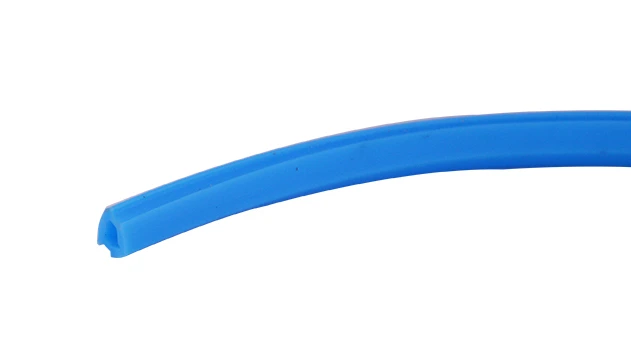
T-slot Rubber Seal Cover
The rubber T-slot seal cover prevents dust and debris buildup, covers wires in the T-slot channel, and adds an extra layer of protection to applications. It rolls into the T-slot, making it easy to assemble.
In the fast-paced world of computer peripheral manufacturing, where every millimeter counts, precision isn't just a goal—it's the backbone of quality. Whether assembling the tactile switches of a mechanical keyboard, the sensor module of a high-precision mouse, or the hinge mechanism of a monitor stand, even the smallest flaw can compromise functionality. Yet, one often-overlooked threat to precision lurks in plain sight: the tiny gaps and crevices in the very workbenches and assembly lines that bring these products to life. Enter T-slot rubber seal covers—a humble but critical component that's quietly revolutionizing how manufacturers protect their processes, their equipment, and ultimately, their bottom line.
The Hidden Challenge: Why T-Slots Need Sealing in Computer Peripheral Production
Walk into any modern electronics manufacturing facility, and you'll likely spot workbenches and assembly lines built with aluminum extrusion profiles. These versatile, modular structures are beloved for their flexibility—thanks to T-slots, the elongated grooves running along their length, which allow tools, fixtures, and accessories to be mounted and repositioned with ease. From holding keyboard keycap jigs to securing mouse sensor alignment tools, T-slots are the unsung heroes of adaptable production lines. But here's the catch: those same T-slots, if left unprotected, become magnets for trouble.
In computer peripheral production, the environment is teeming with potential contaminants. Dust from packaging materials, metal shavings from machining, even microscopic plastic particles from 3D-printed fixtures—all of these can settle into T-slots. Over time, this debris accumulates, turning smooth, functional grooves into gritty, unreliable spaces. The consequences? Tools slip out of alignment, mounting brackets jam, and worst of all, debris can dislodge and land on sensitive components mid-assembly. A single speck of dust in a keyboard switch, for example, can cause a key to stick or fail entirely. For manufacturers, this translates to higher defect rates, costly rework, and missed deadlines—all of which run counter to the principles of lean system efficiency that drive modern production.
This is where T-slot rubber seal covers step in. Designed to fit snugly into the T-slots of aluminum extrusion profiles, these unassuming strips act as a barrier, blocking debris while maintaining the profiles' functionality. Think of them as a protective "skin" for your assembly line—quietly working behind the scenes to keep critical components clean and precise.
What Are T-Slot Rubber Seal Covers, and How Do They Work?
At their core, T-slot rubber seal covers are flexible strips of rubber or elastomer material engineered to fit the unique geometry of T-slots in aluminum extrusion profiles. Most are made from durable materials like EPDM (ethylene propylene diene monomer) rubber or silicone, chosen for their resilience, temperature resistance, and ability to conform to tight spaces. Unlike rigid plastic covers, rubber seal covers are soft enough to compress slightly when accessories are mounted in the T-slot, ensuring a tight seal even with tools in place.
Installation is typically straightforward: most designs feature a "push-fit" style, where the cover is simply pressed into the T-slot until it locks into place. Some may also include adhesive backing for extra security, though the push-fit method is preferred for its reusability—if you need to reposition a tool, you can temporarily remove the cover, adjust the accessory, and pop the cover back in without damaging it. This ease of use is a boon for manufacturers, as it minimizes downtime during line reconfigurations—a key priority in lean system setups, where agility is everything.
But their real magic lies in their dual role: protection and preservation. By sealing the T-slot, they prevent dust, moisture, and debris from accumulating inside. This not only keeps the slot clean but also reduces wear and tear on the aluminum extrusion profile itself. Without a seal, debris can act like sandpaper, scratching the T-slot's inner surfaces over time and making it harder to mount accessories securely. Over years of use, this wear can render entire sections of a workbench or assembly line unreliable—a costly problem that seal covers help avoid.

From Workbench to Assembly Line: Real-World Impact in Computer Peripheral Production
To understand the value of T-slot rubber seal covers, let's step into the shoes of a typical computer peripheral manufacturer—say, a company producing high-end mechanical keyboards. Their assembly workbenches, built with 4040 aluminum extrusion profiles, are bustling with activity: operators use T-slot-mounted jigs to align keycaps, torque drivers to secure switches, and vision systems to inspect for defects. But before implementing seal covers, they faced a recurring issue: by mid-shift, dust and plastic particles from the keycap molding process would settle into the T-slots. By the end of the day, the jigs would start to wobble, leading to misaligned keycaps and a 3% defect rate—enough to eat into profit margins and delay shipments.
After consulting with their lean system team, they decided to test T-slot rubber seal covers on a handful of workbenches. The results were striking: within a week, the defect rate on those benches dropped to 0.5%. Operators reported that jigs stayed aligned longer, and cleaning crews spent 60% less time vacuuming out T-slots. Encouraged, the manufacturer rolled out the covers across all assembly lines. Within three months, overall defect rates fell by 2.2%, and annual savings from reduced rework and cleaning time topped $45,000. For a component that costs just a few dollars per linear foot, the return on investment was undeniable.
This scenario isn't unique. From mouse sensor assembly lines (where even a hair in the T-slot can throw off calibration) to monitor stand production (where metal shavings can jam hinge mounts), T-slot rubber seal covers are proving to be a low-cost, high-impact solution for maintaining precision in computer peripheral manufacturing.

Technical Specs: Choosing the Right T-Slot Rubber Seal Cover for Your Needs
Not all T-slot rubber seal covers are created equal. To maximize their effectiveness, manufacturers need to choose the right cover for their specific aluminum extrusion profile, environment, and application. Below is a breakdown of key specifications to consider, along with a comparison table of common options:
| Aluminum Extrusion Profile Type | Seal Cover Material | Temperature Resistance Range | Color | Installation Method | Key Use Case |
|---|---|---|---|---|---|
| 2020 (small workbenches, light fixtures) | EPDM Rubber | -40°C to 120°C (-40°F to 248°F) | Black | Push-fit | Keyboard keycap assembly jigs |
| 3030 (medium workbenches, tool racks) | Silicone | -60°C to 200°C (-76°F to 392°F) | Gray | Push-fit with adhesive backing | Mouse sensor module testing stations |
| 4040 (heavy-duty assembly lines, conveyor systems) | Fluorinated Rubber (FKM) | -20°C to 260°C (-4°F to 500°F) | White (ESD-safe) | Push-fit with locking tabs | Monitor hinge machining lines (high heat) |
| 4080 (large-scale production lines, material racks) | EPDM Rubber (reinforced) | -30°C to 150°C (-22°F to 302°F) | Blue (visual identification) | Push-fit | Pallet conveyor systems (high debris) |
Material Matters: EPDM is the most popular choice for general-purpose use, offering a balance of flexibility, durability, and cost. Silicone is ideal for high-temperature environments, such as near soldering stations or heat-curing ovens. Fluorinated rubber (FKM) is reserved for extreme conditions, like those involving chemicals or sustained high heat. For ESD-sensitive areas (common in electronics manufacturing), look for conductive or static-dissipative rubber options, often colored white or pink for easy identification.
Profile Compatibility: T-slot sizes vary by profile type—2020 profiles have smaller T-slots than 4080 profiles, for example. Always check the cover's dimensions to ensure a snug fit; a cover that's too loose won't seal properly, while one that's too tight may tear during installation.
Color Coding: While color doesn't affect performance, it can improve workflow efficiency. Many manufacturers use color-coded covers to differentiate between production lines (e.g., blue for keyboard assembly, gray for mouse production) or to highlight ESD-safe zones.
Case Study: How a Mouse Manufacturer Cut Defects by 40% with T-Slot Rubber Seal Covers
A leading manufacturer of gaming mice was struggling with inconsistent sensor performance in their flagship model. After months of troubleshooting, their engineering team traced the issue to their assembly workbenches—specifically, the T-slots in their 3030 aluminum extrusion profile workstations. During sensor calibration, tiny plastic particles from the mouse's outer casing would fall into the T-slots, then dislodge when operators adjusted the calibration tool. These particles would land on the sensor lens, causing erratic tracking in finished mice.
The team tested several solutions: daily deep cleaning of T-slots (too time-consuming), plastic caps (made tool adjustments difficult), and finally, T-slot rubber seal covers made from silicone. The silicone covers were chosen for their heat resistance (the calibration tools generated mild heat) and flexibility. Within two weeks of installation, sensor defects dropped by 40%. Operators noted that the covers stayed in place even with frequent tool adjustments, and cleaning time for the workbenches was reduced by 75%. Today, the manufacturer includes T-slot rubber seal covers as a standard part of their lean system checklist for all new assembly lines.
Beyond Protection: The Hidden Benefits of T-Slot Rubber Seal Covers
While their primary role is to seal T-slots, rubber seal covers offer a host of secondary benefits that align with lean system goals and long-term operational efficiency:
- Extended Equipment Lifespan: By preventing debris from scratching or wearing down T-slot surfaces, seal covers extend the life of aluminum extrusion profiles. This reduces the need for costly replacements, especially in high-traffic areas like conveyor systems.
- Improved Ergonomics: Unsealed T-slots can have sharp edges, which can irritate operators' hands during tool adjustments. Rubber covers soften these edges, making workbenches safer and more comfortable to use.
- Reduced Noise: In conveyor systems, metal accessories moving in unsealed T-slots can rattle or squeak. Rubber covers dampen this noise, creating a quieter, less stressful work environment.
- Sustainability: By reducing rework and extending equipment life, seal covers help minimize waste—a core principle of lean manufacturing. Many are also made from recyclable rubber materials, aligning with eco-friendly production goals.
Addressing Common Concerns: Myths vs. Reality
Despite their benefits, some manufacturers hesitate to adopt T-slot rubber seal covers due to misconceptions. Let's debunk a few common myths:
Myth:
"Seal covers will make it harder to mount accessories in T-slots."
Reality:
Modern seal covers are designed to compress when accessories are mounted, creating a tight seal around the accessory's mounting bolt or bracket. Most manufacturers report no difference in tool adjustability after installation.
Myth:
"They'll melt or degrade in high-temperature environments."
Reality:
While basic EPDM covers have temperature limits, specialized options like silicone or FKM covers can withstand extreme heat (up to 260°C/500°F) and cold (down to -60°C/-76°F), making them suitable for most manufacturing environments.
Myth:
"They're too expensive for small-scale operations."
Reality:
T-slot rubber seal covers cost as little as $0.50 per linear foot (depending on material and quantity). For a small workbench with 10 feet of T-slots, that's a one-time cost of $5—far less than the cost of reworking even a single defective product.
The Future of Precision: Why T-Slot Rubber Seal Covers Are Here to Stay
As computer peripherals continue to evolve—with thinner designs, more sensitive components, and stricter quality standards—the need for precision in manufacturing will only grow. T-slot rubber seal covers, once an afterthought, are increasingly becoming a critical part of the production toolkit. Innovations in materials (like conductive rubber for ESD-sensitive applications) and custom designs (for non-standard T-slot geometries) are making them even more versatile.
For manufacturers committed to lean system principles, seal covers are a no-brainer: they reduce waste, improve quality, and boost efficiency—all with minimal upfront investment. As one production manager put it: "They're the kind of solution that makes you wonder, 'Why didn't we do this sooner?'"
Conclusion: Small Component, Big Impact
In the intricate dance of computer peripheral production, where precision and efficiency reign supreme, T-slot rubber seal covers may seem. But their impact is undeniable. By sealing the gaps that threaten precision, they protect products, streamline workflows, and align with the lean system goals that drive modern manufacturing. Whether you're assembling a $50 mouse or a $500 mechanical keyboard, these simple rubber strips are quietly ensuring that every product that leaves your line is built to last—one sealed T-slot at a time.