- Company Articles
- Products and Technology
- Product knowledge
- T-Slot Rubber Seal Covers for Flexible Production Lines: Adapting to Dynamic Manufacturing Needs

T-Slot Rubber Seal Covers for Flexible Production Lines: Adapting to Dynamic Manufacturing Needs
Related Product
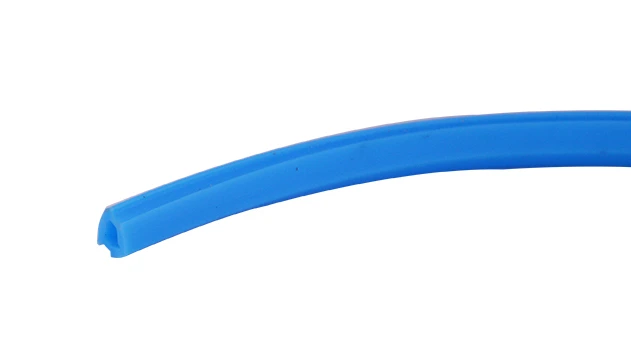
T-slot Rubber Seal Cover
The rubber T-slot seal cover prevents dust and debris buildup, covers wires in the T-slot channel, and adds an extra layer of protection to applications. It rolls into the T-slot, making it easy to assemble.
Walk into any modern manufacturing facility today, and you'll likely notice a common theme: adaptability. Production lines that once ran the same process day in, day out now shift between products hourly. Workbenches reconfigure in minutes to accommodate new tools. Roller tracks reroute materials to meet sudden demand spikes. In this world of constant change, the difference between a smooth operation and a chaotic one often lies in the smallest components—like the unassuming T-slot rubber seal cover. Far more than just a "filler" for aluminum profile slots, these covers are silent workhorses, keeping flexible production lines efficient, safe, and ready to tackle whatever the day throws at them.
The Rise of Flexible Manufacturing: Why Every Component Counts
Gone are the days of rigid assembly lines built for a single product's lifecycle. Today's manufacturers operate in a landscape defined by customization, short product runs, and rapid innovation. A consumer electronics plant might switch from assembling smartwatches to fitness trackers in a morning; an automotive supplier could pivot from producing door handles to dashboard components by afternoon. This flexibility isn't just a luxury—it's survival. And at the heart of this adaptability lies modular infrastructure, with aluminum extrusion profiles serving as the backbone.
Aluminum profiles are beloved in manufacturing for good reason. Lightweight yet strong, they're easy to cut, drill, and connect using simple brackets and joints. Their T-shaped slots—those long, narrow grooves running along their length—are what make them truly modular. These slots let workers attach everything from shelves and tool holders to roller tracks and conveyor belts, all without welding or heavy machinery. But here's the catch: those T-slots, left exposed, can become a hidden liability.
Imagine a busy workbench where a technician is assembling circuit boards. A tiny screw slips from their hand, falls into an open T-slot, and disappears. Later, when the workbench is reconfigured to mount a new tool, the screw jams the bracket, delaying setup. Or consider a roller track moving delicate plastic parts: dust and debris accumulate in exposed T-slots, gumming up the rollers and causing jams. Over time, moisture seeps into unprotected slots, corroding the aluminum and shortening the profile's lifespan. These are the kinds of "small" problems that erode efficiency—exactly what lean systems aim to eliminate.
T-Slot Rubber Seal Covers: The Unsung Heroes of Modular Infrastructure
Enter the T-slot rubber seal cover. At first glance, it might seem like a trivial accessory—a thin strip of rubber or plastic designed to snap into the T-slot of an aluminum profile. But its impact is anything but trivial. Think of it as a protective barrier, a noise dampener, and a workflow optimizer all in one.
Let's break down what makes these covers indispensable. First, protection. By sealing the T-slot, they block dust, metal shavings, and liquids from accumulating inside. This isn't just about keeping the profile clean; it's about preserving functionality. A clean slot ensures that brackets, connectors, and other aluminum profile accessories slide in smoothly during reconfiguration—no more wrestling with stuck components or spending 10 minutes digging out a misplaced washer. For facilities running 24/7, that time adds up fast.
Then there's safety. Exposed T-slots have sharp edges—nothing dangerous, but enough to catch a worker's glove or scratch hands during setup. Rubber seal covers soften those edges, turning a potential annoyance into a smooth, tactile surface. In environments where workers are constantly adjusting equipment, that small comfort boost reduces fatigue and keeps focus where it belongs: on the task at hand.
Noise reduction is another hidden benefit. In manufacturing, the clatter of parts moving along roller tracks, tools hitting workbenches, and conveyors humming is constant. T-slot covers dampen these sounds by absorbing vibrations and preventing small debris from rattling around in empty slots. One plant manager I spoke with (let's call him Mike, from a mid-sized automotive parts supplier) put it this way: "We didn't realize how much noise the open slots added until we covered them. The floor feels calmer now—workers aren't shouting over the din, and communication is clearer. It's made a bigger difference than we expected."

Matching the Cover to the Job: A Closer Look at Materials and Designs
Not all T-slot rubber seal covers are created equal. Manufacturers offer a range of options to suit different environments, from cleanrooms to heavy-duty assembly lines. The most common materials are EPDM rubber (known for heat and chemical resistance), silicone (ideal for high-temperature applications), and durable plastics like polypropylene (great for general use). Colors matter too—yellow for high-visibility areas, grey for sleek, understated workbenches, or even custom hues to match company branding.
To illustrate how these choices play out in real scenarios, let's compare two popular options: yellow and grey plastic roller track guide rails. While not strictly "seal covers," these guide rails often incorporate T-slot sealing features and are critical for material flow. The table below breaks down their key differences:
| Color | Material Composition | Primary Application | Compatibility with Aluminum Profiles | Key Benefit |
|---|---|---|---|---|
| Yellow | Polypropylene with UV stabilizers | High-traffic areas, assembly lines with frequent worker interaction | Fits standard 2020, 3030, and 4040 aluminum profiles | Enhanced visibility reduces collision risks; UV resistance prevents fading in bright light |
| Grey | Reinforced polypropylene with anti-static additives | Cleanrooms, electronics manufacturing, ESD-sensitive environments | Compatible with precision aluminum extrusion profiles (e.g., 4080A, 3060) | Anti-static properties protect sensitive components; neutral color blends with cleanroom aesthetics |
For Mike's automotive plant, the yellow guide rails were a game-changer in their assembly area. "We had a section where workers were constantly moving between two roller tracks—accidental bumps were common. Switching to yellow rails made the paths more visible, and we saw a 30% drop in minor collisions. It's a simple fix, but it speaks to how thoughtful design can prevent problems before they start."

T-Slot Covers and Lean Systems: A Perfect Partnership
At its core, lean manufacturing is about eliminating waste—whether that's wasted time, materials, or effort. T-slot rubber seal covers align perfectly with this philosophy, addressing several types of waste simultaneously.
First, they reduce downtime (a form of "waiting" waste). When T-slots are sealed, roller tracks and conveyor belts jam less frequently, and reconfiguring workbenches takes minutes instead of hours. A food packaging plant in Ohio reported cutting setup time for new product lines by 25% after installing seal covers—time that's now spent producing goods instead of fixing equipment.
Second, they minimize defects (a "defect" waste). In electronics manufacturing, even a speck of dust in an exposed T-slot can contaminate circuit boards. Sealed slots keep sensitive components clean, reducing the number of faulty products that need rework or scrapping. One semiconductor supplier noted a 15% drop in defects after implementing T-slot covers in their cleanroom assembly area.
Third, they support standardization , a key lean principle. By using the same seal covers across all aluminum profiles, manufacturers create consistency in how equipment is built and maintained. New workers can learn to assemble workbenches or repair roller tracks faster, and replacement parts are easier to stock. As Mike put it: "We used to have a mishmash of slot covers—some rubber, some plastic, some that didn't even fit right. Standardizing on one type simplified training and cut our parts inventory costs by 18%."
Beyond the Factory Floor: Unexpected Applications of T-Slot Covers
While T-slot rubber seal covers are most at home in manufacturing, their versatility has led to creative uses beyond the factory. In warehouses, they're used on aluminum profile shelving to prevent small items from slipping through slots. In laboratories, they seal T-slots on custom workstations to contain spills and simplify cleaning. Even in offices, modular desk systems built with aluminum profiles use seal covers to hide cables and create a polished, professional look.
One particularly innovative application is in educational settings. Technical schools and universities with manufacturing programs use aluminum profile workbenches with T-slot covers to teach students about modular design. The covers make the workbenches safer for beginners and easier to reconfigure for different projects—from robotics to 3D printing.
Choosing the Right Supplier: What to Look For
With so many options on the market, selecting a T-slot rubber seal cover supplier can feel overwhelming. Here are a few key factors to consider:
- Material Quality: Ask for material certifications (e.g., RoHS compliance for electronics, FDA approval for food contact). Cheap rubber or plastic can degrade quickly, leading to frequent replacements.
- Customization Options: Can they match specific colors or add features like anti-static properties? A supplier willing to tailor products to your needs is worth the investment.
- Technical Support: Look for suppliers that provide CAD drawings, installation guides, or even on-site training. This is especially valuable if you're new to modular aluminum systems.
- Lead Times: In flexible manufacturing, delays can derail production. Choose a supplier with reliable inventory and fast shipping.
Remember, the best supplier isn't just selling a product—they're partnering with you to solve problems. As one operations director told me: "Our supplier didn't just send us covers; they sent an engineer to walk our floor and recommend the right type for each area. That level of service made all the difference."
The Future of Flexible Manufacturing: Where T-Slot Covers Fit In
As manufacturing continues to evolve—with trends like Industry 4.0, automation, and AI-driven production—modular infrastructure will only grow in importance. T-slot rubber seal covers, while simple, will play a critical role in this future. Imagine smart factories where aluminum profiles are equipped with sensors to monitor equipment health; seal covers could protect these sensors from dust and damage. Or 3D-printed custom covers tailored to unique T-slot designs, making even the most specialized setups efficient and safe.
At the end of the day, though, the value of T-slot rubber seal covers lies in their ability to make the complex simple. They don't require fancy software or massive investments—just a commitment to noticing the small details that shape how work gets done. In a world where manufacturing is faster, more dynamic, and more competitive than ever, sometimes the most powerful innovations are the ones that quietly keep things running smoothly.
So the next time you walk through a manufacturing plant, take a closer look at those aluminum profiles. The T-slot rubber seal covers might be small, but they're a big reason why the line keeps moving, the workers stay safe, and the products keep flowing. In the end, it's the little things that build great manufacturing stories.