- Company Articles
- Products and Technology
- Product knowledge
- T-Slot Rubber Seal Covers for Medical Device Assembly: Meeting FDA and Cleanroom Requirements

T-Slot Rubber Seal Covers for Medical Device Assembly: Meeting FDA and Cleanroom Requirements
Related Product
T-slot Rubber Seal Cover
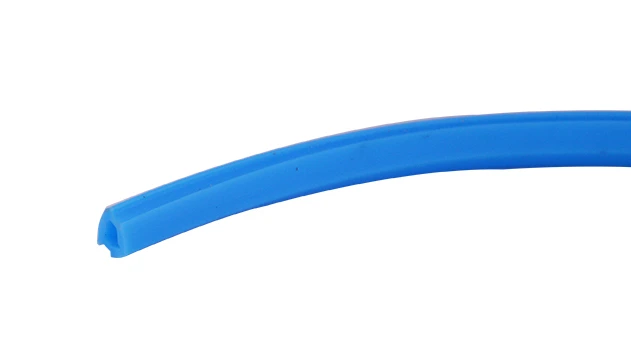
The rubber T-slot seal cover prevents dust and debris buildup, covers wires in the T-slot channel, and adds an extra layer of protection to applications. It rolls into the T-slot, making it easy to assemble.
In the world of medical device manufacturing, precision isn't just a goal—it's a mandate. Every component, every process, and every surface must adhere to standards that leave no room for error. When you're assembling devices that could one day support a patient's heart rhythm, deliver life-saving medication, or diagnose critical illnesses, even the smallest flaw can have catastrophic consequences. That's why cleanrooms and FDA compliance aren't just buzzwords here; they're the foundation of trust between manufacturers, healthcare providers, and the patients who rely on these tools.
But here's the thing: maintaining that level of precision is harder than it sounds. Medical assembly lines are dynamic spaces. They're filled with workbenches, conveyor systems, and aluminum extrusion profiles that form the backbone of production. These structures are designed for efficiency and flexibility, but they also come with tiny gaps, seams, and crevices—perfect hiding spots for dust, debris, or moisture. Over time, these seemingly insignificant spaces can become breeding grounds for contaminants, putting compliance at risk and threatening the integrity of the devices being built.
Enter T-slot rubber seal covers. At first glance, they might seem like a small detail in the grand scheme of medical manufacturing. But anyone who's worked in a cleanroom knows: the smallest details are often the most critical. These unassuming strips of rubber, designed to fit snugly into the T-slots of aluminum profiles, act as silent guardians. They seal off those vulnerable gaps, prevent particle buildup, and ensure that every surface meets the strict standards set by the FDA and cleanroom regulations. Let's dive into how these simple yet powerful components are transforming medical device assembly—and why they've become indispensable for manufacturers committed to excellence.
The Stakes of Cleanroom Compliance in Medical Manufacturing
Before we talk about T-slot rubber seal covers, let's ground ourselves in why cleanroom compliance matters so much. Medical device assembly isn't just about building something that works—it's about building something that's safe to use in clinical settings. The FDA's 21 CFR Part 820, which governs quality systems for medical devices, is clear: manufacturers must establish and maintain procedures to prevent contamination of product contact surfaces. Similarly, ISO 14644-1, the international standard for cleanrooms, classifies air cleanliness based on particle counts (e.g., ISO Class 7 allows no more than 352,000 particles of 0.5μm or larger per cubic meter). For context, that's cleaner than the air in a surgical operating room.
So what happens when these standards aren't met? In 2022, a leading medical device manufacturer was issued a warning letter by the FDA after inspectors found "debris and residue" in the T-slots of aluminum profile workbenches used to assemble insulin pumps. The company had to recall over 100,000 units, costing millions in losses and damaging consumer trust. Another case involved a pacemaker component supplier whose cleanroom failed ISO certification because particle counts spiked near conveyor systems—later traced to gaps in the aluminum extrusion profiles that hadn't been properly sealed. These stories aren't outliers; they're cautionary tales that highlight just how critical surface integrity is in this industry.
The Hidden Challenge: T-Slots in Aluminum Profiles
Most modern medical assembly lines rely heavily on aluminum extrusion profiles. These lightweight, durable structures are the building blocks of workbenches, material racks, and even custom conveyor systems. What makes them so popular? Their T-slots—long, narrow grooves running along the length of the profile. These slots allow manufacturers to attach tools, shelves, monitors, and other accessories with ease, adapting the setup as production needs change. It's a lean system approach, designed to maximize efficiency and minimize waste.
But those T-slots, while versatile, are also a compliance risk. By design, they're recessed, creating tiny channels where dust, lubricants, or even biological contaminants can accumulate. Wiping them down with a disinfectant cloth might remove surface debris, but particles can get trapped deep in the slot, especially if the profile is part of a high-traffic area like a workbench where operators are constantly moving parts. Over time, these particles can dislodge, floating into the air or onto the devices being assembled. For manufacturers, this isn't just a cleanliness issue—it's a violation of FDA's Current Good Manufacturing Practice (CGMP) requirements, which mandate that all product contact surfaces be "maintained to prevent contamination."
T-Slot Rubber Seal Covers: A Simple Solution to a Complex Problem
T-slot rubber seal covers were born out of the need to reconcile two conflicting demands: the flexibility of aluminum extrusion profiles and the strict cleanliness requirements of medical manufacturing. These covers are exactly what they sound like: flexible strips of rubber (often silicone or EPDM) designed to fit perfectly into the T-slots of aluminum profiles. They snap into place, creating a smooth, sealed surface that eliminates gaps and prevents debris from accumulating.
But they're more than just "plug-and-play" fixes. Modern T-slot rubber seal covers are engineered with medical applications in mind. Let's break down their key features and why they matter:
Material Science: Choosing the Right Rubber for the Job
Not all rubber is created equal, especially in medical settings. T-slot seal covers must withstand frequent cleaning with harsh disinfectants (like isopropyl alcohol or hydrogen peroxide), resist degradation from UV light (common in cleanrooms with HEPA lighting), and maintain their elasticity over time. That's why most manufacturers opt for silicone or EPDM rubber:
- Silicone: Offers excellent temperature resistance (-60°C to 200°C), making it ideal for cleanrooms with strict climate control. It's also inert, meaning it won't leach chemicals onto product contact surfaces—a critical feature for FDA compliance.
- EPDM: Known for its durability and resistance to water, steam, and most disinfectants. It's slightly more cost-effective than silicone and performs well in high-moisture environments, like assembly lines where frequent wiping is required.
Both materials are non-porous, which means they don't absorb liquids or harbor bacteria. This is a game-changer for cleaning protocols: instead of scrubbing into T-slots with specialized tools, operators can simply wipe the sealed surface with a lint-free cloth, reducing cleaning time by up to 40% (according to a 2023 study by the Medical Device Manufacturing Association).
Design Features That Drive Compliance
Beyond material choice, the design of T-slot rubber seal covers is tailored to the unique needs of medical assembly. For example:
- Snug Fit: The best seal covers have a "lip" design that grips the edges of the T-slot, preventing them from popping out during vibration (common near conveyor systems or heavy machinery).
- Smooth Surface: No ridges, bumps, or textures that could trap particles. The surface is often slightly matte to reduce glare (important for workbenches with overhead lighting) but still easy to wipe down.
- Color Options: While most are clear or white (to show dirt easily), some manufacturers offer FDA-compliant colors like blue—useful for visual quality checks, as any discoloration or damage is immediately noticeable.
Take, for example, a workbench used to assemble catheter components. The workbench's frame is built from 4040 aluminum extrusion profiles, with T-slots running along the edges to attach tool holders and a monitor arm. Without seal covers, those T-slots would collect dust from the air, lubricant from the tools, and even tiny fragments of plastic from the catheter tubing. With a silicone T-slot rubber seal cover in place, the surface becomes seamless. Operators can wipe it down between shifts, and there's no risk of particles dislodging and contaminating the delicate catheters.

Meeting FDA and ISO Standards: How T-Slot Seal Covers Stack Up
At the end of the day, medical device manufacturers don't adopt new components because they're "nice to have"—they adopt them because they help meet regulatory requirements. Let's map how T-slot rubber seal covers directly address key FDA and ISO standards:
| Regulation/Standard | Key Requirement | How T-Slot Rubber Seal Covers Help |
|---|---|---|
| FDA 21 CFR Part 820.70(a) | "Each manufacturer shall design facilities to prevent contamination of product." | Seals T-slots to eliminate gaps where contaminants (dust, bacteria) can accumulate, reducing cross-contamination risk. |
| ISO 14644-1 (ISO Class 7/8) | Limits particle counts (e.g., ≤352,000 particles of 0.5μm/m³ for Class 7). | Prevents particle shedding from T-slots, lowering overall airborne particle levels in cleanrooms. |
| FDA 21 CFR Part 820.25(a) | "Equipment used in the manufacturing process shall be suitable for its intended use." | Compatible with medical-grade disinfectants and cleanroom conditions, ensuring equipment (workbenches, racks) remains suitable for use. |
| ISO 10993-5 | Tests for cytotoxicity (harm to cells) of materials in contact with medical devices. | Silicone/EPDM seal covers are non-cytotoxic and inert, posing no risk of chemical leaching. |
Perhaps the most compelling example of this is in ESD (Electrostatic Discharge) protected areas (EPAs). Many medical devices, like pacemakers or neurostimulators, contain sensitive electronics that can be damaged by static electricity. Aluminum extrusion profiles are often used in ESD workbenches because they conduct electricity, grounding static charges. But without sealed T-slots, dust accumulation in the slots can insulate the surface, reducing conductivity. A T-slot rubber seal cover made with conductive silicone (a specialized variant) maintains the bench's grounding properties while still sealing the slot—addressing both ESD and contamination risks in one solution.
In 2021, a contract manufacturer specializing in surgical tools switched to conductive T-slot seal covers on their ESD workbenches. Within six months, they saw a 75% reduction in ESD-related component failures and passed their FDA re-inspection with zero observations—a first in the company's history. As their quality manager put it: "We used to spend hours scrubbing T-slots and testing conductivity. Now, we wipe the sealed surface, run a quick grounding check, and get back to production. It's not just compliance—it's efficiency."

Integration with Lean Systems: More Than Just Compliance
Medical device manufacturers don't just care about compliance—they care about efficiency, too. Lean system principles, which focus on minimizing waste and maximizing value, are deeply ingrained in modern manufacturing. T-slot rubber seal covers align perfectly with this mindset, offering benefits that go beyond meeting regulations:
Reduced Downtime for Cleaning and Maintenance
Traditional T-slot cleaning is labor-intensive. Operators might use small brushes, compressed air, or even toothpicks to dislodge debris from the slots—all of which take time and disrupt production. With seal covers, cleaning becomes a quick wipe-down. A 2023 survey by the Lean Manufacturing Institute found that companies using T-slot seal covers reduced cleaning time for aluminum profile workbenches by an average of 65%. For a facility running three shifts, that translates to hundreds of hours saved annually—time that can be redirected to actual production.
Longevity of Aluminum Profiles
Aluminum extrusion profiles are durable, but they're not indestructible. Over time, debris in T-slots can cause micro-abrasions, especially if accessories (like tool mounts) are frequently attached and removed. These abrasions can weaken the profile and create even more crevices for contamination. T-slot seal covers act as a protective barrier, reducing wear and extending the lifespan of the profiles by 30-50%, according to manufacturer data.
Flexibility Without Compromise
One concern some manufacturers have is: "If we seal the T-slots, can we still attach accessories?" The answer is a resounding yes. Modern seal covers are designed to be easily removable. When a workbench needs to be reconfigured (e.g., adding a new shelf or tool holder), operators can simply peel back the seal cover, attach the accessory, and re-seal the slot. It's a minor step that preserves the lean system's core principle of adaptability—without sacrificing cleanliness.
Consider a manufacturer that produces both orthopedic implants and surgical instruments. Their assembly lines need to switch between products multiple times a week, requiring quick reconfigurations of workbenches and material racks. With T-slot rubber seal covers, they can reconfigure a workbench in under 30 minutes (down from 2 hours without seal covers), all while ensuring the new setup still meets cleanroom standards. It's lean manufacturing in action—flexible, efficient, and compliant.
Installation and Best Practices: Getting the Most Out of T-Slot Seal Covers
Like any component, T-slot rubber seal covers work best when installed and maintained properly. Here's a step-by-step guide to ensuring optimal performance:
1. Prepare the T-Slot
Before installing a seal cover, thoroughly clean the T-slot to remove existing debris, oil, or adhesive residue. Use a lint-free cloth dampened with isopropyl alcohol, and allow the slot to dry completely. Any remaining residue can prevent the seal cover from adhering properly, creating gaps.
2. Choose the Right Size
Aluminum extrusion profiles come in different sizes (e.g., 2020, 3030, 4040), and T-slots vary in width and depth. Always check the manufacturer's specifications to ensure the seal cover matches the profile size. A cover that's too small will slip out; one that's too large will stretch and degrade over time.
3. Install with Care
Start by aligning one end of the seal cover with the end of the T-slot. Gently press the cover into the slot, working your way along the profile. For longer profiles, it helps to have a second person hold the opposite end to prevent twisting. Once installed, run a finger along the edge to ensure it's fully seated—you should feel a slight "click" as the lip of the cover grips the slot.
4. Regular Inspection and Replacement
Even the best seal covers wear out over time. Inspect them monthly for signs of damage (e.g., cracks, tears, or loss of elasticity). If a cover is damaged, replace it immediately—don't wait for a compliance inspection. Most manufacturers recommend replacing seal covers every 12-18 months, depending on usage (more frequently in high-traffic areas).
Pro tip: Keep a stock of replacement seal covers on hand. Running out could mean leaving T-slots exposed during production, putting compliance at risk. Many suppliers offer bulk packs tailored to common profile sizes, making it easy to stay prepared.
The Future of T-Slot Seal Covers: Innovations on the Horizon
As medical device manufacturing evolves, so too will the tools that support it. T-slot rubber seal covers are no exception. Here are a few emerging trends to watch:
Smart Seal Covers with Embedded Sensors
Imagine a seal cover that can detect when it's damaged or losing adhesion—before it becomes a contamination risk. Companies are experimenting with conductive silicone seal covers embedded with tiny sensors that monitor integrity. If a crack forms, the sensor sends an alert to the facility's IoT system, triggering a maintenance request. This "predictive maintenance" could revolutionize compliance, turning reactive fixes into proactive prevention.
Antimicrobial Coatings
While silicone and EPDM are already resistant to bacteria, researchers are developing seal covers with antimicrobial coatings (e.g., silver ions) that actively kill pathogens on contact. This could be especially valuable for manufacturers producing devices used in infectious disease settings, adding an extra layer of protection against biological contamination.
Sustainable Materials
As the industry shifts toward sustainability, suppliers are exploring eco-friendly alternatives to traditional rubber. Plant-based silicones and recycled EPDM are being tested, with early results showing comparable performance to conventional materials. For manufacturers aiming for carbon-neutral production, these sustainable seal covers could become a key part of their green initiatives.
Conclusion: Small Component, Big Impact
In the high-stakes world of medical device assembly, T-slot rubber seal covers are easy to overlook. They're not flashy, they don't make headlines, and they rarely get mentioned in product launches. But for the manufacturers who rely on them, they're nothing short of essential. They turn aluminum extrusion profiles—versatile but vulnerable—into compliant, clean surfaces. They reduce downtime, support lean system principles, and give operators the confidence that their workbenches, racks, and conveyors are up to the task of building life-saving devices.
At the end of the day, compliance isn't just about checking boxes. It's about honoring the trust that patients, doctors, and regulators place in medical device manufacturers. T-slot rubber seal covers might be small, but their impact is huge: they help ensure that every device that leaves the factory is not just functional, but safe. And in this industry, that's the highest standard of all.
So the next time you walk through a medical device cleanroom, take a closer look at those aluminum profile workbenches. Chances are, you'll see T-slot rubber seal covers quietly doing their job—sealing gaps, preventing contamination, and keeping the wheels of innovation turning. They're not just components; they're guardians of quality. And in medical manufacturing, that's everything.