- Company Articles
- Products and Technology
- Product knowledge
- T-Slot Rubber Seal Covers in Cold Storage: Low-Temperature Performance and Selection Tips

T-Slot Rubber Seal Covers in Cold Storage: Low-Temperature Performance and Selection Tips
Related Product
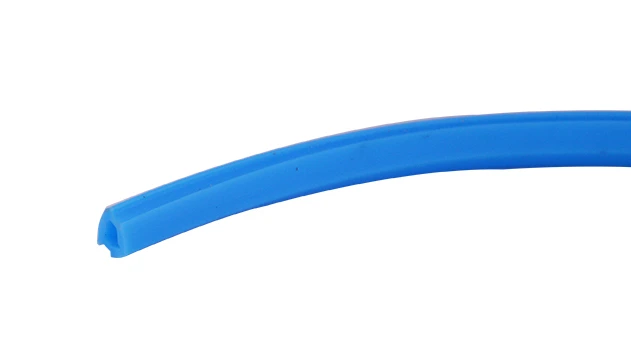
T-slot Rubber Seal Cover
The rubber T-slot seal cover prevents dust and debris buildup, covers wires in the T-slot channel, and adds an extra layer of protection to applications. It rolls into the T-slot, making it easy to assemble.
Step into a bustling cold storage facility, and you'll notice the rhythm of operations: workers moving goods, conveyor belts humming, and aluminum extrusion profiles forming the backbone of workbenches and racks. Amidst all this activity, there's a quiet hero that often goes unnoticed – T-slot rubber seal covers. These unassuming components play a critical role in maintaining efficiency, protecting equipment, and ensuring the longevity of industrial setups, especially in the harsh conditions of cold storage environments. In this article, we'll dive into what makes T-slot rubber seal covers essential, how they perform in low temperatures, and the key factors to consider when selecting the right ones for your facility.
Understanding T-Slot Rubber Seal Covers: What Are They and Why Do They Matter?
To appreciate the value of T-slot rubber seal covers, it helps to first understand the systems they support. In modern industrial facilities – from manufacturing plants to cold storage warehouses – aluminum profiles have become a staple. These profiles, often referred to as aluminum extrusion profiles, are designed with T-shaped slots running along their length. These slots are incredibly versatile, allowing for the easy attachment of accessories: brackets, shelves, tool holders, and even entire workbench setups. They're the building blocks of modular, customizable systems that align perfectly with lean system principles, where adaptability and efficiency are paramount.
But here's the catch: those T-slots, while useful, are also vulnerable points. In cold storage environments, where temperatures can plummet below freezing, moisture, ice, dust, and debris can accumulate in the slots. Over time, this buildup can cause a host of problems: accessories may jam when trying to adjust them, the aluminum profile itself could corrode from trapped moisture, and sharp edges of debris might scratch or damage the slot's interior. This is where T-slot rubber seal covers come in. As the name suggests, these are flexible strips of rubber (or similar materials) designed to fit snugly into the T-slots of aluminum profiles, sealing them off from the elements while still allowing for easy removal when adjustments are needed.
Think of them as a protective barrier for your aluminum extrusion profiles. In cold storage, where every minute of downtime costs money and disrupts workflows, keeping T-slots clean and functional is non-negotiable. A well-chosen seal cover ensures that when a worker needs to reposition a shelf on a material rack or adjust a tool holder on a workbench, they can do so quickly and smoothly – no chiseling out ice or clearing debris first. That's the lean system in action: minimizing waste (in this case, time and effort) and keeping operations running seamlessly.
Low-Temperature Performance: What Makes a Seal Cover Reliable in the Cold?
Cold storage environments are unforgiving, especially for materials that aren't designed to withstand extreme temperatures. For T-slot rubber seal covers, "performance" in this context boils down to one key trait: the ability to function effectively when the mercury drops. Let's break down the critical factors that determine how well a seal cover holds up in low-temperature conditions.
Flexibility at Sub-Zero Temperatures: The Enemy of Brittleness
Rubber, by nature, is flexible – but that flexibility can vanish when temperatures drop. In cold storage, where temperatures can range from just above freezing (chill rooms) to as low as -40°C (deep freezers), a seal cover that becomes hard and brittle is essentially useless. Brittle rubber cracks easily, allowing moisture and debris to seep into the T-slot. Worse, a cracked seal can break off entirely, leaving the slot exposed and defeating the purpose of having a cover in the first place.
High-quality T-slot rubber seal covers are formulated to retain flexibility even in extreme cold. This is achieved through careful selection of base materials and additives that prevent the rubber from stiffening. For example, silicone-based seal covers are known for their exceptional low-temperature flexibility, often remaining pliable at -60°C. EPDM (ethylene propylene diene monomer) rubber, another common material, performs well down to -40°C. The difference lies in the molecular structure: these materials have long, flexible polymer chains that don't freeze or rigidify as easily as cheaper rubber compounds.
To test this, bending a seal cover at -30°C tells the story. A poor-quality cover would snap or develop cracks; a high-quality one would fold smoothly, returning to its original shape without damage. This flexibility ensures that the seal maintains a tight fit against the aluminum profile, even when the profile itself contracts slightly in the cold – a common occurrence with metal materials.
Temperature Range: Matching the Cover to Your Facility's Needs
Not all cold storage facilities are created equal. A dairy storage room might operate at 4°C, while a frozen pizza warehouse could be set to -18°C, and a pharmaceutical storage unit might require -25°C or lower. Choosing a seal cover with a temperature range that aligns with your facility's conditions is critical.
As mentioned earlier, EPDM and silicone are the two most popular materials for low-temperature applications. EPDM is an excellent all-rounder, handling temperatures from -40°C to 150°C – making it suitable for everything from chill rooms to moderate freezers. Silicone, on the other hand, excels in extreme cold, with some formulations surviving down to -60°C. It's the go-to choice for deep freezers or facilities with fluctuating temperatures (e.g., loading docks where seals might be exposed to both cold and ambient temperatures).
It's worth noting that "maximum temperature" is also a consideration, even in cold storage. While the main concern is low temperatures, seal covers might occasionally be exposed to higher heat during cleaning (e.g., steam cleaning) or maintenance. A cover that can withstand brief temperature spikes without degrading will last longer and require fewer replacements.
Durability: Standing Up to Daily Wear and Tear
Cold storage isn't just about low temperatures – it's a high-activity environment. Workers bump into racks, forklifts navigate tight spaces, and cleaning crews regularly sanitize surfaces. T-slot rubber seal covers need to withstand this daily abuse without tearing, cracking, or coming loose.
Durability in seal covers is influenced by several factors: material thickness, tensile strength, and resistance to abrasion. Thicker covers (typically 1-3mm, depending on the T-slot size) are more resistant to punctures, but they must still remain flexible enough to fit into the slot. Tensile strength, measured in megapascals (MPa), indicates how much force the rubber can withstand before breaking – higher is better for withstanding accidental tugs or impacts.
Abrasion resistance is particularly important in areas with high foot traffic or frequent equipment movement. For example, seal covers on workbenches near loading areas might rub against boxes or tools, while those on material racks could be brushed by forklift tines. EPDM tends to have excellent abrasion resistance, making it a durable choice for busy facilities. Silicone, while more flexible in extreme cold, is slightly less abrasion-resistant, so it's often paired with a reinforcing layer (like a fabric mesh) in high-wear applications.
Chemical and Moisture Resistance: Battling the Elements
Cold storage facilities require regular cleaning to prevent the growth of bacteria, mold, or mildew – even in freezing temperatures. This often involves the use of harsh detergents, sanitizers, or pressure washers. T-slot rubber seal covers must resist these chemicals to avoid degradation over time.
EPDM rubber is known for its excellent chemical resistance, particularly against water, steam, alkalis, and most acids. It's a popular choice in food and beverage cold storage, where cleaning agents are commonly used. Silicone, too, holds up well against chemicals, though it can be less resistant to certain solvents. Both materials are inherently water-resistant, which is crucial for preventing moisture from seeping into the T-slot and freezing – a problem that can expand the slot, damage the aluminum profile, or make accessories impossible to adjust.
Another consideration is ozone resistance. While cold storage facilities don't have the same ozone exposure as outdoor environments, some lighting systems or electrical equipment can emit low levels of ozone, which can cause rubber to crack over time. EPDM and silicone are both ozone-resistant, unlike natural rubber, which breaks down quickly in such conditions.

Key Selection Tips: Choosing the Right T-Slot Rubber Seal Cover for Your Cold Storage
Now that we understand what makes T-slot rubber seal covers perform well in cold storage, let's turn to the practical side: how to select the right one for your facility. With so many options on the market, it's easy to feel overwhelmed – but by focusing on these key factors, you can narrow down your choices and make an informed decision.
Step 1: Identify Your Facility's Temperature Extremes
Start by documenting your cold storage's operating temperature range. Don't just rely on the "set" temperature – note any fluctuations (e.g., during loading/unloading, power outages, or maintenance). For example, a facility that occasionally reaches -22°C during peak winter months needs a seal cover rated for at least -25°C to account for these dips. This ensures the cover remains flexible even in unexpected cold snaps.
Step 2: select the Optimal Material (EPDM, Silicone, or Other?)
As discussed earlier, EPDM and silicone are the top contenders for low-temperature applications. Use the table below to compare their key properties and determine which aligns best with your needs:
| Material | Temperature Range (°C) | Flexibility at -30°C | Abrasion Resistance | Chemical Resistance | Cost | Best For |
|---|---|---|---|---|---|---|
| EPDM Rubber | -40 to 150 | Good | High | Excellent (water, alkalis, mild acids) | Moderate | Chill rooms, moderate freezers (-40°C and above), high-traffic areas |
| Silicone Rubber | -60 to 230 | Excellent | Moderate (higher with reinforcement) | Good (acids, solvents, oils) | Higher | Deep freezers (-40°C and below), pharmaceutical storage, extreme temperature fluctuations |
| Neoprene Rubber | -40 to 120 | Fair | High | Excellent (oils, solvents, chemicals) | High | Industrial cold storage with heavy chemical use (e.g., cleaning solvents) |
For most cold storage facilities, EPDM strikes the best balance between performance and cost. If your facility requires deep freezing or frequent temperature swings, silicone is worth the investment. Neoprene is a niche option, ideal only if chemical resistance is the top priority.
Step 3: Consider Hardness (Shore A Scale)
Rubber hardness is measured on the Shore A scale, which ranges from 0 (very soft, like gel) to 100 (hard, like plastic). For T-slot rubber seal covers, the ideal hardness is typically between 50 and 70 Shore A. Softer covers (50-60 Shore A) conform more tightly to the aluminum profile, creating a better seal and easier installation (they "snap" into the slot more smoothly). Harder covers (60-70 Shore A) are more resistant to wear and tear, making them suitable for high-traffic areas or workbenches where tools might scrape against the seal.
It's a trade-off: softer = better sealing, harder = more durable. If your facility has both high-sealing needs (e.g., in humid cold storage where moisture is a concern) and high traffic, consider a medium hardness (60 Shore A) to balance both.
Step 4: Ensure Compatibility with Your Aluminum Profiles
Aluminum profiles come in various sizes, with T-slots of different widths and depths. A 2020 aluminum profile (20mm x 20mm) has a narrower slot than a 4040 profile (40mm x 40mm), and the seal cover must fit perfectly to function. A cover that's too narrow will slip out; one that's too wide won't seat properly, leaving gaps for debris.
Most seal cover manufacturers list compatible profile sizes (e.g., "fits 3030 and 4040 aluminum profiles"). If you're unsure, measure the T-slot's width and depth (typically the slot width is 6mm, 8mm, or 10mm for standard profiles) and compare it to the cover's specifications. Some manufacturers offer samples, which is a good idea if you're working with non-standard profiles or need to test the fit in cold conditions.
Step 5: Evaluate Installation and Maintenance Ease
Time is money in cold storage, so seal covers should be quick to install and easy to replace. Look for "snap-on" designs that require no adhesives or tools – these simply slide into the T-slot and stay in place via friction. Adhesive-backed covers are an option but can be messy to install and difficult to remove without damaging the aluminum profile's finish, especially in cold temperatures where adhesives may lose tackiness.
Maintenance is another factor. Can the cover be easily removed for deep cleaning of the T-slot? Will it withstand being taken on and off repeatedly without stretching or tearing? Snap-on covers excel here, as they're reusable and don't leave residue behind.
Step 6: Check for Industry-Specific Certifications
If your cold storage facility handles food, pharmaceuticals, or medical supplies, the seal cover must meet industry safety standards. For food contact, look for FDA (Food and Drug Administration) or EU 10/2011 certification, which ensures the rubber is non-toxic and won't leach chemicals into food. For pharmaceuticals, USP Class VI certification (for medical-grade materials) may be required. These certifications add a layer of assurance that the cover is safe for use in sensitive environments.

Real-World Applications: How T-Slot Rubber Seal Covers Enhance Cold Storage Operations
To truly grasp the impact of T-slot rubber seal covers, let's look at how they're used in everyday cold storage scenarios. From workbenches to material racks, these small components make a big difference in keeping operations running smoothly.
Workbenches: Keeping Productivity High in Freezing Conditions
Workbenches are the heart of many cold storage operations – they're where workers sort, label, or inspect goods before storage or shipment. Most modern workbenches are built with aluminum extrusion profiles, which allow for easy customization: adding shelves, tool hooks, or bins via the T-slots. Without seal covers, these slots can quickly become filled with ice, frost, or debris from packaging materials.
Imagine a worker trying to adjust a bin on a workbench in a -18°C freezer. If the T-slot is icy, the bin's bracket might jam, requiring the worker to chip away ice with a tool – a time-consuming and frustrating process. With a T-slot rubber seal cover, the slot remains clean and ice-free. The worker can slide the bin into place in seconds, keeping the workflow moving. This not only saves time but also reduces the risk of injury (no sharp tools needed to clear ice) and extends the life of the workbench's accessories.
Some workbenches, like the "Workbench E (single deck-without caster)" from lean system suppliers, are specifically designed for cold storage use. These often come with pre-installed seal covers or recommendations for compatible ones, ensuring that every component works together to support lean productivity.
Material Racks and Turnover Trolleys: Supporting Lean System Efficiency
Material racks and turnover trolleys are essential for organizing and moving goods in cold storage. Built from aluminum profiles, they rely on T-slots to attach dividers, shelves, or wheels. In a lean system, efficiency is key – and nothing kills efficiency like a stuck shelf or a trolley that can't be adjusted to fit different load sizes.
Take "Material Rack B (3 row and 3 floor)" – a common design in cold storage for storing boxes or crates. Each shelf is supported by brackets that slide into the T-slots of the rack's uprights. Without seal covers, ice buildup in the slots could make it impossible to reposition the shelves to accommodate taller boxes. With seal covers, the slots stay clean, and shelves can be adjusted in minutes, allowing the rack to adapt to changing inventory needs. This flexibility is a cornerstone of lean systems, which prioritize minimizing waste (in this case, wasted space or time spent rearranging).
Turnover trolleys, used to transport goods between storage areas and loading docks, face similar challenges. Their aluminum profiles and T-slots need to remain functional even when exposed to both cold storage temperatures and ambient conditions during transport. A well-sealed T-slot prevents moisture from freezing inside, ensuring that the trolley's accessories (like handles or safety rails) stay secure and adjustable.
Conveyors and Roller Tracks: Ensuring Smooth Material Flow
Conveyor systems are the arteries of large cold storage facilities, moving goods from receiving to storage to shipping. Many conveyors use aluminum profiles for their frames, with T-slots that house sensors, guides, or adjustment mechanisms. Roller tracks, another common feature, rely on aluminum guide rails (like "Aluminum Guide Rail A" or "Plastic Roller Track Guide Rail Yellow") to keep rollers aligned. T-slot rubber seal covers on these guide rails prevent debris from jamming the rollers or damaging the track's mechanisms.
For example, "40 Steel Roller Track Yellow Wheel" systems use aluminum profiles to support the rollers. If the T-slots on these profiles are left uncovered, ice or small pieces of packaging could get caught between the rollers and the track, causing jams. A seal cover keeps the slots clean, ensuring that the rollers spin freely and goods move smoothly – a critical factor in maintaining throughput and meeting delivery deadlines.
Common Mistakes to Avoid When Selecting T-Slot Rubber Seal Covers
Even with the best intentions, it's easy to make missteps when choosing T-slot rubber seal covers. Here are some common mistakes to watch out for:
Mistake 1: Choosing the Wrong Material for Your Temperature Range
This is the most critical error. Using an EPDM cover in a -50°C deep freezer will lead to brittleness and cracking within months. Similarly, using a cheap natural rubber cover (which can only handle down to -20°C) in a -25°C facility is a recipe for frequent replacements. Always verify the cover's temperature rating against your facility's actual conditions – and when in doubt, opt for a material with a wider range than you think you need.
Mistake 2: Overlooking Compatibility with Aluminum Profile Accessories
Some T-slot accessories (e.g., brackets, hooks) require the seal cover to be removed temporarily for installation. If the cover is glued in place or difficult to remove, this becomes a hassle. Choose snap-on covers that can be easily peeled back and reinserted without damage. Also, ensure the cover's thickness doesn't interfere with accessory fit – a cover that's too thick might prevent brackets from seating properly in the T-slot.
Mistake 3: Prioritizing Cost Over Quality
It's tempting to opt for the cheapest seal covers available, but this often backfires. Low-quality covers may use recycled rubber or filler materials that degrade quickly in cold temperatures, leading to cracks, tears, or shrinkage. The cost of replacing these covers every few months – not to mention the downtime caused by slot jams – far outweighs the initial savings of buying a higher-quality product.
Mistake 4: Ignoring Color Coding and Organization
While not a performance issue, color coding seal covers can improve organization in large facilities. For example, using yellow covers on workbenches, blue on material racks, and red on conveyors makes it easier to identify zones or equipment types at a glance. Many manufacturers offer covers in multiple colors, so take advantage of this to support lean system organization.
Conclusion: Small Component, Big Impact
T-slot rubber seal covers may be small, but their role in cold storage operations is undeniable. By protecting aluminum profiles from ice, debris, and chemicals, they ensure that workbenches, racks, and conveyors function efficiently – a cornerstone of lean system principles. When selecting seal covers, prioritize low-temperature flexibility, material compatibility, and durability, and avoid common mistakes like choosing the wrong temperature range or sacrificing quality for cost.
Investing in high-quality T-slot rubber seal covers is an investment in your facility's productivity, equipment longevity, and worker satisfaction. After all, in the fast-paced world of cold storage, every small improvement adds up to big results.