- Company Articles
- Products and Technology
- Product knowledge
- T-Slot Rubber Seal Covers in Consumer Electronics Manufacturing: Small Parts, Big Sealing Needs

T-Slot Rubber Seal Covers in Consumer Electronics Manufacturing: Small Parts, Big Sealing Needs
Related Product
T-slot Rubber Seal Cover
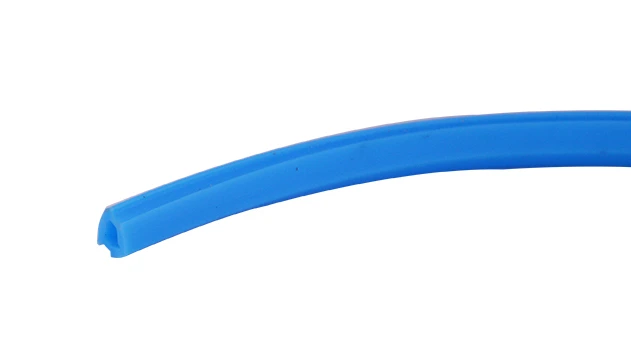
The rubber T-slot seal cover prevents dust and debris buildup, covers wires in the T-slot channel, and adds an extra layer of protection to applications. It rolls into the T-slot, making it easy to assemble.
Walk into any consumer electronics factory today, and you'll be met with a symphony of precision: robotic arms placing microchips smaller than a fingernail, workers in anti-static gear assembling smartphones with millimeter-perfect alignment, and conveyor belts gliding components from station to station without a hitch. Behind every sleek device—the laptop you type on, the smartwatch on your wrist, the tablet your kids use—lies a manufacturing process built on tiny details. And among those details, few are as quietly critical as the T-slot rubber seal cover. These unassuming strips of rubber might not make headlines, but they play a starring role in keeping assembly lines efficient, components protected, and production standards sky-high. Let's dive into why these small parts matter so much in the world of consumer electronics manufacturing.
What Are T-Slot Rubber Seal Covers, Anyway?
First things first: Let's break down the name. "T-slot" refers to the T-shaped grooves found in aluminum extrusion profiles—the modular, versatile building blocks used to construct everything from workbenches and material racks to machine guards and assembly line frames. These slots are the secret to aluminum profiles' flexibility: they let you slide in brackets, fasteners, or accessories, adjusting layouts on the fly to new product designs or production demands. But leave those slots uncovered, and they become magnets for trouble: dust, metal shavings, spilled lubricants, or even tiny plastic fragments from packaging can sneak in, gumming up the works over time.
That's where T-slot rubber seal covers come in. Made from durable, flexible rubber (often EPDM or PVC), they're designed to snap into T-slots, creating a tight, protective barrier. Think of them as the "door" for T-slots: when you need to adjust a bracket or add a new accessory, you peel back the cover, make your change, and press it back into place. When you're not modifying the setup, the cover stays put, keeping debris out and the slot clean. Simple? Yes. Essential? Absolutely.
Why Consumer Electronics Manufacturing Can't Afford to Overlook Them
Consumer electronics are unforgiving when it comes to precision. A smartphone's camera lens misaligned by a fraction of a millimeter might produce blurry photos; a laptop's keyboard with a mispositioned key could ruin the user experience. To avoid these issues, factories rely on controlled environments and tools that stay calibrated down to the micron. T-slot rubber seal covers support this precision in three big ways:
1. They Keep Assembly Lines Lean (and Clean)
In consumer electronics, production runs are fast—think thousands of units per day—and changeovers between models (say, from a 6.7-inch to a 7.0-inch smartphone) need to happen in minutes, not hours. That's where a lean system shines: minimizing waste, maximizing efficiency, and ensuring every second counts. But a lean system can grind to a halt if tools or workbenches break down or need constant cleaning. T-slot rubber seal covers prevent that by keeping T-slots free of debris. Without them, workers might spend extra time scraping dust out of slots before repositioning a tool, or a bracket might jam mid-adjustment, delaying the line. Over a full shift, those small delays add up to big waste—exactly what lean manufacturing aims to eliminate.
2. They Protect Sensitive Components
Many consumer electronics components—like circuit boards, microprocessors, and sensors—are incredibly sensitive to dust, moisture, and static. Even a single speck of dust can short-circuit a chip, and moisture can corrode delicate connections. T-slot rubber seal covers don't just keep slots clean; they also add a layer of protection to the aluminum extrusion profiles themselves. In workbenches used for assembling circuit boards, for example, the profiles might be part of an ESD (electrostatic discharge) system, designed to ground static and protect components. Unsealed slots could collect conductive debris (like metal shavings), compromising the ESD setup. By sealing the slots, the covers help maintain the integrity of these protective systems, keeping components safe from start to finish.
3. They Extend the Life of Equipment
Aluminum extrusion profiles are built to last, but they're not indestructible. Over time, debris in T-slots can cause wear and tear: when brackets are slid in and out, grit acts like sandpaper, scratching the slot's edges and making adjustments harder. T-slot rubber seal covers act as a buffer, reducing friction and preventing abrasion. This means the aluminum profiles—and the workbenches, racks, and frames built from them—last longer, reducing replacement costs and downtime. For factories operating on tight margins, that's a win for the bottom line.

How They Play Nice with Aluminum Extrusion Profiles
Aluminum extrusion profiles are the backbone of modern manufacturing workspaces, and for good reason. They're lightweight but strong, easy to customize, and compatible with hundreds of accessories—from tool holders to conveyor tracks. T-slot rubber seal covers are designed to work seamlessly with these profiles, regardless of the slot size (common sizes include 20x20mm, 30x30mm, or 40x40mm for consumer electronics workbenches). Most are "universal" in design, meaning they'll snap into standard T-slots without needing adhesives or special tools. This compatibility is key: factories often source aluminum extrusion profiles from multiple suppliers, and a one-size-fits-most seal cover ensures consistency across the facility.
Some seal covers even come in different colors—like grey or yellow—matching the aesthetic of the production floor or coding different zones (e.g., yellow for high-traffic areas, grey for static-sensitive zones). This might seem like a small detail, but in a busy factory, color-coding helps workers quickly identify the right tools or workbenches, reducing errors and speeding up tasks.

Beyond Workbenches: Where Else Do They Show Up?
While workbenches are the most obvious place to find T-slot rubber seal covers, their utility extends far beyond assembly stations. Here are a few other spots in consumer electronics factories where they're hard at work:
Material Racks and Trolleys
Factories use aluminum extrusion profiles to build material racks (for storing components like screws, cables, and casings) and turnover trolleys (for moving parts between stations). These racks and trolleys often have adjustable shelves or dividers, held in place by T-slots. Without seal covers, dust from the factory floor could settle in the slots, making it harder to reconfigure the shelves when stock levels change. Seal covers keep the slots clean, ensuring shelves adjust smoothly—even after months of use.
Conveyor Guards and Machine Frames
Conveyors that transport delicate components (like smartphone screens) are often framed with aluminum profiles to keep workers safe and prevent parts from falling off. The T-slots in these frames might hold sensors (to detect jams) or guide rails (to keep components aligned). T-slot rubber seal covers protect these slots from oil, grease, or cleaning chemicals used to sanitize the conveyor, ensuring sensors stay calibrated and guide rails don't jam.
Testing Stations
Before devices leave the factory, they're put through rigorous testing: drop tests, water resistance checks, battery life assessments. Testing stations are built with aluminum profiles to hold clamps, probes, and measurement tools. These tools need to be positioned with extreme accuracy—for example, a probe testing a phone's charging port must align perfectly with the port's pins. T-slot rubber seal covers ensure the T-slots holding these tools stay clean, so adjustments are precise and repeatable, test results are reliable, and no devices are rejected due to testing errors.
Choosing the Right T-Slot Rubber Seal Cover: It's All in the Details
Not all T-slot rubber seal covers are created equal. To get the most out of them, factories need to choose the right type for their needs. Here's what to consider:
Material Matters
Most seal covers are made from EPDM rubber (great for temperature resistance and flexibility) or PVC (durable and cost-effective). For factories with high heat (like those using soldering stations), EPDM is better—it can withstand temperatures up to 150°C (302°F) without melting or cracking. For standard assembly areas, PVC works well and is often more budget-friendly.
Size and Fit
T-slots come in different widths and depths (e.g., 8mm, 10mm, 12mm slots). A seal cover that's too narrow will pop out; one that's too wide won't seat properly. Always check the profile's slot dimensions before ordering—most suppliers list compatible slot sizes for their covers.
Color and Visibility
As mentioned earlier, color can aid in organization. Yellow covers might be used in areas where tools are frequently adjusted (to make the slots easier to spot), while grey or black covers blend into the profile, keeping workspaces looking clean and professional.
| Material | Color Options | Temp. Range | Best For |
|---|---|---|---|
| EPDM Rubber | Grey, Black, Yellow | -40°C to 150°C | High-heat areas (soldering, testing), outdoor use |
| PVC | Grey, White, Blue | -10°C to 60°C | Standard assembly lines, material racks, workbenches |
| Silicone | Clear, Red, Green | -60°C to 200°C | Extreme-temperature testing, medical device assembly (sterilization) |
The Future of T-Slot Rubber Seal Covers: Small Parts, Big Innovations
As consumer electronics get smaller, smarter, and more complex, the demand for precision in manufacturing will only grow. T-slot rubber seal covers are evolving to keep up. Here's what we might see next:
Eco-Friendly Materials
With sustainability becoming a priority for electronics brands (think carbon-neutral factories and recyclable packaging), suppliers are developing seal covers made from recycled rubber or biodegradable materials. These covers perform just as well as traditional ones but reduce environmental impact—a win for both factories and the planet.
Integrated RFID Tags
Imagine a seal cover with a tiny RFID tag embedded in it. When scanned, the tag could tell workers when the cover was installed, when it needs to be replaced, or which profile it belongs to. This would help with maintenance scheduling and inventory management, ensuring factories never run out of covers when they need them.
Antimicrobial Coatings
In cleanrooms or medical device manufacturing (a close cousin to consumer electronics), bacteria and mold are major concerns. Future seal covers might come with antimicrobial coatings (like silver ions) that kill germs on contact, adding an extra layer of protection to sensitive production environments.
Final Thoughts: Small Parts, Big Impact
T-slot rubber seal covers might not be the first thing you think of when you unbox a new gadget, but they're a reminder of a simple truth: in manufacturing, the smallest parts often have the biggest impact. By keeping T-slots clean, protecting components, and supporting lean systems, they help factories build devices that are reliable, high-quality, and affordable. So the next time you swipe your smartphone or type on your laptop, take a moment to appreciate the unsung heroes of the production line—including the humble T-slot rubber seal cover. After all, great technology isn't just about the parts you see; it's about the parts that work behind the scenes to make it all possible.