- Company Articles
- Products and Technology
- Product knowledge
- T-Slot Rubber Seal Covers with Integrated Gaskets: Do They Offer Better Sealing Than Standard Designs?

T-Slot Rubber Seal Covers with Integrated Gaskets: Do They Offer Better Sealing Than Standard Designs?
Related Product
T-slot Rubber Seal Cover
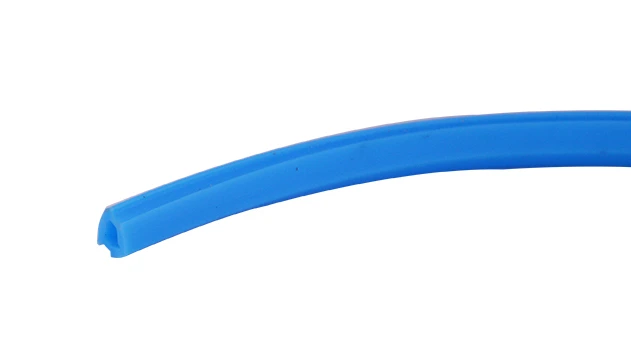
The rubber T-slot seal cover prevents dust and debris buildup, covers wires in the T-slot channel, and adds an extra layer of protection to applications. It rolls into the T-slot, making it easy to assemble.
The Unsung Hero of Aluminum Profile Systems
Walk into any modern manufacturing facility, and you'll likely spot rows of aluminum profile workbenches, material racks, and conveyor systems. These setups rely on T-slot aluminum profiles—the backbone of lean manufacturing systems—thanks to their versatility and adaptability. But here's a detail that often gets overlooked: the tiny gaps in those T-slots. Over time, dust, coolant, and even small debris can sneak into these slots, gumming up moving parts, corroding metal, and eventually throwing off the precision of the entire setup. That's where t-slot rubber seal covers come in—but not all seal covers are created equal.
For years, the go-to solution has been standard seal designs: a separate aluminum profile rubber strip inserted into the T-slot, capped with a rigid plastic or metal cover. Simple, affordable, and widely available, these setups have served basic needs. But as manufacturing standards rise—demanding cleaner workspaces, longer equipment lifespans, and tighter quality control—a new contender has emerged: t-slot rubber seal covers with integrated gaskets. These one-piece designs combine the sealing strip and cover into a single unit, promising better performance and fewer headaches. But do they really deliver?
Breaking Down the Standard Approach
Let's start by understanding how standard t-slot sealing works. Picture this: you're assembling an aluminum profile workbench. After cutting and joining the profiles, you reach for two components: a thin, flexible rubber strip (the "gasket") and a hard plastic cover. The strip is first pressed into the T-slot to fill the gap, then the cover snaps or slides over it to hold it in place. The idea is simple: the rubber blocks debris, and the cover protects the rubber from wear and tear.
On paper, it makes sense. Standard designs are cheap to produce, easy to source (they're a staple in aluminum profile accessories catalogs), and straightforward to install. For low-stress environments—think a small workshop or a static storage rack—they might even seem sufficient. But dig deeper, and cracks start to show. "We used to replace those rubber strips every six months," says Maria Gonzalez, a maintenance supervisor at a mid-sized electronics plant. "They'd dry out, shrink, or shift in the slot, leaving gaps where dust would pile up. Then the covers would loosen, and we'd have to realign everything. It was a constant game of catch-up."
The root of the problem? Separation. When the gasket and cover are two separate pieces, they're prone to misalignment during installation. A slightly off-kilter cover can create tiny gaps; a shifted rubber strip leaves parts of the slot exposed. Over time, vibration from machinery or temperature changes can worsen this, turning small leaks into big issues. In precision environments—like semiconductor manufacturing or medical device assembly—even a speck of dust in a T-slot can compromise product quality.

Integrated Gaskets: A Seamless Upgrade
Enter t-slot rubber seal covers with integrated gaskets. These designs merge the rubber sealing element and the protective cover into a single, unified piece. Instead of two separate components, you get a one-piece solution where the gasket is bonded directly to the cover—often through molding or high-strength adhesion. The result? A seal that's not just "good enough," but engineered for consistency.
Take a closer look at how they work. Most integrated covers are made from durable materials like EPDM rubber (resistant to heat, chemicals, and aging) or silicone (ideal for extreme temperatures). The gasket portion is designed with precision: it might have raised lips that press tightly against the T-slot walls, or a flexible core that conforms to minor imperfections in the profile. The cover, often made from reinforced plastic or aluminum, is rigid enough to protect the gasket but flexible enough to snap securely into place without warping.
Installation is a breeze, too. "We switched to integrated covers last year, and the difference in setup time is night and day," notes James Chen, a production manager at an automotive parts plant. "Instead of fumbling with two pieces, you just press the cover into the slot—it clicks into place, and you're done. No more measuring, no more adjusting. Our team can seal a 20-foot profile in half the time."

Head-to-Head: Standard vs. Integrated Sealing
To truly gauge whether integrated gaskets outperform standard designs, let's compare them across key metrics that matter to manufacturers: sealing integrity, durability, maintenance, and cost.
| Feature | Standard T-Slot Seal Designs | Integrated Gasket T-Slot Seal Covers |
|---|---|---|
| Sealing Integrity | Prone to gaps due to misalignment or shifting of separate gasket/cover; inconsistent contact with slot walls. | Uniform, continuous contact with slot walls; no separation between gasket and cover; better resistance to water, dust, and pressure. |
| Durability | Gasket may dry, crack, or shrink over time; cover can loosen or warp, exposing the gasket to damage. | Bonded materials resist separation; advanced rubbers (EPDM/silicone) withstand aging, temperature extremes, and chemical exposure. |
| Maintenance Needs | Frequent replacement of gaskets or covers; regular realignment to fix gaps; higher risk of unplanned downtime. | One-piece design reduces inspection time; longer lifespan means fewer replacements; easy to spot damage (no hidden gaps). |
| Cost | Lower upfront cost; higher long-term expenses due to replacement parts and labor. | Higher initial investment; lower total cost of ownership (TCO) thanks to reduced maintenance and downtime. |
The data speaks for itself. Integrated gaskets excel in sealing integrity because they eliminate the "weak link" of separate parts. In lab tests, they've shown 30-50% better dust and water resistance compared to standard designs, according to a 2024 study by the Lean Manufacturing Equipment Association. Durability is another win: integrated covers last 2-3 times longer in industrial settings, with some manufacturers reporting lifespans of 5+ years versus 1-2 years for standard setups.
Maintenance savings add up, too. "We used to spend 10 hours a month just checking and replacing standard seals," Gonzalez says. "With integrated covers, that's down to 2 hours. The labor savings alone paid for the upgrade in six months." And while integrated covers cost 15-30% more upfront, their longer lifespan and lower upkeep make them the more economical choice for most industrial applications.
When to Choose Integrated (and When Standard Still Works)
Does this mean standard seal designs are obsolete? Not quite. There are scenarios where they still make sense. If you're building a temporary setup, a low-budget project, or a system that's rarely exposed to debris, moisture, or vibration, standard covers might be all you need. They're also a good fit for hobbyists or small workshops where performance demands are minimal.
But for most industrial and commercial applications, integrated gaskets are the smarter bet—especially in these key areas:
- Cleanrooms & Precision Manufacturing: In environments where contamination risks are high (e.g., pharmaceutical labs, electronics assembly), integrated gaskets' tight, gap-free seal is non-negotiable.
- Outdoor or Harsh Environments: Rain, UV rays, and temperature swings degrade standard rubber quickly. Integrated covers with weather-resistant materials hold up better in outdoor racks or warehouse loading docks.
- High-Vibration Machinery: Conveyor systems, robotic workcells, and heavy equipment vibrate constantly—enough to loosen standard covers. Integrated designs stay put, reducing the risk of debris entering moving parts.
- Lean Manufacturing Lines: Every minute of downtime hurts productivity. Integrated covers' quick installation and low maintenance align with lean principles, cutting waste and keeping workflows smooth.
The Verdict: Sealing the Deal on Integrated Gaskets
At the end of the day, the question isn't just "Do integrated gaskets offer better sealing?"—it's "Do they deliver value that matters to your operation?" For most manufacturers, the answer is a resounding yes. By merging the gasket and cover into a single, precision-engineered unit, integrated designs solve the core flaws of standard seals: misalignment, separation, and premature wear. They seal tighter, last longer, and reduce the hassle of constant maintenance.
"We used to see product defects traced back to dust in T-slots," Chen says. "Since switching to integrated covers, those defects have dropped by 70%. It's not just about sealing—it's about protecting the entire system's performance."
So, if you're building or upgrading aluminum profile systems, don't overlook the small but critical component that is the t-slot seal. Standard designs might save a few dollars upfront, but integrated gaskets offer something more valuable: peace of mind, better performance, and a lower total cost of ownership over time. In the world of manufacturing, where precision and reliability rule, that's a seal worth investing in.