- Company Articles
- Products and Technology
- Technology Sharing
- Technical Deep Dive: Turning Angle Code 2020 and Aluminum Joint Durability

Technical Deep Dive: Turning Angle Code 2020 and Aluminum Joint Durability
Related Product
Urning Angle Code 2020
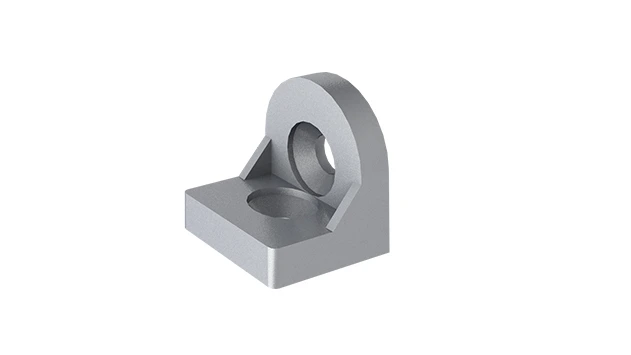
The turning angle aluminum profile connector provides a 90 degree hidden corner connection. 2020 it is means this size is used for 20 series aluminum profile.The corner code comes with set screws that allow for quick, easy connections.
In the world of manufacturing and industrial design, it's often the smallest components that hold the biggest impact. Think about the workbenches where electronics are assembled, the material racks that keep production floors organized, or the conveyor systems that move parts seamlessly through a factory—each of these relies on a hidden network of connectors, fasteners, and structural elements working together. Today, we're shining a spotlight on two unsung heroes of this ecosystem: the Turning Angle Code 2020 and aluminum joints. These might sound like parts, but their durability and precision directly shape the reliability, safety, and efficiency of the systems they support. Let's dive into what makes them tick, why they matter, and how they're changing the game for industrial setups.
What Even Is a Turning Angle Code 2020? Let's Start with the Basics
First things first: if you're not knee-deep in aluminum profile systems, the term "Turning Angle Code 2020" might sound like tech jargon. Let's break it down. At its core, it's a specialized bracket—small, unassuming, but engineered to do one critical job: connect two pieces of 2020 aluminum profile at a right angle (90 degrees). But why "2020"? That's the size of the aluminum profile it's designed for: 20mm by 20mm. These profiles are the building blocks of countless industrial structures, from lightweight workbenches to modular machine guards, thanks to their strength-to-weight ratio and ease of customization.
Imagine you're building a simple workbench. You've got your vertical legs (2020 aluminum profiles) and horizontal rails that form the frame. To attach the rails to the legs securely, you need something that bridges the gap, reinforces the corner, and ensures the joint doesn't wobble under load. That's where the Turning Angle Code 2020 comes in. It's like the "cornerstone" of the connection, distributing weight evenly and preventing the profiles from twisting or pulling apart over time.
But not all angle codes are created equal. The Turning Angle Code 2020 stands out for its precision. Unlike generic metal brackets, it's specifically molded or machined to fit the T-slots of 2020 profiles—those groove-like channels that run along the length of the profile, allowing accessories to slide in and lock into place. This snug fit isn't just about convenience; it's about structural integrity. A poorly fitting angle code can create weak points, leading to squeaky, unstable structures that need constant readjustment. The Turning Angle Code 2020, when paired with the right bolts and T-slot nuts, creates a connection that feels almost seamless—like the two profiles were always meant to be joined.
Aluminum Joints: The Glue That Holds It All Together (Without the Mess)
Now, let's talk about aluminum joints. If angle codes are the brackets that connect profiles at corners, joints are the more versatile connectors that handle everything from straight-line extensions to complex, multi-directional connections. Think of them as the "elbows" and "T-junctions" of the aluminum profile world. They come in all shapes and sizes: 90-degree joints for corners, 45-degree joints for slopes, three-way joints for branching structures, and even swivel joints that allow for adjustable angles.
The key here is that these are aluminum joints. Why aluminum? For starters, it's lightweight, which matters when you're building structures that might need to be reconfigured or moved. But more importantly, aluminum (especially when alloyed with elements like magnesium or silicon) offers impressive strength and corrosion resistance. In factories where moisture, chemicals, or even just humidity are present, steel joints might rust and weaken over time, but aluminum joints hold their own—keeping the structure stable for years.
But durability isn't just about the material. It's also about design. A well-engineered aluminum joint will have features like reinforced stress points, precision threading for bolts, and a smooth finish that prevents galling (that annoying friction that can seize up metal parts when they're tightened). For example, some joints have internal ribs or thicker walls at the connection points, which act like internal reinforcement to handle higher loads without bending.

Why Does Durability Matter So Much? Let's Talk Real-World Impact
You might be thinking, "Okay, so these parts are strong. But does that really make a difference day-to-day?" Let's put it in perspective. Suppose a manufacturing plant uses cheap, low-quality angle codes and joints for their assembly workbenches. After a few months of daily use—workers leaning on the benches, tools being set down, parts being assembled—the joints start to loosen. The workbench wobbles. Now, an assembler trying to solder tiny electronics on a shaky surface is more likely to make mistakes, slowing down production and increasing waste. Worse, if a joint fails completely, the bench could collapse, risking injury or damage to expensive equipment.
On the flip side, a workbench built with Turning Angle Code 2020 and high-quality aluminum joints? It stays rigid. It doesn't creak when someone leans on it. It can handle the weight of heavy tools or batches of parts without so much as a wiggle. That stability translates to fewer errors, less downtime for repairs, and a safer workplace. Over time, those "small" investments in durable components save companies money—no more replacing bent brackets or re-welding loose joints every few months.
And it's not just workbenches. Take material racks, for example. A rack loaded with boxes of components needs to stay vertical and stable, even when being loaded or unloaded with a forklift. If the joints holding the rack's shelves to its uprights are weak, a sudden jolt could cause the shelves to shift, spilling parts everywhere. But with robust aluminum joints and angle codes, the rack remains solid, protecting both the materials and the workers around it.
| Component Type | Key Function | Typical Material | Max Load Capacity (Approx.) | Best For |
|---|---|---|---|---|
| Turning Angle Code 2020 | Connects 2020 aluminum profiles at 90° angles | Aluminum alloy (e.g., 6061) | 150-200 kg per joint | Workbenches, small material racks, light-duty frames |
| Standard Aluminum Corner Joint | General 90° connections for various profile sizes | Aluminum alloy (e.g., 6063) | 200-300 kg per joint | Conveyor frames, machine guards, heavy-duty racks |
| Small Iron Corner Code | Budget-friendly right-angle connection | Mild steel (often uncoated) | 80-120 kg per joint | Temporary structures, non-critical frames |
| 3-Way Aluminum Joint | Branching connections (e.g., T-junctions) | Aluminum alloy (e.g., 6061-T6) | 180-250 kg per joint | Modular shelving, multi-directional frames |

The Science Behind the Strength: What Makes Turning Angle Code 2020 and Aluminum Joints Durable?
Let's get a bit technical (but don't worry, we'll keep it accessible). The durability of these components boils down to three key factors: material selection, design engineering, and manufacturing precision.
1. Material Selection: It's All About the Alloy Most high-quality Turning Angle Code 2020 brackets and aluminum joints are made from aluminum alloys like 6061 or 6063. These aren't pure aluminum—they're mixed with small amounts of other metals to boost specific properties. 6061, for example, includes magnesium and silicon, which make it stronger and more resistant to corrosion than pure aluminum. It's also heat-treatable, meaning manufacturers can "bake" it to further enhance its strength. For components like angle codes, which need to withstand shear forces (the stress that tries to slide one part past another), this extra strength is crucial.
2. Design Engineering: Every Curve and Groove Serves a Purpose Take a close look at a Turning Angle Code 2020, and you'll notice it's not just a flat piece of metal bent at 90 degrees. It likely has rounded edges (to reduce stress concentration), a base that fits perfectly into the T-slot of the 2020 profile, and pre-drilled holes that align with the profile's slot spacing. These details might seem minor, but they add up. Rounded edges prevent cracks from forming under repeated stress. A snug T-slot fit ensures the bracket doesn't shift, even when the joint is loaded. And aligned holes make installation easier, reducing the chance of "forced" connections that weaken the joint.
Aluminum joints, too, have clever design features. Many use a "clamping" mechanism, where a bolt tightens against the inside of the profile's T-slot, creating a friction fit that's both strong and adjustable. Some joints even have built-in springs or locknuts to prevent bolts from loosening due to vibration—critical in factories where machines are running 24/7.
3. Manufacturing Precision: Tight Tolerances Mean Reliable Performance Ever tried to fit a square peg into a round hole? It doesn't work. The same goes for industrial components. A Turning Angle Code 2020 that's even 0.1mm too thick won't slide into the T-slot of a 2020 profile properly, leading to a loose connection. That's why manufacturers use precision machining (like CNC milling) or die casting to ensure every part meets tight tolerances. This level of accuracy means that whether you buy one angle code or a hundred, they'll all fit the same profile perfectly—no guesswork, no "adjustments" with a hammer required.
Beyond the Bench: Real-World Applications of Turning Angle Code 2020 and Aluminum Joints
To really understand why these components matter, let's look at a few industries where they're making a tangible difference.
Electronics Manufacturing: Precision is Everything In plants that assemble smartphones, circuit boards, or medical devices, even the tiniest vibration can ruin a product. Workbenches here need to be rock-solid. Enter 2020 aluminum profiles framed with Turning Angle Code 2020 brackets. These create stable surfaces where technicians can work with microscopes or delicate tools, knowing the bench won't shift. Aluminum joints also allow for easy customization—adding shelves, tool holders, or ESD (electrostatic discharge) mats to protect sensitive components.
Automotive Production: Heavy Loads, Constant Motion Automotive factories are tough environments. Conveyor systems carry heavy parts (like engine blocks or door panels) around the clock, and material racks store thousands of components. Here, aluminum joints (paired with larger profiles, like 4040 or 8080) are used to build the frames of these conveyors and racks. Their durability ensures the systems can handle the weight and vibration without failing, while their lightweight nature makes installing or reconfiguring lines faster and safer for workers.
Warehousing and Logistics: Speed and Adaptability Warehouses are always evolving—new products, seasonal demand spikes, or shifts in inventory mean racks and picking stations need to be reconfigured quickly. Modular systems built with 2020 profiles, Turning Angle Code 2020 brackets, and aluminum joints excel here. They can be disassembled, moved, and reassembled in hours, not days, without welding or heavy tools. And because the joints are durable, these reconfigured systems remain just as stable as the original setup.
How to Choose the Right Components: Tips for Buyers
If you're in the market for Turning Angle Code 2020 brackets or aluminum joints, how do you separate the high-quality options from the duds? Here are a few pointers:
Check the Material Certification Reputable suppliers will specify the aluminum alloy (e.g., 6061-T6) and may even provide material test reports. Avoid generic "aluminum" joints—you want to know the alloy to ensure it meets strength requirements.
Inspect the Finish A smooth, consistent finish (like anodizing) isn't just for looks. Anodized aluminum is more corrosion-resistant and less likely to gall when bolts are tightened. Rough edges or uneven coatings are red flags for poor manufacturing.
Test the Fit If possible, request a sample and test it with your 2020 aluminum profile. The angle code should slide into the T-slot easily but not wiggle. The holes should align perfectly with standard T-slot nuts or bolts.
Ask About Load Ratings Suppliers should be able to provide load capacity data (e.g., "max static load per joint"). Compare this to your needs—remember, it's better to over-engineer than under-engineer, especially for safety-critical structures.
The Future of Aluminum Profile Systems: What's Next for Angle Codes and Joints?
As manufacturing becomes more automated and factories strive for greater flexibility, the demand for smarter, more durable components is growing. We're already seeing innovations in this space. For example, some manufacturers are adding RFID tags to aluminum joints, allowing maintenance teams to track component age and usage—so they can replace parts before they fail, not after. Others are experimenting with composite materials, blending aluminum with carbon fiber to create joints that are even lighter and stronger.
There's also a push for greater sustainability. Aluminum is already recyclable, but companies are now designing joints and angle codes that use less material without sacrificing strength—reducing waste and lowering carbon footprints. And as 3D printing technology improves, we might see custom angle codes or joints printed on-demand for unique applications, eliminating the need for large production runs of specialized parts.
Wrapping Up: Small Parts, Big Impact
At the end of the day, the Turning Angle Code 2020 and aluminum joints are reminders that great systems are built from great components. They might not get the same attention as flashy robots or high-tech machinery, but without them, those bigger systems would crumble. Whether you're building a simple workbench or a complex conveyor line, investing in quality angle codes and joints isn't just about durability—it's about building a foundation you can trust, day in and day out.
So the next time you walk through a factory or workshop, take a second look at the structures around you. Chances are, there's a Turning Angle Code 2020 or aluminum joint holding it all together, quietly doing its job. And now, you'll know just how much thought, engineering, and care went into making that small but mighty part.