- Company Articles
- Products and Technology
- Product knowledge
- Technical Guide: Sizing 40 Roller Track Placon Mount Flat for Your Conveyor Line

Technical Guide: Sizing 40 Roller Track Placon Mount Flat for Your Conveyor Line
Related Product
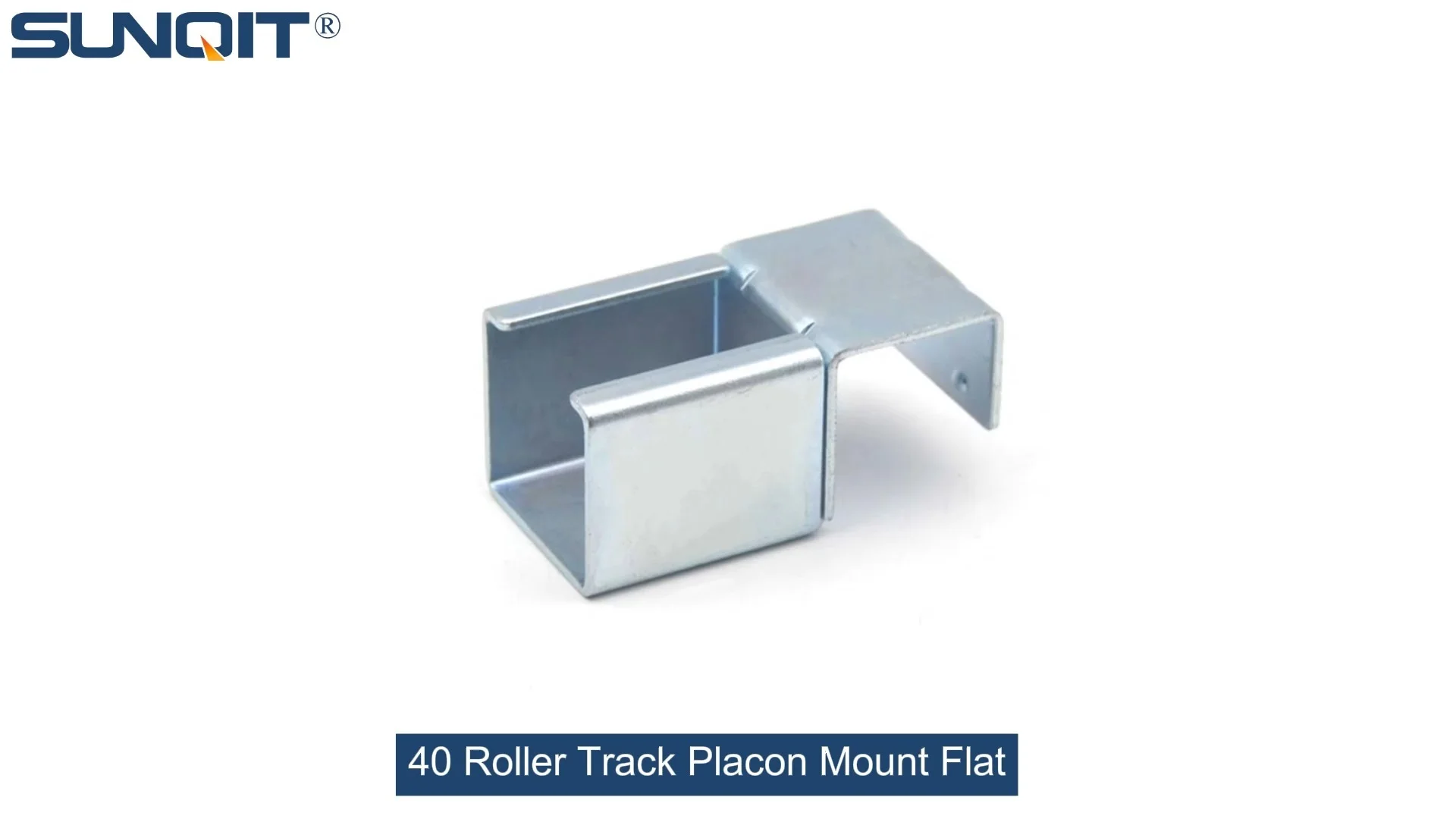
40 Roller Track Placon Mount Flat
Roller track placon mount work as a connector for roller track and pipe or aluminum profile in rack syetem, it is a necessary parts in rack system which widely used in industrial plant and logistic,warehouse storage.
Get the Perfect Fit for Smoother, Leaner Production Flows
Why Sizing Matters More Than You Think
Let's start with a scenario we've all seen (or maybe experienced): A production line where the roller tracks don't quite fit. Parts get stuck, workers waste time adjusting, and suddenly that "lean" setup you invested in feels more like a bottleneck. Sound familiar? The truth is, something as small as the 40 Roller Track Placon Mount Flat can make or break your conveyor system's efficiency. But why? Because in lean manufacturing, every component is a link in the chain—if one link is weak (or the wrong size), the whole system slows down.
Whether you're setting up a new line for 3C device assembly or upgrading an existing medical equipment production area, getting the placon mount flat right isn't just about measurements. It's about aligning with your overall lean goals: reducing waste, improving flow, and building a system that can adapt as your needs change. That's why we've put together this guide—to walk you through sizing this critical component like a pro, so you can keep parts moving, workers productive, and your bottom line happy.
Quick Tip:
A misaligned placon mount flat can cause uneven wear on rollers, leading to frequent replacements. Over time, that's not just downtime—it's unnecessary costs. Get it right the first time, and you'll save hours of hassle later.
What Even Is a 40 Roller Track Placon Mount Flat?
Before we dive into sizing, let's make sure we're all on the same page. The 40 Roller Track Placon Mount Flat is the unsung hero that connects your roller track to the aluminum profile frames (you know, those sturdy aluminum profiles that form the backbone of so many lean systems). Think of it as the bridge between your conveyor's moving parts and its fixed structure. Without a properly sized placon mount, your roller track might wobble, shift, or even detach—definitely not what you want when delicate circuit boards or medical components are gliding along.
Key Design Features to Know
- Flat Base Design: Unlike angled mounts, the "flat" here means it sits flush against the aluminum profile, offering stable support for straight conveyor runs.
- 40 Series Compatibility: The "40" refers to the profile size it's designed for—typically 40mm aluminum profiles, common in medium-duty applications.
- Material Matters: Most are made from high-grade aluminum (same as your lean pipe systems) or steel, chosen for durability and resistance to corrosion in factory environments.
- Adjustable Fit: Many models come with slotted holes, letting you fine-tune positioning even if your measurements are slightly off (because let's be real—no workshop is 100% perfect).
Now, you might be wondering: "Why not just buy a one-size-fits-all mount?" Great question. The problem is that conveyor lines vary wildly—different loads, speeds, and environments demand different specs. A placon mount flat that works for a light-duty electronics line might buckle under the weight of automotive parts. That's where sizing comes in.

Critical Specifications to Check First
Before grabbing a tape measure, let's break down the specs that will guide your sizing decisions. These aren't just numbers on a datasheet—they're the blueprint for a conveyor that works with your team, not against them.
| Specification | What It Means | Why It Matters for Sizing |
|---|---|---|
| Mounting Hole Spacing | Distance between the holes that attach the mount to the aluminum profile | Must match the T-slot spacing on your profile (common: 20mm, 40mm, or custom) |
| Track Width Compatibility | Width of the roller track the mount supports | A 40mm track needs a mount wide enough to cradle it without overhang |
| Height Profile | Distance from the base of the mount to the top of the track | Affects alignment with adjacent conveyors or flow racks |
| Load Capacity | Maximum weight the mount can support without bending | Heavier parts (like medical devices) need higher capacity mounts |
| Material Thickness | Thickness of the mount's metal (usually 2-5mm) | Thicker = stronger, but also heavier—balance is key for portability if needed |
Pro Note:
Always check the load capacity
per mount
, not just the track. If your conveyor has a 50kg total load, and you're using 4 mounts, each needs to handle at least 12.5kg (plus a safety margin—we recommend 20-30% extra).

Step-by-Step Sizing: From Measurement to Selection
Okay, let's get hands-on. Sizing your placon mount flat involves three main steps: measuring your setup, matching specs to your needs, and double-checking for compatibility. Grab your tape measure, a notepad, and let's go.
Step 1: Measure Your Aluminum Profile
First, confirm the size of the aluminum profile you're using. The "40" in 40 Roller Track Placon Mount Flat is a clue, but profiles can vary (e.g., 40x40mm, 40x80mm). Measure the width of the profile's face where the mount will attach. Write that number down—it's your starting point.
- Tool Needed: Digital calipers or a sturdy ruler (avoid fabric tape measures—they stretch!)
- What to Check: Is the profile a standard EU series (like 4040A) or a custom size? Standard sizes are easier to match, but custom profiles might need bespoke mounts.
Step 2: Determine Track Width and Load
Next, measure the width of your roller track. Most 40-series tracks are 40-60mm wide, but this varies by manufacturer. Then, calculate the maximum load that will pass over the mount. This includes the weight of the track itself plus the heaviest part that will ever run on it (yes, even that occasional bulky component).
Pro Move:
If you're using the track for mixed loads (e.g., small parts one day, larger assemblies the next), size for the heaviest load. It's better to over-engineer than risk failure.
Step 3: Check Hole Spacing and T-Slot Compatibility
Aluminum profiles have T-slots—those grooves that let you attach components with bolts. The placon mount's holes need to align with these slots. Measure the distance between the centers of two adjacent T-slots (this is called "slot pitch"). Common pitches are 20mm, 30mm, or 40mm. Your mount's hole spacing should match this exactly, or have slotted holes to adjust.
For example, if your profile has a 40mm slot pitch, a mount with 40mm hole spacing will bolt right on. If the mount has slots instead of fixed holes, you can slide it to align—handy for uneven setups.
Step 4: Match to Your Conveyor Type
Not all conveyors are the same, and your placon mount should fit the job. Here's how different setups might affect your choice:
- Gravity Flow Conveyors: These rely on incline and gravity, so the mount needs to keep the track stable at an angle (even a small slope can put extra stress on mounts).
- Powered Conveyors: Motorized systems have vibrations—opt for thicker mounts or extra bolts to prevent loosening over time.
- ESD-Sensitive Areas: If you're working with electronics (hello, 3C assembly!), look for mounts made from conductive materials to dissipate static (pair with an ESD workbench for full protection).

Real-World Applications: Sizing for Your Industry
Let's get specific. Different industries have different needs, and the way you size your placon mount flat will vary based on what you're producing. Here are examples from the sectors we know best (because we've helped set up lines just like yours).
3C Electronics Assembly
In 3C (computers, communications, consumer electronics), you're dealing with small, lightweight parts—think smartphone components or circuit boards. But don't let "lightweight" fool you: precision is critical. A misaligned mount could cause parts to shift, leading to scratches or misplacement during assembly.
Sizing Tips for 3C: Go for a 40x40mm profile with a placon mount flat that has slotted holes for fine adjustments. Load capacity? 5-10kg per mount is usually enough, but if you're using automated pick-and-place systems, bump that up to 15kg to account for sudden movements.
Medical Device Manufacturing
Medical lines demand cleanliness and reliability—no room for jams when you're assembling life-saving equipment. Roller tracks here often run at slower speeds, but the mounts need to be corrosion-resistant (stainless steel is a good call) to handle frequent sanitization.
Sizing Tips for Medical: Prioritize material over weight. A 3mm stainless steel mount might be heavier, but it won't rust when exposed to disinfectants. Also, check that the mount's edges are smooth—no sharp corners to catch on gloves or packaging.
Automotive Parts Production
Automotive parts are bulkier—think brackets, housings, or engine components. Here, load capacity is king. A typical automotive conveyor might carry 20-30kg per section, so your placon mount flat needs to be beefy.
Sizing Tips for Automotive: Opt for 40x80mm profiles (wider = more stability) and mounts with 5mm material thickness. If the line runs 24/7, add a safety margin of 50% to the load capacity—those mounts are working overtime!
Industry Hack:
If you're unsure, ask your
lean solution
provider for case studies. Most have data on what works in your sector—no need to reinvent the wheel.
Common Sizing Mistakes (and How to Avoid Them)
Even pros make mistakes. Here are the ones we see most often, and how to steer clear:
Mistake #1: Assuming "40" Fits All 40mm Profiles
Not all 40mm profiles are created equal. A 40x40mm square profile has a different mounting surface than a 40x20mm rectangular one. Always measure the actual face width, not just relying on the "40" label.
Mistake #2: Underestimating Load (by a Lot)
"It's just small parts" is a risky mindset. Even small parts add up—especially if they're moving fast. Plus, workers might occasionally place tools or boxes on the track. Err on the side of higher capacity.
Mistake #3: Ignoring Environmental Factors
Humid warehouses, dusty factories, or cleanrooms—each needs a different mount material. For example, in a food packaging plant, aluminum mounts resist rust better than steel. In a desert facility, dust can clog slotted holes, so fixed-hole mounts might be better.
Mistake #4: Skipping the Test Fit
Always test-fit one mount before ordering a full batch. Bolt it to your profile, attach a short section of track, and run a test load through. Does it wobble? Are the bolts easy to tighten? Better to find out with one mount than 50.
Choosing the Right Supplier: What to Look For
Okay, you've got your measurements, you know your specs—now where do you buy the placon mount flat? Not all suppliers are created equal, and choosing the right one can save you headaches down the line.
- Customization Options: If your setup is unique (e.g., non-standard profile, special load requirements), a supplier who offers custom mounts is worth their weight in aluminum. Look for those who mention " lean solution customization" in their services.
- Material Quality: Ask about the aluminum grade (e.g., 6063-T5 is common for profiles) and whether they use recycled materials (good for sustainability, a key lean principle).
- Technical Support: A supplier who can walk you through sizing questions (like we're doing now!) is gold. Avoid those who just send a catalog and disappear.
- Sample Availability: As we mentioned earlier, test-fitting is critical. A supplier who sends free or low-cost samples shows they stand behind their products.
Remember, your conveyor and flow rack systems are long-term investments. Skimping on a $5 mount to save a few bucks might cost you $500 in downtime later. Choose wisely.
Final Checklist: Ready to Order?
Before you hit "purchase," run through this checklist to make sure you haven't missed anything:
- Aluminum profile width: measured and noted (e.g., 40x40mm)
- Slot pitch: checked against mount hole spacing
- Roller track width: matches mount's track support size
- Total load per mount: calculated with 20-30% safety margin
- Material: chosen for your environment (aluminum, steel, stainless)
- Test fit: done (or sample ordered)
- Supplier: offers customization and support
If you can check all these boxes, congratulations—you're ready to size like a pro. Remember, lean manufacturing is all about continuous improvement, so even if you make a mistake, you can adjust. But with this guide, you're already ahead of the game.
Last Thought:
Your conveyor line is more than just metal and rollers—it's the heartbeat of your production. The 40 Roller Track Placon Mount Flat might be small, but it's a big part of keeping that heartbeat steady. Take the time to size it right, and you'll be rewarded with smoother flows, happier workers, and a system that grows with your business.