- Company Articles
- Products and Technology
- Product knowledge
- Technical Parameters of 40 Steel Roller Track Black ESD Wheel: Size, Load & Resistance

Technical Parameters of 40 Steel Roller Track Black ESD Wheel: Size, Load & Resistance
Related Product
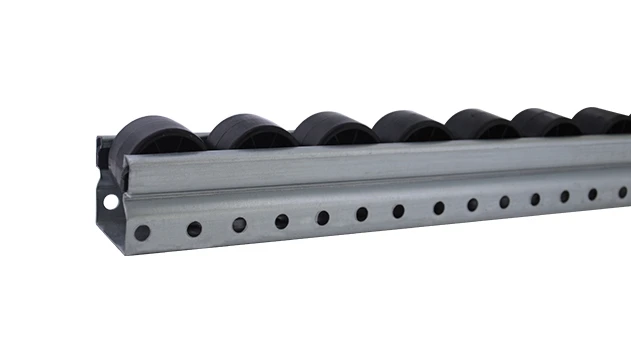
40 Steel Roller Track Black ESD Wheel
The roller track can be installed with multiple accessories to create different slopes and configurations of flow racks.All steel conveyor 40 roller track accessories are engineered to perfectly fit the sliding rail.
In the fast-paced world of manufacturing, especially within electronics and precision assembly, every component plays a critical role in ensuring efficiency, safety, and product quality. One such component that often goes unnoticed but forms the backbone of smooth operations is the roller track. Among the various types available, the 40 Steel Roller Track with Black ESD Wheels stands out for its unique combination of durability, electrostatic discharge (ESD) protection, and adaptability. Whether integrated into an ESD workstation on a 3C assembly line or part of a larger lean system, this roller track is designed to meet the rigorous demands of modern production environments. Let's dive into its technical details, exploring size specifications, load capacity, ESD resistance, and more—all while understanding why it has become a go-to choice for manufacturers aiming to optimize their processes.
Understanding the Basics: What Is 40 Steel Roller Track Black ESD Wheel?
Before we get into the nitty-gritty of technical parameters, let's start with the fundamentals. The 40 Steel Roller Track Black ESD Wheel is a specialized type of conveyor component engineered for material handling in environments where electrostatic control is non-negotiable. The "40" in its name refers to the track width (40mm), a standard dimension that ensures compatibility with most modular production setups. The "Steel" highlights its robust construction, while "Black ESD Wheel" indicates that the rollers are made from ESD-safe material, typically a conductive plastic, colored black for easy identification.
This roller track isn't just a standalone product; it's a key piece of the puzzle in lean manufacturing. When paired with other components like workbenches, conveyors, and turnover trolleys, it creates a seamless flow of materials—exactly what lean solution strategies aim to achieve. Think of it as the silent enabler that keeps production lines moving, reducing bottlenecks and minimizing the risk of ESD damage to sensitive electronics, such as circuit boards or semiconductor components.
Size Specifications: Getting the Dimensions Right
Size matters in manufacturing, and the 40 Steel Roller Track Black ESD Wheel is designed with precision to fit into standard production layouts. Let's break down its key dimensional parameters, which dictate how it integrates with other equipment and handles different material sizes.
| Parameter | Standard Specification | Notes |
|---|---|---|
| Track Width | 40mm | Inner width between side rails; compatible with 40-series aluminum profiles |
| Roller Diameter | 25mm | Black ESD wheel; conductive plastic material |
| Roller Spacing | 50mm (center-to-center) | Optimal spacing for balanced load distribution |
| Track Length | Customizable (1m-6m) | Available in standard lengths or cut-to-order for specific layouts |
| Track Height (Including Rollers) | 65mm | From bottom of steel frame to top of roller surface |
| Steel Frame Thickness | 1.5mm-2.0mm | Depends on load rating; thicker frames for heavy-duty applications |
Why do these dimensions matter? Let's take roller spacing as an example. At 50mm center-to-center, the rollers ensure that even small or irregularly shaped items—like component trays or small circuit boards—don't get stuck. If the spacing were too wide, lightweight items might sag between rollers, causing jams. Too narrow, and you'd be adding unnecessary cost and weight without extra benefit. The 50mm spacing strikes a balance, making this roller track versatile across different material sizes.
The customizable length is another highlight. Manufacturers rarely have one-size-fits-all production lines, so being able to order a 2.5m track for a compact ESD workstation or a 6m track for a long conveyor line ensures that the roller track adapts to the space, not the other way around. This flexibility is a cornerstone of lean system design, where minimizing waste (including wasted space) is a top priority.

Load Capacity: How Much Can It Handle?
Load capacity is where the "steel" in 40 Steel Roller Track truly shines. A roller track is only as good as its ability to carry materials without bending, warping, or failing—especially in high-throughput environments where items are constantly moving. Let's break down its load ratings and what they mean for real-world use.
Key Load Ratings:
- Dynamic Load Capacity: 50kg/m (when track length ≤3m); 40kg/m (when track length >3m)
- Static Load Capacity: 100kg/m (evenly distributed weight)
- Maximum Single Roller Load: 8kg (to prevent wheel damage)
Dynamic load refers to the weight the track can handle when materials are in motion—think of a tray of circuit boards sliding down the track from one workstation to the next. Static load, on the other hand, applies when materials are stationary on the track, such as during temporary storage. It's important to note that load capacity decreases as track length increases because longer tracks have more flex; a 6m track, for example, can't carry as much per meter as a 2m track.
To put this in perspective, consider a typical 3C assembly line producing smartphones. Each smartphone motherboard, housed in an anti-static tray, weighs about 0.5kg. A standard tray might hold 10 motherboards, totaling 5kg. If the track is 3m long, it can comfortably carry 10 such trays (50kg total) without issues. This aligns perfectly with the dynamic load rating, ensuring smooth, uninterrupted flow—exactly what you need in a high-volume production setting.
Another factor to consider is load distribution. Placing all the weight in one spot (e.g., a single heavy box) can exceed the single roller load limit (8kg), even if the total weight is under the per-meter rating. That's why manufacturers often use evenly spaced dividers or trays to spread the weight across multiple rollers, maximizing the track's lifespan and reliability.

ESD Resistance: Protecting Sensitive Electronics
In electronics manufacturing, electrostatic discharge (ESD) is a silent killer. A single static shock, often imperceptible to humans, can fry a microchip, rendering an entire product useless. That's where the "ESD" in 40 Steel Roller Track Black ESD Wheel comes into play. Its black wheels are engineered to dissipate static charges, preventing them from building up and damaging sensitive components.
The ESD resistance of this roller track is measured in ohms (Ω), following industry standards like ANSI/ESD S20.20 and IEC 61340. Here's what you need to know:
| ESD Resistance Range | Compliance Standard | Testing Method |
|---|---|---|
| 10⁶ Ω to 10⁹ Ω | ANSI/ESD S20.20, IEC 61340-5-1 | Surface resistance test using a megohmmeter; electrodes applied to wheel surface |
Why this range? A resistance below 10⁶ Ω would make the wheel too conductive, potentially creating a short circuit risk. Above 10⁹ Ω, and it doesn't dissipate static fast enough, leaving components vulnerable. The 10⁶-10⁹ Ω range is the sweet spot—slow enough to prevent sudden discharges but fast enough to keep static levels safe.
This feature is particularly critical in ESD workstations, where operators handle bare circuit boards or semiconductors. When a tray slides along the black ESD wheels, any static charge on the tray or components is safely conducted through the wheels, into the steel track, and ultimately to ground. It's like giving your production line a built-in "static shield," ensuring that even the most delicate electronics reach the next stage of assembly unharmed.
Materials & Construction: Built to Last
A roller track is only as reliable as the materials it's made from. The 40 Steel Roller Track Black ESD Wheel is constructed with durability in mind, using high-quality materials that stand up to the wear and tear of daily manufacturing use.
Steel Track Frame: The main frame is made from cold-rolled steel, chosen for its strength and rigidity. Cold-rolled steel undergoes a process that smooths the surface and improves dimensional accuracy, ensuring the track remains straight even under heavy loads. To prevent rust and corrosion—common in factory environments with moisture or chemicals—the frame is treated with a zinc-plated coating, followed by a black powder finish. This dual protection not only extends the track's lifespan but also gives it a clean, professional look that blends with modern production setups.
Black ESD Wheels: The rollers are injection-molded from a conductive polypropylene blend, a material selected for its balance of conductivity, wear resistance, and low friction. Unlike rubber wheels, which can degrade over time or leave marks on sensitive surfaces, these plastic wheels maintain their shape and ESD properties even after years of use. The black color isn't just for aesthetics; it's a visual cue for operators and quality control teams to quickly identify ESD-safe components, reducing the risk of mixing up with non-ESD parts.
Axles & Bearings: Each wheel is mounted on a stainless steel axle with precision ball bearings. This combination ensures smooth rotation, minimizing friction and making it easier to move heavy loads with minimal force. The bearings are sealed to prevent dust and debris from entering, which is crucial in cleanroom environments or electronics manufacturing where particle contamination can ruin products.
Real-World Applications: Where Does It Fit In?
Technical parameters are important, but they only tell part of the story. To truly appreciate the 40 Steel Roller Track Black ESD Wheel, we need to look at where it's used and how it enhances real production processes. Here are some key applications where this roller track shines:
1. 3C Assembly Lines
In the production of smartphones, laptops, and other consumer electronics (3C products), precision and ESD protection are paramount. The 40 Steel Roller Track Black ESD Wheel is often integrated into ESD workstations where components like LCD screens, batteries, or motherboards are assembled. For example, a smartphone assembly line might use this roller track to move trays of partially assembled devices from the soldering station to the testing station. The ESD wheels ensure that static charges don't build up during transit, while the steel frame handles the constant movement of trays without bending.
2. Lean System Integration
Lean manufacturing is all about eliminating waste and streamlining workflows. This roller track plays a key role in such systems by enabling "just-in-time" material delivery. For instance, in an automotive parts plant, it can be paired with a conveyor to transport small components (like sensors or connectors) directly to the assembly line, reducing the need for workers to walk to storage areas. The 40mm width and customizable length make it easy to fit into existing lean setups, whether as part of a U-shaped production cell or a linear conveyor system.
3. Medical Device Manufacturing
Medical device production requires strict adherence to cleanliness and safety standards. The 40 Steel Roller Track's zinc-plated and powder-coated steel frame resists corrosion, making it suitable for environments where regular cleaning with disinfectants is necessary. Additionally, the ESD wheels prevent static from attracting dust particles, which could compromise the sterility of devices like pacemakers or surgical tools. When combined with a custom lean solution, this roller track helps medical manufacturers meet regulatory requirements while maintaining high throughput.
4. Warehousing and Logistics
While often associated with production lines, this roller track also finds use in warehouses, particularly in picking and packing areas for electronics. It can be installed on shelving units to create gravity-fed storage, where boxes of ESD-sensitive components slide forward as items are picked, ensuring easy access and reducing the risk of static damage during handling. The load capacity of 50kg/m means it can handle multiple boxes stacked on a single track, maximizing storage density.
Advantages Over Other Roller Tracks
With so many roller tracks on the market, why choose the 40 Steel Roller Track Black ESD Wheel? Let's compare it to other common types to highlight its unique benefits:
vs. Plastic Roller Tracks: Plastic tracks are lighter and cheaper but lack the load capacity and durability of steel. A plastic track might warp under heavy loads or crack in cold environments, whereas the 40 Steel Track's rigid frame and steel construction ensure it holds up in tough conditions.
vs. Non-ESD Roller Tracks: Standard roller tracks with non-conductive wheels are fine for non-electronic materials, but they're a liability in ESD-sensitive areas. The black ESD wheels on this track provide an extra layer of protection that can save manufacturers from costly product failures.
vs. Larger (50mm+) Roller Tracks: While wider tracks can handle bigger loads, they take up more space and may not fit into compact workstations. The 40mm width strikes a balance, offering enough capacity for most small to medium-sized components without sacrificing flexibility.
Another advantage is its compatibility with modular systems. Most manufacturers use aluminum profiles (like 4040 or 3030 series) to build workstations and conveyors, and the 40 Steel Roller Track is designed to bolt directly onto these profiles using standard brackets. This means it can be easily reconfigured as production needs change—whether you're expanding a line, adding a new workstation, or repurposing an old setup. This adaptability is a hallmark of lean solution design, where equipment should evolve with the business, not become a fixed cost.
Installation and Maintenance Tips
Even the best equipment performs poorly if installed incorrectly or neglected. Here's how to ensure your 40 Steel Roller Track Black ESD Wheel operates at its best for years to come:
Installation Steps
1. Prepare the Surface: Ensure the mounting surface (aluminum profile, workbench frame, etc.) is flat and level. Use a spirit level to check for unevenness, as a sloped track can cause materials to slide too quickly or get stuck.
2. Secure the Track: Use M5 or M6 bolts (depending on the profile) to attach the track to the mounting surface. Tighten bolts evenly to avoid warping the steel frame—over-tightening on one side can bend the track, leading to uneven roller rotation.
3. Test Wheel Rotation: After installation, spin each wheel by hand to ensure smooth movement. If a wheel is stuck, check for debris in the bearing or misalignment of the axle, and adjust as needed.
4. Ground the Track: For ESD protection to work, the track must be properly grounded. Connect a grounding wire from the steel frame to a verified earth ground point (e.g., a grounding bar or ESD floor mat). Use a multimeter to test continuity between the track and ground—resistance should be below 1Ω.
Maintenance Best Practices
1. Regular Cleaning: Wipe down the track and wheels weekly with a lint-free cloth dampened with isopropyl alcohol (for ESD wheels) or mild soap (for steel frames). This removes dust, oil, and debris that can affect wheel rotation or ESD conductivity.
2. Lubrication: Every 6 months, apply a small amount of silicone-based lubricant to the wheel axles (avoid oil-based lubricants, which can attract dust). This keeps bearings smooth and prevents rust.
3. Load Checks: Periodically verify that the track isn't being overloaded. If you notice wheels deforming or the track bending, reduce the load or reinforce the mounting surface.
4. ESD Resistance Testing: Test the wheels' surface resistance quarterly using a megohmmeter. If readings fall outside the 10⁶-10⁹ Ω range, replace the wheels immediately—ESD protection can degrade over time, especially with heavy use.
FAQs: Answering Common Questions
To wrap up, let's address some questions manufacturers often ask about the 40 Steel Roller Track Black ESD Wheel:
Q: Can I cut the track to a custom length myself?
A: Yes, but it's best to have it cut by the supplier using precision tools. If cutting on-site, use a metal saw with a fine-tooth blade and deburr the edges to prevent sharp corners from damaging materials or injuring workers.
Q: How do I calculate the maximum load for a track longer than 3m?
A: For tracks over 3m, reduce the dynamic load by 10kg/m for every additional meter (e.g., a 4m track = 40kg/m, 5m = 30kg/m). Always err on the side of caution and distribute weight evenly.
Q: Are the black ESD wheels replaceable?
A: Absolutely. Most suppliers sell replacement wheels individually, so you don't have to replace the entire track if one wheel fails. Just ensure the replacement wheels meet the same ESD resistance standards.
Q: Can this track be used outdoors or in humid environments?
A: While the zinc-plated steel frame resists rust, it's not fully waterproof. For outdoor use or high-humidity areas (like food processing), consider adding a protective coating or choosing a stainless steel version if available.
Final Thoughts: Why It Matters for Your Production
The 40 Steel Roller Track Black ESD Wheel may seem like a small component, but its impact on manufacturing efficiency and product quality is significant. By combining precise size specifications, robust load capacity, and reliable ESD protection, it addresses the core needs of modern production lines—especially those in electronics, medical devices, and other precision industries. Whether you're building a new ESD workstation, upgrading an existing conveyor system, or designing a custom lean solution, this roller track offers the durability, flexibility, and safety that manufacturers can't afford to overlook.
In the end, it's not just about moving materials from A to B—it's about doing so in a way that reduces waste, protects sensitive components, and adapts to changing demands. That's the power of well-engineered tools like the 40 Steel Roller Track Black ESD Wheel: they don't just support your production process; they elevate it.