- Company Articles
- Products and Technology
- Product knowledge
- Technical Specifications of Gusset ALP 4040: Dimensions, Thickness, and Hole Patterns

Technical Specifications of Gusset ALP 4040: Dimensions, Thickness, and Hole Patterns
Related Product
Gusset ALP 4040
The 4040 bracket/Gusset is an external fastening method that creates a 90 degree connection. 4040 means this size is used for 40 series aluminum profile with a quick connection by bolt and nut. It is a lightweight bracket that requires no machining servic
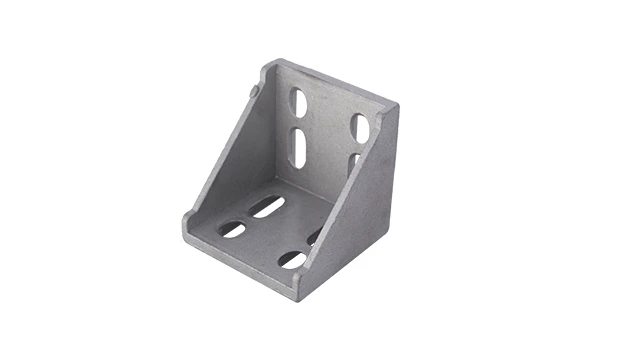
In the world of manufacturing, warehousing, and workshop setups, it's often the smallest components that keep everything running smoothly. Think about it: a well-built workbench doesn't just rely on its sturdy tabletop or heavy-duty legs—it's the hidden reinforcements, the connectors, and the precision-engineered accessories that ensure it can handle years of daily use. Today, we're shining a spotlight on one such unsung hero: the gusset ALP 4040 . If you've ever wondered how aluminum profile structures stay rigid under heavy loads or why some workbenches feel rock-solid while others wobble, this little accessory might be the answer. Let's dive into its technical specs, why they matter, and how it fits into the bigger picture of lean systems and aluminum profile setups.
What Is Gusset ALP 4040, Anyway?
First things first: let's demystify the name. "Gusset ALP 4040" might sound like industry jargon, but break it down, and it's actually quite straightforward. A gusset is a flat, often triangular or rectangular plate used to strengthen joints between two or more structural components—think of it as a "reinforcement bracket." "ALP" likely stands for "Aluminum Profile," hinting at its material and purpose. And "4040"? That's a nod to the aluminum profile size it's designed for: 40mm x 40mm, one of the most common profile dimensions in workshops and manufacturing lines.
So, in simple terms, the gusset ALP 4040 is a specialized aluminum bracket made to reinforce connections on 4040 aluminum profiles. Whether you're building a workbench, a material rack, or a conveyor frame, this tiny accessory adds critical rigidity. Without it, joints might flex under pressure, leading to wobbly structures, premature wear, or even safety hazards. In lean systems , where efficiency and durability are non-negotiable, that's a big deal.
Fun fact: Lean systems thrive on minimizing waste—including waste from equipment failure. By reinforcing joints with gusset ALP 4040, you extend the lifespan of your structures, reducing the need for replacements and keeping your workflow uninterrupted.
Dimensions: Getting the Fit Just Right
When it comes to aluminum profile accessories, size isn't just a number—it's about compatibility. A gusset designed for a 3030 profile (30mm x 30mm) won't work on a 4040, and vice versa. Let's break down the key dimensions of the gusset ALP 4040 and why each matters.
Overall Length and Width
Standard gusset ALP 4040 units typically measure 80mm in length and 40mm in width . Why 80mm? That length is intentional: it allows the gusset to span across the flange of a 4040 profile (which is 40mm wide) and overlap with the adjacent component it's reinforcing—say, a crossbeam or a vertical support. The 40mm width ensures it aligns perfectly with the profile's edges, avoiding overhang that could catch on tools or materials.
Of course, like most aluminum profile accessories , custom sizes are available for unique setups. For example, if you're building a compact workstation where space is tight, you might opt for a shorter 60mm length. But for 90% of applications—think standard workbenches, shelving units, or assembly line frames—the 80mm x 40mm size is the sweet spot.
Thickness: The Unsung Hero of Strength
If dimensions are about fit, thickness is all about strength. The gusset ALP 4040's thickness directly impacts how much weight it can support and how well it resists bending. Most manufacturers offer two common thickness options: 2mm and 3mm . Let's compare them:
- 2mm thickness: Lightweight and ideal for light-duty applications. Think of a workbench used for small electronics assembly, where the load is mostly hand tools and small parts. It adds reinforcement without adding unnecessary weight, keeping the structure easy to move or reconfigure (a big plus in lean systems, where adaptability is key).
- 3mm thickness: The heavyweight champion. This is your go-to for heavy-duty setups: workbenches holding power tools, material racks stacked with metal parts, or conveyor frames carrying bulky items. The extra millimeter might not sound like much, but it doubles the load capacity in some cases—we're talking 200kg+ per joint instead of 100kg.
Pro tip: When in doubt, go thicker. A 3mm gusset won't slow you down, but a 2mm one might fail if you later upgrade to heavier equipment. It's a small investment in long-term durability.

Hole Patterns: Precision for Perfect Installation
You could have the sturdiest gusset in the world, but if it doesn't align with your aluminum profile's T-slots, it's useless. That's where hole patterns come in. The gusset ALP 4040 features pre-drilled holes that let you bolt it securely to 4040 profiles, and the spacing, size, and number of these holes are far from random.
Hole Size and Spacing
Most gusset ALP 4040 units come with two M5 or M6 holes —the "M" stands for metric, and the number refers to the bolt diameter (5mm or 6mm). Why two holes? They create a "clamping" effect, distributing pressure evenly across the joint and preventing rotation. The spacing between these holes is typically 30mm , which matches the standard T-slot spacing on 4040 aluminum profiles. This isn't a coincidence: 30mm is the magic number for T-slot profiles, ensuring compatibility with most bolts, nuts, and aluminum profile accessories like end caps or brackets.
Some manufacturers offer a "4-hole" variant for extra security, with two holes on each side of the gusset. This is popular in high-vibration environments, like near heavy machinery, where even a slightly loose bolt could lead to instability.
Hole Placement: Edge Clearance Matters
Ever tried to tighten a bolt only to find the hole is too close to the edge of the bracket, causing the metal to crack? Not fun. That's why gusset ALP 4040 holes are positioned with careful edge clearance —usually 10mm from the lengthwise edges and 15mm from the widthwise edges . This ensures the aluminum around the hole stays strong, even when you crank down on the bolt with a wrench.
| Specification | Standard Value | Custom Options | Why It Matters |
|---|---|---|---|
| Length | 80mm | 60mm–100mm | Spans 4040 profile flanges; avoids overhang |
| Width | 40mm | 30mm–50mm | Aligns with 4040 profile edges; prevents snags |
| Thickness | 2mm or 3mm | 1.5mm–4mm | Determines load capacity and flex resistance |
| Hole Size | M5 or M6 | M4–M8 | Matches standard T-slot bolts and nuts |
| Hole Spacing | 30mm (center-to-center) | Custom to profile slot spacing | Ensures compatibility with 4040 aluminum profiles |

Material: Why Aluminum? (And What Grade?)
So far, we've talked about shape and size , but what about the material itself? Gusset ALP 4040 is almost always made from aluminum—and for good reason. Aluminum is lightweight, corrosion-resistant, and easy to machine, making it perfect for accessories that need to balance strength and practicality. But not all aluminum is created equal; the grade matters.
Most manufacturers use 6063-T5 aluminum for gusset ALP 4040. Let's unpack that: 6063 is an alloy known for its excellent extrudability (meaning it can be shaped into precise profiles) and good strength-to-weight ratio. The "T5" refers to the heat treatment process—artificially aging the aluminum to increase its hardness without making it brittle. The result? A gusset that's tough enough to resist dents but still flexible enough to absorb minor impacts (like a dropped tool bouncing off a workbench).
Why not steel? Steel is stronger, sure, but it's also heavier and prone to rust. In lean systems, where structures are often reconfigured or moved, extra weight is a liability. Aluminum's corrosion resistance is another win: in damp warehouses or workshops where spills happen, you won't have to worry about rust weakening the gusset over time.
Real-World Applications: Where Gusset ALP 4040 Shines
Technical specs are great, but how does this translate to actual use? Let's look at a few common scenarios where gusset ALP 4040 makes a tangible difference.
Workbenches: No More Wobble
A workbench is the heart of any workshop, and a wobbly workbench is a productivity killer. Imagine trying to assemble small electronics or tighten a bolt when the tabletop moves with every tool stroke—it's frustrating, and it increases the risk of mistakes. By adding gusset ALP 4040 at the joints where the legs meet the table frame, you eliminate that flex. For example, a standard 1.2m x 0.8m workbench with 4040 legs and a 4040 frame will feel significantly sturdier with 3mm gussets at each of the four corners. Suddenly, tasks like sawing, drilling, or using a bench vice become safer and more precise.
Material Racks: Stack 'Em High (Safely)
Material racks in warehouses often hold hundreds of kilograms of parts, boxes, or raw materials. A single shelf loaded with heavy items can put immense stress on the vertical supports and horizontal beams. Gusset ALP 4040 reinforces these connections, allowing you to stack more without worrying about the rack buckling. For instance, a 3-tier material rack with 4040 uprights and 4040 crossbeams might use 2mm gussets for light boxes but 3mm gussets if it's holding metal components or machinery parts.
Lean System Conveyors: Smooth Sailing
In lean manufacturing, conveyors are the arteries that move parts from one station to the next. A wobbly conveyor frame can cause jams, misaligned parts, or even damaged goods. Gusset ALP 4040 is often used at the joints of conveyor supports, especially where the frame meets the floor or where horizontal sections connect to vertical legs. By keeping the frame rigid, it ensures the conveyor belt or roller track stays level, so parts glide smoothly instead of getting stuck.
Pro tip: When pairing gusset ALP 4040 with other accessories, like 90° aluminum profile connectors or T-slot bolts, always check the load ratings. A gusset can only reinforce a joint as strong as the weakest component in the system!
Common Mistakes to Avoid
Even the best accessories can underperform if misused. Here are a few pitfalls to watch out for when working with gusset ALP 4040:
- Choosing the wrong thickness: Using a 2mm gusset for a heavy-duty rack might save a few cents upfront, but it'll cost you when the rack bends under load. When in doubt, calculate the maximum weight the joint will bear and size up.
- Ignoring hole alignment: If the gusset's holes don't line up with the T-slots on your 4040 profile, you'll end up drilling new holes or forcing bolts into place—both bad ideas. Always double-check that the hole spacing (usually 30mm) matches your profile's T-slot spacing.
- Overtightening bolts: Aluminum is strong, but it's not indestructible. Cranking a bolt too hard can strip the T-slot threads or warp the gusset. Use a torque wrench if you're unsure—most M5 bolts in aluminum profiles should be tightened to 3–4 Nm.
- Forgetting corrosion protection: While 6063-T5 aluminum is corrosion-resistant, it's not immune to saltwater or harsh chemicals. In extreme environments (like marine workshops), consider anodizing the gusset for an extra layer of protection.
Final Thoughts: Why Gusset ALP 4040 Deserves a Spot in Your Toolkit
At the end of the day, the gusset ALP 4040 is more than just a bracket—it's a testament to the "lean" philosophy of doing more with less. By focusing on precision dimensions, optimal thickness, and smart material choices, it delivers maximum reinforcement with minimal weight or cost. Whether you're building a simple workbench or a complex conveyor system, this little accessory ensures your structure is built to last, reducing waste, downtime, and frustration.
So, the next time you walk into a workshop or manufacturing plant and admire how solid the equipment feels, take a closer look at the joints. Chances are, there's a gusset ALP 4040 holding things together—quietly, reliably, and with the kind of attention to detail that makes all the difference in lean systems. And if you're in the market for one? Remember: measure twice, choose the right thickness, and always prioritize compatibility with your 4040 aluminum profiles. Your future self (and your wobbly workbench) will thank you.