- Company Articles
- Products and Technology
- Solution
- Telecom Equipment Production: Streamlining Processes with Aluminum Workbench A

Telecom Equipment Production: Streamlining Processes with Aluminum Workbench A
Related Product
Aluminum Workbench A
Aluminum tube workbench is more flexible and durable, compared with traditional PE/ABS coated steel tube. It is easy to assemble, anti corrosion, rust protection, and recycle use after disassemble.
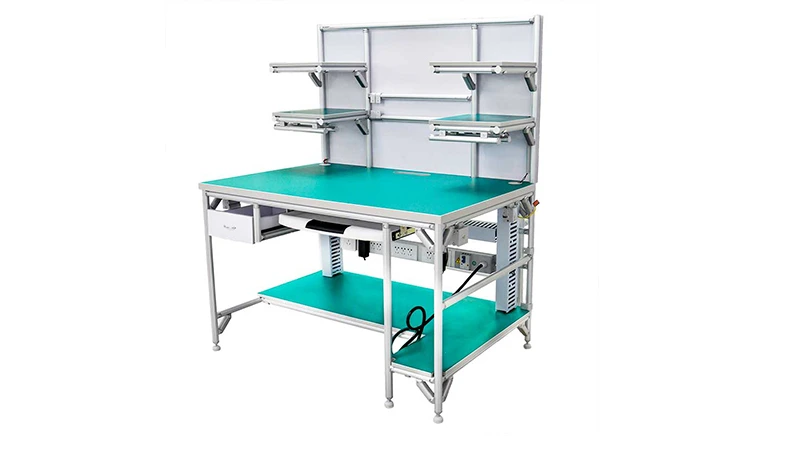
In the fast-paced world of telecom manufacturing, where 5G components shrink by the month and production deadlines loom like storm clouds, the difference between a smooth line and a bottleneck often comes down to the tools on the floor. Walk into any high-performing telecom facility today, and you'll notice a quiet workhorse at the center of the action: the Aluminum Workbench A. More than just a table, it's a linchpin in lean systems, a shield against static damage, and a catalyst for faster, more precise assembly. Let's dive into how this unassuming piece of equipment is transforming how telecom gear—from tiny transceivers to bulky routers—goes from blueprint to reality.
The Telecom Production Challenge: Speed, Precision, and Static
Telecom equipment isn't what it used to be. A decade ago, a router might have a handful of circuit boards; today, 5G base stations pack hundreds of microchips, each smaller than a grain of rice. These components demand millimeter-perfect placement, and even the tiniest mistake—like a misaligned connector or a static discharge—can render a $500 unit useless. Add to that the pressure to scale production: as telecom companies race to roll out 5G networks globally, factories are expected to churn out more units with fewer errors, all while keeping costs in check.
Traditional workbenches, often made of wood or generic steel, weren't built for this. They creak under heavy equipment, their surfaces scratch easily (leaving debris that jams delicate parts), and worst of all, they offer zero protection against electrostatic discharge (ESD). I've toured facilities where workers draped anti-static mats over old benches like band-aids, only to watch those mats peel up at the corners, creating trip hazards. And don't get me started on reconfiguration—when a new product line launches, swapping out a fixed steel bench for one with extra shelving could take a team of technicians an entire weekend. By then, the production schedule is already in the red.
Did you know? A single ESD event—like a static shock from a workbench—can damage a telecom chip at voltages as low as 250 volts. To put that in perspective, a human can't even feel a shock until it hits 3,000 volts. By the time a worker notices a problem, dozens of components might already be ruined.
Aluminum Workbench A: Built for the Way Telecom Teams Work
Enter Aluminum Workbench A. At first glance, it's sleek—its frame crafted from aluminum extrusion profile, a material known for its strength-to-weight ratio. Run a hand along its surface, and you'll notice it's smooth, no splinters or rough edges, because aluminum profiles are precision-cut. But the real genius is in the details. Let's break down why it's become a staple in telecom lines:
Lightweight but Unbreakable
Aluminum might feel light, but don't let that fool you. The extrusion process—where aluminum is forced through a die to create uniform shapes—results in a frame that can support up to 500 pounds without bending. That's crucial when you're mounting oscilloscopes, soldering stations, and bins of tiny screws on top. And because it's lightweight, reconfiguring the line isn't a Herculean task. Two workers can pick up an Aluminum Workbench A and shift it six feet to the left in 10 minutes, not a weekend. That flexibility is gold when a last-minute order for 1,000 routers hits the floor.
Customizable Down to the Millimeter
Telecom assembly isn't one-size-fits-all. A workstation for building fiber optic modules needs shelves for microscopes; one for testing antennas might require a clear desk space for signal meters. Aluminum Workbench A plays well with aluminum profile accessories—think adjustable tool rails, pegboards, and even monitor mounts that clamp directly to the frame. Want a shelf for your ESD-safe bins? Screw on an aluminum guide rail A, and you're done. Need to add a power strip? There's a slot in the profile for that. No drilling, no welding, no waiting for a custom part. It's like building with advanced Legos, but for grown-ups who need their tools to work as hard as they do.
A Partner in Lean Systems
Lean manufacturing isn't just a buzzword in telecom—it's survival. The goal is to eliminate waste: wasted time searching for tools, wasted space storing unused parts, wasted effort moving components across the floor. Aluminum Workbench A is designed with this in mind. Its single-deck design (without casters, which can wobble during precision work) keeps the focus on the task at hand, while its modular nature means you only add what you need. No more cluttered surfaces with tools that haven't been used in months. Pair it with a flow rack—stocked with just-in-time parts—and suddenly, a worker doesn't have to walk 20 feet to grab a connector. It's right there, at arm's length, on the bench.

From Bench to Flow: How Aluminum Workbench A Syncs with Lean Systems
A lean system is only as strong as its weakest link. In many factories, that link used to be the workbench—until Aluminum Workbench A came along. Let's walk through a typical telecom assembly line to see how it fits:
Step 1: Parts Delivery via Flow Rack – Early in the morning, a conveyor rolls bins of circuit boards, antennas, and connectors to the line. These bins slide into a flow rack, which uses gravity and roller tracks to feed parts to the workbench. The flow rack is positioned inches from Aluminum Workbench A, so the assembler simply reaches over and grabs the next bin. No bending, no stretching, no wasted steps.
Step 2: Precision Assembly on the Bench – The assembler sits down at Aluminum Workbench A. The surface is level (thanks to adjustable feet hidden under the frame), so their hands don't tire from leaning. They flip on a task light mounted to the bench's aluminum profile, illuminating the PCB they're working on. Because the bench is ESD-safe (more on that later), they don't have to pause to ground themselves every five minutes—they can focus on placing a 0.5mm connector without second-guessing.
Step 3: Testing and Transport – Once the board is assembled, the worker slides it onto a roller track attached to the end of the bench. The track feeds into a conveyor, which carries the board to the testing station. No lifting, no carrying, no risk of dropping. The conveyor, like the workbench, is built with aluminum components, so it's quiet—no clanging metal to distract the team.
This flow—from flow rack to bench to conveyor—is seamless because every piece is designed to work together. Aluminum Workbench A isn't an afterthought; it's the hub that ties the whole system together. And because it's made from the same aluminum profile as the flow racks and conveyor frames, replacing a part (like a damaged rail) is as easy as ordering a new aluminum profile accessory from the supplier. No more mismatched components from different vendors.

ESD Workstations: Protecting the Invisible Threat
Let's talk about static. In telecom manufacturing, it's the silent killer. A worker walks across a carpet, touches a workbench, and zaps a PCB with 1,000 volts—enough to fry a microchip but too weak to feel. By the time the board fails testing hours later, it's impossible to trace the damage back to that single touch. Traditional benches, which conduct static, only make this worse. Aluminum Workbench A, though? It's often paired with ESD workstation features that turn it into a shield.
Many Aluminum Workbench A models come with ESD-safe surfaces—either a conductive coating or a built-in grounding system that channels static away from the bench and into the floor. Some even have integrated wrist strap holders, so workers can clip on and forget about it. I visited a telecom plant in Texas last year that switched to these benches and saw their ESD-related scrap rate drop from 4% to 0.3% in three months. That's thousands of saved units, and thousands of dollars back in their budget.
| Feature | Traditional Workbench | Aluminum Workbench A |
|---|---|---|
| Material | Wood or generic steel; prone to warping/scratches | Aluminum extrusion profile; corrosion-resistant, smooth, and durable |
| ESD Protection | None (requires add-on mats that wear out) | Integrated ESD-safe surface and grounding options |
| Customization | Fixed design; modifying requires tools and time | Modular with aluminum profile accessories (shelves, rails, lights) |
| Weight | Heavy (hard to reconfigure) | Lightweight (two workers can move it in minutes) |
| Durability | Scratches, dents, and static buildup over time | Resistant to scratches, corrosion, and static; lasts 10+ years |
Why Aluminum? The Material That Makes It All Possible
You might be wondering: Why aluminum? Why not steel, which is cheaper? Here's the thing: Steel is heavy, it rusts, and it's a nightmare to machine into the precise shapes needed for modular workbenches. Aluminum, on the other hand, checks every box for telecom production:
- Corrosion Resistance – Telecom factories are often humid (to prevent static), but aluminum doesn't rust. Even if a spill happens, a quick wipe is all it takes to keep the bench looking new.
- Recyclability – When a bench finally reaches the end of its life (which takes decades), aluminum is 100% recyclable. It's a win for sustainability, which matters more than ever to telecom companies under pressure to reduce their carbon footprints.
- Precision Manufacturing – Aluminum extrusion profiles are made with tight tolerances, so every bench is identical. That consistency means tools fit the same way on every station, reducing training time for new workers.
And let's not forget the accessories. Aluminum Workbench A isn't a standalone product—it's part of an ecosystem. Need a shelf for your solder paste? Grab an aluminum profile bracket. Want to mount a barcode scanner? There's an aluminum guide rail that fits. Suppliers like lean system suppliers or aluminum profile suppliers stock these parts, so you never have to wait weeks for a custom piece. It's like having a hardware store tailored to your production line.
Real Results: A Telecom Plant's Lean Transformation
To put this in perspective, let's look at a real-world example. A mid-sized telecom manufacturer in Ohio (I'll call them "TechComm") was struggling with their router assembly line. Their old wooden workbenches were warped, ESD mats were peeling, and workers were spending 20 minutes per shift just searching for tools. Production was at 80 units per day, with a 5% error rate. They decided to overhaul their line with Aluminum Workbench A, flow racks, and conveyors.
The results? Within a month, tool search time dropped to 5 minutes per shift. The ESD error rate plummeted to 0.8%. And because the workbenches were easier to adjust, they could add a second shift without retooling. Six months later, they were cranking out 120 units per day—50% more—with fewer defects. The plant manager told me, "We didn't just buy workbenches; we bought a faster, calmer line. Our workers aren't stressed anymore, and it shows in the quality."
Choosing the Right Supplier: More Than Just a Parts Vendor
Of course, none of this works if you skimp on the supplier. A cheap aluminum workbench might look the part, but its joints will loosen, its surface will scratch, and its ESD coating will wear off in a year. That's why partnering with a reputable lean system supplier or aluminum workbench supplier is key. The best suppliers don't just sell you a bench—they send a consultant to your facility, map out your workflow, and recommend the right accessories (like roller tracks or caster wheels for mobile units, though Workbench A is stationary). They'll even train your team on how to reconfigure the bench themselves, so you're not calling for service every time a new product launches.
When vetting suppliers, ask about their aluminum extrusion process—are their profiles made in-house, or sourced from third parties? Do they offer warranties on ESD coatings? Can they customize the bench height or surface material to fit your specific products? A good supplier will answer these questions without hesitation. After all, they're invested in your success—if your line runs smoother, you'll keep coming back for more benches, flow racks, and conveyors.
The Future of Telecom Production: Smarter, Faster, Leaner
As telecom equipment gets more advanced—think 6G components, AI-powered routers, and satellite communication gear—production lines will need to evolve even further. Aluminum Workbench A is already keeping up. Some manufacturers are adding smart features, like built-in sensors that track how long parts spend on the bench (to spot bottlenecks) or LED lights that change color when a tool is missing. Others are experimenting with aluminum honeycomb panels for lighter, stiffer surfaces that can support heavier equipment.
But even without the bells and whistles, the core value of Aluminum Workbench A remains: it's a tool that adapts to you . It doesn't force your team to work around its limitations; it bends to fit your workflow, your products, and your goals. In an industry where every second and every cent counts, that's not just a nice-to-have—it's a game-changer.
Final Thoughts: The Bench That Builds the Future
At the end of the day, telecom production is about more than just making equipment. It's about connecting people—whether it's a rural community getting 5G for the first time or a business relying on stable internet to keep operations running. Every router, every antenna, every chip matters. And behind each of those products is a workbench that made it possible.
Aluminum Workbench A isn't glamorous, but it's essential. It's the quiet partner that helps teams meet deadlines, reduce waste, and protect the delicate components that power our connected world. So the next time you pick up your phone or log onto Wi-Fi, take a second to appreciate the unseen heroes of production—the benches, the flow racks, the conveyors, and the teams who rely on them. They're the reason we stay connected, even when the world moves faster than ever.