- Company Articles
- Products and Technology
- Product knowledge
- Telecom Equipment Racks: Flat Swivel Castor Wheel with Brake for Easy Maintenance Access

Telecom Equipment Racks: Flat Swivel Castor Wheel with Brake for Easy Maintenance Access
Related Product
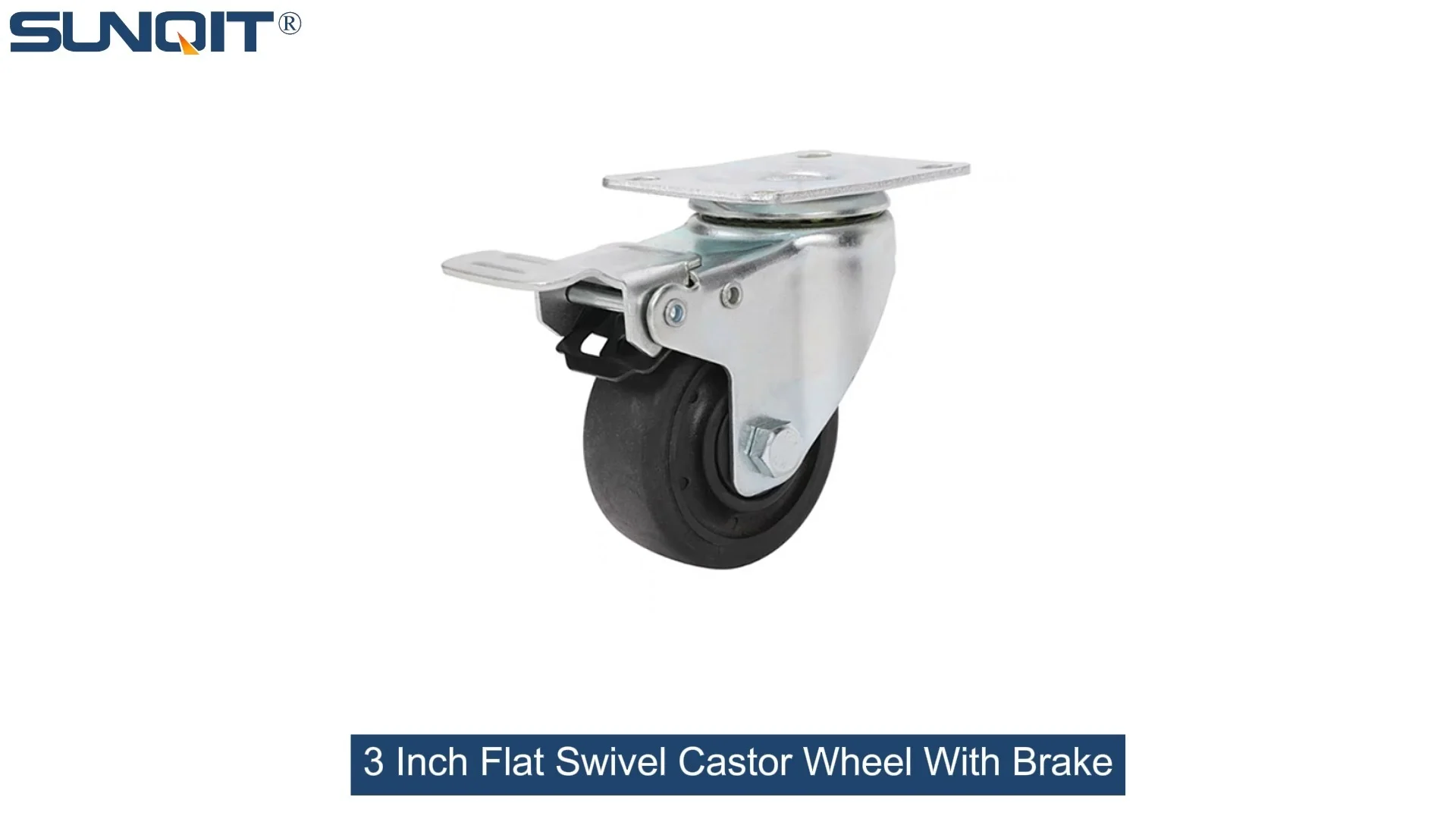
Flat Swivel Castor Wheel With Brake
Chair Casters Ball Bearing Wheels Rubber Base with brake design. Resistant to abrasion, impact and corrosion. Heavy payload can hold 70Kgs per pcs,which can make it works at a stable and smooth status.
In the quiet hum of a data center or the bustling backroom of a telecom hub, there's an unsung hero keeping our calls, texts, and streaming services running smoothly: the telecom equipment rack. These metal frameworks, packed with routers, servers, and fiber-optic gear, are the backbone of modern communication. But for all their importance, they've long hidden a frustrating secret: when something goes wrong, accessing the equipment inside can feel like solving a puzzle with leaden pieces. Heavy, immovable, and often crammed into tight spaces, traditional telecom racks turn routine maintenance into a time-consuming, back-breaking chore. That is, until the flat swivel castor wheel with brake arrived on the scene.
If you've ever watched a technician strain to inch a 300-pound rack away from the wall, or seen a team of two struggle to reposition gear for cable management, you know the problem. Telecom infrastructure doesn't just need to be powerful—it needs to be accessible. Downtime in telecom isn't just an inconvenience; it's a bottom-line crisis. Every minute a router is offline can cost a business thousands, and in critical sectors like healthcare or emergency services, it can put lives at risk. So why have we tolerated immobile racks for so long? The answer, until recently, was simple: there wasn't a mobility solution that balanced strength, safety, and precision—until now.
The Maintenance Challenge: Why Accessibility Matters in Telecom Racks
Let's start with the basics: telecom equipment racks are heavy. Even a mid-sized rack, loaded with servers and networking gear, can weigh 500 pounds or more. In data centers, these racks are often lined up in rows, inches apart, to maximize space. While this density is efficient for storage, it's a nightmare for maintenance. When a cable frays, a fan fails, or a server needs upgrading, technicians are forced to work in cramped quarters, sometimes on their knees or reaching blindly behind the rack.
Worse, moving a traditional rack often requires brute force. Without wheels, adjusting its position means recruiting a colleague (or two), using pry bars, or even disassembling parts of the rack to lighten the load. This isn't just slow—it's dangerous. In 2023, the Bureau of Labor Statistics reported over 2,000 workplace injuries in data centers alone, many linked to improper lifting or moving of heavy equipment. And even when racks are moved successfully, there's the risk of damaging floors, scratching walls, or jostling sensitive gear into misalignment.
Then there's the issue of precision. Telecom racks need to be perfectly aligned with cable pathways, power sources, and cooling systems. A rack that's even an inch out of place can strain cables, block airflow, or create hotspots—all of which shorten equipment lifespan. Traditional fixed racks offer no room for (fine-tuning); once bolted to the floor, they're there for good. This rigidity might work in a static setup, but in today's fast-evolving telecom landscape—where 5G rollouts, cloud expansions, and IoT growth demand constant upgrades—fixed infrastructure is a liability.
Enter the Flat Swivel Castor Wheel with Brake: A Game-Changer in Mobility
Imagine a telecom rack that glides like a well-oiled shopping cart, then locks into place so securely it might as well be bolted to the floor. That's the promise of the flat swivel castor wheel with brake —a deceptively simple invention that's revolutionizing how telecom facilities manage their equipment. But what exactly is this caster, and how does it solve the problems we've just outlined?
What Is a Flat Swivel Castor Wheel with Brake?
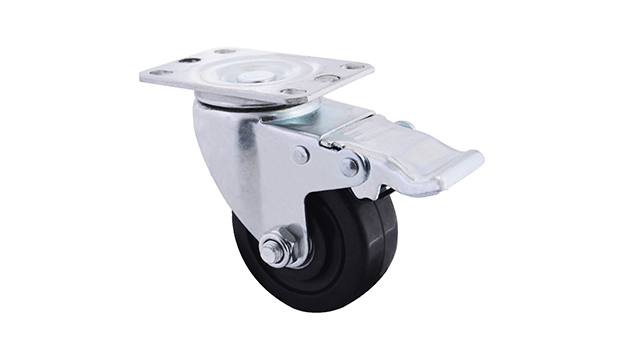
At its core, a flat swivel castor wheel with brake is a mobility solution designed for heavy-duty applications. The "flat" refers to its low-profile design—unlike bulky industrial casters that add inches to a rack's height, these sit close to the ground, keeping the rack stable and reducing wobble. The "swivel" means the wheel can rotate 360 degrees, allowing the rack to move in any direction, even in tight spaces. And the "brake" is a critical safety feature: a foot-operated lever that locks both the wheel and the swivel mechanism, preventing movement once the rack is in position.
But what sets these casters apart isn't just their components—it's how they work together. A standard caster might swivel or lock, but premium flat swivel castors with brakes are engineered for precision. Take the swivel joint, for example: high-quality models use ball bearings or roller bearings to ensure smooth rotation, even when the rack is fully loaded. The brake, too, is designed for reliability; instead of a flimsy plastic lever, it's often made of steel, with a cam mechanism that grips the wheel tightly, even under hundreds of pounds of pressure.
How It Differs from Standard Casters
To understand the value of these casters, it helps to compare them to what's come before. Standard casters, the kind you might find on a office chair or a light-duty cart, are not built for telecom racks. They're often made of plastic, which cracks under heavy loads, or have single-lock brakes that only stop the wheel (not the swivel), leaving the rack prone to drifting. Some are fixed (non-swivel), limiting movement to back-and-forth, which is useless in a crowded data center.
Heavy-duty industrial casters, on the other hand, are built to handle weight—but they're often overkill. With large, pneumatic wheels or metal frames, they add bulk and height, making racks top-heavy and harder to maneuver. They also lack the precision needed for telecom: a slight bump can send a rack with industrial casters rolling, even if the brake is engaged.
The flat swivel castor wheel with brake strikes a balance. It's compact enough to keep racks stable, strong enough to handle 1,000+ pound loads, and precise enough to move smoothly in a 2-foot gap between other racks. For telecom facilities, this balance is transformative.
The Anatomy of Reliability: Key Features of Premium Flat Swivel Castor Wheels
Not all flat swivel castor wheels with brakes are created equal. To truly enhance telecom operations, a caster must be built to withstand the unique demands of the industry: temperature fluctuations, heavy loads, frequent movement, and the need for minimal maintenance. Let's break down the key features that separate a premium caster from a budget knockoff.
Materials: Durability in Harsh Environments
Telecom rooms and data centers are not gentle places. Temperatures can swing from 65°F to 95°F (and higher, if cooling systems fail), and humidity levels often fluctuate. Dust, static electricity, and even chemical cleaners are part of daily life. A caster that works in a warehouse might corrode or seize up in these conditions—so materials matter.
The wheel itself is a good starting point. Polyurethane (PU) is a popular choice for telecom casters. Why? It's tough enough to handle heavy loads, yet soft enough to protect sensitive floors (like the anti-static tiles common in data centers) from scratches. It also resists oil, grease, and most chemicals, making it easy to clean. For even harsher environments—say, outdoor telecom cabinets or facilities with exposure to moisture—rubber or stainless steel wheels might be better, though they're slightly noisier.
The caster frame, or bracket, is equally important. Most premium models use cold-rolled steel, which is stronger and more corrosion-resistant than regular steel. Some are even powder-coated or zinc-plated to add an extra layer of protection against rust. The swivel head, which connects the wheel to the bracket, is often made of hardened steel or aluminum, with precision-machined parts to prevent jamming.
Brake Mechanism: Safety First
In telecom, a caster's brake isn't just a convenience—it's a safety feature. A failed brake could send a loaded rack rolling into a power source, damaging equipment or causing a short circuit. That's why the best flat swivel castors with brakes use a dual-lock system: one that locks the wheel (preventing it from rolling) and one that locks the swivel (preventing the wheel from turning).
How does this work? When you press the brake lever, two things happen: a pad clamps down on the wheel's tread, stopping rotation, and a pin or plate engages with the swivel raceway, freezing the wheel in place. This dual lock is far more secure than a single-lock brake, which might stop the wheel but still let the rack swivel, leading to instability.
The brake lever itself should be easy to operate, even for technicians wearing gloves. Look for levers that are large enough to grip, with a non-slip surface, and positioned so they can be engaged or released with a simple foot tap. Some models even have a "soft-touch" feature, where the lever requires minimal force to lock, reducing strain on technicians' feet during repeated use.
Swivel Design: Maneuverability in Tight Spaces
Data centers and telecom rooms are rarely spacious. Racks are often packed together, with just 18–24 inches of clearance between them. In these conditions, a caster that only moves forward and backward is useless. That's where the swivel design shines—but not all swivels are created equal.
The key to smooth swiveling is the bearing system. Basic casters use plain bearings, which can stick or grind under heavy loads. Premium models, however, use ball bearings (for lighter loads) or tapered roller bearings (for heavier loads), which reduce friction and allow the wheel to rotate effortlessly. Some even have a "raceway" (the circular track the swivel head moves in) filled with lubricant, ensuring years of smooth operation without maintenance.
Another feature to look for is a "kingpinless" swivel design. Traditional casters have a kingpin—a bolt that holds the swivel head in place. Over time, this bolt can loosen or bend, causing the caster to wobble. Kingpinless casters eliminate this weak point by using a riveted or welded construction, making them more durable and longer-lasting. For telecom racks that are moved frequently, this is a critical upgrade.

Beyond Mobility: How These Casters Enhance Telecom Operations
So far, we've focused on how flat swivel castor wheels with brakes solve the mobility problem—but their impact goes far beyond just moving racks. They're a catalyst for efficiency, safety, and innovation in telecom operations. Let's explore how.
Reducing Downtime During Maintenance
In telecom, downtime is the enemy. According to a 2024 study by the Telecom Industry Association, unplanned downtime costs the average provider $5,600 per minute. That's over $300,000 per hour—money that could be saved with faster maintenance. Flat swivel castor wheels with brakes cut maintenance time in two ways: by making racks easier to access and by simplifying the process of moving them.
Consider a typical scenario: a technician needs to replace a faulty router in the back of a rack. With a fixed rack, they might spend 15 minutes clearing space, recruiting help, and carefully sliding the router out. With a mobile rack on flat swivel casters, they can: (1) disengage the brakes, (2) swivel the rack 45 degrees to create space, (3) replace the router, (4) swivel it back, and (5) lock the brakes—all in under 5 minutes. Multiply that by dozens of maintenance tasks per month, and the time savings add up quickly.
Even planned upgrades benefit. When rolling out new 5G equipment, for example, teams often need to reconfigure racks to accommodate larger servers or additional cooling units. With mobile racks, they can rearrange the entire room in hours, not days, minimizing disruption to services.
Ergonomic Benefits for Technicians
Telecom technicians are the unsung heroes of connectivity, but their jobs are physically demanding. Bending, reaching, and lifting heavy equipment can lead to chronic injuries like back pain or carpal tunnel syndrome. The Centers for Disease Control (CDC) estimates that over 30% of data center technicians report work-related musculoskeletal disorders—many of which are preventable with better ergonomics.
Flat swivel castor wheels with brakes address this by reducing the need for heavy lifting. Instead of straining to pull a rack away from the wall, a technician can simply unlock the brakes and glide it into position with one hand. This not only reduces the risk of injury but also makes the job more efficient; a technician who isn't exhausted from moving racks can focus on the task at hand, leading to fewer mistakes.
The low-profile design of these casters also helps. By keeping the rack closer to the ground, they reduce the height technicians need to reach when accessing top-mounted equipment. Combine this with a well-designed workbench —positioned nearby for tools and testing gear—and you've created a workspace that prioritizes technician comfort and productivity.
Compatibility with Existing Infrastructure
One of the biggest concerns when upgrading equipment is compatibility. Will the new casters fit my existing racks? Do I need to replace everything? The good news is that most flat swivel castor wheels with brakes are designed to work with standard telecom racks. They come in a range of stem sizes and mounting plates, so they can be bolted or welded onto most rack legs without major modifications.
For facilities with custom racks or unusual leg designs, caster accessories like stem adapters or mounting brackets can bridge the gap. These accessories—often sold separately—allow technicians to adjust the caster's fit, ensuring a secure connection. For example, a stem adapter might convert a 2-inch stem into a 3-inch stem, letting the caster fit a rack with thicker legs.
But the compatibility doesn't stop at racks. These casters also play well with other telecom infrastructure, like roller tracks . Roller tracks are long, narrow strips with embedded wheels, used to slide heavy equipment (like servers or batteries) into and out of racks. When combined with mobile racks, roller tracks become even more useful: a technician can roll a server onto the track, position the rack next to it, and slide the server into place—no lifting required. It's a seamless workflow that turns two-person jobs into one-person tasks.

Caster Accessories: The Small Parts That Make a Big Difference
A flat swivel castor wheel with brake is only as good as its accessories. These small, often-overlooked parts can enhance performance, extend lifespan, and ensure the caster works perfectly with your specific setup. Let's take a closer look at some must-have caster accessories for telecom applications.
Stem Adapters and Mounting Plates
As mentioned earlier, not all racks have the same leg size or mounting holes. Stem adapters solve this problem by allowing you to adjust the caster's stem (the part that attaches to the rack) to fit different leg diameters. For example, if your rack has 3-inch legs but the caster's stem is 2 inches, a stem adapter can bridge the gap. Mounting plates are another essential accessory; they attach to the bottom of the rack, providing a flat surface for the caster to bolt onto. This is especially useful for racks with uneven or damaged legs, as the plate distributes weight evenly across the caster.
Brake Extension Levers
In some telecom setups, racks are positioned close to the ground, making the brake lever hard to reach—especially for technicians with mobility issues or those wearing thick safety boots. Brake extension levers solve this by adding a longer handle to the brake, making it easier to engage or release with a foot tap. Some even have a "memory" feature, staying in the up or down position until manually adjusted, reducing the need for repeated bending.
Wheel Guards and Covers
Dust, dirt, and debris are the enemies of smooth-rolling casters. Over time, particles can build up in the wheel bearings, causing them to jam or wear out prematurely. Wheel guards—plastic or metal shields that fit around the wheel—keep debris out, while wheel covers (like rubber caps) protect the wheel tread from damage when the rack is stored for long periods. Both are inexpensive investments that can double the lifespan of your casters.
Lubrication Kits
Even the best casters need occasional maintenance, and lubrication is key. A caster lubrication kit typically includes a small bottle of high-temperature grease (designed to withstand the heat of telecom rooms) and a precision applicator. Regular lubrication—every 6 months for heavy-use casters—keeps the swivel joint and wheel bearings moving smoothly, preventing squeaking and reducing wear.
Integration with Workbenches and Roller Tracks: A Seamless Workflow
Telecom operations aren't just about racks—they're about the entire ecosystem of tools, equipment, and workspace. Flat swivel castor wheels with brakes shine when integrated with other components like workbenches and roller tracks , creating a workflow that's efficient, safe, and adaptable.
Workbenches: The Command Center of Telecom Maintenance
A workbench in a telecom facility is more than just a table; it's where technicians test equipment, organize tools, and troubleshoot issues. When paired with mobile racks on flat swivel casters, workbenches become even more powerful. Imagine this: a technician rolls a rack up to the workbench, locks the casters, and uses the bench to stage a new server. They can plug the server into power and network ports on the bench to test it, then slide it into the rack—all without moving more than a few feet.
The key is to choose a workbench that's compatible with your casters. Look for benches with a low profile (to match the rack's height when on casters) and a sturdy frame that can support heavy equipment. Some workbenches even come with built-in roller tracks on top, allowing technicians to slide equipment between the bench and the rack with minimal effort.
Roller Tracks: Moving Heavy Equipment with Ease
Roller tracks are long, narrow strips with small, free-spinning wheels that make it easy to move heavy items (like servers, batteries, or patch panels) horizontally. When installed on the floor or on workbenches, they work hand-in-hand with mobile racks. Here's how: a technician places a server on the roller track, positions the mobile rack at the end of the track, and gently pushes the server into the rack. No lifting, no straining—just smooth, controlled movement.
For telecom racks, roller tracks can also be mounted inside the rack itself, creating sliding shelves for equipment. This is especially useful for items that need frequent access, like backup batteries or test devices. When combined with flat swivel casters, these shelves can be pulled out, the rack moved, and the shelf slid back in—all in seconds.
Installation and Maintenance: Keeping Your Casters in Top Shape
Installing flat swivel castor wheels with brakes is a straightforward process, but attention to detail is key to ensuring safety and performance. Here's a step-by-step guide to installation, followed by tips for ongoing maintenance.
Installation: A DIY Job (With the Right Tools)
Before you start, gather your tools: a drill, socket set, level, and measuring tape. You'll also need the casters, mounting plates (if using), and any caster accessories like stem adapters. Here's how to proceed:
- Prepare the rack: Empty the rack of all equipment to reduce weight. If possible, tilt the rack gently and place it on blocks to lift the legs off the ground (use a helper for safety).
- Attach mounting plates (if needed): If your rack legs aren't flat or have uneven surfaces, bolt mounting plates to the bottom of each leg. Use a level to ensure the plates are straight—this will prevent the rack from wobbling later.
- Mount the casters: Align each caster with the mounting plate (or directly with the rack leg) and secure it with bolts. Tighten the bolts firmly, but don't over-tighten—this can strip the threads or bend the plate.
- Test the casters: Lower the rack to the ground and give it a gentle push. It should roll smoothly, with no sticking or wobbling. Test the brakes by pressing the lever—they should lock the wheel and swivel immediately.
- Re-load the rack: Once the casters are secure, carefully replace the equipment. Check the brakes again with the rack loaded to ensure they can handle the weight.
Ongoing Maintenance: Extending Caster Lifespan
With proper care, a good set of flat swivel castor wheels with brakes can last 5–7 years. Here are some maintenance tips to keep them rolling smoothly:
- Inspect regularly: Every month, check the casters for loose bolts, worn wheels, or debris buildup. Tighten bolts as needed, clean wheels with a damp cloth, and remove any hair or string wrapped around the axles.
- Lubricate annually: Use a high-temperature grease to lubricate the swivel joint and wheel bearings. This prevents rust and keeps the casters moving smoothly.
- replace worn parts: If a wheel starts to crack or the brake lever becomes loose, replace the caster or the faulty part immediately. Waiting can lead to bigger problems, like a rack tipping or a brake failure.
- Train technicians: Make sure everyone who moves the racks knows how to use the brakes properly. Misusing the brake (e.g., kicking it instead of pressing it) can damage the mechanism over time.
Comparing Options: Why Not Just Any Caster Wheel?
With so many casters on the market, it's tempting to opt for the cheapest option. But in telecom, where reliability and safety are critical, cutting corners on casters can cost far more in the long run. To help you make an informed decision, let's compare flat swivel castor wheels with brakes to other common caster types, using a table to highlight key differences.
| Feature | Flat Swivel Castor Wheel with Brake | Standard Industrial Caster | Fixed (Non-Swivel) Caster | Benefit for Telecom Racks |
|---|---|---|---|---|
| Height Profile | Low (1–3 inches) | High (4–6 inches) | Variable | Reduces rack wobble; improves stability |
| Swivel Range | 360 degrees (full rotation) | 360 degrees (may be stiff under load) | 0 degrees (only moves forward/backward) | Allows movement in tight spaces; easier to position racks |
| Brake Type | Dual-lock (wheel + swivel) | Single-lock (wheel only) or none | None (fixed position) | Prevents accidental movement; keeps rack stable during maintenance |
| Weight Capacity | 500–1,500 lbs per caster | 1,000–3,000 lbs per caster (bulkier) | 500–2,000 lbs per caster | Handles heavy telecom equipment without sacrificing maneuverability |
| Floor Protection | Polyurethane wheels (gentle on floors) | Rubber or steel wheels (may scratch) | Rubber or steel wheels | Protects anti-static floors in data centers |
Future Trends: The Next Generation of Telecom Mobility
As telecom technology evolves, so too will the tools that support it. Flat swivel castor wheels with brakes are just the beginning—here are some emerging trends to watch for in the coming years:
Smart Casters with Sensors
Imagine a caster that can tell you when it's about to fail. Smart casters equipped with sensors could monitor temperature, vibration, and wheel wear, sending alerts to facility managers when maintenance is needed. Some might even track how often the rack is moved, helping optimize workflow or identify underused equipment.
Eco-Friendly Materials
Sustainability is becoming a priority in telecom, and casters are no exception. Look for manufacturers using recycled materials (like reclaimed steel for frames or plant-based polyurethane for wheels) or casters designed for easy recycling at the end of their lifespan.
Motorized Casters
For extremely heavy racks (think 2,000+ pounds), motorized casters could be the next step. These would allow a single technician to move a fully loaded rack with the push of a button, using a battery-powered motor to assist with movement. While still in development, they could revolutionize how large-scale telecom facilities handle equipment.
Conclusion: Investing in Mobility for a Resilient Telecom Future
In the fast-paced world of telecom, where 5G, IoT, and cloud computing demand constant innovation, the ability to adapt quickly is key. Flat swivel castor wheels with brakes might seem like a small upgrade, but they're a critical one. By making equipment racks mobile, safe, and easy to maintain, they reduce downtime, improve technician ergonomics, and unlock new possibilities for workflow optimization.
Whether you're managing a small telecom room or a sprawling data center, the right casters can transform how you operate. Pair them with caster accessories for a custom fit, integrate them with workbenches and roller tracks for seamless workflows, and invest in regular maintenance to keep them rolling for years. In the end, it's not just about moving racks—it's about building a telecom infrastructure that's as agile and resilient as the networks it supports.
So the next time you walk into a data center or telecom room, take a moment to look down. The unsung heroes might not be the servers or routers—but the casters keeping them accessible, safe, and ready to power the next generation of connectivity.