- Company Articles
- Products and Technology
- Solution
- Telecommunication Equipment: Four Way Straight Lean Pipe Joint Solutions for Router Production

Telecommunication Equipment: Four Way Straight Lean Pipe Joint Solutions for Router Production
Related Product
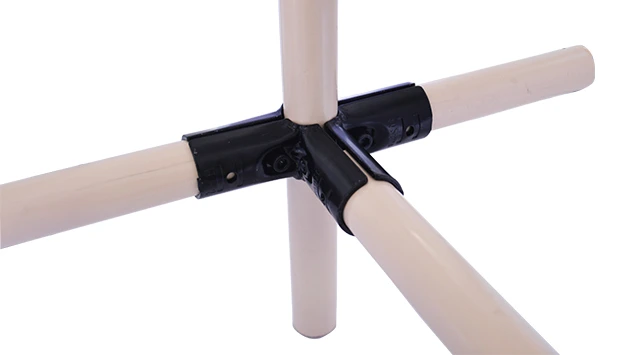
Four Way Straight Lean Pipe Joint
Four way lean pipe joint for 4 pcs 28MM lean pipe connection in straight angle, which used widely in workbench, flow rack, hand trolley frame connection.
In today's fast-paced tech landscape, routers are the unsung heroes keeping homes, offices, and industries connected. From streaming 4K videos to powering smart factories, these devices demand precision, reliability, and adaptability. But behind every high-performance router lies a production line grappling with unique challenges: frequent model updates, tight deadlines, space constraints, and the need to minimize waste. For manufacturers, the question isn't just about building routers—it's about building them efficiently, flexibly, and sustainably. This is where lean manufacturing systems step in, and at the heart of many of these systems is a humble yet powerful component: the four way straight lean pipe joint. In this article, we'll explore how this unassuming connector is transforming router production, making lines more agile, cost-effective, and ready to meet the demands of tomorrow's connectivity.
The Challenges of Modern Router Production
Router production is no longer a one-size-fits-all process. Today's consumers expect routers with faster speeds (think Wi-Fi 6E and emerging Wi-Fi 7), better range, and compatibility with a growing ecosystem of smart devices. This has led to an explosion in product diversity—from compact home routers to enterprise-grade models with multiple antennas and advanced security features. For manufacturers, this diversity translates to a host of challenges:
1. Rigid Production Lines Struggle with Change Traditional production setups often rely on fixed, welded workbenches, custom racks, and inflexible conveyors. When a new router model is introduced—say, one with a larger chassis or additional ports—these setups require extensive rework. Welding new frames, modifying workstations, or replacing entire sections of the line can take weeks, leading to costly downtime and missed market windows.
2. Space Constraints Limit Efficiency Many manufacturing facilities operate in tight quarters, especially in urban areas where real estate is expensive. Traditional storage solutions like static shelving or bulky racks eat up valuable floor space, leaving little room for expansion or reconfiguration. This can create bottlenecks, as workers waste time navigating crowded aisles or retrieving parts from hard-to-reach locations.
3. Waste Undermines Profitability In lean manufacturing terms, waste (or "muda") comes in many forms: excess inventory, unnecessary movement, waiting times, and defects. For router production, this might mean overstocking parts for a discontinued model, workers walking long distances to fetch tools, or parts getting damaged due to poor storage. These inefficiencies not only drive up costs but also slow down production, making it harder to keep up with demand.
4. Adaptability to New Technologies As routers evolve, so do their components. Circuit boards get smaller, antennas more complex, and casings more ergonomic. A production line that worked for last year's model may not accommodate these changes. For example, assembling a router with 5G capabilities might require new testing stations or specialized tooling—something rigid setups struggle to integrate without major overhauls.
These challenges aren't just operational—they're strategic. In an industry where innovation cycles are measured in months, not years, manufacturers need production systems that can pivot as quickly as their R&D teams. This is where lean systems, built around modular components like the four way straight lean pipe joint, offer a game-changing solution.
Lean Systems: The Foundation of Efficient Router Production
At its core, a lean system is about creating more value with less waste. It's a mindset that prioritizes continuous improvement, employee empowerment, and customer focus—but it's also deeply rooted in the physical tools and structures that make efficiency possible. Unlike traditional manufacturing, which often relies on fixed, one-purpose equipment, lean systems thrive on modularity, flexibility, and adaptability. They're designed to grow, shrink, and reconfigure as needs change—without sacrificing stability or performance.
In router production, a lean system might include modular workbenches where assembly happens, flow racks for organizing parts, conveyors for moving components between stations, and mobile trolleys for transporting materials. What ties these elements together? Often, it's a network of pipes and joints that can be easily assembled, disassembled, and reconfigured. And among these joints, the four way straight lean pipe joint stands out for its versatility and strength.
But why "lean"? Let's break it down. A lean system using four way straight lean pipe joints addresses the key challenges of router production head-on: it reduces setup time by allowing quick reconfigurations, optimizes space with compact, customizable structures, minimizes waste by enabling just-in-time part delivery, and adapts seamlessly to new router models. It's not just about cutting costs—it's about building a production line that can evolve with the industry.

The Four Way Straight Lean Pipe Joint: A Closer Look
If lean systems are the backbone of modern router production, then the four way straight lean pipe joint is the vertebrae that gives that backbone flexibility and strength. At first glance, it might look like a simple metal connector, but its design is engineered for precision and versatility. Let's unpack what makes this joint so essential.
What Is It? A four way straight lean pipe joint is a multi-directional connector designed to join four lean pipes at 90-degree angles, forming a stable, cross-shaped structure. It's typically made from high-quality steel (often zinc-plated for corrosion resistance) or aluminum, ensuring durability even in high-traffic production environments. Unlike welded joints, which are permanent, these connectors use bolts or clamps to secure pipes, making assembly and disassembly quick and tool-friendly.
Design That Drives Flexibility The magic of the four way joint lies in its simplicity. Each joint has four ports (one for each pipe) that align perfectly with standard lean pipes (most commonly 28mm in diameter, a size widely adopted in manufacturing). When pipes are inserted into these ports, a tightening mechanism—usually a hex bolt or cam lever—secures them in place. This design eliminates the need for welding, cutting, or specialized tools, allowing even non-technical staff to assemble or modify structures in minutes.
Strength Without Compromise Don't let its simplicity fool you: the four way straight lean pipe joint is built to handle heavy loads. Depending on the material (steel vs. aluminum) and pipe thickness, a single joint can support anywhere from 300kg to 800kg of static weight. This makes it ideal for building sturdy workbenches, heavy-duty flow racks, or conveyors carrying partially assembled routers. The joint's internal ribbing distributes weight evenly across all connected pipes, reducing stress points and minimizing the risk of failure over time.
Compatibility: The Key to Modularity One of the four way joint's greatest strengths is its compatibility with other lean components. It works seamlessly with two-way, three-way, and swivel joints, allowing manufacturers to build everything from simple square frames to complex, multi-level structures. Pair it with casters, and you've got a mobile workstation; add roller tracks, and it becomes part of a flow rack; attach a conveyor belt, and it supports material transport. This compatibility means that a single set of joints and pipes can be repurposed across the production line, reducing the need for specialized equipment.

Applications in Router Production: From Workbench to Warehouse
Now that we understand what the four way straight lean pipe joint is, let's explore how it's applied in router production. From the moment raw components arrive at the factory to the final testing of finished routers, this joint plays a critical role in creating efficient, adaptable workflows. Here are three key applications:
1. Modular Workbenches: The Heart of Assembly
Router assembly is a meticulous process, involving tasks like soldering circuit boards, attaching antennas, and fitting casings. This work requires stable, ergonomic workbenches that can be tailored to each task and worker. Traditional workbenches, with fixed heights and limited storage, often fall short—especially when production shifts to a new router model with different assembly steps.
Enter the four way straight lean pipe joint. By connecting pipes with these joints, manufacturers can build custom workbenches that adapt to their needs. Need a shelf for tools? Add a horizontal pipe section using a four way joint. Want to mount a monitor for assembly instructions? Attach a vertical pipe with a clamp. Need to raise the work surface by 10cm to reduce worker strain? Loosen the bolts, adjust the pipes, and retighten. It's that simple.
These workbenches can also integrate accessories like ESD (electrostatic discharge) mats—critical for protecting sensitive router components from static damage—or LED task lighting to improve visibility during intricate soldering work. And when a new router model requires a longer or wider workspace, the bench can be expanded by adding more pipes and four way joints, no welding required.
2. Flow Racks: Streamlining Parts Storage
Efficient router production relies on having the right parts at the right place, at the right time. Components like capacitors, resistors, and antenna cables come in various sizes and quantities, and misplacing even one part can bring an assembly line to a halt. Flow racks—tilted shelves where parts slide forward as they're used—solve this problem by ensuring easy access and first-in, first-out (FIFO) inventory management.
The four way straight lean pipe joint is instrumental in building these racks. By connecting vertical and horizontal pipes, manufacturers can create sturdy frames that support sloped roller tracks (another common lean component). The angle of the slope ensures parts gravity-feed to the front of the rack, so workers never have to reach to the back or dig through bins. And because the joints are adjustable, shelf heights can be modified to fit different part sizes—whether it's a small circuit board or a bulky router casing.
For example, a flow rack used for router antennas might have shorter shelves with smaller gaps between rollers, while one storing power supplies could have taller, sturdier shelves. With four way joints, these racks can be built to fit the exact dimensions of the production floor, maximizing space utilization and reducing the time workers spend walking to retrieve parts.
3. Conveyors: Keeping Production Flowing
Between assembly steps—say, from circuit board installation to casing assembly—routers need to move smoothly between workstations. Conveyors are the workhorses here, but traditional belt or roller conveyors are often fixed in place, making them hard to reconfigure when production needs change. The four way straight lean pipe joint offers a better alternative: modular conveyors that can be adjusted, extended, or rerouted with minimal effort.
By using four way joints to build the conveyor frame, manufacturers can create lightweight yet durable structures that support roller tracks or belt systems. For example, a small section of conveyor might connect two workbenches, while a longer line could span multiple stations. If a new testing station is added, the conveyor can be extended by adding more pipe sections and joints. If space becomes tight, the line can be curved or split using swivel joints (paired with four way joints) to navigate around obstacles.
These modular conveyors are also easy to disassemble and repurpose. If a production line is temporarily shut down for maintenance, the conveyor components can be reused to build a temporary workbench or storage rack elsewhere in the facility. This kind of flexibility is impossible with fixed conveyors, which often end up as scrap when no longer needed.
The Benefits: Why Router Manufacturers Are Embracing Four Way Joints
The four way straight lean pipe joint isn't just a tool for building structures—it's a catalyst for operational transformation. When integrated into a lean system, it delivers a host of benefits that directly address the challenges of router production:
1. Reduced Setup Time, Faster Time-to-Market Traditional production line reconfigurations can take weeks. With four way joints, setting up a new workbench or modifying a flow rack takes hours. For router manufacturers, this means faster response to market trends. When a competitor launches a new model, you can retool your line in days, not weeks, ensuring you stay ahead in the race for market share.
2. Lower Costs, Higher ROI Welded structures require skilled labor and expensive materials. Four way joints, by contrast, are affordable, reusable, and require minimal labor to assemble. Over time, this translates to significant cost savings. For example, a manufacturer that previously spent $10,000 on a custom welded workbench might spend just $2,000 on a modular lean bench using four way joints—and when that bench is no longer needed, its components can be repurposed to build something else, extending their lifespan and ROI.
3. Space Optimization In crowded factories, every square foot counts. Four way joint structures are inherently space-efficient, as they can be built to fit exact dimensions. A flow rack that once took up 10 square meters can be redesigned with vertical pipes (connected via four way joints) to store the same number of parts in 6 square meters, freeing up space for new equipment or additional assembly stations.
4. Waste Reduction By enabling modularity and FIFO inventory management, four way joints help cut down on waste. Parts are stored efficiently in flow racks, reducing the risk of damage or obsolescence. Workbenches are tailored to worker movements, minimizing unnecessary walking or reaching. And because structures can be reconfigured, there's less need to purchase new equipment, reducing waste from discarded tools or frames.
5. Empowered Workers Lean manufacturing isn't just about tools—it's about giving workers the ability to improve their own workflows. With four way joints, assembly line workers can adjust their workbenches to their height, add tool holders where they're most needed, or reposition flow racks for easier access. This sense of ownership leads to higher job satisfaction and, ultimately, better productivity.
Traditional vs. Lean: A Comparison
| Aspect | Traditional Production Setup | Lean Setup with Four Way Straight Lean Pipe Joints |
|---|---|---|
| Setup Time for New Model | 2–4 weeks (requires welding, custom fabrication) | 1–2 days (bolt-together assembly, no specialized tools) |
| Flexibility | Fixed; difficult to modify without major rework | Highly flexible; structures can be disassembled and reconfigured on demand |
| Space Efficiency | Bulky; static designs waste floor space | Compact; modular builds fit exact space requirements |
| Cost Over Time | High (custom fabrication, frequent replacements) | Low (reusable components, minimal maintenance) |
| Waste Reduction | High waste (excess inventory, damaged parts, idle time) | Low waste (FIFO storage, optimized workflows, minimal downtime) |
| Worker Ergonomics | One-size-fits-all workstations; risk of strain/injury | Customizable workbenches; adjustable height/accessories for comfort |
Technical Specifications: Four Way Straight Lean Pipe Joint
Material:
Zinc-plated carbon steel (standard) or aluminum (lightweight option)
Compatibility:
Works with 28mm diameter lean pipes (steel, aluminum, or PE-coated)
Load Capacity:
Steel joints: 500–800kg static load; Aluminum joints: 300–500kg static load
Connection Type:
Hex bolt tightening (standard) or cam lever (tool-free option)
Corrosion Resistance:
Zinc plating provides protection against rust in indoor environments; stainless steel variants available for humid/dusty settings
Operating Temperature:
-20°C to 80°C (suitable for most factory environments)
Compliance:
ISO 9001 certified; RoHS compliant (lead-free materials)
Accessories:
Compatible with end caps, pipe clamps, casters, and roller track mounts
Case Study: How a Mid-Sized Router Manufacturer Boosted Efficiency by 40%
To put these benefits into perspective, let's look at a real-world example (details anonymized for privacy). A mid-sized router manufacturer in Southeast Asia was struggling with frequent model changes and high production costs. Their traditional setup included welded workbenches, static shelving, and a fixed conveyor line, which took 3 weeks to reconfigure for new router models. Worker turnover was high due to ergonomic issues, and parts were often damaged in storage, leading to a 15% defect rate.
In 2023, the company adopted a lean system centered around four way straight lean pipe joints. They replaced their welded workbenches with modular lean benches, built flow racks for parts storage, and installed a modular conveyor line. The results were striking:
- Setup time for new models dropped from 3 weeks to 2 days , allowing the company to launch two new router lines ahead of competitors.
- Defect rates fell to 5% as parts were stored more carefully in flow racks, reducing damage.
- Worker satisfaction scores increased by 35% after employees adjusted their workbenches for better ergonomics.
- Overall production efficiency rose by 40% , cutting per-unit costs by $8 and increasing profit margins by 12%.
The company's plant manager summed it up: "The four way joints transformed how we think about production. We no longer see our line as a fixed asset—we see it as a toolkit that we can rearrange to meet any challenge."
Looking Ahead: The Future of Router Production
As routers continue to evolve—with faster speeds, more advanced AI features, and integration with emerging technologies like 6G—the need for flexible production systems will only grow. The four way straight lean pipe joint, while simple, is well-positioned to play a key role in this future. Here's what we can expect:
1. Integration with Smart Manufacturing Industry 4.0 is bringing sensors, IoT, and data analytics to the factory floor. Modular lean structures built with four way joints can easily incorporate smart tools: sensors to track part inventory in flow racks, cameras to monitor assembly quality, or digital displays mounted on workbenches for real-time production metrics. Because these structures are modular, adding new technology doesn't require overhauling the entire line.
2. Lightweight Materials While steel four way joints are standard today, aluminum variants are gaining popularity for their lighter weight and corrosion resistance. This is especially useful in cleanroom environments or regions with high humidity, where steel might rust over time. Aluminum joints also make structures easier to move, supporting the trend toward mobile workstations.
3. Customization at Scale As router manufacturers shift toward mass customization (e.g., routers tailored for specific industries like healthcare or education), production lines will need to handle smaller batch sizes with more frequent changes. Four way joints, with their ability to quickly reconfigure workbenches and racks, will be essential for making small-batch production economically viable.
Conclusion: The Small Joint Powering Big Changes
In the world of router production, where innovation is constant and efficiency is king, the four way straight lean pipe joint is more than a component—it's a enabler of progress. By turning rigid production lines into flexible, adaptable systems, it helps manufacturers reduce waste, cut costs, and stay ahead of the competition. Whether it's building a custom workbench for assembling the latest Wi-Fi 7 router or designing a flow rack that keeps parts organized and accessible, this humble joint proves that sometimes the smallest tools make the biggest impact.
For router manufacturers looking to thrive in the digital age, the message is clear: lean systems built around modular components like the four way straight lean pipe joint aren't just an option—they're a necessity. As connectivity continues to shape our world, the production lines that build the devices powering that connectivity must be as agile, reliable, and innovative as the routers themselves. And with the right tools, that future is already within reach.