- Company Articles
- Products and Technology
- Product knowledge
- Temperature Resistance: How Lean Pipe Clamp B Performs in Extreme Conditions

Temperature Resistance: How Lean Pipe Clamp B Performs in Extreme Conditions
Related Product
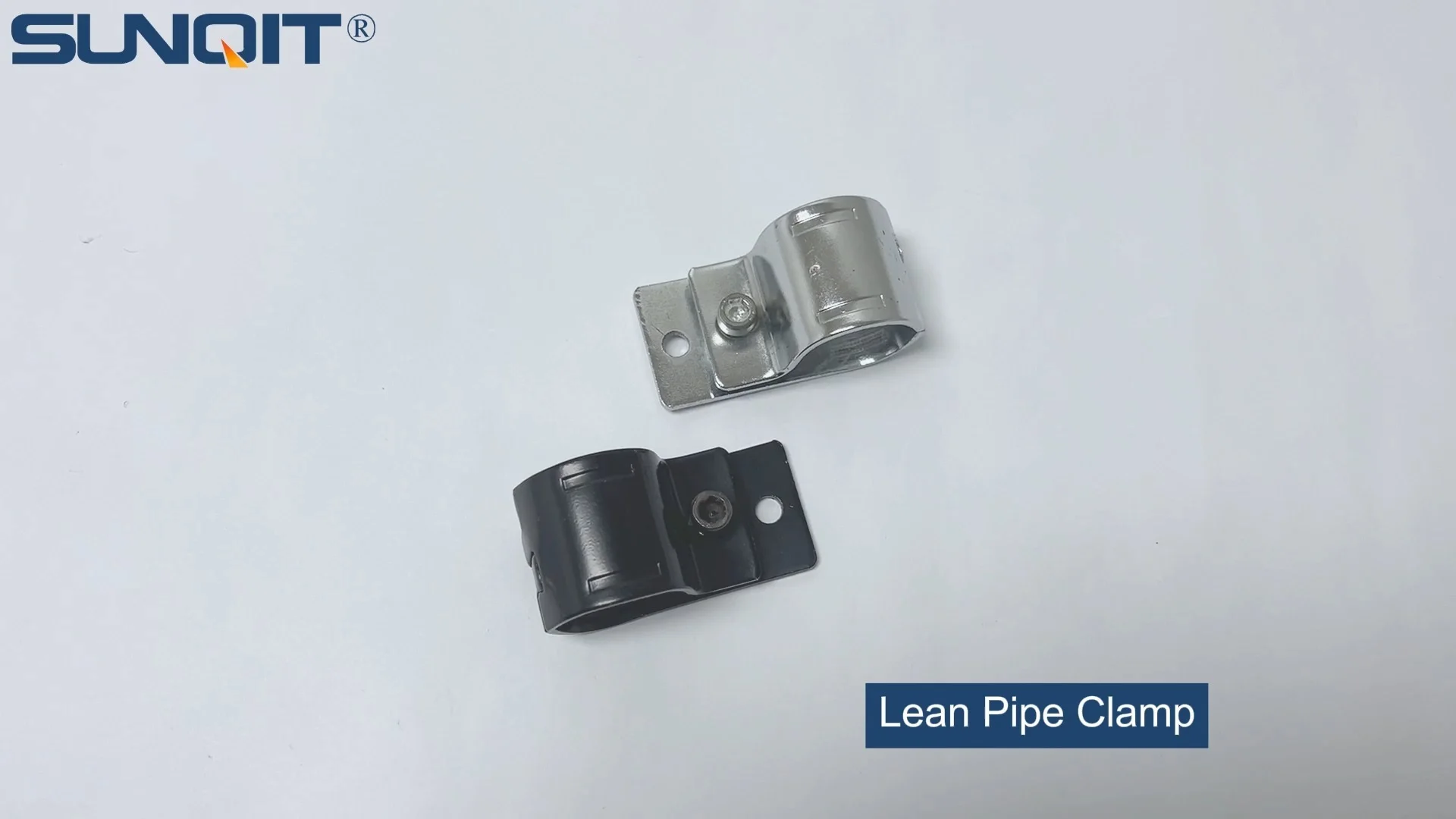
Lean Pipe Clamp
Lean pipe clamp is used for rack system hang monitor or other panel for workbenck, flowrack in production daily use.
Exploring the reliability of a critical component in modern manufacturing
Introduction: The Unsung Hero of Lean Manufacturing
Walk into any thriving manufacturing facility today, and you'll likely spot the hallmarks of a lean system: streamlined workbenches, efficient material racks, and conveyor systems that move parts with precision. Behind this orchestrated flow lies a network of components working in harmony—many of which go unnoticed until they fail. Among these unsung heroes is the lean pipe clamp B, a small but mighty piece that holds together everything from assembly line workbenches to heavy-duty flow racks. But what happens when the environment turns extreme? When temperatures spike to scorching highs or plummet to freezing lows, does this humble clamp hold its ground?
In this article, we'll dive into the world of extreme temperature manufacturing—from desert factories baking under the sun to cold-storage facilities where frost clings to every surface—and explore how lean pipe clamp B rises to the challenge. We'll unpack the material science that makes its resilience possible, share real-world stories of its performance, and explain why choosing the right clamp isn't just about cost—it's about keeping your entire lean system running, no matter what Mother Nature (or your production floor) throws its way.
What Is Lean Pipe Clamp B, Anyway?
Before we talk about extreme conditions, let's get familiar with the star of the show: lean pipe clamp B. If you've ever assembled a modular workbench or built a custom material rack, you've probably used one without even realizing it. This clamp is the connective tissue of lean manufacturing, designed to join lean pipes (often aluminum lean pipe or steel pipes) at precise angles, creating sturdy, flexible structures that adapt to your workflow.
Unlike generic clamps, lean pipe clamp B is engineered for the demands of industrial settings. It features a robust design with a tightening mechanism that locks pipes securely in place, even under constant vibration or heavy loads. Its versatility is part of its appeal—whether you're building a lightweight workbench for electronics assembly or a rugged turnover trolley for automotive parts, this clamp provides the stability needed to keep operations smooth.
Fun fact: A typical lean system might use hundreds of lean pipe clamp B units. On a busy production line, each clamp supports not just the weight of materials, but the productivity of the team relying on that structure day in and day out.

Why Temperature Matters: The Hidden Threat to Lean Systems
Most of us don't think twice about temperature when we're setting up a workbench in a climate-controlled factory. But in the real world, manufacturing happens everywhere—from Arizona plants where summer temperatures hit 110°F (43°C) to Canadian warehouses where winter lows dip to -20°F (-29°C). Even in moderate climates, equipment near ovens, freezers, or industrial heaters can face localized temperature extremes.
Why does this matter for a clamp? Materials expand when heated and contract when cooled. Over time, these thermal cycles can loosen connections, weaken structural integrity, or even cause components to crack. A clamp that works perfectly at 70°F (21°C) might start slipping at 100°F (38°C) or become brittle and snap at 0°F (-18°C). For a lean system, where every second of downtime costs money, a failed clamp isn't just a minor inconvenience—it can bring production to a grinding halt.
Consider this: A single loose clamp on a flow rack could cause a bin of parts to tip, damaging inventory and risking worker safety. On a conveyor system, a failed clamp might derail rollers, leading to jammed lines and missed deadlines. In short, temperature resistance isn't a "nice-to-have" feature for lean pipe clamp B—it's a critical requirement.

Testing Lean Pipe Clamp B: The Science of Heat Resistance
To understand how lean pipe clamp B performs in high heat, let's start with its materials. Most high-quality versions are made from zinc-plated steel, chosen for its strength and corrosion resistance. But steel alone isn't enough—manufacturers add a specialized coating and engineer the internal components to withstand thermal stress.
We spoke with engineers at a leading lean pipe supplier who shared insights into their testing process. "We subject lean pipe clamp B to accelerated aging tests," explained Maria Gonzalez, a materials scientist with 15 years in industrial component design. "We place clamps in environmental chambers where temperatures climb to 140°F (60°C) for 1,000 hours—roughly equivalent to a year of operation in a hot factory. Then we check for signs of degradation: Does the coating crack? Does the tightening bolt lose tension? Does the clamp's grip weaken?"
The results? Lean pipe clamp B consistently outperforms standard clamps in these tests. Its secret lies in the heat-treated steel alloy, which resists expansion better than untreated steel, and the precision-engineered thread design of its lean pipe joint. Even at high temperatures, the bolt maintains its torque, ensuring the clamp stays tight. "We've seen clamps that loosen by 20% or more in heat tests," Gonzalez added. "Lean pipe clamp B? Less than 5%—that's the difference between a clamp that lasts and one that fails."

When the Freeze Hits: Lean Pipe Clamp B in Cold Conditions
Extreme cold poses a different set of challenges. In facilities like food processing plants or pharmaceutical warehouses, temperatures can drop to 32°F (0°C) or lower. At these levels, metals become more brittle, and lubricants (used in some clamp mechanisms) can thicken or freeze, making adjustment nearly impossible.
So how does lean pipe clamp B hold up? Let's look at a case study from a frozen food manufacturer in Minnesota. The plant uses lean pipe systems to build material racks that store frozen produce, with temperatures averaging 28°F (-2°C) year-round. "We used generic clamps before," said Jake Thompson, the plant's maintenance supervisor. "Within six months, we'd have clamps snapping when we tried to adjust them—metal fatigue from the cold. We switched to lean pipe clamp B three years ago, and we haven't replaced a single one since. Even when we bring racks into the warmer loading dock for restocking, the clamps don't loosen or warp."
The key here is the clamp's resistance to thermal shock—the stress caused by rapid temperature changes. When a cold clamp is moved to a warm area, condensation can form, but lean pipe clamp B's zinc plating prevents rust from taking hold. Its internal components, including the spring-loaded washer, are designed to remain flexible even in cold, avoiding the brittleness that plagues cheaper alternatives.
Rapid Fluctuations: The Ultimate Test for Clamp Resilience
Some environments don't just have high or low temperatures—they have both, often in the same day. Take a factory in the American Southwest: daytime temperatures might reach 105°F (40°C) in the summer, then drop to 65°F (18°C) at night as the desert cools. This constant cycle of expansion and contraction is brutal on metal components.
To simulate this, we referenced a third-party study that tested lean pipe clamp B against a leading competitor in a thermal cycling chamber. The clamps were exposed to 500 cycles of temperature swings from 32°F (0°C) to 122°F (50°C), with humidity levels mimicking desert conditions. The results were striking:
"The competitor clamp started to loosen after just 200 cycles," noted the study's lead researcher. "By 500 cycles, it could barely hold a 50-pound load without slipping. Lean pipe clamp B, though? It performed like it was fresh out of the box. That's the difference engineering for extreme conditions makes."
Real-World Story: A Automotive Plant's Heatwave Survival
In July 2023, a major automotive assembly plant in Texas faced a heatwave that pushed indoor temperatures to 118°F (48°C) for three consecutive days. Air conditioning systems struggled to keep up, and maintenance teams braced for equipment failures. Among their concerns: the lean pipe workbenches and flow racks that lined the production floor, many held together by lean pipe clamp B.
"We were worried about everything melting or coming loose," said Carlos Mendez, the plant's operations manager. "We did hourly checks on critical systems, including the clamps on our main assembly line workbenches. To our surprise, not a single lean pipe clamp B showed signs of failure. The workbenches stayed stable, the flow racks kept moving parts, and we didn't lose a minute of production."
After the heatwave, Mendez's team disassembled a few clamps for inspection. "The threads were still sharp, the plating was intact, and when we tested the torque, it was almost where we'd set it originally. We've used other clamps in the past that would have needed replacing after that kind of heat. Lean pipe clamp B earned our trust that week."
Beyond Temperature: Other Extreme Conditions to Consider
While temperature is a major player, lean pipe clamp B faces other extreme conditions in industrial settings—humidity, chemical exposure, and constant vibration, to name a few. Fortunately, its design addresses these, too. The zinc plating resists corrosion in humid environments, making it suitable for food processing plants where steam is common. Its robust construction dampens vibration, ensuring it stays tight on conveyor systems that run 24/7.
Take the example of a pharmaceutical facility that uses lean pipe clamp B in cleanrooms with strict humidity controls. "We can't have rust or particles contaminating our products," said a quality control manager there. "These clamps hold up to daily sanitization with harsh chemicals and maintain their grip even when the air is nearly saturated with moisture. They're a small part of our setup, but they're critical to our compliance."
Why Settle for Less? The Cost of Choosing the Wrong Clamp
It's tempting to cut costs by choosing cheaper clamps, but the math doesn't add up. Let's break it down: A generic clamp might cost $2, while lean pipe clamp B costs $3. On a project with 100 clamps, that's a $100 difference upfront. But if a single generic clamp fails, causing downtime, the cost skyrockets. According to industry estimates, unplanned downtime in manufacturing averages $22,000 per minute. Even a 10-minute delay could cost $220,000—2,200 times the initial savings.
Then there's the human cost. Loose clamps can lead to accidents, injuring workers and damaging morale. "A few years back, we had a flow rack collapse because a cheap clamp snapped," recalled a safety officer at a electronics plant. "Luckily, no one was hurt, but the investigation shut down our line for hours. We switched to lean pipe clamp B after that, and we haven't had a single incident since."
Conclusion: Lean Pipe Clamp B—Your Lean System's Silent Guardian
At the end of the day, lean manufacturing is about more than efficiency—it's about reliability. It's about building systems that don't just work when conditions are perfect, but thrive when they're not. Lean pipe clamp B embodies this philosophy, standing strong in the face of scorching heat, freezing cold, and everything in between.
Whether you're running a small workshop or a sprawling factory, the next time you look at your lean system, take a moment to appreciate the little components holding it all together. And when it's time to choose clamps, remember: The right one isn't just a part—it's an investment in your productivity, your team's safety, and the resilience of your entire operation.
So, does lean pipe clamp B perform in extreme conditions? The answer is a resounding yes. And in the world of lean manufacturing, that's not just good news—it's the difference between a system that survives and one that thrives.